Amino Acids (AA)
Amino acids (AAs) are the fundamental building blocks of proteins, playing a crucial role in various biological processes. These organic compounds are essential for protein synthesis, metabolic pathways, and cell signaling. In this category, you will find a comprehensive range of amino acids, including essential, non-essential, and modified forms, which are vital for research in biochemistry, molecular biology, and nutritional sciences. At CymitQuimica, we provide high-quality amino acids to support your research and development needs, ensuring accuracy and reliability in your experimental outcomes.
Subcategories of "Amino Acids (AA)"
- Amino Acid Derivatives(3,957 products)
- Amino Acid and Amino Acid Related Compounds(3,472 products)
- Amino Acids with Oxygen or Sulphur(168 products)
- Boc- Amino Acids(351 products)
- Fmoc Amino Acids(1,710 products)
Found 38265 products of "Amino Acids (AA)"
Sort by
Purity (%)
0
100
|
0
|
50
|
90
|
95
|
100
Fmoc-cis-4-aminocyclohexane carboxylic acid
CAS:<p>Fmoc-cis-4-aminocyclohexane carboxylic acid is a reagent, useful for the synthesis of complex compounds. It is also used as an intermediate in the production of fine chemicals and speciality chemicals. In addition, it is a versatile building block that can be used to synthesize many different types of compounds, including pharmaceuticals and pesticides. Fmoc-cis-4-aminocyclohexane carboxylic acid is a high quality compound with a CAS number of 147900-45-6. It has been shown to be an effective scaffold for the synthesis of novel reaction components.</p>Formula:C22H23NO4Purity:Min. 95%Color and Shape:White/Off-White SolidMolecular weight:365.42 g/molBoc-Phe-Pro-OH
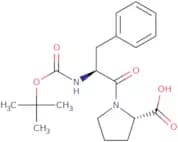
CAS:<p>Boc-Phe-Pro-OH is an opioid receptor agonist. It binds to the δ opioid receptors and activates them, which leads to analgesic effects. Boc-Phe-Pro-OH also has antibacterial properties and can be used for the treatment of bacterial infections. This compound may also have antiinflammatory properties that are mediated by its ability to inhibit prostaglandin synthesis. Boc-Phe-Pro-OH has been shown to possess a high affinity for the μ opioid receptor, but does not activate this receptor subtype.</p>Formula:C19H26N2O5Purity:Min. 95%Color and Shape:White To Off-White SolidMolecular weight:362.42 g/mol2'-Hydroxy-5'-methoxyacetophenone
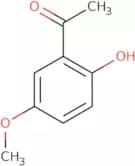
CAS:<p>2'-Hydroxy-5'-methoxyacetophenone is a molecule that has been shown to have anticancer activity. It inhibits the production of molecules in cancer cells, such as carbonic anhydrase and nitric oxide synthase. This molecule also binds to DNA and prevents the transcription of genes involved in cell proliferation, including NF-κB DNA. 2'-Hydroxy-5'-methoxyacetophenone also has inhibitory properties on the growth of cancer cells, including MCF-7 cells.</p>Formula:C9H10O3Purity:Min. 95%Color and Shape:Off-White PowderMolecular weight:166.17 g/molL-Lysine diisocyanate ethyl ester
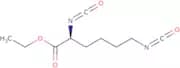
CAS:<p>L-Lysine diisocyanate ethyl ester (LDIEE) is a fluorescence probe that can be used to detect the presence of disulfide bonds. This compound reacts with thiols, such as cysteine, glutathione, and metallothioneins. LDIEE has been shown to bind to human serum proteins and has been used in biological studies for the detection of hydrogen bonding interactions. The biological properties of this compound have not been studied but it is hypothesized that LDIE may have anti-cancer activities due to its ability to react with coumarin derivatives.</p>Formula:C10H14N2O4Purity:Min. 95 Area-%Color and Shape:Clear LiquidMolecular weight:226.23 g/mol3-Phenylpropionyl chloride
CAS:<p>3-Phenylpropionyl chloride is an acylating agent with antimicrobial properties. It is used as a precursor in the synthesis of many pharmaceuticals, such as amines and cyclohexane derivatives. 3-Phenylpropionyl chloride is a reactive compound that can undergo an acylation reaction with nucleophilic compounds to form an n-oxide. This reaction can be catalyzed by metal ions or bases. 3-Phenylpropionyl chloride has inhibitory properties against enzymes, such as aminoglycoside acetyltransferase and carbonyl reductase. It also has shown antitumor activity in cancer cells and metabolic disorders in the liver due to its ability to inhibit glycosidic bond formation.</p>Formula:C9H9ClOPurity:Min. 95%Color and Shape:LiquidMolecular weight:168.62 g/mol4-Methyl-1,2-cyclohexanedicarboxylic anhydride, mixture of isomers
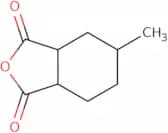
CAS:Controlled Product<p>4-Methyl-1,2-cyclohexanedicarboxylic anhydride is a hydroxy group with the chemical formula CH3CH(CO)OCH(CO)C(CH3)2. It is a white crystalline solid that is soluble in organic solvents and reacts with acids to form esters. 4-Methyl-1,2-cyclohexanedicarboxylic anhydride has been shown to be a competitive inhibitor of creatine kinase and calcium carbonate as well as an inhibitor of polyols. This compound also shows high thermal expansion and viscosity. 4-Methyl-1,2-cyclohexanedicarboxylic anhydride has been shown to have clinical relevance when used in conjunction with epoxy and boron nitride for the treatment of fatty acids and fatty acid derivatives. The optical properties of 4-methyl 1,2 cyclohexanedicarboxy</p>Formula:C9H12O3Purity:Min. 95%Color and Shape:Colorless Clear LiquidMolecular weight:168.19 g/mol1-Methylazetidin-3-amine dihydrochloride
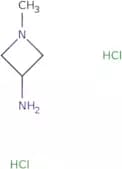
CAS:<p>1-Methylazetidin-3-amine dihydrochloride is a synthetic chemical compound that is used as a reagent, high quality, complex intermediate, and fine chemical. It has been shown to be useful in the synthesis of various compounds and has been reported as a useful scaffold for organic synthesis. This compound also exhibits versatile building block properties due to its ability to react with various functional groups. 1-Methylazetidin-3-amine dihydrochloride has been found to be a useful reaction component in the production of pharmaceuticals, pesticides, and other products.</p>Formula:C4H12Cl2N2Purity:Min. 95%Color and Shape:White PowderMolecular weight:159.06 g/molN-b-Boc-D-2,3-diaminopropionic acid
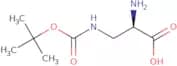
CAS:<p>N-b-Boc-D-2,3-diaminopropionic acid is a chemical compound that belongs to the group of polypeptides. It has been shown to act as a receptor activator in cell-based assays and is capable of binding to taste receptors. N-b-Boc-D-2,3-diaminopropionic acid has also been found to be an effective inhibitor of alpha amylase, which is an enzyme that breaks down starch into maltose and dextrin. This chemical compound could serve as a potential therapeutic agent for type 2 diabetes, obesity, and other metabolic disorders. NBDAPA has also been found in fossilized invertebrates such as squid and urchins.</p>Formula:C8H16N2O4Purity:Min. 95%Color and Shape:White to off-white solid.Molecular weight:204.22 g/molDL-Alanine
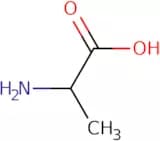
CAS:<p>DL-Alanine is a small molecule drug that has been used as a fluorescence probe for the detection of human hepatitis B virus (HBV) DNA. DL-Alanine has also been shown to be an inhibitor of the polymerase chain reaction, which is a technique used for amplifying DNA. The fluorescence of DL-alanine is quenched by HBV, and the intensity of this interaction can be measured using an ultraviolet spectrophotometer. DL-Alanine was found to inhibit HBV replication in a model system when it was added at concentrations between 1 and 10 mM. The inhibition was attributed to its ability to scavenge anion radicals generated during the course of HBV replication. DL-Alanine inhibits both wild type and mutant strains of HBV, with no significant difference in potency between them.</p>Formula:C3H7NO2Purity:(Titration) Min. 98.5%Color and Shape:PowderMolecular weight:89.09 g/mol2-Hydroxy-4-methoxybenzophenone-5-sulfonic acid
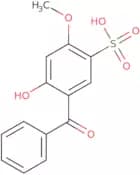
CAS:<p>2-Hydroxy-4-methoxybenzophenone-5-sulfonic acid is a diazonium salt that can be used as a reference standard to measure the microbial metabolism of aromatic compounds. It is stable in air and light, but can undergo photolysis in solution. The monosodium salt form of 2-hydroxy-4-methoxybenzophenone-5-sulfonic acid has been shown to have acute toxicities for fish, rats and rabbits. This compound also has photochemical properties that make it useful for surface methodology, such as determining the degree of hydrophobicity of various types of surfaces. Hydrochloric acid is needed for the preparation of this compound.</p>Formula:C14H12O6SPurity:Min. 95%Color and Shape:White To Yellow SolidMolecular weight:308.31 g/mol3-Methyl-2-benzothiazolinone hydrazone
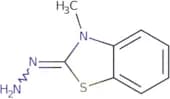
CAS:<p>3-Methyl-2-benzothiazolinone hydrazone is a chemical substance that is used as a reagent for protein synthesis. It binds to the iron in the urine and prevents its oxidation, which may be due to its ability to form dehydroascorbic acid. 3-Methyl-2-benzothiazolinone hydrazone has been shown to have synthetase activity, which may be responsible for its ability to catalyze the formation of isoxsuprine hydrochloride from two molecules of acetoacetyl phosphate and one molecule of glyceraldehyde phosphate. The reaction is carried out in the presence of an iron catalyst, such as ferrous sulfate, under conditions where there are sufficient amounts of oxygen present. This compound has been shown to be stable in acidic solutions, such as urine samples. 3-Methyl-2-benzothiazolinone hydrazone can also be used as a reagent in analytical methods</p>Formula:C8H9N3SPurity:Min. 95%Color and Shape:Slightly Yellow Clear LiquidMolecular weight:179.24 g/molPhe-Phe-OH
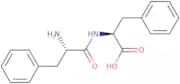
CAS:<p>Phenyl-phenyl-OH is a fatty acid amide that is used in the synthesis of lactogenic hormones. It is also an intermediate in the synthesis of ethylene diamine. Phenyl-phenyl-OH has been shown to have a high rate of reaction with human serum, and its kinetic data are complex with respect to both protonation and steric interactions. The compound has been shown to form hydrogen bonds with basic proteins, which may be due to its ability to protonate at pH values below 8.5.</p>Formula:C18H20N2O3Purity:Min. 95%Color and Shape:White PowderMolecular weight:312.36 g/mol5-Fluoro-D-Tryptophan
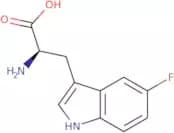
CAS:<p>5-Fluoro-D-Tryptophan is a fluorescent substrate for the enzyme indoleamine 2,3 dioxygenase (IDO) that is used in assays to determine the activity of this enzyme. IDO is an enzyme that is found in animals and catalyzes the first step in tryptophan metabolism by converting it to 5-fluoro-kynurenine. The amount of fluorescence generated can be detected with a fluorescence detector. 5-Fluoro-D-Tryptophan has been shown to have higher levels of uptake by tumor tissue than by normal tissue, which may be due to its ability to inhibit protein synthesis and cell division.</p>Formula:C11H11FN2O2Purity:Min. 95%Color and Shape:White/Off-White SolidMolecular weight:222.22 g/molN-[4-(Acetylamino)phenyl]glycine
CAS:<p>N-[4-(Acetylamino)phenyl]glycine is a fine chemical that can be used as a building block in the synthesis of pharmaceuticals, agricultural chemicals, and other speciality chemicals. It is an intermediate in the synthesis of heterocyclic compounds and has been shown to be useful for the preparation of complex compounds. N-[4-(Acetylamino)phenyl]glycine also serves as a reaction component in many organic reactions and has been used as a research chemical. This compound has high purity and can be obtained at competitive prices.</p>Formula:C10H12N2O3Purity:Min. 95%Color and Shape:PowderMolecular weight:208.21 g/molDL-Propargylglycine
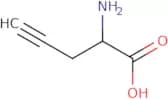
CAS:<p>DL-Propargylglycine is a molecule that has been used as a model system for studying the interaction of neurokinin-1 receptor with response elements. It has also been shown to have inhibitory properties on polymerase chain, which is important in the process of energy metabolism. This compound has been shown to increase cytosolic Ca2+ and inhibit nuclear DNA synthesis in certain cells. DL-Propargylglycine can be used to study the effects of growth factor-β1 on myocardial infarcts and bowel disease.</p>Formula:C5H7NO2Purity:Min. 95%Color and Shape:White Off-White PowderMolecular weight:113.11 g/mol(S)-3-Phenylalanine t-butyl ester HCl
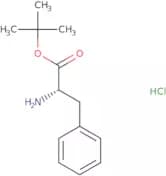
CAS:<p>(S)-3-Phenylalanine t-butyl ester HCl is a solute with the molecular formula of C9H11NO2. It is an ester that has been hydrochloride to produce a solute that is soluble in water and alcohols. (S)-3-Phenylalanine t-butyl ester HCl is also a provitamin, which means it can be converted into vitamin B6 in the body. This compound has been shown to reduce the viscosity of fluids at high temperatures and low pressure, making it useful in thermally labile solutes. The solubility of (S)-3-phenylalanine t-butyl ester HCl in various solvents depends on its concentration. The fluorescence properties of this compound depend on the concentration and temperature. These properties have been used for deconvolution purposes in amide studies.</p>Formula:C13H19NO2·HClPurity:Min. 95%Color and Shape:White PowderMolecular weight:257.76 g/mol2-(Dimethylamino)-2-methylpropanoic acid
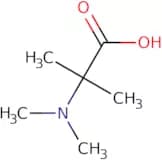
CAS:<p>2-(Dimethylamino)-2-methylpropanoic acid is a solvent that has been investigated for use in vapor phase systems. It has been shown to have the ability to adsorb onto surfaces and to be able to desorb from these surfaces at a later time. This process allows 2-(dimethylamino)-2-methylpropanoic acid to be used as an additive for waterproofing and other applications. A thermogravimetric analysis of 2-(dimethylamino)-2-methylpropanoic acid showed that it decomposes at temperatures between 220°C and 260°C, which is lower than the temperature required for many other solvents. This property makes it suitable for use in vapor phase systems.</p>Formula:C6H13NO2Purity:Min. 95%Color and Shape:PowderMolecular weight:131.17 g/molO-tert-Butyl-L-serine
CAS:<p>O-tert-Butyl-L-serine is a chemical compound that is a derivative of the amino acid L-phenylalanine. It is used as a linker to attach benzene molecules to other compounds. Its kinetics and properties have been studied in detail, and it has been shown to be a high molecular weight, hydrophobic, organic solvent ester. O-tert-Butyl-L-serine can be synthesized by reacting benzyl chloride with an ester hydrochloride in the presence of catalytic amounts of pyridine and DMAP. The resulting product is an amide hydrochloride that can then be converted into the tertiary amine using base hydrolysis. This tertiary amine can then be reacted with benzene in the presence of base to produce O-tert-butyl-L-serine.</p>Formula:C7H15NO3Purity:Min. 98 Area-%Color and Shape:PowderMolecular weight:161.2 g/mol1-Methyluric acid
CAS:Controlled Product<p>1-Methyluric acid is a purine derivative that is a metabolite of caffeine. It is formed by the hepatic cytochrome P450 enzyme system and excreted in the urine. 1-Methyluric acid has been shown to be metabolized by rat liver microsomal enzymes, with the production of malonic acid, which may be responsible for its observed hepatotoxicity. The drug has also been shown to have an antibody response in rats and has been found to inhibit the activity of human liver enzymes. It also inhibits rat kidney enzyme activities and causes renal toxicity in rats. There are many drug interactions that can occur with 1-methyluric acid, including those with warfarin, phenytoin, carbamazepine, and diazepam. This drug should not be used in patients with severe renal impairment or chronic renal failure because it can cause acute renal failure due to its high degree of protein binding and rapid elimination from the body.</p>Formula:C6H6N4O3Purity:Min. 98 Area-%Color and Shape:White PowderMolecular weight:182.14 g/mol4-Methylcyclohexanone
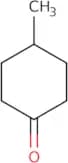
CAS:<p>4-Methylcyclohexanone is a diazonium salt that has been shown to be an intramolecular hydrogen-bonded substrate for the hydroxyl group. It has been used as a precursor for the synthesis of 2,4-diaminobenzoic acid (2,4-DABA) and 3,5-diaminoquinoxaline (3,5-DQNX). 4-Methylcyclohexanone is also used in the production of herbicides and other organic compounds. The reaction mechanism can be explained by considering that 4-methylcyclohexanone is an electron donor with two hydroxyl groups. One of these groups will react with a diazonium salt to provide the α-hydroxyimine intermediate. This intermediate then reacts with another molecule of cyclohexanone to yield the desired product. A typical example of this mechanism is shown below:<br>The acetate</p>Formula:C7H12OPurity:Min. 95%Color and Shape:Clear LiquidMolecular weight:112.17 g/mol



![N-[4-(Acetylamino)phenyl]glycine](/_next/image/?url=https%3A%2Fstatic.cymitquimica.com%2Fproducts%2F3D%2Fthumb-webp%2FFA123743.webp&w=3840&q=75)