Amino Acids (AA)
Amino acids (AAs) are the fundamental building blocks of proteins, playing a crucial role in various biological processes. These organic compounds are essential for protein synthesis, metabolic pathways, and cell signaling. In this category, you will find a comprehensive range of amino acids, including essential, non-essential, and modified forms, which are vital for research in biochemistry, molecular biology, and nutritional sciences. At CymitQuimica, we provide high-quality amino acids to support your research and development needs, ensuring accuracy and reliability in your experimental outcomes.
Subcategories of "Amino Acids (AA)"
- Amino Acid Derivatives(3,969 products)
- Amino Acid and Amino Acid Related Compounds(3,474 products)
- Amino Acids with Oxygen or Sulphur(168 products)
- Boc- Amino Acids(351 products)
- Fmoc Amino Acids(1,710 products)
Found 38282 products of "Amino Acids (AA)"
Sort by
Purity (%)
0
100
|
0
|
50
|
90
|
95
|
100
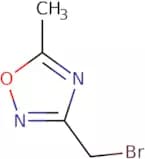
3-(Bromomethyl)-5-methyl-1,2,4-oxadiazole
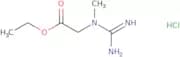
CAS:<p>3-(Bromomethyl)-5-methyl-1,2,4-oxadiazole is an activating molecule that can be used as a histochemical stain. It forms a blue dye when reacted with the amino acid histidine in tissue. This compound stains cells and tissues blue, which can be used to identify different types of cells. 3-(Bromomethyl)-5-methyl-1,2,4-oxadiazole is also useful for identifying the location of specific proteins by detecting their presence in different types of cells. This compound can also be used in vivo to activate angiotensinogen in wild-type mice and then analyzing the effects on angiotensin levels.</p>Formula:C4H5BrN2OPurity:Min. 95 Area-%Color and Shape:Yellow Clear LiquidMolecular weight:177 g/molH-Ile-OEt.HCl
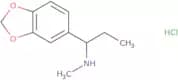
CAS:<p>H-Ile-OEt.HCl is an ester hydrochloride that is a dietary supplement. It is used in short-term exposures and as a dietary supplement, and has been shown to have anti-inflammatory properties. H-Ile-OEt.HCl is an acid with a pH of 2.0 to 3.0, and it has the ability to be absorbed by the body through the stomach and small intestine. This acid can also be converted into HCl in the stomach, which may cause irritation or ulceration.</p>Formula:C6H13N3O2•HClPurity:Min. 95%Color and Shape:PowderMolecular weight:195.65 g/molN-Methyl-3,4-methylenedioxyphenylpropane hydrochloride
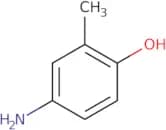
CAS:Controlled Product<p>N-Methyl-3,4-methylenedioxyphenylpropane hydrochloride is a high quality reagent that is a useful intermediate in the synthesis of complex compounds. It is used as a fine chemical and research chemicals in the manufacture of speciality chemicals. N-Methyl-3,4-methylenedioxyphenylpropane hydrochloride has been shown to be an excellent scaffold for the synthesis of many different compounds with high versatility. It can also be used as a building block or reaction component.</p>Formula:C11H15NO2·HClColor and Shape:PowderMolecular weight:229.7 g/mol4-Amino-2-methylphenol
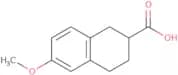
CAS:<p>4-Amino-2-methylphenol is a chemical substance that is used in the production of dyes, cationic surfactants, and basic dyes. It can be produced through oxidation of phenol or by dehydration of aniline. 4-Amino-2-methylphenol has been shown to have potential use as a surface enhancer for Raman spectroscopy. This compound has also been used to extract amines and ethers from organic solvents.</p>Formula:C7H9NOPurity:Min. 95%Color and Shape:SolidMolecular weight:123.15 g/mol6-Methoxy-1,2,3,4-tetrahydronaphthalene-2-carboxylic acid
CAS:<p>6-Methoxy-1,2,3,4-tetrahydronaphthalene-2-carboxylic acid (MTN) is a polyphenol that has been shown to be effective against Alzheimer's disease in vitro and in vivo. MTN is able to bind to the polymerase chain reaction (PCR) product of APP and inhibit it from binding to heme oxygenase. MTN also prevents the accumulation of amyloid plaques by inhibiting the formation of beta-amyloid protein. MTN binds to thioflavin T and can be used as a fluorescent probe for immunofluorescence staining. MTN also inhibits the expression levels of APP and PS1 proteins in APP/PS1 transgenic mice by modulating the activity of transcriptional factors such as CREB.</p>Formula:C12H14O3Purity:Min. 95%Color and Shape:PowderMolecular weight:206.24 g/mol1-(tert-Butoxy)-2-methylpropane
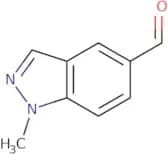
CAS:<p>1-(tert-Butoxy)-2-methylpropane is a reactive, thermodynamic, and chemical substance. It has the chemical formula CH 3 (CH 2 ) 3 CO-O-C(CH 3 ) 3 . It is a colorless liquid with a boiling point of -25 degrees Celsius. 1-(tert-Butoxy)-2-methylpropane reacts with peroxides to form tert-butyl hydroperoxide. This compound has been observed in reactions involving the formation of ion exchange resins. 1-(tert-Butoxy)-2-methylpropane can be protonated to form tertiary butyl cation and tertiary butyl anion. The reactivity of this substance is optimal at 25 degrees Celsius and its chemical structures are composed of formyl group and ion exchange groups.</p>Formula:C8H18OPurity:Min. 95%Color and Shape:PowderMolecular weight:130.23 g/mol1-Methyl-1H-indazole-5-carbaldehyde
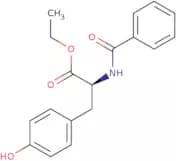
CAS:<p>1-Methyl-1H-indazole-5-carbaldehyde is a selective inhibitor of the enzyme lysine acetyltransferase (KAT). KAT inhibitors are a new class of compounds that have been shown to be effective in inhibiting the growth of acute myeloid leukaemia cells, with little effect on other cells. 1-Methyl-1H-indazole-5-carbaldehyde has potent inhibitory activity against human myeloid leukemia cells and does not affect the viability of normal human erythrocytes or peripheral blood mononuclear cells. This compound is reversible, meaning it can be turned off when it is no longer needed. 1-Methyl-1H-indazole-5-carbaldehyde has also been shown to inhibit maoA and thymidine phosphorylase in vitro.</p>Formula:C9H8N2OPurity:Min. 95%Color and Shape:PowderMolecular weight:160.17 g/molBenzoyl-L-tyrosine ethyl ester
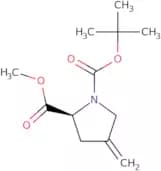
CAS:<p>Benzoyl-L-tyrosine ethyl ester is a copolymer of benzoyl-L-tyrosine and polyethylene glycol. It is a mesoporous material that has an ability to bind with DNA and inhibit the activity of enzymes such as proteases, trypsin, and chymotrypsin. Benzoyl-L-tyrosine ethyl ester inhibits the enzymatic activity of these enzymes by binding to the active site on their surface; it also inhibits the production of inflammatory mediators. This product has been shown to have potent inhibitor properties in vitro, but its efficacy in vivo has not been evaluated.</p>Formula:C18H19NO4Purity:Min. 95%Color and Shape:PowderMolecular weight:313.35 g/molN-Boc-4-methylene-L-proline methyl ester
CAS:<p>N-Boc-4-methylene-L-proline methyl ester is a versatile building block for the synthesis of complex compounds. It is an intermediate that can be used in the production of pharmaceuticals, agrochemicals, and other speciality chemicals. The compound has been shown to have an inhibitory effect on HIV replication.</p>Formula:C12H19NO4Purity:Min. 95%Color and Shape:Colorless PowderMolecular weight:241.28 g/mol5-Acetoxy-6-methoxyindole
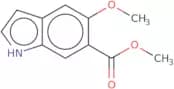
CAS:<p>5-Acetoxy-6-methoxyindole is a fine chemical, useful building block, and research chemical with CAS No. 112919-69-4. It is a versatile building block and reaction component that can be used as a reagent or speciality chemical in the synthesis of other complex compounds. 5-Acetoxy-6-methoxyindole is also used as an intermediate in the synthesis of drugs and pharmaceuticals. This compound has high purity, making it a high quality product with many uses.</p>Formula:C11H11NO3Purity:Min. 95%Molecular weight:205.21 g/mol2-Methoxy-4-amino-5-ethylsulfonyl benzoic acid
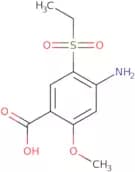
CAS:<p>2-Methoxy-4-amino-5-ethylsulfonyl benzoic acid is a synthetic chemical that is used in wastewater treatment. It is also used as a precursor for the production of other chemicals, such as thiocyanates, peroxides, and bromoethanes. 2-Methoxy-4-amino-5-ethylsulfonyl benzoic acid can be produced by the reaction of hydrochloric acid with thionyl chloride. It reacts with aluminium to produce an acylation reaction that produces 2,2'-dithiodiethanol (DTE). The DTE can be reacted with an organic compound to produce a variety of products, including salicylic acid or bromoethanes.</p>Formula:C10H13NO5SPurity:Min. 95%Color and Shape:PowderMolecular weight:259.28 g/molN-Acetyl-L-Tyrosine extrapure, 98%
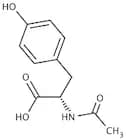
CAS:Formula:C11H13NO4Purity:min. 98%Color and Shape:White, Crystalline powder, ClearMolecular weight:223.22L-Isoleucine extrapure CHR, 99%
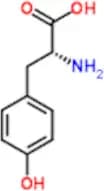
CAS:Formula:C6H13NO2Purity:min. 99%Color and Shape:White to off - white, Crystalline powder, ClearMolecular weight:131.17D-Tyrosine extrapure, 98%
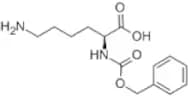
CAS:Formula:C9H11NO3Purity:min. 98.0%Color and Shape:White to off-white, Crystalline powderMolecular weight:181.2Z-N-e-Lysine Dicyclohexyl Ammonium Salt extrapure, 98%
CAS:Formula:C19H28N2O6·C12H23NMolecular weight:561.75L-Leucine extrapure, ExiPlus, Multi-Compendial, 99%
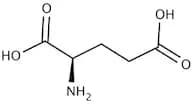
CAS:Formula:C6H13NO2Purity:min. 99%Color and Shape:White, Crystalline powder, Clear, ColourlessMolecular weight:131.17D-Glutamic Acid extrapure CHR, 99%
CAS:Formula:C5H9NO4Purity:min. 99%Color and Shape:White, Crystalline powder, Clear, ColourlessMolecular weight:147.13L-Tryptophan Methyl Ester Hydrochloride extrapure, 99%
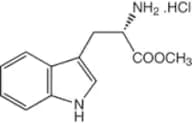
CAS:Formula:C12H14N2O2·HClPurity:min.99%Color and Shape:Off- white, PowderMolecular weight:254.57Carbocysteine extrapure, 98%
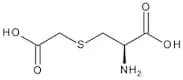
CAS:Formula:C5H9O4NSPurity:min. 98%Color and Shape:White, Crystalline powderMolecular weight:179.19