Amino Acids (AA)
Subcategories of "Amino Acids (AA)"
- Amino Acid Derivatives(4,012 products)
- Amino Acid and Amino Acid Related Compounds(3,490 products)
- Amino Acids with Oxygen or Sulphur(168 products)
- Boc- Amino Acids(351 products)
- Fmoc Amino Acids(1,710 products)
Found 38366 products of "Amino Acids (AA)"
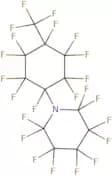
Perfluoro-N-(4-methylcyclohexyl)piperidine
CAS:Controlled ProductPerfluoro-N-(4-methylcyclohexyl)piperidine (4-FPP) is a fluorine compound that has been shown to inhibit the enzymatic activity of tyrosine kinases. It is a potent inhibitor of both human and murine tyrosine kinases, but it does not bind to bacterial tyrosine kinase domains. 4-FPP has been used in clinical studies as an anti-cancer drug, although it's clinical relevance remains unclear. It has also been shown to be effective against the influenza virus by inhibiting the synthesis of viral proteins that are involved in replication. The chemical structure of 4-FPP contains a carbonyl group that can react with other compounds through a photochemical process. This reaction is thought to result in the development of new drugs with similar biochemical properties to 4-FPP.
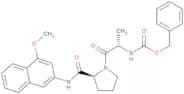
Formula:C12F23NPurity:Min. 95%Color and Shape:Clear LiquidMolecular weight:595.1 g/molZ-Ala-Pro-4MbetaNA
CAS:Please enquire for more information about Z-Ala-Pro-4MbetaNA including the price, delivery time and more detailed product information at the technical inquiry form on this pageFormula:C27H29N3O5Purity:Min. 95%Molecular weight:475.54 g/molIGF-I (1-3)
CAS:IGF-I (1-3) H-Gly-Pro-Glu-OH is a synthetic peptide that has been shown to be effective in treating neuronal death caused by glutamate. It binds to calcium ions and inhibits the activity of gamma-aminobutyric acid, which is an inhibitory neurotransmitter. IGF-I (1-3) H-Gly-Pro-Glu-OH also blocks fatty acid synthesis, leading to necrotic cell death. In vitro assays have shown that this drug can protect against blood group O erythrocytes from pyridoxal phosphate oxidation and protocatechuic acid binding. This drug has also been shown to increase locomotor activity in mice, as well as improve motor function in rats with experimental stroke. IGF-I (1-3) H-Gly-Pro-Glu-OH is synthesized using a polymerase chain reaction technique and consists of amino acids 1 through 3 ofFormula:C12H19N3O6Purity:Min. 95%Molecular weight:301.3 g/molH-beta-Ala-Lys-OH·HCl
CAS:Please enquire for more information about H-beta-Ala-Lys-OH·HCl including the price, delivery time and more detailed product information at the technical inquiry form on this pageFormula:C9H19N3O3·HClPurity:Min. 95%Molecular weight:253.73 g/molEGF Receptor (988-993) (phosphorylated) (human)
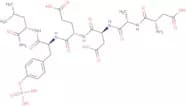
CAS:Please enquire for more information about EGF Receptor (988-993) (phosphorylated) (human) including the price, delivery time and more detailed product information at the technical inquiry form on this page
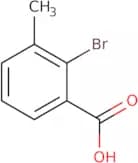
Formula:C31H46N7O16PPurity:Min. 95%Molecular weight:803.71 g/mol2-Bromo-3-methylbenzoic acid
CAS:2-Bromo-3-methylbenzoic acid is an alcohol that has been shown to be selective for the stereoselective synthesis of chiral secondary alcohols. It has been used in the reduction of 2-formylphenylboronic acid, yielding a mixture of the two possible diastereomers, and in the reductive elimination of carboxylic acids, which can be used as an alternative to the Baylis-Hillman reaction. The compound also has inhibitory activity against several bacteria, including methicillin resistant Staphylococcus aureus (MRSA) and Mycobacterium tuberculosis. 2-Bromo-3-methylbenzoic acid is photochromic and changes color from yellow to red when exposed to UV light.Formula:C8H7BrO2Purity:Min. 95%Color and Shape:PowderMolecular weight:215.04 g/molH-Pro-Phe-Lys-OH acetate salt
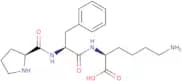
CAS:Please enquire for more information about H-Pro-Phe-Lys-OH acetate salt including the price, delivery time and more detailed product information at the technical inquiry form on this page
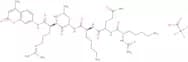
Formula:C20H30N4O4Purity:Min. 95%Molecular weight:390.48 g/molAc-Lys-Gln-Lys-Leu-Arg-AMC trifluoroacetate salt
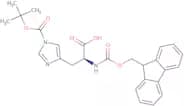
CAS:Please enquire for more information about Ac-Lys-Gln-Lys-Leu-Arg-AMC trifluoroacetate salt including the price, delivery time and more detailed product information at the technical inquiry form on this pageFormula:C41H66N12O9Purity:Min. 95%Molecular weight:871.04 g/molN-α-Fmoc-Nim-Boc-L-histidine
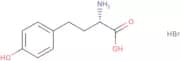
CAS:N-α-Fmoc-Nim-Boc-L-histidine is a histidine analog that has been shown to have an acidic pKa value. It is a potential drug candidate for the treatment of tumors, with cytotoxic activity against tumor cells and reduced toxicity against normal cells. N-α-Fmoc-Nim-Boc-L-histidine has been synthesized by solid phase synthesis and characterized using mass spectrometry and nuclear magnetic resonance spectroscopy. The compound was found to be stable in the acidic environment of endosomes, which are membrane bound compartments that play an important role in cellular uptake. NMR data shows that this compound exists as a disulfide bond when it is taken up by cells. This suggests that the compound may be cleaved by reducing agents in the cell before it enters the cytosol.Formula:C26H27N3O6Purity:Min. 95%Color and Shape:PowderMolecular weight:477.51 g/molHomo-L-tyrosine hydrobromide
CAS:Homo-L-tyrosine hydrobromide (HLTB) is a prodrug that is converted to L-3,4-dihydroxyphenylalanine (L-dopa) in vivo. It is used as an immunomodulator by stimulating the immune system and reducing inflammation. HLTB has been shown to have anti-inflammatory effects on the production of cytokines and chemokines, which are important for tumor growth and metastasis. HLTB is also known to inhibit tyrosine kinase, which plays a role in the development of some cancers.Formula:C10H14BrNO3Purity:Min. 95%Molecular weight:276.13 g/molZ-Val-Gly-Arg-pNA acetate salt
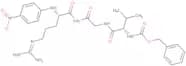
CAS:Please enquire for more information about Z-Val-Gly-Arg-pNA acetate salt including the price, delivery time and more detailed product information at the technical inquiry form on this pageFormula:C27H36N8O7Purity:Min. 95%Molecular weight:584.62 g/molH-Pro-Pro-Gln-OH trifluoroacetate salt
CAS:Please enquire for more information about H-Pro-Pro-Gln-OH trifluoroacetate salt including the price, delivery time and more detailed product information at the technical inquiry form on this pageFormula:C15H24N4O5Purity:Min. 95%Molecular weight:340.38 g/molBoc-D-Pro-Gly-OH
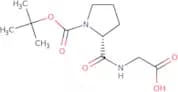
CAS:Please enquire for more information about Boc-D-Pro-Gly-OH including the price, delivery time and more detailed product information at the technical inquiry form on this page
Formula:C12H20N2O5Purity:Min. 95%Molecular weight:272.3 g/molAtriopeptin III (rat)
CAS:Atriopeptin III is a peptide hormone that belongs to the atrial natriuretic peptide group. It is an analog of atrial natriuretic peptide (ANP), which regulates blood pressure and sodium excretion, and has minimal toxicity. The disulfide bond between Cys-Cys and Cys-Gly on the N terminus of Atriopeptin III is necessary for its activity. The enzyme responsible for this disulfide bond formation is thioredoxin reductase, which is found in the cytoplasm of cells. Atriopeptin III has been shown to inhibit cyclase activity in renal proximal tubular cells, as well as congestive heart failure in rats. It also inhibits fatty acid synthesis by inhibiting carnitine acyltransferase I, leading to increased levels of free fatty acids and diacylglycerols in the blood plasma.Formula:C107H165N35O34S2Purity:Min. 95%Molecular weight:2,549.8 g/molH-Lys(Boc)-2-chlorotrityl resin (200-400 mesh)
Please enquire for more information about H-Lys(Boc)-2-chlorotrityl resin (200-400 mesh) including the price, delivery time and more detailed product information at the technical inquiry form on this pagePurity:Min. 95%Acetyl-Amylin (8-37) (mouse, rat)
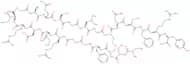
CAS:Please enquire for more information about Acetyl-Amylin (8-37) (mouse, rat) including the price, delivery time and more detailed product information at the technical inquiry form on this pageFormula:C142H229N43O44Purity:Min. 95%Molecular weight:3,242.6 g/molEthyl 4-methoxyphenylacetate
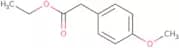
CAS:Ethyl 4-methoxyphenylacetate is a fatty acid that is synthesized by the condensation of aniline and pyrrole. It has been shown to inhibit the growth of bacteria, such as Salmonella typhi and Staphylococcus aureus, in vitro. The inhibition of bacterial growth is thought to be due to its ability to react with hydrogen fluoride, which results in the formation of reactive oxygen species and nitrogen radicals. This compound also inhibits the production of tyrosinase in human skin cells, which may be beneficial for individuals with acne. Ethyl 4-methoxyphenylacetate has been shown to be safe for use in clinical trials.Formula:C11H14O3Purity:Min. 95%Color and Shape:Clear LiquidMolecular weight:194.23 g/mol(D-Ala2,D-Leu5)-Enkephalin
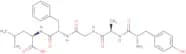
CAS:Enkephalin is a peptide belonging to the group of opioid drugs. It is a neurotransmitter that binds to kappa-opioid receptors and μ-opioid receptors. Enkephalin has been shown to inhibit voltage-dependent calcium channels and mitochondrial membrane potential in neurons, which leads to neuronal death. This drug also inhibits the production of cyclic guanine monophosphate (cGMP) by inhibiting guanine nucleotide-binding proteins at the plasma membrane, leading to a decrease in the synthesis of proteins and DNA. The dextran sulfate test can be used to measure enkephalin activity by precipitating it from solution with sodium sulfate. Additionally, this drug can be used as a p-gp inhibitor for the treatment of cancer cells.Formula:C29H39N5O7Purity:Min. 95%Molecular weight:569.65 g/molFmoc-L-alpha-aminobutyric acid
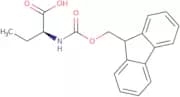
CAS:Fmoc-L-alpha-aminobutyric acid is a synthetic amino acid that is used as a linker in solid-phase peptide synthesis. It is also used to synthesize analogs of the serine protease NS3, which are postulated to inhibit hepatitis C virus replication by preventing the release of viral RNA from infected cells. Fmoc-L-alpha-aminobutyric acid has been shown to have anti-viral activity against the influenza virus and HIV.Formula:C19H19NO4Purity:Min. 98 Area-%Color and Shape:PowderMolecular weight:325.36 g/mol4-(4-Phenylbutoxy)benzoic acid
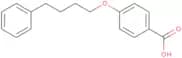
CAS:4-(4-Phenylbutoxy)benzoic acid is an organic compound that is produced by the reaction of 4-hydroxybenzoic acid with a Grignard reagent. The 4-hydroxybenzoic acid reacts with magnesium to form magnesium chloride and p-hydroxybenzoic acid, which then reacts with a Grignard reagent to form the desired product. This compound has been used in wastewater treatment and as an intermediate in the synthesis of dyes, perfumes, and pharmaceuticals. 4-(4-Phenylbutoxy)benzoic acid has also been used as a starting material for synthesizing other compounds such as chlorobenzene and p-hydroxybenzoic acid.
Formula:C17H18O3Purity:Min. 95%Molecular weight:270.32 g/mol