Amino Acids (AA)
Subcategories of "Amino Acids (AA)"
- Amino Acid Derivatives(4,017 products)
- Amino Acid and Amino Acid Related Compounds(3,491 products)
- Amino Acids with Oxygen or Sulphur(168 products)
- Boc- Amino Acids(351 products)
- Fmoc Amino Acids(1,710 products)
Found 38385 products of "Amino Acids (AA)"
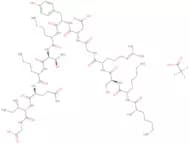
Axltide trifluoroacetate salt
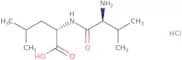
CAS:Please enquire for more information about Axltide trifluoroacetate salt including the price, delivery time and more detailed product information at the technical inquiry form on this pageFormula:C63H107N19O20S2Purity:Min. 95%Molecular weight:1,514.77 g/molH-Val-Leu-OH·HCl
CAS:H-Val-Leu-OH·HCl is a hydrolytic cleavage product of the covalent adduct of valproic acid and HCl. It is an acidic compound that can be produced by hydrolysis or by exposure to alcohols. This compound is also known as ethylene glycol monobutyl ether, which is formed when ethylene reacts with butanol. H-Val-Leu-OH·HCl has been shown to cause termination in animal experiments and has been detected in humans following alcohol exposure. It also has some toxic effects on animals such as liver damage, kidney damage, and death.Formula:C11H22N2O3·HClPurity:Min. 95%Molecular weight:266.76 g/mol4-Fluoromethyl-alpha-methylbenzyl alcohol
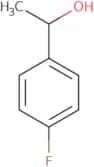
CAS:4-Fluoromethyl-alpha-methylbenzyl alcohol is a nonclassical molecule that has been synthesized. This molecule has been modeled computationally and the results indicate that it exhibits a planar geometry with a diastereomeric ratio of 1:1. The theoretical calculations show that the reaction of 4-fluoromethyl-alpha-methylbenzyl alcohol with water is exothermic, which would result in the formation of an intermediate hydroxide ion. Kinetic studies have shown that this molecule can undergo transfer reactions and dehydrogenation reactions, both of which are possible mechanisms for its reactivity.
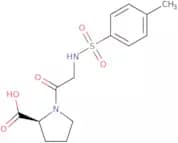
Formula:C8H9FOPurity:Min. 95%Molecular weight:140.15 g/molTos-Gly-Pro-OH
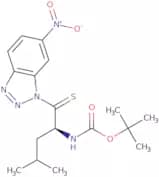
CAS:Tos-Gly-Pro-OH is a fluorescent histone deacetylase (HDAC) inhibitor. It has been validated as a competitive inhibitor of HDACs by using a fluorescence assay to detect the deacetylated form of 7-amino-4-methylcoumarin. Tos-Gly-Pro-OH is used in the treatment of malignant tumors, such as leukemia and lymphoma, by inhibiting HDACs that are responsible for cellular proliferation. In addition, Tos-Gly-Pro-OH may be useful in the treatment of diseases caused by bacterial infection because it inhibits bacterial HDACs that are responsible for protein synthesis and chemotaxis. This drug also inhibits trypsin activity and can be used as an alternative to nonisotopic solvents for peptide synthesis.Formula:C14H18N2O5SPurity:Min. 95%Molecular weight:326.37 g/molBoc-Thionoleu-1-(6-nitro)benzotriazolide
CAS:Please enquire for more information about Boc-Thionoleu-1-(6-nitro)benzotriazolide including the price, delivery time and more detailed product information at the technical inquiry form on this pageFormula:C17H23N5O4SPurity:Min. 95%Molecular weight:393.46 g/molCholecystokinin Octapeptide (1-2) (desulfated)
CAS:Cholecystokinin octapeptide (1-2) (desulfated) H-Asp-Tyr-OH is a peptide that has been found to have hypotensive properties. It is an agonist of the CCK receptor and has been shown to be effective in lowering blood pressure. Cholecystokinin octapeptide (1-2) (desulfated) H-Asp-Tyr-OH stabilizes membranes, which may account for its ability to reduce the permeability of erythrocyte membranes. This peptide also interacts with histidine residues in striate muscle, which may account for its ability to relax smooth muscle. Cholecystokinin octapeptide (1-2) (desulfated) H-Asp-Tyr-OH is orally administered or can be hydrolyzed into amino acids in the gastrointestinal tract.Formula:C13H16N2O6Purity:Min. 95%Molecular weight:296.28 g/molpTH (1-38) (human)
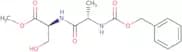
CAS:Please enquire for more information about pTH (1-38) (human) including the price, delivery time and more detailed product information at the technical inquiry form on this pageFormula:C197H319N59O55S2Purity:Min. 95%Molecular weight:4,458.14 g/molZ-Ala-Ser-OMe
CAS:Z-Ala-Ser-OMe is a peptide that is produced by catalyzed amide bond formation between the carboxylic acid group of Z-Ala and the amino group of Ser. This peptide has been shown to have a molecular weight of 564.2 and a melting point of 139°C. The peptides are coupled by d-amino acid residues to form chains, which are then esterified with acyl groups to yield Z-Ala-Ser-OMe.Formula:C15H20N2O6Purity:Min. 95%Molecular weight:324.33 g/molH-Ala-Pro-pNA hydrochloride salt
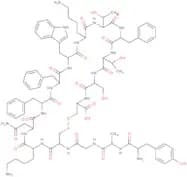
CAS:H-Ala-Pro-pNA hydrochloride salt is a protease inhibitor that is used as a therapeutic agent for the treatment of hepatitis C. It has been shown to inhibit the activity of serine proteases, such as trypsin and chymotrypsin, by binding to their active site. H-Ala-Pro-pNA hydrochloride salt also inhibits the activity of DPPIV (dipeptidyl peptidase IV), which is an enzyme that cleaves the third amino acid from peptides in some blood cells. H-Ala-Pro-pNA hydrochloride salt has been shown to be effective in preventing diabetic nephropathy in animal models by inhibiting DPPIV activity. H-Ala-Pro-pNA hydrochloride salt can be used to treat chronic hepatitis B and C infections. It binds to virus particles and prevents them from attaching themselves to host cells, thus preventing viral replication.Formula:C14H18N4O4Purity:Min. 95%Molecular weight:306.32 g/molTyr-Somatostatin-14
CAS:Please enquire for more information about Tyr-Somatostatin-14 including the price, delivery time and more detailed product information at the technical inquiry form on this pageFormula:C85H113N19O21S2Purity:Min. 95%Molecular weight:1,801.05 g/molAcetyl-(D-Lys2, Sar 3)-Melanotropin-Potentiating Factor acetate salt
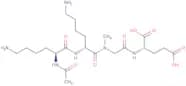
CAS:Acetyl-(D-Lys2, Sar 3)-Melanotropin-Potentiating Factor acetate salt Ac-Lys-D-Lys-Sar-Glu-OH acetate salt is synthesized from a tetrapeptide. It has been shown to be neurotrophic and to stimulate the uptake of dopamine. Acetyl-(D-Lys2, Sar 3)-Melanotropin-Potentiating Factor acetate salt Ac-Lys-D-Lys-Sar-Glu-OH acetate salt has also been shown to be an analog of the growth factor nerve growth factor (NGF) and have similar effects on muscle tissue.Formula:C22H40N6O8Purity:Min. 95%Molecular weight:516.59 g/molVEGFR-KDR/Flk-1 Antagonist Peptide trifluoroacetate salt
CAS:Please enquire for more information about VEGFR-KDR/Flk-1 Antagonist Peptide trifluoroacetate salt including the price, delivery time and more detailed product information at the technical inquiry form on this pageFormula:C77H99N23O18SPurity:Min. 95%Molecular weight:1,666.82 g/molCyclo(-Ala-Gln)
CAS:Cyclo(-Ala-Gln) is a cyclic dipeptide that is used in the bioscience industry for analytical purposes. It can be analyzed using liquid chromatography mass spectrometry. Cyclo(-Ala-Gln) is a bioactive molecule that has been shown to inhibit the growth of bacteria, such as Staphylococcus aureus and E. coli. It also has an effect on cancer cells and has been shown to have anti-inflammatory properties.
Formula:C8H13N3O3Purity:Min. 95%Molecular weight:199.21 g/mol(Des-Gly10,D-Arg6,Pro-NHEt 9)-LHRH II (chicken)
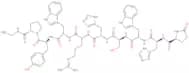
CAS:Please enquire for more information about (Des-Gly10,D-Arg6,Pro-NHEt 9)-LHRH II (chicken) including the price, delivery time and more detailed product information at the technical inquiry form on this pageFormula:C64H79N19O12Purity:Min. 95%Molecular weight:1,306.43 g/molH-Thr(tBu)-pNA
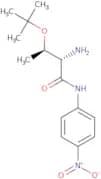
CAS:Please enquire for more information about H-Thr(tBu)-pNA including the price, delivery time and more detailed product information at the technical inquiry form on this pageFormula:C14H21N3O4Purity:Min. 95%Molecular weight:295.33 g/mol1-(4-Hydroxy-3-methoxyphenyl)-2-nitroethene
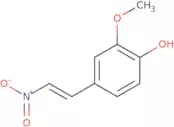
CAS:1-(4-Hydroxy-3-methoxyphenyl)-2-nitroethene is an experimental molecule that was not previously known to exist. The intramolecular reaction of 1,4-dihydroxynitrobenzene and glyoxylic acid yields the product. It is a phenolic compound with biological activity, which has been shown to inhibit glycosidases and alkaloids.Formula:C9H9NO4Purity:Min. 95%Color and Shape:SolidMolecular weight:195.17 g/molSomatostatin-14 (reduced)
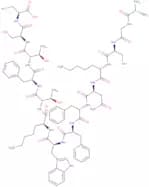
CAS:Somatostatin-14 (reduced) H-Ala-Gly-Cys-Lys-Asn-Phe-Phe-Trp-Lys-Thr-Phe-Thr-Ser-Cys is a synthetic peptide that is an adjuvant for vaccines. It induces a biphasic response by increasing the humoral immune response and decreasing the cellular immune response. Somatostatin has been shown to decrease the severity of symptoms in patients with psychiatric disorders and can be used as a long term treatment for these conditions. Somatostatin also has effects on the pancreas, such as inhibiting insulin release, leading to decreased blood glucose levels. Its disulfide bond in its structure may be important for its activity and stability.Formula:C76H106N18O19S2Purity:Min. 95%Molecular weight:1,639.9 g/mol(D-Leu6,Pro-NHEt 9)-LHRH (4-9)
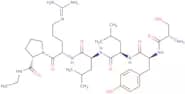
CAS:Please enquire for more information about (D-Leu6,Pro-NHEt 9)-LHRH (4-9) including the price, delivery time and more detailed product information at the technical inquiry form on this pageFormula:C37H62N10O8Purity:Min. 95%Molecular weight:774.95 g/molH-Arg-Arg-OH acetate salt
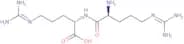
CAS:H-Arg-Arg-OH acetate salt is a protease inhibitor. It has been shown to inhibit the activity of serine proteases, such as trypsin and chymotrypsin, in vitro. H-Arg-Arg-OH acetate salt binds to the active site of the enzyme and prevents substrate binding. The acidity of the environment where this inhibitor is active can be used to control its activity. At acidic pH, H-Arg-Arg-OH acetate salt is more potent than at neutral pH. When it comes into contact with a protein substrate, H-Arg-Arg-OH acetate salt will bind to a hydroxyl group on the protein molecule and prevent it from hydrolyzing its substrate. This process can be reversed by adding an alkaline buffer to increase the pH of the system or by adding an acid buffer to decrease it.br>br> H-Arg-Arg-OH acetate salt is found in cyanobFormula:C12H26N8O3Purity:Min. 95%Molecular weight:330.39 g/molBz-Pro-Phe-Arg-pNA·HCl
CAS:Bz-Pro-Phe-Arg-pNA·HCl is a synthetic peptide that has been shown to be a specific marker for diagnosis of thrombocytopenia. The peptide is cleaved by proteases, including serine proteases and trypsin, and the resulting fragments are assayed in biochemical tests. Bz-Pro-Phe-Arg-pNA·HCl is synthesized by solid phase peptide synthesis with an N-terminal amide bond. This synthetic peptide can be used as a substrate for various serine proteases and trypsin to generate diagnostic fragments. Bz-Pro-Phe-Arg-pNA·HCl also specifically binds to wild type erythrocytes and hemocytes, which are cells that produce blood cells.Formula:C33H38N8O6·HClPurity:Min. 95%Molecular weight:679.17 g/mol