Amino Acids (AA)
Amino acids (AAs) are the fundamental building blocks of proteins, playing a crucial role in various biological processes. These organic compounds are essential for protein synthesis, metabolic pathways, and cell signaling. In this category, you will find a comprehensive range of amino acids, including essential, non-essential, and modified forms, which are vital for research in biochemistry, molecular biology, and nutritional sciences. At CymitQuimica, we provide high-quality amino acids to support your research and development needs, ensuring accuracy and reliability in your experimental outcomes.
Subcategories of "Amino Acids (AA)"
- Amino Acid Derivatives(4,015 products)
- Amino Acid and Amino Acid Related Compounds(3,490 products)
- Amino Acids with Oxygen or Sulphur(168 products)
- Boc- Amino Acids(351 products)
- Fmoc Amino Acids(1,710 products)
Found 38368 products of "Amino Acids (AA)"
Sort by
Purity (%)
0
100
|
0
|
50
|
90
|
95
|
100
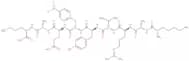
Neuropeptide Y (free acid) (human, rat) trifluoroacetate salt
CAS:Please enquire for more information about Neuropeptide Y (free acid) (human, rat) trifluoroacetate salt including the price, delivery time and more detailed product information at the technical inquiry form on this pageFormula:C189H284N54O58SPurity:Min. 95%Molecular weight:4,272.67 g/molTyr-Uroguanylin (mouse, rat)
Please enquire for more information about Tyr-Uroguanylin (mouse, rat) including the price, delivery time and more detailed product information at the technical inquiry form on this pageFormula:C69H105N17O27S4Purity:Min. 95%Molecular weight:1,732.93 g/mol[5-(5,6-Dimethyl-1,3-benzoxazol-2-yl)-2-methylphenyl]amine
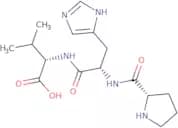
CAS:[5-(5,6-Dimethyl-1,3-benzoxazol-2-yl)-2-methylphenyl]amine is a high quality chemical used in the research and development of new drugs. It is useful as a building block or intermediate for complex compounds, such as pharmaceuticals, agrochemicals, and dyes. It is also used as an intermediate to produce other chemicals with antimicrobial properties. This compound can be used in the production of many different types of products.Formula:C16H16N2OPurity:Min. 95%Color and Shape:Beige PowderMolecular weight:252.31 g/molH-Pro-His-Val-OH
CAS:Please enquire for more information about H-Pro-His-Val-OH including the price, delivery time and more detailed product information at the technical inquiry form on this page
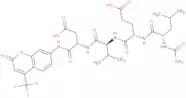
Formula:C16H25N5O4Purity:Min. 95%Molecular weight:351.4 g/molAc-Leu-Glu-Val-Asp-AFC
CAS:Please enquire for more information about Ac-Leu-Glu-Val-Asp-AFC including the price, delivery time and more detailed product information at the technical inquiry form on this pageFormula:C32H40F3N5O11Purity:Min. 95%Molecular weight:727.68 g/molH-beta-Cyclohexyl-Ala-OMe·HCl
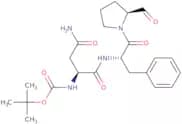
CAS:Please enquire for more information about H-beta-Cyclohexyl-Ala-OMe·HCl including the price, delivery time and more detailed product information at the technical inquiry form on this pageFormula:C10H19NO2·HClPurity:Min. 95%Molecular weight:221.72 g/molBoc-Asn-Phe-Pro-aldehyde
CAS:Boc-Asn-Phe-Pro-aldehyde is a cytosolic proteolytic target enzyme that hydrolyzes peptides with an aliphatic amino acid residue at the carboxy terminus. It is localized in the cytoplasm, where it is activated by serine proteases. Boc-Asn-Phe-Pro-aldehyde has been shown to be effective in cell culture and supernatant. This enzyme can also be used to demonstrate the presence of a particular peptide by releasing a reactive chloride, which can be detected using tetrazolium chloride. This protease has been shown to exacerbate inflammation when administered in vivo.Formula:C23H32N4O6Purity:Min. 95%Molecular weight:460.52 g/molH-Leu-Pro-Pro-OH
CAS:H-Leu-Pro-Pro-OH is a synthetic tripeptide that has been shown to increase endothelial function in humans. The peptide is thought to work by increasing nitric oxide production and by inhibiting angiotensin II production. H-Leu-Pro-Pro-OH also reportedly increases uptake of glucose in the intestine and decreases blood pressure. In placebo-controlled, crossover studies, H-Leu-Pro-Pro-OH increased plasma concentrations of angiotensin I and II, suggesting that it may be a potent inhibitor of angiotensin converting enzyme (ACE).Formula:C16H27N3O4Purity:Min. 95%Molecular weight:325.4 g/mol(D-Lys6)-LHRH (free acid) acetate salt
CAS:Controlled ProductPlease enquire for more information about (D-Lys6)-LHRH (free acid) acetate salt including the price, delivery time and more detailed product information at the technical inquiry form on this pageFormula:C59H83N17O14Purity:Min. 95%Molecular weight:1,254.4 g/molH-Gly-DL-Thr-OH
CAS:H-Gly-DL-Thr-OH is an organic compound that is a component of natural phenolic compounds. This compound is generated by the pyrolysis of biomass, and it has been shown to have selective properties for GC-MS analysis. H-Gly-DL-Thr-OH can be used as a sustainable chemical component in the production of biofuels and other chemicals. The optimal conditions for this synthesis are potassium hydroxide, temperature, pressure, and irradiation time. The separation parameters for H-Gly-DL-Thr-OH are based on its GC retention time and mass spectra.
Formula:C6H12N2O4Purity:Min. 95%Molecular weight:176.17 g/molTRH (free acid) Pyr-His-Pro-OH
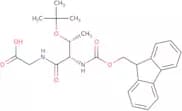
CAS:TRH is a hormone that regulates the metabolic rate and stimulates the pancreas to release insulin. It also has been shown to be involved in regulating locomotor activity and is used in clinical trials for its potential therapeutic effects on Alzheimer’s disease. TRH binds to receptors on gland cells where it activates adenylate cyclase and increases intracellular levels of cAMP, which leads to an increase in cytosolic calcium concentration. TRH also binds to receptors on nerve cells and causes these cells to release neurotransmitters such as dopamine and serotonin. TRH is synthesized by the thyroid gland, pituitary gland, hypothalamus, or other tissues in response to stress or illness. TRH can be administered orally or injected intravenously; it is not active when taken orally because it is broken down by digestive enzymes before reaching the systemic circulation.Formula:C16H21N5O5Purity:Min. 95%Molecular weight:363.37 g/molFmoc-Thr(tBu)-Gly-OH
CAS:Please enquire for more information about Fmoc-Thr(tBu)-Gly-OH including the price, delivery time and more detailed product information at the technical inquiry form on this pageFormula:C25H30N2O6Purity:Min. 95%Molecular weight:454.52 g/molMca-(Asn670,Leu671)-Amyloid beta/A4 Protein Precursor770 (667-674)-Dap (Dnp) ammonium acetate salt
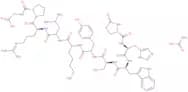
CAS:Please enquire for more information about Mca-(Asn670,Leu671)-Amyloid beta/A4 Protein Precursor770 (667-674)-Dap (Dnp) ammonium acetate salt including the price, delivery time and more detailed product information at the technical inquiry form on this pageFormula:C56H73N13O26Purity:Min. 95%Molecular weight:1,344.25 g/mol(Des-Gly10,D-Leu6,[13C6]Leu7,Pro-NHEt 9)-LHRH trifluoroacetate salt
Please enquire for more information about (Des-Gly10,D-Leu6,[13C6]Leu7,Pro-NHEt 9)-LHRH trifluoroacetate salt including the price, delivery time and more detailed product information at the technical inquiry form on this pagePurity:Min. 95%1,9-Dimethyl-methylene blue zinc chloride
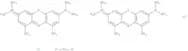
CAS:1,9-Dimethyl-methylene blue zinc chloride double salt is a fluorescent dye that has been used in the study of hyaluronic acid and mesenchymal stem cells. The compound absorbs light at a wavelength of 580 nm, which is the same as the absorption wavelength for hyaluronic acid and mesenchymal stem cells. 1,9-Dimethyl-methylene blue zinc chloride double salt can be used to measure the amount of these compounds in tissues. This dye also shows sensitivity to artifacts such as hemolysis and lipemia, making it useful for research purposes.Formula:(C18H22ClN3S)2•ZnCl2Purity:Min. 95%Color and Shape:PowderMolecular weight:832.11 g/mol1-Boc-pyrrolidine-2,4-dione
CAS:Please enquire for more information about 1-Boc-pyrrolidine-2,4-dione including the price, delivery time and more detailed product information at the technical inquiry form on this pageFormula:C9H13NO4Purity:Min. 95%Molecular weight:199.2 g/molH-Gly-Trp-Gly-Gly-OH
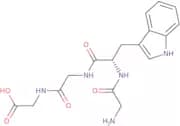
CAS:Please enquire for more information about H-Gly-Trp-Gly-Gly-OH including the price, delivery time and more detailed product information at the technical inquiry form on this pageFormula:C17H21N5O5Purity:Min. 95%Molecular weight:375.38 g/molN-Fmoc-L-gamma-carboxyglutamic acid gamma,gamma-di-t-butyl ester
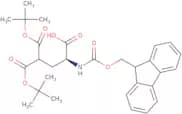
CAS:Please enquire for more information about N-Fmoc-L-gamma-carboxyglutamic acid gamma,gamma-di-t-butyl ester including the price, delivery time and more detailed product information at the technical inquiry form on this pageFormula:C29H35NO8Purity:Min. 95%Molecular weight:525.59 g/mol(H-Cys-allyl ester)2·2 p-tosylate (Disulfide bond)
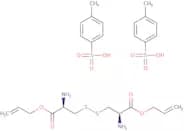
CAS:Please enquire for more information about (H-Cys-allyl ester)2·2 p-tosylate (Disulfide bond) including the price, delivery time and more detailed product information at the technical inquiry form on this pageFormula:C12H20N2O4S2·2C7H8O3SPurity:Min. 95%Molecular weight:664.84 g/molHIV Protease Substrate VII
CAS:Please enquire for more information about HIV Protease Substrate VII including the price, delivery time and more detailed product information at the technical inquiry form on this pageFormula:C52H81N15O14Purity:Min. 95%Molecular weight:1,140.29 g/mol

![[5-(5,6-Dimethyl-1,3-benzoxazol-2-yl)-2-methylphenyl]amine](/_next/image/?url=https%3A%2Fstatic.cymitquimica.com%2Fproducts%2F3D%2Fthumb-webp%2FFD134975.webp&w=3840&q=75)




![(Des-Gly10,D-Leu6,[13C6]Leu7,Pro-NHEt 9)-LHRH trifluoroacetate salt](/_next/image/?url=https%3A%2Fstatic.cymitquimica.com%2Fproducts%2F3D%2Fthumb-webp%2FFD109775.webp&w=3840&q=75)