Amino Acids (AA)
Subcategories of "Amino Acids (AA)"
- Amino Acid Derivatives(4,012 products)
- Amino Acid and Amino Acid Related Compounds(3,490 products)
- Amino Acids with Oxygen or Sulphur(168 products)
- Boc- Amino Acids(351 products)
- Fmoc Amino Acids(1,710 products)
Found 38366 products of "Amino Acids (AA)"
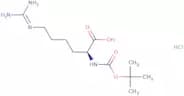
Boc-Homoarg-OH·HCl
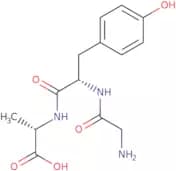
CAS:Please enquire for more information about Boc-Homoarg-OH·HCl including the price, delivery time and more detailed product information at the technical inquiry form on this pageFormula:C12H24N4O4·HClPurity:Min. 95%Molecular weight:324.8 g/molH-Gly-Tyr-Ala-OH
CAS:H-Gly-Tyr-Ala-OH is a hydrophobic, reactive molecule that has been shown to be unstable in the presence of light and air. This compound is synthesized by the sequence: Gly-Tyr-Ala. It has been found to be an exciplex with the photooxidation product, 2-aminoacetophenone. The molecular weight of H-Gly-Tyr-Ala-OH is constant and can be determined by electrospray mass spectrometry. This molecule has shown to have a strong interaction with ovary tissue and can also produce carboxylate ions in solution.
Formula:C14H19N3O5Purity:Min. 95%Molecular weight:309.32 g/molFmoc-Asp(OtBu)-Wang resin (200-400 mesh)
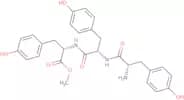
Please enquire for more information about Fmoc-Asp(OtBu)-Wang resin (200-400 mesh) including the price, delivery time and more detailed product information at the technical inquiry form on this pagePurity:Min. 95%H-Tyr-Tyr-Tyr-OMe
CAS:H-Tyr-Tyr-Tyr-OMe is a chiral, fluorinated, enantiomeric molecule that is synthesized by the reaction of an aryloxybenzene with tetrahydropyran and chlorine. This product has been used in asymmetric synthesis as a building block for pyrazole derivatives. It has also been used to produce alcohols and dialkylamino compounds.
Formula:C28H31N3O7Purity:Min. 95%Molecular weight:521.56 g/mol(His(1-Me)2)-LHRH trifluoroacetate salt
CAS:Please enquire for more information about (His(1-Me)2)-LHRH trifluoroacetate salt including the price, delivery time and more detailed product information at the technical inquiry form on this pageFormula:C56H77N17O13Purity:Min. 95%Molecular weight:1,196.32 g/molMeOSuc-Ala-Ala-Pro-Val-AMC
CAS:MeOSuc-Ala-Ala-Pro-Val-AMC is a serine protease inhibitor that has been shown to inhibit neutrophil elastase and human trypsin. It has been shown to be effective in the treatment of inflammatory diseases such as hepatitis, colitis, and Crohn's disease. MeOSuc-Ala-Ala-Pro-Val-AMC also inhibits coagulation and can be used as an anticoagulant. This drug is one of the few drugs that have been shown to inhibit both trypsin and elastase with equal potency.Formula:C31H41N5O9Purity:Min. 95%Molecular weight:627.69 g/mol(Leu31,Pro34)-Neuropeptide Y (human, rat) trifluoroacetate salt
CAS:Please enquire for more information about (Leu31,Pro34)-Neuropeptide Y (human, rat) trifluoroacetate salt including the price, delivery time and more detailed product information at the technical inquiry form on this page
Formula:C189H284N54O56SPurity:Min. 95%Molecular weight:4,240.67 g/molExendin-4 (3-39)
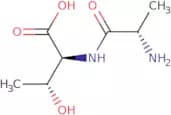
CAS:Please enquire for more information about Exendin-4 (3-39) including the price, delivery time and more detailed product information at the technical inquiry form on this pageFormula:C176H272N46O58SPurity:Min. 95%Color and Shape:PowderMolecular weight:3,992.38 g/molH-Ala-Thr-OH
CAS:H-Ala-Thr-OH is a dipeptide that is used as a stabilizer for the active form of methionine in some nutritional supplements. H-Ala-Thr-OH is synthesized by the hydroxylation of DL-methionine, which is then converted to H-Ala-Thr-OH by an aminopeptidase. The amino acid sequence of H-Ala-Thr-OH resembles that of l-threonine, but lacks an α carbon atom and an amino group on the carboxylic acid end. This dipeptide has been shown to be auxotrophic for both lysine and threonine when expressed in Escherichia coli.Formula:C7H14N2O4Purity:Min. 95%Molecular weight:190.2 g/molBoc-beta-cyclopropyl-Ala-OH·DCHA
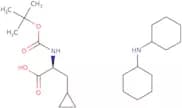
CAS:Controlled ProductPlease enquire for more information about Boc-beta-cyclopropyl-Ala-OH·DCHA including the price, delivery time and more detailed product information at the technical inquiry form on this pageFormula:C11H19NO4·C12H23NPurity:Min. 95%Molecular weight:410.59 g/molFmoc-Orn (Boc)-Wang resin (200-400 mesh)
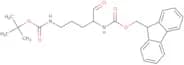
Please enquire for more information about Fmoc-Orn (Boc)-Wang resin (200-400 mesh) including the price, delivery time and more detailed product information at the technical inquiry form on this pagePurity:Min. 95%Amylin (8-37) (human) trifluoroacetate salt
CAS:Please enquire for more information about Amylin (8-37) (human) trifluoroacetate salt including the price, delivery time and more detailed product information at the technical inquiry form on this pageFormula:C138H216N42O45Purity:Min. 95%Molecular weight:3,183.45 g/mol5-Phenylisoxazole-3-carboxylic acid
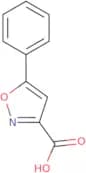
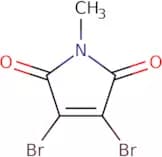
CAS:5-Phenylisoxazole-3-carboxylic acid is a phenoxy compound that has been shown to inhibit the growth of tuberculosis bacteria. This drug binds to the postsynaptic potential in the cell membrane and inhibits the effector proteins from interacting with the receptor, preventing neurotransmitter release. The molecular modeling study showed that 5-Phenylisoxazole-3-carboxylic acid interacts with ethyl esters and rifampin, which inhibits xanthine oxidase. Xanthine oxidase inhibitors are used as a treatment for gout and hyperuricemia. 5-Phenylisoxazole-3-carboxylic acid also has fluorimetric properties, which can be used to measure its concentration in biological samples such as urine or plasma. Nitro groups in this drug make it susceptible to oxidation by nitric oxide, which can be monitored using nmr spectra.Formula:C10H7NO3Purity:Min. 95%Molecular weight:189.17 g/mol2,3-Dibromo-N-methylmaleimide
CAS:2,3-Dibromo-N-methylmaleimide is a synthetic compound that can be used as an anticancer agent. It inhibits the proliferation of endothelial cells and induces apoptosis in cancer cells. The molecular structure of 2,3-Dibromo-N-methylmaleimide is similar to bisindolylmaleimides, which are naturally occurring compounds found in plants. 2,3-Dibromo-N-methylmaleimide is synthesized by cross coupling with magnesium and hydroxyl group using a vibrational spectroscopy technique called nmr spectra. This molecule also has amine groups that can be used for drug conjugation or activation.Formula:C5H3Br2NO2Purity:Min. 95%Molecular weight:268.89 g/molFmoc-Lys(N3)-OH
CAS:Fmoc-Lys(N3)-OH is a glutamic acid molecule with a specific lysine and histidine residue. It has been shown to be cytotoxic in vitro, specifically targeting cancer cells. Fmoc-Lys(N3)-OH can be conjugated to vancomycin or other molecules that are not normally cell permeable for the treatment of neurodegenerative diseases. The divalent nature of this molecule allows it to cross the blood-brain barrier. Solid phase synthesis is used to produce this compound, which is then purified by chromatography and characterized by mass spectrometry.Formula:C21H22N4O4Purity:Min. 95%Molecular weight:394.42 g/molH-Asp-Gly-OH
CAS:H-Asp-Gly-OH is a peptide hormone that belongs to the group of hydroxylated aspartic acid. This peptide hormone has been shown to be a lymphocyte transformation factor in vitro and stimulates the production of collagen and other proteins. It has also been shown to have anticarcinogenic effects on bone cancer cells, which may be due to its ability to induce apoptosis. H-Asp-Gly-OH has a neutral pH and forms stable complexes with metal ions, such as copper and zinc, which are important for a variety of biological functions.
Formula:C6H10N2O5Purity:Min. 95 Area-%Color and Shape:PowderMolecular weight:190.15 g/mol1-O-Octadecyl-sn-glycerol
CAS:1-O-Octadecyl-sn-glycerol (1ODG) is a dietary lipid that is absorbed by the gastrointestinal tract and transported to the liver. It is used in cell culture as a substitute for lipids that are not available or cannot be used for experiments. 1ODG is also found in human lung and colon tissues, where it may act as a growth factor. 1ODG has been shown to inhibit herpes simplex virus type I (HSV-1) replication in cultured cells by increasing intracellular calcium levels and inhibiting viral DNA synthesis. It can also increase fatty acid synthesis and induce cellular proliferation of tissue culture cells, such as lung fibroblasts.Formula:C21H44O3Purity:Min. 95%Molecular weight:344.57 g/molZ-Gln(Mtt)-OH
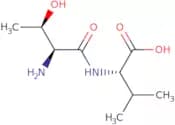
CAS:Please enquire for more information about Z-Gln(Mtt)-OH including the price, delivery time and more detailed product information at the technical inquiry form on this pageFormula:C33H32N2O5Purity:Min. 95%Molecular weight:536.62 g/molH-Thr-Val-OH
CAS:The peptidomimetic H-Thr-Val-OH is a synthetic molecule that is hydrophobic. It has been shown to activate epidermal growth factor (EGF) through the transduction of a signal from outside the cell to inside the cell. This activation of EGF leads to increased levels of other molecules, such as cytosolic amide and hydrogen bond, which are important for cell growth. The amino acid sequence of H-Thr-Val-OH resembles that of EGF, allowing it to bind to the same receptor site on cells. This binding activates signalling pathways that lead to increased levels of proteins involved in cell proliferation, migration, and differentiation.Formula:C9H18N2O4Purity:Min. 95%Molecular weight:218.25 g/mol(Lys3)-Bombesin
CAS:Lys3-Bombesin is a bifunctional peptide that binds to the bombesin receptor and is used in cancer therapy. It is a radiotracer, which can be used for diagnostic imaging and diagnosis of tumors. Lys3-Bombesin has a high affinity for the bombesin receptor subtype B, which is expressed by prostate cancer cells. The peptide can be conjugated to a small molecule, such as a radioactive isotope, and used to deliver it specifically to the tumor site. This compound has been shown to inhibit the growth of human prostate cancer cells in vitro.Formula:C71H110N22O18SPurity:Min. 95%Molecular weight:1,591.84 g/mol