Amino Acids (AA)
Amino acids (AAs) are the fundamental building blocks of proteins, playing a crucial role in various biological processes. These organic compounds are essential for protein synthesis, metabolic pathways, and cell signaling. In this category, you will find a comprehensive range of amino acids, including essential, non-essential, and modified forms, which are vital for research in biochemistry, molecular biology, and nutritional sciences. At CymitQuimica, we provide high-quality amino acids to support your research and development needs, ensuring accuracy and reliability in your experimental outcomes.
Subcategories of "Amino Acids (AA)"
- Amino Acid Derivatives(3,955 products)
- Amino Acid and Amino Acid Related Compounds(3,466 products)
- Amino Acids with Oxygen or Sulphur(168 products)
- Boc- Amino Acids(351 products)
- Fmoc Amino Acids(1,710 products)
Found 38249 products of "Amino Acids (AA)"
Sort by
Purity (%)
0
100
|
0
|
50
|
90
|
95
|
100
5-Methyl-4,5,6,7-tetrahydrothiazolo[5,4-c]pyridine-2-carboxylic Acid Hydrochloride
CAS:Controlled Product<p>Stability Hygroscopic<br>Applications 5-Methyl-4,5,6,7-tetrahydrothiazolo[5,4-c]pyridine-2-carboxylic Acid Hydrochloride is used as a reagent in the synthesis of N-(2-acylaminobenzyl or 2-acylaminoheterocyclylmethyl)thiophene-2-carboxamide derivatives as antithrombotics. It is also used as a reagent in the synthesis of diamide derivatives as FXa inhibitors. 5-Methyl-4,5,6,7-tetrahydrothiazolo[5,4-c]pyridine-2-carboxylic Acid Hydrochloride is an intermediate for Edoxaban (E555520).<br>References Mochizuki, A., et al.: Jpn. Kokai Tokkyo Koho. JP 2010120852 A 20100603. Jun 3, 2010; Mochizuki, A., et al.: PCT Int. Appl. WO 2008123017 A1 20081016. Oct 16, 2008<br></p>Formula:C8H11ClN2O2SColor and Shape:Light BrownMolecular weight:234.7β-Alanine-2,2,3,3-D4
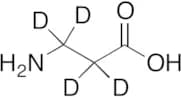
CAS:Controlled Product<p>Applications Isotope labelled β-Alanine is a naturally occurring beta amino acid. β-Alanine is formed in vivo by the degradation of dihydrouracil (D449990) and carnosine. β-Alanine is also the rate-limiting precursor of carnosine, as a result supplementation with β-alanine increases the concentration of carnosine in muscles.<br></p>Formula:C3D4H3NO2Color and Shape:NeatMolecular weight:93.122-Methoxypropanol
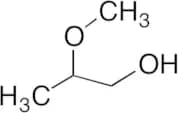
CAS:Controlled Product<p>Applications 2-Methoxypropanol is a susbtance used in the relative parameter sensitivity in prenatal toxicity studies with substances classified as developmental toxicants. Also applied in the studies for the analysis of volatile organic compounds in cigarette packaging materials by SPME-GC/MS.<br> Not a dangerous good if item is equal to or less than 1g/ml and there is less than 100g/ml in the package<br>References Rorije, E., et al.: Reprod. Toxicol., 34, 284 (2012); Hong, W, et al.: Fujian Fenxi Ceshi, 19, 24 (2010)<br></p>Formula:C4H10O2Color and Shape:ColourlessMolecular weight:90.12Ethyl trans-3-Methyl-4-oxocrotonate
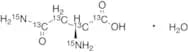
CAS:Controlled Product<p>Applications Derivative of monoenoic and trienoic analogs of Sorbic Acid with antifungal activity.<br>References Guerin, J. et al.: Annales Pharmaceutiques Francaises 44, 373 (1987)<br></p>Formula:C7H10O3Color and Shape:NeatMolecular weight:142.15L-Asparagine-13C4, 15N2 Hydrate
CAS:Controlled ProductFormula:C4H815N2O3H2OColor and Shape:NeatMolecular weight:138.0818028-benzyl-4-propanoyl-1-oxa-4,8-diazaspiro[4.5]decane-3-carboxylic acid
CAS:Purity:95.0%Molecular weight:332.3999938964844β-Methylamino-L-alanine Dihydrochloride
CAS:Controlled ProductFormula:C4H10N2O2·2(HCl)Color and Shape:NeatMolecular weight:118.13 +2(36.46)8-methyl-4-(4-methylbenzoyl)-1-oxa-4,8-diazaspiro[4.5]decane-3-carboxylic acid
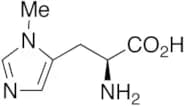
CAS:Purity:95.0%Molecular weight:318.372985839843753-N-Methyl-L-histidine
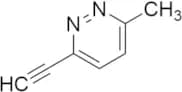
CAS:<p>Applications 3-N-Methyl-L-histidine is a potential compound to be used as a treatment with pharmacological PPARα agonists to stimulate the ubiquitin proteasome pathway and myofibrillar protein breakdown in skeletal muscle of rodents.<br>References Ringseis, R., et al.: Biochem. Biphys. Gen. Subject., 1830, 2105 (2013); Ubhi, B.K., et al.: Molec. Biosys., 8, 3125 (2012);<br></p>Formula:C7H11N3O2Color and Shape:NeatMolecular weight:169.183-Ethynyl-6-methylpyridazine
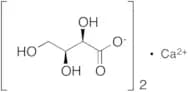
CAS:Controlled ProductFormula:C7H6N2Color and Shape:NeatMolecular weight:118.136L-Threonic Acid Calcium Salt
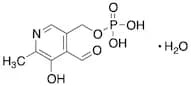
CAS:Controlled Product<p>Applications L-Threonic acid calcium salt is the salt of L-Threonic acid, a naturally occurring compound that can be found in the leaves of Pelargonium crispum. L-Threonic acid is also the degradation product of Dehydroascorbate (DHA), a metabolite of Vitamin C (A786990).<br>References Helsper, J. & Loewus, F.: Plant Phys., 69, 1365 (1982); Koch, C. & Biaglow, J.: J. Cell. Phys., 94, 299 (1978); Nielsen J., et al.: J. Agr. Food Chem., 49, 2998 (2001)<br></p>Formula:C4H7O5·CaColor and Shape:NeatMolecular weight:310.269(4-Formyl-5-hydroxy-6-methylpyridin-3-yl)methyl Dihydrogen Phosphate Hydrate
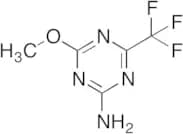
CAS:<p>Stability Air Sensitive, Moisture Sensitive<br>Applications (4-Formyl-5-hydroxy-6-methylpyridin-3-yl)methyl dihydrogen phosphate hydrate (cas# 41468-25-1) is a useful research chemical.<br></p>Formula:C8H10NO6P·H2OColor and Shape:White To Off-WhiteMolecular weight:265.164-Methoxy-6-(trifluoromethyl)-1,3,5-triazin-2-amine
CAS:<p>Applications 4-Methoxy-6-(trifluoromethyl)-1,3,5-triazin-2-amine can be used as reactant/reagent in preparation of N-phenylsulfony-N'-pyrimidinylureas as herbicides.<br>References Hamprecht, G., et al.: Ger. Offen., DE 4322726 A1 19950112 (1995)<br></p>Formula:C5H5F3N4OColor and Shape:NeatMolecular weight:194.112-Methyl Hippuric Acid
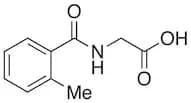
CAS:Controlled Product<p>Applications The main metabolite of o-xylene.<br>References Gregus, Z., et al.: Drug Metab. Dispos., 26, 1082 (1998), Gregus, Z., et al.: Xenobiotica, 29, 547 (1999), Gonzalez-Reche, L., et al.: Arch. Toxicol., 77, 80 (2003),<br></p>Formula:C10H11NO3Color and Shape:White To Off-WhiteMolecular weight:193.20L-(+)-2-Phenylglycine
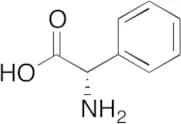
CAS:<p>Applications L-(+)-2-Phenylglycine is a derivative of Glycine (G615990), the smallest of all the amino acids, and is also used to treat schizophrenia, stroke, and benign prostatic hyperplasia. L-(+)-2-Phenylglycine is also used as an N-linked side chain of an SMTP (Stachybotrys microspora tripenyl phenols) congener, which was potent in enhancing plasminogen activation in S. microspora.<br>References Gusev, E., et al.: Cerebrovasc. Dis., 10, 49 (2000); Koide, H., et al.: J. Antibiot., 65, 91 (2012); Rosse, R., et al.: Clin. Neuropharmacol., 12, 416 (1989); Tuszynski, G., et al.: Lab. Invest., 70, 228 (1994)<br></p>Formula:C8H9NO2Color and Shape:Off White Crystalline PowderMolecular weight:151.16262-(((1S,2R,4S)-4-(DIMETHYLCARBAMOYL)-2-(5-METHYL-4,5,6,7-TETRAHYDROTHIAZOLO[5,4-C]PYRIDINE-2-CARBOXAMIDO)CYCLOHEXYL)AMINO)-2-OXOACETIC ACID
CAS:Purity:95%Molecular weight:437.5199890136719Glycyl-L-Tyrosine Dihydrate
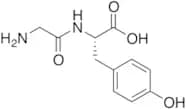
CAS:Controlled Product<p>Applications Glycyl-L-Tyrosine Dihydrate is used in process for producing N-Glycyltyrosine. Glycyl-L-Tyrosine Dihydrate is the anhydrous form of Glycyl-L-tyrosine(G720108); which is used in preparation method of high quality Aspartame and Aspartame crystallization-inducing agent.<br>References Mimura, T., et al.: Eur. Pat. Appl., (1999); Gao, Z., et al.: Faming Zhuanli Shenqing, (2019);<br></p>Formula:C11H14N2O4·2H2OColor and Shape:NeatMolecular weight:274.278-ethyl-4-(pyridine-3-carbonyl)-1-oxa-4,8-diazaspiro[4.5]decane-3-carboxylic acid
CAS:Purity:95.0%Molecular weight:319.36099243164067-Chloro-L-Tryptophan
CAS:Controlled Product<p>Stability Hygroscopic<br>Applications 7-CHLORO-L-TRYPTOPHAN (cas# 73945-46-7) is a useful research chemical.<br></p>Formula:C11H11N2O2ClColor and Shape:NeatMolecular weight:238.67(S)-2-Amino-4-[(3-aminopropyl)amino]-butanoic Acid
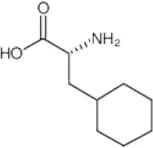
CAS:Controlled Product<p>Applications (S)-2-Amino-4-[(3-aminopropyl)amino]-butanoic Acid is used in the reaction of carboxynorspermidine decarboxylase of Vibrio alginolyticus.<br>References Nakao, H., et al.: J. Gen. Microbiol. 136, 1699-704 (1990)<br></p>Formula:C7H17N3O2Purity:>90%Color and Shape:NeatMolecular weight:175.229(R)-D-Cyclohexylalanine
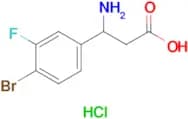
CAS:Controlled ProductFormula:C9H17NO2Color and Shape:NeatMolecular weight:171.2373-Amino-3-(4-bromo-3-fluorophenyl)propanoic acid hydrochloride
CAS:Purity:97.0%Molecular weight:298.5400085449219N-Methyl-N-nitroso-1-octadecylamine
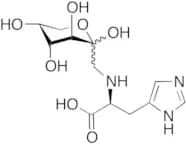
CAS:<p>Applications N-Methyl-N-nitroso-1-octadecylamine was found to present in various hair-care products when investigated through thermal energy analyzer.<br>References Morrison, J.B., et al.: Food. Chem. Toxicol., 21, 69 (1983); Rainey, W.T., et al.: Biomed. Mass. Spec., 5, 395 (1978);<br></p>Formula:C19H40N2OColor and Shape:White To Off-WhiteMolecular weight:312.53Fructose-histidine
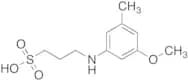
CAS:Controlled Product<p>Applications Fructose-histidine is an amadori compound formed in food.<br>References Wang, J., et al.: J. Mass Spec., 43, 262 (2008); Hashiba, H.: J. Agri. Food Chem., 24, 70 (1976)<br></p>Formula:C12H19N3O7Color and Shape:NeatMolecular weight:317.3N-3-(Sulfopropyl)-3-methoxy-5-methylaniline
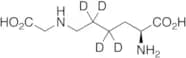
CAS:Controlled Product<p>Applications N-3-(Sulfopropyl)-3-methoxy-5-methylaniline is used as a reagent for the evaluation of basic property and long-term stability of reagents for enzymically assaying triglyceride, cholesterol and uric acid.<br>References Yamaguchi, T., Iryo to Kensa Kiki-Shiyaku., 3, 591-597 (2007).<br></p>Formula:C11H17NO4SColor and Shape:NeatMolecular weight:259.32Nε-(1-Carboxymethyl)-L-lysine-d4
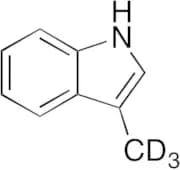
CAS:Controlled Product<p>Stability Hygroscopic<br>Applications CEL and CML are two stable, nonenzymatic chemical modifications of protein lysine residues resulting from glycation and oxidation reactions.<br>References Fu, M.X., et al.: J. Biol. Chem., 271, 9982 (1996), Ahmed M.U., et al.: Biochem.J., 324, 565 (1997), Schleicher, E.D., et al.: J. Clin. Invest., 99, 457 (1997), Shibayama, R., et al.: Diabetes, 48, 1842 (1999),<br></p>Formula:C8H12D4N2O4Color and Shape:NeatMolecular weight:208.253-Methyl-d3-indole
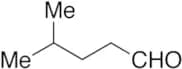
CAS:Controlled Product<p>Applications 3-Methyl-d3-indole has been used to prove that bioactivation of the pulmonary toxin 3-methylindole requires methyl carbon-hydrogen bond breakage in mice. 3-Methyl-d3-indole is the labeled analogue of 3-Methylindole (M313470), A naturally abundant pneumotoxin, found primarily in mammalian feces providing its strong fecal odor.<br> Not a dangerous good if item is equal to or less than 1g/ml and there is less than 100g/ml in the package<br>References Huijzer, J., et. al.: Toxicol. Appl. Pharm., 90, 60 (1987); Nakashima, T., et al.: Biol. Pharm. Bull., 32, 832 (2009); Xu, H., et al.: Chem. Pharm. Bull., 57, 321 (2009); Bodoor, K., et al.: J. Med. Chem., 52, 3753 (2009); Naskar, S., et al.: J. Chem. Res., 3, 174 (2009); Sollner, K., et al.: J. Agric. Food Chem., 57, 4319 (2009)<br></p>Formula:C92H3H6NColor and Shape:NeatMolecular weight:134.194-Methylpentanal (up to 75% hydrated form)
CAS:Controlled Product<p>Applications An intermediate used in the synthesis of Pregabalin (P704800) and related compounds.<br> Not a dangerous good if item is equal to or less than 1g/ml and there is less than 100g/ml in the package<br>References Posadas, I., et al.: Br. J. Pharmacol., 142, 331 (2004),<br></p>Formula:C6H12OColor and Shape:Colourless LiquidMolecular weight:100.168-methyl-4-(3,4,5-trimethoxybenzoyl)-1-oxa-4,8-diazaspiro[4.5]decane-3-carboxylic acid
CAS:Purity:95.0%Molecular weight:394.424011230468752-Methyl-5-nitrobenzenesulfonamide
CAS:Controlled Product<p>Applications 2-Methyl-5-nitrobenzenesulfonamide is a chemical reagent in the synthesis of good inhibitors of cancer-related carbonic anhydrase. Also used in the synthesis of novel deacetylase inhibitors used in anti-tumor therapy.<br>References Moeker, J. et al.: J. Med. Chem., 57, 3522 (2014); Han, L. et al.: Bioorg. Med. Chem., 22, 1529 (2014);<br></p>Formula:C7H8N2O4SColor and Shape:Yellowish SolidMolecular weight:216.214-(2,4-dichlorophenyl)-3H,4H,5H,6H,7H-imidazo[4,5-c]pyridine-6-carboxylic acid
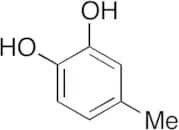
CAS:Purity:95.0%Molecular weight:312.14999389648444-Methylcatechol
CAS:<p>Applications 4-Methylcatechol is a potent inducer of nerve growth factor (NGF) synthesis in vitro and in vivo.<br>References Kaechi, K., et al.: J. Pharmacol. Exp. Ther., 272, 1300 (1995); Hanaoka, Y., et al.: J. Neurol. Sci., 122, 28 (1994)<br></p>Formula:C7H8O2Color and Shape:NeatMolecular weight:124.141'-(Tert-butoxycarbonyl)-3H-spiro[isobenzofuran-1,4'-piperidine]-3-carboxylic acid
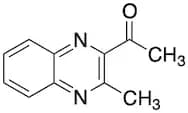
CAS:Purity:97%Molecular weight:333.38400268554693-Acetyl-2-methylquinoxaline
CAS:<p>Applications 3-Acetyl-2-methylquinoxaline is an intermediate in the synthesis of Desoxyquinocetone which is a metabolite of the veterinay drug Quinocetone.<br>References Li, Y. et al.: J. AOAC Int., 91, 1494 (2008); Liu, Z.-Y. et al.: Anal. Bioanal. Chem., 396, 1259 (1271);<br></p>Formula:C11H10N2OColor and Shape:NeatMolecular weight:186.214-Amino-2-methyl-5-pyrimidinemethanesulfonic acid
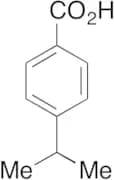
CAS:Controlled Product<p>Applications 4-Amino-2-methyl-5-pyrimidinemethanesulfonic acid is used in the biosynthesis of Thiamine (T344185) in yeast.<br>References White, R., et al.: Journal of the American Chemical Society, 104, 4934 (1982).<br></p>Formula:C6H9N3O3SColor and Shape:NeatMolecular weight:203.224-(1-Methylethyl)benzoic Acid
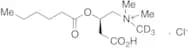
CAS:<p>Applications 4-(1-Methylethyl)benzoic Acid is used in the synthesis of quinuclidine benzamides as agonists for nicotinic acetylcholine receptors. Also used in the synthesis of nifuroxazide analogues showing antimicrobial activity against methicillin-resistant Staphylococcus.<br>References Bodnar, A. et al.: J. Med. Chem., 48, 905 (2005); Masunari, A. et al.: Bioorg. Med. Chem. Lett., 15, 4229 (2007);<br></p>Formula:C10H12O2Color and Shape:NeatMolecular weight:164.2Hexanoyl-L-carnitine-(N-methyl-d3) Chloride
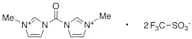
Controlled Product<p>Stability Hygroscopic<br>Applications Hexanoyl-L-carnitine-(N-methyl-d3) Chloride, is the labeled analogue of Hexanoyl-L-carnitine Hydrochloride (H294440), which is used as reactant in the synthesis of carnitine benzyl esters as prodrugs.<br>References Gong, X., et. al.: J. Chem. Res., 6, 327 (2008)<br></p>Formula:C13H23D3ClNO4Color and Shape:NeatMolecular weight:298.821,1'-Carbonylbis(3-methylimidazolium) Triflate
CAS:Controlled Product<p>Applications An efficient reagent for aminoacylations. Used in the synthesis of chiral Pilocarpine analogs via a C-8 ketone intermediate.<br>References Enz, A., et al.: Life Sci., 52, 513 (1993), Felder, C., et al.: J. Med. Chem., 43, 4333 (2000),<br></p>Formula:C9H12N4O·2CF3O3SColor and Shape:NeatMolecular weight:490.362,3-Difluoro-DL-phenylglycine
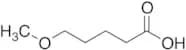
CAS:Formula:C8H7F2NO2Purity:95.0%Color and Shape:SolidMolecular weight:187.1465-methoxypentanoic acid
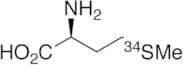
CAS:Controlled Product<p>Applications 5-methoxypentanoic acid (cas# 70160-05-3) is a useful research chemical.<br></p>Formula:C6H12O3Color and Shape:ColourlessMolecular weight:132.15L-Methionine-34S
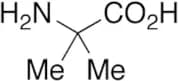
CAS:<p>Applications Labelled L-Methionine, an essential aminoacid for human development. Hepatoprotectant; antidote (acetominophen poisoning); urinary acidifier.<br>References Benevenga, N.J., et al.: J. Agric. Food Chem., 22, 2 (1974), Fleisher, L.D., et al.: Clin. Endocrinol. Metab., 3, 37 (1974), Meinnel, T., et al.: Biochimie, 75, 1061 (1993),<br></p>Formula:C5H11NO234SColor and Shape:NeatMolecular weight:151.112-Aminoisobutyric Acid (2-Methylalanine)
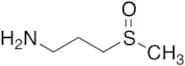
CAS:Controlled Product<p>Applications 2-Methylalanine is an Alanine (A481400) derivative. Alanine is an amino acid that occurs naturally in nature. It is a functional component in the alanine cycle which regulates the level of alanine aminotransferases which can be used as a diagnostic tool to predict type II diabetes.<br>References Naveed S. et al.: Diab., 53, 11 (2004); Barlind, J. et al.: Bioorg. Med. Chem. Lett., 23, 2721 (2013);<br></p>Formula:C4H9NO2Color and Shape:NeatMolecular weight:103.123-Methanesulfinylpropan-1-amine
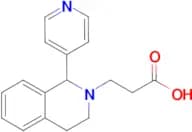
CAS:Controlled Product<p>Applications 3-Methanesulfinylpropan-1-amine is used in preparation of Amide compounds as pesticides including acaricides, insecticides, and parasiticides.<br>References Furukawa, H., et al.: Jpn. Kokai Tokkyo Koho, (2018);<br></p>Formula:C4H11NOSColor and Shape:NeatMolecular weight:121.2013-(1-Pyridin-4-yl-3,4-dihydroisoquinolin-2(1H)-yl)propanoic acid
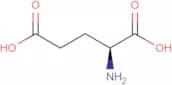
CAS:Purity:90.0%Molecular weight:282.3429870605469H-Glu-OH
CAS:<p>M02979 - H-Glu-OH</p>Formula:C5H9NO4Purity:98%Color and Shape:White crystals or crystalline powderMolecular weight:147.13L-Lysine L-Malate
CAS:Controlled Product<p>Applications L-Lysine L-Malate is used in the preparation of amino acid ionic liquids for use in food and medical field.<br></p>Formula:C6H14N2O2·C4H6O5Color and Shape:NeatMolecular weight:280.27
![5-Methyl-4,5,6,7-tetrahydrothiazolo[5,4-c]pyridine-2-carboxylic Acid Hydrochloride](/_next/image/?url=https%3A%2Fstatic.cymitquimica.com%2Fproducts%2FTR%2Fthumb-webp%2FM330085.webp&w=3840&q=75)


![8-benzyl-4-propanoyl-1-oxa-4,8-diazaspiro[4.5]decane-3-carboxylic acid](/_next/image/?url=https%3A%2Fstatic.cymitquimica.com%2Fproducts%2F10%2Fthumb-webp%2FF525787.webp&w=3840&q=75)


![8-methyl-4-(4-methylbenzoyl)-1-oxa-4,8-diazaspiro[4.5]decane-3-carboxylic acid](/_next/image/?url=https%3A%2Fstatic.cymitquimica.com%2Fproducts%2F10%2Fthumb-webp%2FF525624.webp&w=3840&q=75)
![2-(((1S,2R,4S)-4-(DIMETHYLCARBAMOYL)-2-(5-METHYL-4,5,6,7-TETRAHYDROTHIAZOLO[5,4-C]PYRIDINE-2-CARBO…](/_next/image/?url=https%3A%2Fstatic.cymitquimica.com%2Fproducts%2F10%2Fthumb-webp%2FF816177.webp&w=3840&q=75)
![8-ethyl-4-(pyridine-3-carbonyl)-1-oxa-4,8-diazaspiro[4.5]decane-3-carboxylic acid](/_next/image/?url=https%3A%2Fstatic.cymitquimica.com%2Fproducts%2F10%2Fthumb-webp%2FF525700.webp&w=3840&q=75)

![(S)-2-Amino-4-[(3-aminopropyl)amino]-butanoic Acid](/_next/image/?url=https%3A%2Fstatic.cymitquimica.com%2Fproducts%2FTR%2Fthumb-webp%2FA609335.webp&w=3840&q=75)

![8-methyl-4-(3,4,5-trimethoxybenzoyl)-1-oxa-4,8-diazaspiro[4.5]decane-3-carboxylic acid](/_next/image/?url=https%3A%2Fstatic.cymitquimica.com%2Fproducts%2F10%2Fthumb-webp%2FF525628.webp&w=3840&q=75)

![4-(2,4-dichlorophenyl)-3H,4H,5H,6H,7H-imidazo[4,5-c]pyridine-6-carboxylic acid](/_next/image/?url=https%3A%2Fstatic.cymitquimica.com%2Fproducts%2F10%2Fthumb-webp%2FF522513.webp&w=3840&q=75)
![1'-(Tert-butoxycarbonyl)-3H-spiro[isobenzofuran-1,4'-piperidine]-3-carboxylic acid](/_next/image/?url=https%3A%2Fstatic.cymitquimica.com%2Fproducts%2F10%2Fthumb-webp%2FF750353.webp&w=3840&q=75)

acetic acid](/_next/image/?url=https%3A%2Fstatic.cymitquimica.com%2Fproducts%2F10%2Fthumb-webp%2FF300211.webp&w=3840&q=75)