Amino Acids (AA)
Amino acids (AAs) are the fundamental building blocks of proteins, playing a crucial role in various biological processes. These organic compounds are essential for protein synthesis, metabolic pathways, and cell signaling. In this category, you will find a comprehensive range of amino acids, including essential, non-essential, and modified forms, which are vital for research in biochemistry, molecular biology, and nutritional sciences. At CymitQuimica, we provide high-quality amino acids to support your research and development needs, ensuring accuracy and reliability in your experimental outcomes.
Subcategories of "Amino Acids (AA)"
- Amino Acid Derivatives(3,955 products)
- Amino Acid and Amino Acid Related Compounds(3,436 products)
- Amino Acids with Oxygen or Sulphur(168 products)
- Boc- Amino Acids(351 products)
- Fmoc Amino Acids(1,710 products)
Found 38216 products of "Amino Acids (AA)"
Sort by
Purity (%)
0
100
|
0
|
50
|
90
|
95
|
100
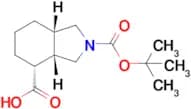
(3aS,4R,7aS)-2-(tert-Butoxycarbonyl)octahydro-1H-isoindole-4-carboxylic acid
CAS:Purity:98+%Molecular weight:269.341003417968751-(4-Hydroxy-3-methoxyphenyl)-1-propanone
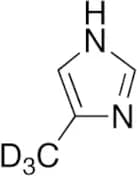
CAS:<p>Applications 1-(4-Hydroxy-3-methoxyphenyl)-1-propanone is a derivative of Guaiacol, a precursor to various flavorants, such as eugenol and vanillin.<br>References Allen, C., et al.: Org. Synth., 3, 418 (1955); Esposito, L., et al.: Kirk-Othmer Encyclopedia of Chemical Technology, 4th edition, 24, 812 (1997)<br></p>Formula:C10H12O3Color and Shape:NeatMolecular weight:180.204-Methylimidazole-d3
CAS:Controlled Product<p>Applications Labelled 4-Methylimidazole (M312990). 4-Methylimidazole is a monomethylated imidazole that can be used as a building block in the preparation of a wide range of biologically active compounds. 4-Methylimidazole is a product which results from the interaction of reducing sugars with ammonia. 4-Methylimidazole showed convulsant activity in animals and is listed as a possible carcinogen.<br> Not a dangerous good if item is equal to or less than 1g/ml and there is less than 100g/ml in the package<br>References Nishie, K. et al.: Toxicol. Appl. Pharmacol., 14, 301 (1969): Cunha, S.C. et al.: J. Food Comp. Anal., 24, 609 (2011); Chan, P.C. et al.: Arch. Toxicol., 82, 55 (2008);<br></p>Formula:C4H3D3N2Color and Shape:BeigeMolecular weight:85.122-Methoxyethanol
CAS:Controlled Product<p>Applications 2-Methoxyethanol is used in the synthesis of 2-aminothiazoles in the treatment of prion disease (1). 2-Methoxyethanol is also used in the preparation of Rho-associated kinase inhibitors or (ROCK) inhibitors, for treatment of cardiovascular disease (2). Drinking water contaminant candidate list 3 (CCL 3) compound as per United States Environmental Protection Agency (EPA), environmental, and food contaminants.<br> Not a dangerous good if item is equal to or less than 1g/ml and there is less than 100g/ml in the package<br>References 1. Li, Z. et al.: ChemMedChem. 2013 May;8(5):847-57.2. Boland, S. et al.: Bioorg. Med. Chem. Lett. 2013 Dec 1;23(23):6442-6.<br></p>Formula:C3H8O2Color and Shape:NeatMolecular weight:76.093-Mercapto-3-methylbutanoic Acid Ethyl Ester
CAS:Controlled Product<p>Applications 3-Mercapto-3-methylbutanoic Acid Ethyl Ester is an intermediate in the synthesis of 3-Mercapto-3-methylbutyl Formate (M253540), which is one of the major odor-active thiol in pan-roasted white sesame seeds.<br>References Czerny, M., et al.: J .Agric. Food Chem., 47, 695 (1999), Steinhaus, M., et al.: Eur. Food Res. Technol., 226, 45 (2007), Tamura, H., et al.: Agric. Food Chem., 2010, 58, 7368 (2010),<br></p>Formula:C7H14O2SColor and Shape:NeatMolecular weight:162.25Ethametsulfuron-methyl
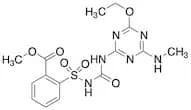
CAS:Controlled Product<p>Applications Ethametsulfuron-methyl is a regulator of the early steps of complement activation on mucosal surfaces. It can be used in combination treatment of ohmic heating with various essential oil components for inactivation of food-borne pathogens in buffered peptone water and salsa.<br>References Kim, S. S., et al.: Food Control, 80, 29 (2017); Reichhardt, M. P., et al.: Front Immunol, 7, 85 (2016)<br></p>Formula:C15H18N6O6SColor and Shape:NeatMolecular weight:410.404-Aminohippuric Acid
CAS:Controlled Product<p>Applications 4-Aminohippuric Acid is used in the measurement of renal plasma flow as a diagnostic tool which may be applied towards kidney disorders.<br>References Phillips, R. et al.: Am. J. Physiol., 152, 523 (1948);<br></p>Formula:C9H10N2O3Color and Shape:Off White SolidMolecular weight:194.19D-Tyrosine
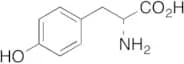
CAS:Controlled Product<p>Applications D-Tyrosine, the stereoisomer to L-Tyrosine (T899975), is an amino acid used in various organic syntheses for antibiotics. It is used in the synthesis of (-)-anisomycin, as well as BATSI (boronic acid transition state inhibitors) which act on β-lactamases. It has also been studied as an inhibitor of microbial growth on surfaces, reducing microbial attachment to hydrophillic glass and hydrophobic polypropylene surfaces.<br>References Li, Ji. et al.: Chin. Chem. Lett., 23, 647 (2012); Xu, H. et al.: Water Res., 45, 5796 (2011); Ke, W. et al.: Antimicrob. Agents Chemother., 55, 174 (2011);<br></p>Formula:C9H11NO3Color and Shape:NeatMolecular weight:181.192-(3-Chlorophenyl)-2-[4-(4-fluorophenyl)piperazin-1-yl]acetic acid
CAS:Molecular weight:348.79998779296875δ-Valerolactam-d4
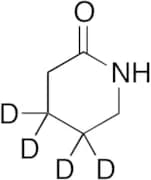
CAS:Controlled Product<p>Applications δ-Valerolactam-d4 is a labeled analog of δ-Valerolactam (V091440), which is a useful synthetic intermediate. It is an intermediate used to synthesize Cenicriviroc (C256550), an experimental drug candidate for the treatment of HIV infection. It is also a starting material for a new route to hexahydrojulolidines, using intramolecular 1,4-cycloaddition.<br>References Potts, K., et al. J. Org. Chem., 58, 5040 (1993); Klibanov, O., et al.: Curr. Opinion Invest. Drugs, 11, 940 (2010);<br></p>Formula:C5H5D4NOColor and Shape:NeatMolecular weight:103.16N-Acetylisoleucine
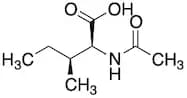
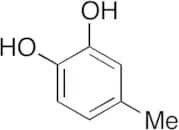
CAS:Controlled Product<p>Applications N-ACETYLISOLEUCINE (cas# 3077-46-1) is a useful research chemical.<br></p>Formula:C8H15NO3Color and Shape:NeatMolecular weight:173.24-Methylcatechol
CAS:<p>Applications 4-Methylcatechol is a potent inducer of nerve growth factor (NGF) synthesis in vitro and in vivo.<br>References Kaechi, K., et al.: J. Pharmacol. Exp. Ther., 272, 1300 (1995); Hanaoka, Y., et al.: J. Neurol. Sci., 122, 28 (1994)<br></p>Formula:C7H8O2Color and Shape:NeatMolecular weight:124.141-Isobutyl-2,3,4,9-tetrahydro-1H-pyrido[3,4-b]indole-3-carboxylic acid
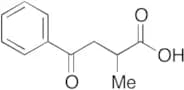
CAS:Purity:97%Molecular weight:272.34799194335942-Methyl-4-oxo-4-phenylbutyric Acid
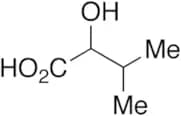
CAS:Controlled Product<p>Applications 2-Methyl-4-oxo-4-phenylbutyric Acid is a chemical reagent used in the synthesis of various pharmaceutically active compounds. Used in the synthesis of Minozac, a suppressor of brain proinflammatory cytokine up-regulation.<br>References Hu, W. et al.: Bioog. Med. Chem. Lett., 17, 414 (2007); Qabaja, G. ET AL.: J. ORG. CHEM., 80, 133 (2015);<br></p>Formula:C11H12O3Color and Shape:NeatMolecular weight:192.212-Hydroxy-3-methylbutyric Acid
CAS:Controlled Product<p>Applications 2-Hydroxy-3-methylbutyric Acid is a α-hydroxylated butyric acid derivative used as a marker in chemical diagnosis of organic aciduria and other inborn errors. 2-Hydroxy-3-methylbutyric Acid is also used as a metabolomic biomarkers in preeclampsia.<br>References Nakagawa, K. et al.: J. Chrom. B Anal. Technol. Biomed. Life Sci., 878, 942 (2010); Kenny, L.C. et al.: Reprod. Sci., 15, 591 (2008); Garcia, A. et al.: Clin. Chem., 44, 1905 (1999);<br></p>Formula:C5H10O3Color and Shape:NeatMolecular weight:118.132-Methyl-d3-propyl-3,3,3-d3 Alcohol
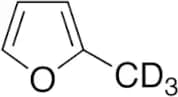
CAS:Controlled Product<p>Applications 2-Methyl-d3-propyl-3,3,3-d3 Alcohol (CAS# 72182-69-5) is a useful isotopically labeled research compound.<br></p>Formula:C4D6H4OColor and Shape:NeatMolecular weight:80.162-Methylfuran-d3
CAS:Controlled Product<p>Stability Light Sensitive, Volatile<br>Applications Labelled 2-Methylfuran (M305440). 2-Methylfuran is a volatile organic compound (VOCs) used as a potential non-intrusive tool for screening of lung cancer.<br> Not a dangerous good if item is equal to or less than 1g/ml and there is less than 100g/ml in the package<br>References McWilliams, et al.: Curr. Oncol. Rep., 4, 487 (2002), Buszewski, B., et al.: Biomed. Chromatogr., 21, 553 (2007), Ligor, T., et al.: J. Breath. Res., 1, 1 (2007),<br></p>Formula:C52H3H3OPurity:>90%Color and Shape:Light YellowMolecular weight:85.124-(4-chloro-2-fluorobenzoyl)-8-propyl-1-oxa-4,8-diazaspiro[4.5]decane-3-carboxylic acid
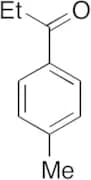
CAS:Purity:95.0%Molecular weight:384.82998657226564′-Methylpropiophenone
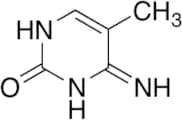
CAS:Controlled Product<p>Applications 4′-Methylpropiophenone is a chemical reagent used in electrocarboxylation reactions.<br>References Zhang, K. et al.: Chin. J. Chem., 28, 509 (2010); Zhao, S. et al.: Tetra. Lett., 52, 2702 (2011);<br></p>Formula:C10H12OColor and Shape:NeatMolecular weight:148.205-Methylcytosine (~90%)
CAS:Controlled Product<p>Applications 5-Methylcytosine (cas# 554-01-8) is a useful research chemical.<br></p>Formula:C5H7N3OPurity:~90%Color and Shape:NeatMolecular weight:125.133-Methoxy-1,2-propanediol
CAS:<p>Applications 3-Methoxy-1,2-propanediol is used to prepare phosphorothioate analogs of sn-2 radyl lysophosphatidic acid as metabolically stabilized LPA receptor agonists. It is also used to synthesize diacylglycerol analogs as potential second-messenger antagonists.<br>References Jiang, G., et al.: Bioorg. Med. Chem. Lett., 23, 1865 (2013); Briggs, J., et al.: Bioorg. Med. Chem. Lett., 2, 127 (1992)<br></p>Formula:C4H10O3Color and Shape:Colourless LiquidMolecular weight:106.1208-benzyl-4-butanoyl-1-oxa-4,8-diazaspiro[4.5]decane-3-carboxylic acid
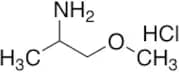
CAS:Purity:95.0%Molecular weight:346.4270019531251-Methoxypropan-2-amine Hydrochloride
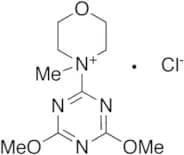
CAS:Controlled Product<p>Applications 1-methoxypropan-2-amine hydrochloride (cas# 677743-83-8) is a useful research chemical.<br></p>Formula:C4H11NO·ClHColor and Shape:NeatMolecular weight:125.5974-(4,6-Dimethoxy-s-triazin-2-yl)-4-methyl-morpholinium Chloride
CAS:Controlled Product<p>Applications DMTMM, a conjugating agent that efficiently conjugat PnPS to Luminex microspheres without affecting the antigenicity of a broad set of PnPS.<br> Not a dangerous good if item is equal to or less than 1g/ml and there is less than 100g/ml in the package<br>References Wrzesien, J. & Graham, D.: Tetrahedron, 68, 1230 (2012); Schlottmann, S. et al.: J. Im. Meth., 309, 75 (2006)<br></p>Formula:C10H17N4O3·ClColor and Shape:NeatMolecular weight:276.72N-Acetyl Phentermine
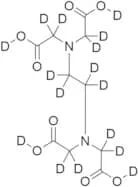
CAS:Controlled Product<p>Applications N-(2-Methyl-1-phenylpropan-2-yl)acetamide is a byproduct from the preparation of benzolactams by palladium-catalyzed carbonylation of arylethylamines and α-amino benzenepropanoates.<br>References Lopez, B., et al.: Chem. Commun., 47, 1054 (2011); Albert, J., et al.: Organometallics, 32, 649 (2013);<br></p>Formula:C12H17NOColor and Shape:NeatMolecular weight:191.27Ethylenediaminetetraacetic Acid-d16
CAS:Controlled Product<p>Applications Ethylenediaminetetraacetic Acid-d16 (CAS# 203805-96-3) is a useful isotopically labeled research compound.<br></p>Formula:C10D16N2O8Color and Shape:White To Off-WhiteMolecular weight:308.34Ademethionine-d3 1,4-Butanedisulfonate (>85%)
CAS:Controlled Product<p>Applications Ademethionine-d3 1,4-Butanedisulfonate, is a labeled analogue of Ademethionine 1,4-Butanedisulfonate (A280355), used in the synthesis of sulfonio-adenosyl-L-methionine (SAMe) salts.<br></p>Formula:C15H20D3N6O5S(C4H8O6S2)·(C4H10O6S2)Purity:>85%Color and Shape:NeatMolecular weight:402.46 (Free Base)4-Chloro-4-methyl-1-pentene
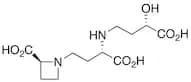
CAS:Controlled Product<p>Applications 4-Chloro-4-methyl-1-pentene affects the surface modification of Kevlar stitch threads on mechanical interfacial properties of carbon fiber and bismaleimide stitched composites.<br> Not a dangerous good if item is equal to or less than 1g/ml and there is less than 100g/ml in the package<br>References Ai, T., et al.: Fuhe Cailiao Xuebao, 24, 34-39 (2007)<br></p>Formula:C6H11ClColor and Shape:NeatMolecular weight:118.62’-Deoxymugineic Acid
CAS:Controlled Product<p>Applications Phytosiderophores are produced in higher plants as iron chelating amino acids that promote uptake of iron from soil.<br>References Klair, S., et al.: J. Plant Nutr., 19, 1295 (1996),<br></p>Formula:C12H20N2O7Color and Shape:NeatMolecular weight:304.301-Carboxy-7-(dimethylamino)-3,4-dihydroxyphenoxazin-5-ium chloride
CAS:Purity:95.0%Molecular weight:336.73001098632814-[3-(benzyloxy)-4-methoxyphenyl]-3H,4H,5H,6H,7H-imidazo[4,5-c]pyridine-6-carboxylic acid
CAS:Purity:95.0%Molecular weight:379.41598510742192-[4-(3-Chlorophenyl)piperazin-1-yl]-2-(3-methylphenyl)acetic acid
CAS:Molecular weight:344.83999633789064-[2-(4-chlorophenyl)acetyl]-8-methyl-1-oxa-4,8-diazaspiro[4.5]decane-3-carboxylic acid
CAS:Purity:95.0%Molecular weight:352.82000732421875N-Pyrazinylcarbonyl-L-phenylalanine Methyl Ester
CAS:<p>Applications Used for the synthesis of Bortezomib from L-phenylalanine via dipeptidyl boronic acid ester intermediates.<br>References Zhu, Y., et al.: J. Med. Chem., 52, 4192 (2009),<br></p>Formula:C15H15N3O3Color and Shape:NeatMolecular weight:285.302-[(Carboxymethyl-methyl-amino)-methyl]-piperidine-1-carboxylic acid tert-butyl ester
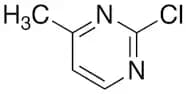
CAS:Purity:95.0%Molecular weight:286.372009277343752-Chloro-4-methylpyrimidine
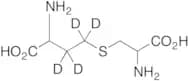
CAS:Controlled Product<p>Stability Toxic<br>Applications 2-Chloro-4-methylpyrimidine (cas# 13036-57-2) is a compound useful in organic synthesis.<br></p>Formula:C5H5ClN2Color and Shape:BeigeMolecular weight:128.56D,L-Cystathionine-d4
CAS:Controlled Product<p>Applications Isotope labelled Intermediate for transsulfuration whereby a mammal transfers the sulfur of methionine via homocysteine to cysteine.<br>References Thompson, J.W., et al.: J. Biol. Chem., 266, 17011 (1991), Yoshida, Y., et al.: Microbiol., 148, 3961 (2002), Jiracek, J., et al.: J. Med. Chem., 49, 3982 (2006),<br></p>Formula:C72H4H10N2O4SColor and Shape:White To Light BrownMolecular weight:226.293-[(4,6-Dimethylpyrimidin-2-yl)amino]benzoic acid
CAS:Formula:C13H13N3O2Purity:95.0%Color and Shape:SolidMolecular weight:243.266L-Homocysteine Thiolactone Hydrochloride
CAS:Controlled Product<p>Applications L-Homocysteine Thiolactone Hydrochloride is used to prepare substituted homocysteine analogs as inhibitors of peptidylglycine α-amidating monooxygenase. It is also used to synthesize (mercaptoacyl)alanylprolines as metalloprotease inhibitors.<br>References Erion, M., et al.: J. Med. Chem., 37, 4430 (1994); Slusarchyk, W., et al.: Bioorg. Med. Chem. Lett., 5, 753 (1995)<br></p>Formula:C4H8ClNOSColor and Shape:NeatMolecular weight:153.632-(4-Fluorophenyl)-2-[4-(4-fluorophenyl)piperazin-1-yl]acetic acid
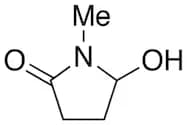
CAS:Molecular weight:332.351013183593755-Hydroxy-N-methyl-2-pyrrolidinone
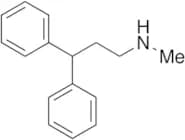
CAS:Controlled Product<p>Applications 5-Hydroxy-N-methyl-2-pyrrolidinone is a metabolite of N-methylpyrrolidone (NMP).<br>References Payan, J., et al.: Drug Metab. Dispos., 30, 1418 (2002), Carnerup, M., et al.: Food Chem. Toxicol., 43, 1441 (2005), Angerer, J., et al.: Toxicol. Sci., 93, 3 (2006),<br></p>Formula:C5H9NO2Color and Shape:NeatMolecular weight:115.13N-Methyl-3,3-diphenylpropylamine
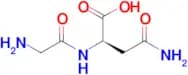
CAS:<p>Applications N-Methyl-3,3-diphenylpropylamine is an intermediate for the synthesis of SNRI-NMDA antagonist and neuroprotectants.<br>References Olney, J. et al.: Sci., 244, 1360 (1989); Williams, W., et al.: Mol. Pharmacol. 44, 851 (1993);<br></p>Formula:C16H19NColor and Shape:NeatMolecular weight:225.33(R)-4-Amino-2-(2-aminoacetamido)-4-oxobutanoic acid
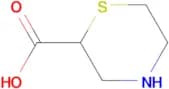
CAS:Purity:95.0%Molecular weight:189.17100524902344Thiomorpholine-2-carboxylic acid
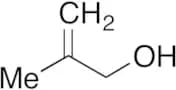
CAS:Purity:97.0%Color and Shape:SolidMolecular weight:147.190002441406252-Methyl-2-propen-1-ol
CAS:Controlled Product<p>Stability Light Sensitive<br>Applications 2-Methyl-2-propen-1-ol has been used in the synthesis of C2-methyl-1,2-di-O-hexadecylglycerophosphocholine.<br> Not a dangerous good if item is equal to or less than 1g/ml and there is less than 100g/ml in the package<br>References Bittman, R., Witzke N.M.: Chem. Physics Lipid, 50, 99 (1989)<br></p>Formula:C4H8OColor and Shape:NeatMolecular weight:72.11





![2-(3-Chlorophenyl)-2-[4-(4-fluorophenyl)piperazin-1-yl]acetic acid](/_next/image/?url=https%3A%2Fstatic.cymitquimica.com%2Fproducts%2F10%2Fthumb-webp%2FF300385.webp&w=3840&q=75)
![1-Isobutyl-2,3,4,9-tetrahydro-1H-pyrido[3,4-b]indole-3-carboxylic acid](/_next/image/?url=https%3A%2Fstatic.cymitquimica.com%2Fproducts%2F10%2Fthumb-webp%2FF695615.webp&w=3840&q=75)

![4-(4-chloro-2-fluorobenzoyl)-8-propyl-1-oxa-4,8-diazaspiro[4.5]decane-3-carboxylic acid](/_next/image/?url=https%3A%2Fstatic.cymitquimica.com%2Fproducts%2F10%2Fthumb-webp%2FF525750.webp&w=3840&q=75)

![8-benzyl-4-butanoyl-1-oxa-4,8-diazaspiro[4.5]decane-3-carboxylic acid](/_next/image/?url=https%3A%2Fstatic.cymitquimica.com%2Fproducts%2F10%2Fthumb-webp%2FF525788.webp&w=3840&q=75)
![(3-methylphenyl)[4-(2-methylphenyl)piperazin-1-yl]acetic acid](/_next/image/?url=https%3A%2Fstatic.cymitquimica.com%2Fproducts%2F10%2Fthumb-webp%2FF300212.webp&w=3840&q=75)




![4-[3-(benzyloxy)-4-methoxyphenyl]-3H,4H,5H,6H,7H-imidazo[4,5-c]pyridine-6-carboxylic acid](/_next/image/?url=https%3A%2Fstatic.cymitquimica.com%2Fproducts%2F10%2Fthumb-webp%2FF522502.webp&w=3840&q=75)
![2-[4-(3-Chlorophenyl)piperazin-1-yl]-2-(3-methylphenyl)acetic acid](/_next/image/?url=https%3A%2Fstatic.cymitquimica.com%2Fproducts%2F10%2Fthumb-webp%2FF300388.webp&w=3840&q=75)
![4-[2-(4-chlorophenyl)acetyl]-8-methyl-1-oxa-4,8-diazaspiro[4.5]decane-3-carboxylic acid](/_next/image/?url=https%3A%2Fstatic.cymitquimica.com%2Fproducts%2F10%2Fthumb-webp%2FF525660.webp&w=3840&q=75)

![1-[(3-methoxythien-2-yl)methyl]piperidine-4-carboxylic acid](/_next/image/?url=https%3A%2Fstatic.cymitquimica.com%2Fproducts%2F10%2Fthumb-webp%2FF518818.webp&w=3840&q=75)
![2-[(Carboxymethyl-methyl-amino)-methyl]-piperidine-1-carboxylic acid tert-butyl ester](/_next/image/?url=https%3A%2Fstatic.cymitquimica.com%2Fproducts%2F10%2Fthumb-webp%2FF081316.webp&w=3840&q=75)
![3-[(4,6-Dimethylpyrimidin-2-yl)amino]benzoic acid](/_next/image/?url=https%3A%2Fstatic.cymitquimica.com%2Fproducts%2F10%2Fthumb-webp%2FF023725.webp&w=3840&q=75)

![2-(4-Fluorophenyl)-2-[4-(4-fluorophenyl)piperazin-1-yl]acetic acid](/_next/image/?url=https%3A%2Fstatic.cymitquimica.com%2Fproducts%2F10%2Fthumb-webp%2FF300207.webp&w=3840&q=75)