Amino Acids (AA)
Amino acids (AAs) are the fundamental building blocks of proteins, playing a crucial role in various biological processes. These organic compounds are essential for protein synthesis, metabolic pathways, and cell signaling. In this category, you will find a comprehensive range of amino acids, including essential, non-essential, and modified forms, which are vital for research in biochemistry, molecular biology, and nutritional sciences. At CymitQuimica, we provide high-quality amino acids to support your research and development needs, ensuring accuracy and reliability in your experimental outcomes.
Subcategories of "Amino Acids (AA)"
- Amino Acid Derivatives(3,955 products)
- Amino Acid and Amino Acid Related Compounds(3,451 products)
- Amino Acids with Oxygen or Sulphur(168 products)
- Boc- Amino Acids(351 products)
- Fmoc Amino Acids(1,710 products)
Found 38234 products of "Amino Acids (AA)"
Sort by
Purity (%)
0
100
|
0
|
50
|
90
|
95
|
100
D-Serine Methyl Ester Hydrochloride
CAS:Controlled Product<p>Applications D-Serine Methyl Ester Hydrochloride (cas# 5874-57-7) is a compound useful in organic synthesis.<br></p>Formula:C4H9NO3·ClHColor and Shape:NeatMolecular weight:155.58N-Acetyl-L-glutamic Acid
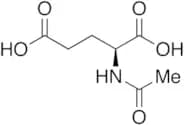
CAS:Controlled Product<p>Applications N-Acetyl-L-glutamic Acid is the N-Acetyl analogue of the non-essential amino acid, L-glutamic acid (G596960). N-Acetyl-L-glutamic Acid activates carbamoyl phosphate synthetase in the urea cycle.<br>References Saheki, T. et al.: J. Biochem., 77, 659 (1975); Rivas, J. et al.: Acta Biol. Med. Ger., 36, 1673 (1977); Zollner, H.: Biochim. Biophys. Acta, 676, 170 (1981);<br></p>Formula:C7H11NO5Color and Shape:NeatMolecular weight:189.17D-Serine
CAS:Controlled Product<p>Applications A proteinogenic amino acids involved in the biosynthesis of purines and pyrimidines. Inhibitor of serine palmitoyltransferase. A neuromodulator.<br>References Junjaud, G. et al.: J. Neurochem., 98, 1159 (2006); Hanada, K. et al.: FEBS Lett., 474, 63 (2000); Pollegionni, L. et al.: Cell. Mol. Life Sci., 67, 2387 (2010);<br></p>Formula:C3H7NO3Color and Shape:NeatMolecular weight:105.09L-Ornithine-2,3,3,4,4,5,5-d7 hydrochloride
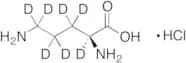
CAS:Controlled Product<p>Applications L-Ornithine-2,3,3,4,4,5,5-d7 hydrochloride is the labelled analogue of L-Ornithine Hydrochloride (O695550), a non-essential amino acid for human development but is required intermediate in arginine biosynthesis. L-Ornithine is found in virtually all vertebrate tissues as well as incorporated into proteins, such as tyrocidine. Isolation from chicken excreta.<br>References Fattori, D., et al.: J. Med. Chem., 50, 550 (2007), Gomez-Alonso, S., et al.: J. Agric. Food Chem., 55, 608 (2007), Subramaniam, R., et al.: Bioorg. Med. Chem. Lett., 18, 3333 (2008),<br></p>Formula:C5D7H5N2O2·ClHColor and Shape:NeatMolecular weight:175.1104926088N-Benzyl-L-tyrosine
CAS:Controlled Product<p>Applications Protected L-Tyrosine (T899975), an amino acid, used by cells to synthesize proteins. L-Tyrosine is biologically converted from L-phenylalanine and is in turn is converted to L-DOPA and further converted into the neurotransmitters: dopamine, norepinephrine, and epinephrine.<br>References Rasmussen D.D. et al.: J. Clin. Endocrinol. Metab., 57, 760 (1983); Bagchi, S.P. et al.: Biochem. Pharmacol., 26, 900 (1977)<br></p>Formula:C16H17NO3Color and Shape:NeatMolecular weight:271.32indole-3-acetyl-L-phenylalanine
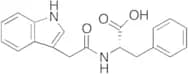
CAS:Controlled Product<p>Applications Indole-3-acetyl-L-phenylalanine is an indole-3-acetyl-amino acid conjugate involved in regulatory mechanisms for the control of auxin activity during physiological and pathophysiological responses.<br>References Ostrowski, M., et al.: J Plant Physiol, 191, 63-72 (2016)<br></p>Formula:C19H18N2O3Color and Shape:NeatMolecular weight:322.358L-Asparagine-13C4, 15N2 Hydrate
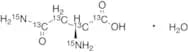
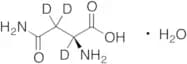
CAS:Controlled ProductFormula:C4H815N2O3H2OColor and Shape:NeatMolecular weight:138.0818023-Nitro-L-tyrosine-d3
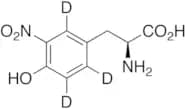
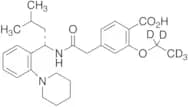
CAS:Controlled Product<p>Applications A labelled marker for peroxynitrite. Oxidant and cytotoxic agent.<br>References Sekiguchi, M., et al.: Brain Res., 978, 228 (2003), van den Tweel, E., et al.: J. Neurobiol., 167, 64 (2005), Shirakura, T., et al.: Biol. Pharm. Bull., 28, 1658 (2005),<br></p>Formula:C9D3H7N2O5Color and Shape:NeatMolecular weight:229.2Repaglinide-ethyl-d5
CAS:Controlled Product<p>Applications Deuterated Repaglinide, a non-sulfonylurea oral hypoglycemic agent which is used as an antidiabetic.<br>References Wolffenbuttel, B.H.R., et al.: Eur. J. Clin. Pharmacol., 45, 113 (1993), Ampudia-Blasco, F.J., et al.: Diabetologia, 37, 703 (1994),<br></p>Formula:C272H5H31N2O4Color and Shape:White SolidMolecular weight:457.62L-Thioproline
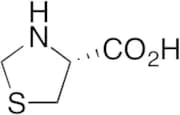
CAS:<p>Applications L-Thioproline is used to create a monolayer on gold electrodes for the determination Copper(II). L-Thioproline has shown to be an effect inhibitor of proline absorption in Saccharomyces chevalieri.<br> Not a dangerous good if item is equal to or less than 1g/ml and there is less than 100g/ml in the package<br>References Cui, X., et. al.: Sci. China Chem., 53, 257 (2010); Magana-Schwenchke, N., Schwencke, J.: BBA-Biomembranes, 173, 313 (1969)<br></p>Formula:C4H7NO2SColor and Shape:NeatMolecular weight:133.17D-Arginine
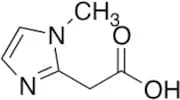
CAS:Controlled Product<p>Applications D-Arginine is an unnatural isomer of L-Arginine (A769505), and is used to inhibit glutamate-induced nitric oxide production in rats. Derivatives of D-Arginine are used for pharmaceutical purposes, one example is 1-Deamino-8-D-arginine vasopressin, which is used to treat various bleeding disorders.<br>References Castellano, M., et al.: Neurosci. Lett., 314, 127 (2001); Kobrinsky, N., et al.: Lancet, 323, 1145 (1984); Weyrich, A., et al.: Circulation, 86, 279 (1992)<br></p>Formula:C6H14N4O2Color and Shape:NeatMolecular weight:174.20(1-Methyl-1H-imidazol-2-yl)-acetic Acid
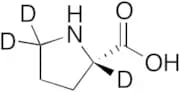
CAS:Controlled Product<p>Applications (1-Methyl-1H-imidazol-2-yl)-acetic acid (cas# 118054-54-9) is a useful research chemical.<br></p>Formula:C6H8N2O2Color and Shape:Off WhiteMolecular weight:140.14L-Proline-2,5,5-d3
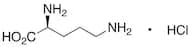
CAS:Controlled ProductFormula:C5D3H6NO2Color and Shape:NeatMolecular weight:118.149L-Ornithine Hydrochloride
CAS:Controlled Product<p>Stability Hygroscopic<br>Applications L-Ornithine is a non-essential amino acid for human development but is required intermediate in arginine biosynthesis. L-Ornithine is found in virtually all vertebrate tissues as well as incorporated into proteins, such as tyrocidine. Isolation from chicken excreta.<br>References Fattori, D., et al.: J. Med. Chem., 50, 550 (2007), Gomez-Alonso, S., et al.: J. Agric. Food Chem., 55, 608 (2007), Subramaniam, R., et al.: Bioorg. Med. Chem. Lett., 18, 3333 (2008),<br></p>Formula:C5H12N2O2·ClHColor and Shape:White To Off-WhiteMolecular weight:168.62L-Asparagine-d3 Hydrate
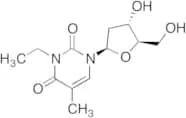
CAS:Controlled Product<p>Applications L-Asparagine-d3 Hydrate is an isotope labelled L-Asparagine Hydrate, a naturally occurring amino acid that is not a essential for humans and can be synthesized from central metabolic pathway intermediates.<br>References Burda, P., et al.: Biochim. Biophys. Acta., 1426, 239 (1999); Yamane, H., et al.: Animal. Sci. J., 80, 286 (2009);<br></p>Formula:C4D3H5N2O3·H2OColor and Shape:White To Off-WhiteMolecular weight:153.1517N3-Ethylthymidine
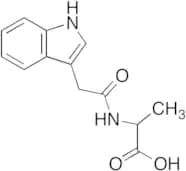
CAS:Controlled Product<p>Applications E677525<br>References Shimizu, T., et al.: Chem. Pharm. Bull., 53, 313 (2005)<br></p>Formula:C12H18N2O5Color and Shape:NeatMolecular weight:270.12157Indole-3-acetic-L-alanine
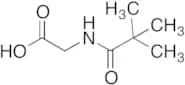
CAS:Controlled Product<p>Applications Indole-3-acetic-L-alanine is a derivative of the phytohormone indole-3-acetic acid (I577340) used in studies for the isolation and characterization of Arabdopsis thaliana mutants.<br>References Rampey, R.A., et al.: G3 (Bethesda), 3, 131-141 (2013)<br></p>Formula:C13H14N2O3Color and Shape:NeatMolecular weight:246.26N-Pivaloylglycine
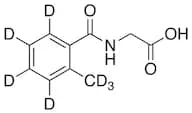
CAS:Controlled Product<p>Applications N-Pivaloylglycine is used in the biological study between dogs and rats. In a high dose toxicity study of pivalic acid (PA), PA caused skeletal muscle disorder in dog, and a significant increase of pivaloyl carnitine (PC) was observed in canine muscle, but not in rat muscle.<br>References Yamaguchi, T., et al.: Toxicol. Appl. Pharmacol., 214, 61-68 (2006)<br></p>Formula:C7H13NO3Color and Shape:NeatMolecular weight:159.182-Methyl Hippuric Acid-d7
CAS:Controlled Product<p>Applications The main labelled metabolite of o-xylene.<br>References Gregus, Z., et al.: Drug Metab. Dispos., 26, 1082 (1998), Gregus, Z., et al.: Xenobiotica, 29, 547 (1999), Gonzalez-Reche, L., et al.: Arch. Toxicol., 77, 80 (2003),<br></p>Formula:C10D7H4NO3Color and Shape:NeatMolecular weight:200.242-Methylpropylamine
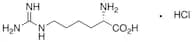
CAS:<p>Applications 2-Methylpropylamine is used in the synthesis of arylsulfonamide inhibitors that act upon afflictions of osteoarthritis. In addition, it is used in the synthesis of novel reservatrol amide derivatives that act as anti-tumor agents.<br> Not a dangerous good if item is equal to or less than 1g/ml and there is less than 100g/ml in the package<br>References Yao, Ri-Sheng. et al.: Eur. J. Med. Chem. Lett., 62, 222 (2013); Nuti, E. et al.: Eur. j. Med. Chem., 62, 379 (2013)<br></p>Formula:C4H11NColor and Shape:NeatMolecular weight:73.14L-Homoarginine Hydrochloride
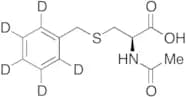
CAS:Controlled Product<p>Stability Moisture Sensitive<br>Applications An inhibitor of alkaline phosphatase isoenzymes. An analog of Homoarginine (H585000).<br>References Muth, W., et al.: J. Biol. Chem., 249, 7463 (1974), Hanukoglu, I., et al.: Eur. J. Biochem., 180, 479 (1989), Khaw, L., et al.: J. Bacteriol. 180, 809 (1998), Gallagher, D., et al.: J. Mol. Biol., 342, 119 (2004),<br></p>Formula:C7H16N4O2·ClHColor and Shape:NeatMolecular weight:224.69N-Acetyl-S-benzyl-d5-L-cysteine
CAS:Controlled Product<p>Applications N-Acetyl-S-benzyl-d5-L-cysteine is deuterium labelled N-Acetyl-S-benzyl-L-cysteine, which is a metabolite of toluene.<br>References Gargas, M., et al.: Toxicol. Appl. Pharmacol., 98, 87 (1989), Commandeur, J., et al.: Pharmacol. Rev., 47(2), 271 (1995), Campo, P., et al.: Neurotoxicol. Teratol., 21, 427 (1999), Lohse, C., et al.: J. Agr. Food Chem., 48, 5913 (2000),<br></p>Formula:C12D5H10NO3SColor and Shape:NeatMolecular weight:258.35Ethyl Lauroyl Arginate Hydrochloride
CAS:<p>Applications Ethyl Lauroyl Arginate Hydrochloride is used as a food antimicrobial in the sanitation of preserved foods. It is also used in cosmetics as a preservative.<br> Not a dangerous good if item is equal to or less than 1g/ml and there is less than 100g/ml in the package<br>References Brandt, A. et al.: . Food. Sci., 75, M557 (2010); Taormina, P. et al.: J. Food. Prot., 72, 1216 (2009); Chem. and Eng. News Page 14, Nov. 5 (2018)<br></p>Formula:C20H40N4O3·ClHColor and Shape:NeatMolecular weight:421.02D-Cysteine Hydrochloride Monohydrate
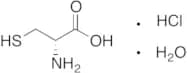
CAS:Controlled Product<p>Applications D-Cysteine Hydrochloride Monohydrate is used as a reactant in the expedient synthesis of electronically modified luciferins for bioluminescence imaging.<br>References McCutcheon, D., et al.: J. Am. Chem. Soc., 134, 7604 (2012);<br></p>Formula:C3H7NO2S·HCl·H2OColor and Shape:NeatMolecular weight:121.16+(36.46)+(18.02)C2 Ceramide
CAS:Controlled Product<p>Stability Moisture Sensitive<br>Applications A biologically active, cell permeable, but nonphysiologic ceramide analog. It inhibits cell proliferation and induces monocytic differentiation of HL-60 cells and induces apoptosis. It stimulates protein phosphatase 2A and activates MAP Kinase2.<br>References Inoue, T., et al.: J. Biol. Chem., 284, 9566 (2009), Kang, J., et al.: Bioorg. Med. Chem., 17, 1498 (2009), Rath, G., et al.: Int. J. Biochem. Cell Biol., 41, 1165 (2009),<br></p>Formula:C20H39NO3Color and Shape:Off White PowderMolecular weight:341.53Ethyl 5-Methyl-6-oxo-5,6-dihydro-4H-benzo[f]imidazo[1,5-a][1,4]diazepine-3-carboxylate
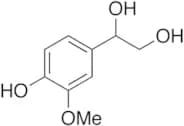
CAS:Controlled Product<p>Impurity Flumazenil EP Impurity E<br>Applications Ethyl 5-Methyl-6-oxo-5,6-dihydro-4H-benzo[f]imidazo[1,5-a][1,4]diazepine-3-carboxylate (Flumazenil EP Impurity E) is used in the biological studies and preparation of imidazobenzodiazepines as probes for diazepaminsensitive receptor pharmacophore.<br>References Zhang, P., et al.: J. Med. Chem., 38, 1679 (1995)<br></p>Formula:C15H15N3O3Color and Shape:NeatMolecular weight:285.30rac 4-Hydroxy-3-methoxyphenylethylene Glycol
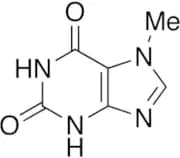
CAS:Controlled Product<p>Stability Hygroscopic<br>Applications A metabolite of Catecholamines.<br>References Kopin, I.J., et al.: J. Biol. Chem., 236, 2109 (1961), Short, F.W., et al.: J. Med. Pharm. Chem., 5, 642 (1962)<br></p>Formula:C9H12O4Color and Shape:White To Off-WhiteMolecular weight:184.197-Methyl Xanthine
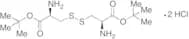
CAS:Controlled Product<p>Applications Metabolite of Theophylline and Caffeine.<br>References Yu, Ch. et al.: J. Bacteriol. 191, 4624 (2009); Geraets, L. et al.: Biochem. Pharmacol. 72, 902 (2006).<br></p>Formula:C6H6N4O2Color and Shape:NeatMolecular weight:166.14L-Cystine Bis(T-butyl Ester) Dihydrochloride
CAS:Controlled Product<p>Applications L-Cystine Bis(T-butyl Ester) Dihydrochloride is used as a reagent in the synthesis of chelate oxorhenium to create new integrin antagonists.<br>References Le Gal, J., et al.: J. Inorg. Biochem., 105, 880 (2011);<br></p>Formula:C14H28N2O4S2Color and Shape:NeatMolecular weight:352.513N-Acetyl-L-(-)-leucine
CAS:<p>Applications N-Acetyl-L-(-)-leucine is used in the preparation of small molecule inhibitors of anti-apoptotic Bcl-2 family proteins. Also used in the preparation of amphiphilic copolymers involving hydrophobic amino acid and oligopeptide side chains for optical tumor imaging in vivo.<br>References Zheng, C. et al.: Bioorg. Med. Chem. Lett., 22, 39 (2012); Miki, K. et al.: Bull. Chem. Soc. Jap., 85, 1277 (2012);<br></p>Formula:C8H15NO3Color and Shape:NeatMolecular weight:173.21(3S,3aS,6aS)-5-(tert-Butoxycarbonyl)hexahydro-2H-furo[2,3-c]pyrrole-3-carboxylic acid
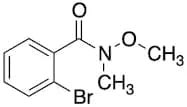
CAS:Purity:95%Molecular weight:257.28601074218752-Bromo-N-methoxy-N-methylbenzamide
CAS:Controlled Product<p>Applications 2-bromo-N-methoxy-N-methylbenzamide (cas# 899425-05-9) is a useful research chemical.<br></p>Formula:C9H10BrNO2Color and Shape:NeatMolecular weight:244.085N-Acetyl-L-cysteine-d3
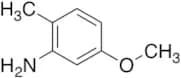
CAS:Controlled Product<p>Stability Hygroscopic<br>Applications A labelled metabolite of Methyl isocyanate.<br>References Slatter, J. G., et al.: Chem. Res. Toxicol., 4, 157 (1991),<br></p>Formula:C52H3H6NO3SColor and Shape:Off-WhiteMolecular weight:166.215-Methoxy-2-methylaniline
CAS:Controlled Product<p>Applications 5-Methoxy-2-methylaniline (cas# 50868-72-9) is a useful research chemical.<br></p>Formula:C8H11NOColor and Shape:White To Dark BrownMolecular weight:137.1794-(2-chlorobenzoyl)-8-ethyl-1-oxa-4,8-diazaspiro[4.5]decane-3-carboxylic acid
CAS:Purity:95.0%Molecular weight:352.820007324218754-Amino-3-Hydroxybutanoic Acid
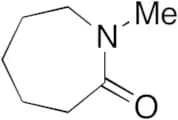
CAS:Controlled ProductFormula:C4H9NO3Color and Shape:NeatMolecular weight:119.12N-Methylcaprolactam
CAS:<p>Applications N-Methylcaprolactam is a reagent that is used in the synthesis of 3-Chloro-4-(dichloromethyl)-5-hydroxy-2(5H)-furanone-13C5, which is a chlorinated furanone that accounts for more of the mutagenic activity of drinking water than any other disinfection byproduct.<br></p>Formula:C7H13NOColor and Shape:NeatMolecular weight:127.184,6,7,8-Tetrahydro-8-hydroxy-6-methylpyrimido[1,2-a]purin-10(3H)-one (Mixture of Diastereomers)
CAS:Controlled Product<p>Applications Cyclic propano guanine adduct DNA acetaldehyde histone.<br>References Nath, R., et al.: Cancer Res., 58, 581 (1998), Wang, M., et al.: Chem. Res., 13, 1065 (2000), Terashima, I., et al.: Biochemistry, 40, 4106 (2001), Yokoyama, A., et al.: Carcinogenesis, 23, 1851 (2002),<br></p>Formula:C9H11N5O2Color and Shape:Off-WhiteMolecular weight:221.228-methyl-4-(pyridine-3-carbonyl)-1-oxa-4,8-diazaspiro[4.5]decane-3-carboxylic acid
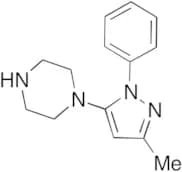
CAS:Purity:95.0%Molecular weight:305.33401489257811-(3-Methyl-1-phenyl-1H-pyrazol-5-yl)piperazine
CAS:Controlled Product<p>Applications 1-(3-Methyl-1-phenyl-1H-pyrazol-5-yl)piperazine is an intermediate used to prepare nonracemic γ-bicyclic heteroarylpiperazine- and heteroarylpiperidine-substituted prolinylthiazolidines as selective and orally active dipeptidylpeptidase 4 inhibitors for use as antidiabetic agents.<br>References Yoshida, T., et al.: Bioorg. Med. Chem., 20, 5705 (2012)<br></p>Formula:C14H18N4Color and Shape:NeatMolecular weight:242.328-ethyl-4-(2,4,6-trimethylbenzoyl)-1-oxa-4,8-diazaspiro[4.5]decane-3-carboxylic acid
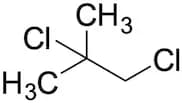
CAS:Purity:95.0%Molecular weight:360.45401000976561,2-Dichloro-2-methylpropane
CAS:<p>Applications 1,2-Dichloro-2-methylpropane (cas# 594-37-6) is a useful research chemical.<br> Not a dangerous good if item is equal to or less than 1g/ml and there is less than 100g/ml in the package<br></p>Formula:C4H8Cl2Color and Shape:NeatMolecular weight:127.014-(4-chloro-2-fluorobenzoyl)-8-methyl-1-oxa-4,8-diazaspiro[4.5]decane-3-carboxylic acid
CAS:Purity:95.0%Molecular weight:356.77999877929694-(3-bromobenzoyl)-8-methyl-1-oxa-4,8-diazaspiro[4.5]decane-3-carboxylic acid
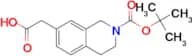
CAS:Purity:95.0%Molecular weight:383.242004394531252-(2-(TERT-BUTOXYCARBONYL)-1,2,3,4-TETRAHYDROISOQUINOLIN-7-YL)ACETIC ACID
CAS:Purity:95.0%Molecular weight:291.34698486328125N-Methyl-1H-imidazole-1-carboxamide (~90%)
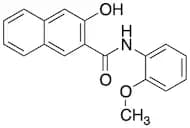
CAS:Controlled Product<p>Stability Moisture Sensitive<br>Applications N-Methyl-1H-imidazole-1-carboxamide is a useful Methyl Isocyanate (MIC) substitute.<br></p>Formula:C5H7N3OPurity:~90%Color and Shape:NeatMolecular weight:125.123-Hydroxy-2'-methoxy-2-naphthanilide
CAS:Controlled Product<p>Applications 3-Hydroxy-2'-methoxy-2-naphthanilide (cas# 135-62-6) is a useful research chemical.<br></p>Formula:C18H15NO3Color and Shape:NeatMolecular weight:293.312-Fluoro-3-methoxyphenylboronic acid
CAS:Controlled Product<p>Applications 2-Fluoro-3-methoxyphenylboronic acid<br></p>Formula:C7H8BFO3Color and Shape:NeatMolecular weight:169.951-Chloro-3-methoxypropane
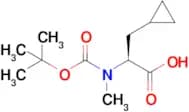
CAS:Controlled Product<p>Applications 1-Chloro-3-methoxypropane (cas# 36215-07-3) is a compound useful in organic synthesis.<br></p>Formula:C4H9ClOColor and Shape:NeatMolecular weight:108.57(S)-2-((tert-Butoxycarbonyl)(methyl)amino)-3-cyclopropylpropanoic acid
CAS:Purity:95%Molecular weight:243.30299377441406








![Ethyl 5-Methyl-6-oxo-5,6-dihydro-4H-benzo[f]imidazo[1,5-a][1,4]diazepine-3-carboxylate](/_next/image/?url=https%3A%2Fstatic.cymitquimica.com%2Fproducts%2FTR%2Fthumb-webp%2FE923525.webp&w=3840&q=75)

![(3S,3aS,6aS)-5-(tert-Butoxycarbonyl)hexahydro-2H-furo[2,3-c]pyrrole-3-carboxylic acid](/_next/image/?url=https%3A%2Fstatic.cymitquimica.com%2Fproducts%2F10%2Fthumb-webp%2FF601944.webp&w=3840&q=75)


![4-(2-chlorobenzoyl)-8-ethyl-1-oxa-4,8-diazaspiro[4.5]decane-3-carboxylic acid](/_next/image/?url=https%3A%2Fstatic.cymitquimica.com%2Fproducts%2F10%2Fthumb-webp%2FF525668.webp&w=3840&q=75)

![4,6,7,8-Tetrahydro-8-hydroxy-6-methylpyrimido[1,2-a]purin-10(3H)-one (Mixture of Diastereomers)](/_next/image/?url=https%3A%2Fstatic.cymitquimica.com%2Fproducts%2FTR%2Fthumb-webp%2FT293685.webp&w=3840&q=75)
![8-methyl-4-(pyridine-3-carbonyl)-1-oxa-4,8-diazaspiro[4.5]decane-3-carboxylic acid](/_next/image/?url=https%3A%2Fstatic.cymitquimica.com%2Fproducts%2F10%2Fthumb-webp%2FF525651.webp&w=3840&q=75)
![8-ethyl-4-(2,4,6-trimethylbenzoyl)-1-oxa-4,8-diazaspiro[4.5]decane-3-carboxylic acid](/_next/image/?url=https%3A%2Fstatic.cymitquimica.com%2Fproducts%2F10%2Fthumb-webp%2FF525711.webp&w=3840&q=75)
![4-(4-chloro-2-fluorobenzoyl)-8-methyl-1-oxa-4,8-diazaspiro[4.5]decane-3-carboxylic acid](/_next/image/?url=https%3A%2Fstatic.cymitquimica.com%2Fproducts%2F10%2Fthumb-webp%2FF525664.webp&w=3840&q=75)
![4-(3-bromobenzoyl)-8-methyl-1-oxa-4,8-diazaspiro[4.5]decane-3-carboxylic acid](/_next/image/?url=https%3A%2Fstatic.cymitquimica.com%2Fproducts%2F10%2Fthumb-webp%2FF525640.webp&w=3840&q=75)