Amino Acids (AA)
Amino acids (AAs) are the fundamental building blocks of proteins, playing a crucial role in various biological processes. These organic compounds are essential for protein synthesis, metabolic pathways, and cell signaling. In this category, you will find a comprehensive range of amino acids, including essential, non-essential, and modified forms, which are vital for research in biochemistry, molecular biology, and nutritional sciences. At CymitQuimica, we provide high-quality amino acids to support your research and development needs, ensuring accuracy and reliability in your experimental outcomes.
Subcategories of "Amino Acids (AA)"
- Amino Acid Derivatives(3,955 products)
- Amino Acid and Amino Acid Related Compounds(3,465 products)
- Amino Acids with Oxygen or Sulphur(168 products)
- Boc- Amino Acids(351 products)
- Fmoc Amino Acids(1,710 products)
Found 38248 products of "Amino Acids (AA)"
Sort by
Purity (%)
0
100
|
0
|
50
|
90
|
95
|
100
D-Homocystine
CAS:Controlled Product<p>Applications D-Homocysteine is the stereoisomer of L-Homocystine, increased levels lead to hyperhomocysteinemia; a cardiovascular risk factor in prediction of coronary heart disease as well as being associated with congenital birth defects, pregnancy complications and cancer.<br>References Geisel, J. et al.: Clin. Chem. Lab. Med., 41, 1513 (2003); Geisel, J. et al.: Clin. Chem. Lab. Med., 41, 1513 (2003);<br></p>Formula:C8H16N2O4S2Color and Shape:WhiteMolecular weight:268.354-benzoyl-8-propyl-1-oxa-4,8-diazaspiro[4.5]decane-3-carboxylic acid
CAS:Purity:95.0%Molecular weight:332.39999389648441-(4-Hydroxy-3-methoxyphenyl)-1-propanone
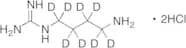
CAS:<p>Applications 1-(4-Hydroxy-3-methoxyphenyl)-1-propanone is a derivative of Guaiacol, a precursor to various flavorants, such as eugenol and vanillin.<br>References Allen, C., et al.: Org. Synth., 3, 418 (1955); Esposito, L., et al.: Kirk-Othmer Encyclopedia of Chemical Technology, 4th edition, 24, 812 (1997)<br></p>Formula:C10H12O3Color and Shape:NeatMolecular weight:180.204-Aminobutyl-d8 Guanidine Dihydrochloride
CAS:Controlled Product<p>Applications 4-Aminobutyl-d8 Guanidine is the labelled analog of the decarboxylation product of the amino acid arginine (A769500) and also an intermediate in polyamine biosynthesis.<br>References Golding, B.T., et al.: Biochem. Soc. Trans., 22, 391S (1994);<br></p>Formula:C5H6D8N4·2HClColor and Shape:NeatMolecular weight:211.162631-[2-Nitro-4-(trifluoromethyl)phenyl]piperidine-4-carboxylic acid
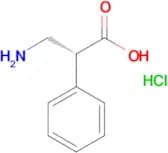
CAS:Molecular weight:318.25201416015625(+)-a-Methyl-b-alanine
CAS:Controlled Product<p>Applications (+)-α-Methyl-β-alanine is a reactant for the chemoenzymatic assembly of cryptophycins as potent anticancer therapeutics.<br>References Magarvey, N.A., et al.: ACS Chem. Biol., 1, 766-779 (2006)<br></p>Formula:C4H9NO2Color and Shape:NeatMolecular weight:103.120D-Aspartic Acid
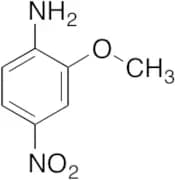
CAS:<p>Applications A non-essential amino acid found in food sources and dietary supplements. Its conjugate base D-aspartate has potential use as a a therapeutic agent in the treatment of schizophrenia-related symptoms.<br>References Errico, F. et al.: J. Neurosci., 28, 10404 (2008); Denu, J.M. et al.: Biochem., 34, 3396 (1995); Chen, P.E. et al.: Mol. Pharmacol., 67, 1470 (2005);<br></p>Formula:C4H7NO4Color and Shape:NeatMolecular weight:133.102-Methoxy-4-nitroaniline
CAS:<p>Applications 2-Methoxy-4-nitroaniline is a derivative of 4-Nitroaniline (N491770), which is used in the synthesis of photorefractive polymers, as novel chromophores in analytical study. As well, due to the absorption spectrum associated with 4-Nitroaniline, it is used to determine catechol derivatives in syntheses.<br>References Nagaraja, P. et al.: J. Pharm. Biomed. Anal., 25, 417 (2001);<br></p>Formula:C7H8N2O3Color and Shape:YellowMolecular weight:168.15Caerulein (>85%)
CAS:Controlled Product<p>Applications Caerulein is a ten amino acid oligopeptide that stimulates smooth muscle and increases digestive secretions. It is similar in action and composition to cholecystokinin. It stimulates gastric, biliary, and pancreatic secretion; and certain smooth muscle. It is used in paralytic ileus and as diagnostic aid in pancreatic malfunction. It is used to induce pancreatitis in experimental animal models.<br>References Anastasi,E., et al.: Ep., 23, 699 (1997); De Caro, G., et al.: Br. J. Pharmac Chemother., 33, 48 (1968)<br></p>Formula:C58H73N13O21S2Purity:~90%Color and Shape:Off-WhiteMolecular weight:1352.408-ethyl-4-(naphthalene-2-carbonyl)-1-oxa-4,8-diazaspiro[4.5]decane-3-carboxylic acid
CAS:Purity:95.0%Molecular weight:368.4330139160156N-Methyl-p-toluenesulfonamide
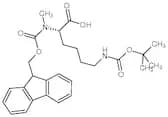
CAS:Controlled Product<p>Applications N-Methyl-p-toluenesulfonamide is an intermediate used in the synthesis of vicinal haloamino ketone derivative.<br>References Sun, H., et al.: Chem. Biol. Drug Design, 75, 269 (2010)<br></p>Formula:C8H11NO2SColor and Shape:NeatMolecular weight:185.243Fmoc-n-me-lys(boc)-oh
CAS:Controlled Product<p>Applications Fmoc-n-me-lys(boc)-oh<br></p>Formula:C27H34N2O6Color and Shape:NeatMolecular weight:482.569(2R)-3-Amino-2-fluoropropanoic Acid-13C3
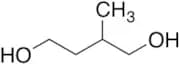
CAS:Controlled ProductFormula:C3H6FNO2Color and Shape:NeatMolecular weight:110.062-Methyl-1,4-butanediol
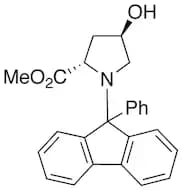
CAS:Controlled Product<p>Stability Unstable in Aqueous Solution<br>Applications 2-METHYL-1,4-BUTANEDIOL (cas# 2938-98-9) is a useful research chemical.<br></p>Formula:C5H12O2Color and Shape:NeatMolecular weight:104.15(4R, 2S)-4-Hydroxy-1-(9-phenyl-9H-fluoren-9-yl)-proline Methyl Ester
CAS:Controlled Product<p>Applications (4R, 2S)-4-Hydroxy-1-(9-phenyl-9H-fluoren-9-yl)-proline Methyl Ester (cas# 179990-59-1) is a compound useful in organic synthesis.<br></p>Formula:C25H23NO3Color and Shape:Light BrownMolecular weight:385.463-Methyl-2-buten-1-ol-d6 (d5 Major) (Contain ~3% d0)
CAS:Controlled Product<p>Applications Important compounds in coffee aroma.<br> Not a dangerous good if item is equal to or less than 1g/ml and there is less than 100g/ml in the package<br></p>Formula:C52H6H4OColor and Shape:NeatMolecular weight:92.17N-Acetyl-S-(carbamoylethyl)-L-cysteine-d3
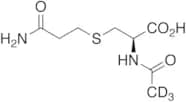
CAS:Controlled Product<p>Stability Hygroscopic<br>Applications Labelled N-Acetyl-S-(carbamoylethyl)-L-cysteine (A171870). N-Acetyl-S-(carbamoylethyl)-L-cysteine is the urinary metabolite of Acrylamide (AA). Acrylamide is formed during the heating of food and is classified as a genotoxic carcinogen.<br>References Besaratinia, A., et al.: Mutat. Res., 80, 31 (2005), Bjellaas, T., et al.: Xenobiotica, 35, 1003 (2005), Bjellaas, T., et al.: Food Chem. Toxicol., 45, 1020 (2007), Bjellaas, T., et al.: Toxicol. Sci., 98, 110 (2007),<br></p>Formula:C8H11D3N2O4SColor and Shape:Off-WhiteMolecular weight:237.29NG,NG-Dimethylarginine-D6 Dihydrochloride
CAS:Controlled Product<p>Stability Very Hygroscopic<br>Applications A potent inhibitor of NO synthase of adrenal glands, brain, and vascular endothelial cells.<br>References Vallence, P., et al.: Lancet, 339, 572 (1992),<br></p>Formula:C8H14D6Cl2N4O2Color and Shape:NeatMolecular weight:281.214-Methylhexanoic Acid
CAS:Controlled Product<p>Applications 4-Methylhexanoic Acid<br></p>Formula:C7H14O2Color and Shape:Colourless To Light YellowMolecular weight:130.18L-Alanine-d3
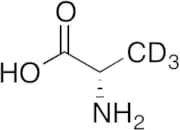
CAS:Controlled Product<p>Applications L-Alanine-d3 is the labeled analogue of L-Alanine (A481500), which is used to make in-vivo measurement of glucose and alanine metabolism in studies of patients with diabetes. L-Alanine is a non-essential amino acid for human development. L-Alanine is one of the 20 amino acids encoded by the genetic code.<br>References Bier, D.M. et al.: Diabetes, 26, 1005 (1977); Capaldo, B. et al.: J. Clin. Endocrinol. Metab., 71, 1220 (1990); Giacca, A. et al.: Diabetes, 47, 1763 (1998)<br></p>Formula:C3D3H4NO2Color and Shape:NeatMolecular weight:92.11Nε-(1-Carboxymethyl)-L-lysine-d4
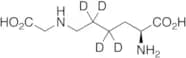
CAS:Controlled Product<p>Stability Hygroscopic<br>Applications CEL and CML are two stable, nonenzymatic chemical modifications of protein lysine residues resulting from glycation and oxidation reactions.<br>References Fu, M.X., et al.: J. Biol. Chem., 271, 9982 (1996), Ahmed M.U., et al.: Biochem.J., 324, 565 (1997), Schleicher, E.D., et al.: J. Clin. Invest., 99, 457 (1997), Shibayama, R., et al.: Diabetes, 48, 1842 (1999),<br></p>Formula:C8H12D4N2O4Color and Shape:NeatMolecular weight:208.25L-Cysteine-15N,d3
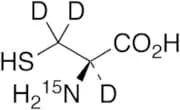
CAS:Controlled ProductFormula:C3D3H415NO2SColor and Shape:NeatMolecular weight:125.17Myristoyl-L-carnitine Hydrochloride
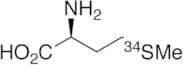
CAS:Controlled Product<p>Applications Myristoyl-L-carnitine Hydrochloride is a long-chain fatty ester of carnitine which is accumulated and released into the circulation, in fatty-acid oxidation defects. Pattern of Lauroyl-L-carnitine can be diagnostic for a number of ß-oxidation defects.<br>References Ventura, F., et al.: Clinica Chimica Acta, 281, 1 (1999); Pourfarzam, M., et al.: Clinical Chem,, 40, 2267 (1994); Schaefer, J., et al.: Pediatric Res., 37, 354 (1995)<br></p>Formula:C21H42ClNO4Color and Shape:NeatMolecular weight:408.02L-Methionine-34S
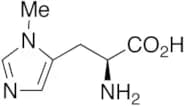
CAS:<p>Applications Labelled L-Methionine, an essential aminoacid for human development. Hepatoprotectant; antidote (acetominophen poisoning); urinary acidifier.<br>References Benevenga, N.J., et al.: J. Agric. Food Chem., 22, 2 (1974), Fleisher, L.D., et al.: Clin. Endocrinol. Metab., 3, 37 (1974), Meinnel, T., et al.: Biochimie, 75, 1061 (1993),<br></p>Formula:C5H11NO234SColor and Shape:NeatMolecular weight:151.113-N-Methyl-L-histidine
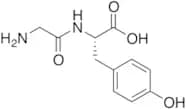
CAS:<p>Applications 3-N-Methyl-L-histidine is a potential compound to be used as a treatment with pharmacological PPARα agonists to stimulate the ubiquitin proteasome pathway and myofibrillar protein breakdown in skeletal muscle of rodents.<br>References Ringseis, R., et al.: Biochem. Biphys. Gen. Subject., 1830, 2105 (2013); Ubhi, B.K., et al.: Molec. Biosys., 8, 3125 (2012);<br></p>Formula:C7H11N3O2Color and Shape:NeatMolecular weight:169.18Glycyl-L-Tyrosine Dihydrate
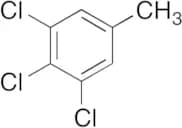
CAS:Controlled Product<p>Applications Glycyl-L-Tyrosine Dihydrate is used in process for producing N-Glycyltyrosine. Glycyl-L-Tyrosine Dihydrate is the anhydrous form of Glycyl-L-tyrosine(G720108); which is used in preparation method of high quality Aspartame and Aspartame crystallization-inducing agent.<br>References Mimura, T., et al.: Eur. Pat. Appl., (1999); Gao, Z., et al.: Faming Zhuanli Shenqing, (2019);<br></p>Formula:C11H14N2O4·2H2OColor and Shape:NeatMolecular weight:274.271,2,3-Trichloro-5-methylbenzene
CAS:<p>Applications 1,2,3-Trichloro-5-methylbenzene is useful in calculating 21 physical properties of organic compounds strictly from molecular structure.<br> Not a dangerous good if item is equal to or less than 1g/ml and there is less than 100g/ml in the package<br>References Jain, N., et al.: J. Pharm. Sci., 88, 852-860 (1999)<br></p>Formula:C7H5Cl3Color and Shape:White To Off-WhiteMolecular weight:195.4744,4'-Methylene-d2-dianiline
CAS:Controlled Product<p>Applications 4,4'-Methylene-d2-dianiline (CAS# 215590-72-0) is a useful isotopically labeled research compound.<br></p>Formula:C13H12D2N2Color and Shape:NeatMolecular weight:200.286-Hydroxy-L-DOPA
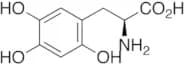
CAS:Controlled Product<p>Impurity Levodopa EP Impurity A; Levodopa USP Related Compound A<br>Stability Hygroscopic<br>Applications 6-Hydroxy-L-DOPA (Levodopa EP Impurity A; Levodopa USP Related Compound A) is the 6-hydroxy derivative of the amino acid L-DOPA (D533751) with neurotoxic properties. Studies show that exogenously administered 6-Hydroxy-L-DOPA is biotransformed by amino acid decarboxylase to the highly potent and catecholamine-selective neurotoxin, 6-Hydroxydopamine. The treatment of 6-Hydroxy-L-DOPA in rats resulted in the stimulation of acetylcholinesterase.<br>References Jaim-Etcheverry, G. et al.: Brain Res., 100, 699 (1975); Kostrzewa, R.M. et al.: Amino Acids, 14, 175 (1998); Berthet, A. et al.: J. Neurosci., 29, 4829 (2009);<br></p>Formula:C9H11NO5Color and Shape:Brown To BlackMolecular weight:213.19L-Ornithine-2,3,3,4,4,5,5-d7 hydrochloride
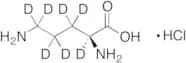
CAS:Controlled Product<p>Applications L-Ornithine-2,3,3,4,4,5,5-d7 hydrochloride is the labelled analogue of L-Ornithine Hydrochloride (O695550), a non-essential amino acid for human development but is required intermediate in arginine biosynthesis. L-Ornithine is found in virtually all vertebrate tissues as well as incorporated into proteins, such as tyrocidine. Isolation from chicken excreta.<br>References Fattori, D., et al.: J. Med. Chem., 50, 550 (2007), Gomez-Alonso, S., et al.: J. Agric. Food Chem., 55, 608 (2007), Subramaniam, R., et al.: Bioorg. Med. Chem. Lett., 18, 3333 (2008),<br></p>Formula:C5D7H5N2O2·ClHColor and Shape:NeatMolecular weight:175.1104926088Isobutyryl L-Carnitine Chloride
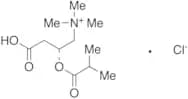
CAS:Controlled ProductFormula:C11H22NO4·ClColor and Shape:NeatMolecular weight:267.753-Methyl-1,3,5-pentanetriol (Technical Grade)
CAS:Controlled Product<p>Applications 3-Methyl-1,3,5-pentanetriol is used in the synthesis of Mevalonolactone (M339040), in the synthesis of vitamins and isoprenoids such as steroids.<br>References Yamashita, H. et al.: Frag. J., 28, 62 (2000); Huang, F. et al.: J. Am. Chem. Soc., 97, 4144 (1975);<br></p>Formula:C6H14O3Color and Shape:NeatMolecular weight:134.17N-Benzyl-L-tyrosine
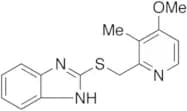
CAS:Controlled Product<p>Applications Protected L-Tyrosine (T899975), an amino acid, used by cells to synthesize proteins. L-Tyrosine is biologically converted from L-phenylalanine and is in turn is converted to L-DOPA and further converted into the neurotransmitters: dopamine, norepinephrine, and epinephrine.<br>References Rasmussen D.D. et al.: J. Clin. Endocrinol. Metab., 57, 760 (1983); Bagchi, S.P. et al.: Biochem. Pharmacol., 26, 900 (1977)<br></p>Formula:C16H17NO3Color and Shape:NeatMolecular weight:271.324-Desmethoxypropoxyl-4-methoxy S-Deoxo Rabeprazole
CAS:Controlled Product<p>Impurity Rabeprazole EP Impurity G<br>Applications Used in the preparation of 2-[[(2-pyridyl)methyl]thio]-1H-benzimidazoles derivatives as anti helicobacter pylori agents.<br>References Kuehler, T. et al.: J. Med. Chem., 41, 1777 (1998)<br></p>Formula:C15H15N3OSColor and Shape:WhiteMolecular weight:285.361-Methoxy-2-propanol
CAS:Controlled Product<p>Applications 1-Methoxy-2-propanol is used as a reagent in the synthesis of 2-amino-3-carboxy-4-phenylthiophenes as novel atypical protein kinase C inhibitors. Also used as a reagent in the synthesis of Metolachlor (M338700); a selective pre-emergence herbicide.<br> Not a dangerous good if item is equal to or less than 1g/ml and there is less than 100g/ml in the package<br>References Titchenell, P.M., et al.: Bioorg. Med. Chem. Lett., 23, 3034 (2013); Zhang, H.: Nongyao Kexue Yu Guanli, 32, 26 (2011)<br></p>Formula:C4H10O2Color and Shape:ColourlessMolecular weight:90.12D-Arginine
CAS:Controlled Product<p>Applications D-Arginine is an unnatural isomer of L-Arginine (A769505), and is used to inhibit glutamate-induced nitric oxide production in rats. Derivatives of D-Arginine are used for pharmaceutical purposes, one example is 1-Deamino-8-D-arginine vasopressin, which is used to treat various bleeding disorders.<br>References Castellano, M., et al.: Neurosci. Lett., 314, 127 (2001); Kobrinsky, N., et al.: Lancet, 323, 1145 (1984); Weyrich, A., et al.: Circulation, 86, 279 (1992)<br></p>Formula:C6H14N4O2Color and Shape:NeatMolecular weight:174.203-[(1-methyl-1H-pyrazolo[3,4-d]pyrimidin-4-yl)amino]benzoic acid
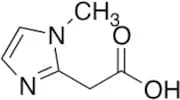
CAS:Purity:95.0%Molecular weight:269.2640075683594(1-Methyl-1H-imidazol-2-yl)-acetic Acid
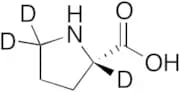
CAS:Controlled Product<p>Applications (1-Methyl-1H-imidazol-2-yl)-acetic acid (cas# 118054-54-9) is a useful research chemical.<br></p>Formula:C6H8N2O2Color and Shape:Off WhiteMolecular weight:140.14L-Proline-2,5,5-d3
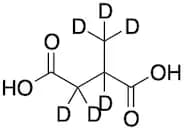
CAS:Controlled ProductFormula:C5D3H6NO2Color and Shape:NeatMolecular weight:118.149(±)-2-Methyl-d3-succinic-2,3,3-d3 Acid
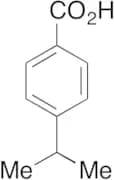
CAS:Controlled Product<p>Applications (±)-2-Methyl-d3-succinic-2,3,3-d3 Acid (CAS# 347840-08-8) is a useful isotopically labeled research compound.<br></p>Formula:C5D6H2O4Color and Shape:NeatMolecular weight:138.154-(1-Methylethyl)benzoic Acid
CAS:<p>Applications 4-(1-Methylethyl)benzoic Acid is used in the synthesis of quinuclidine benzamides as agonists for nicotinic acetylcholine receptors. Also used in the synthesis of nifuroxazide analogues showing antimicrobial activity against methicillin-resistant Staphylococcus.<br>References Bodnar, A. et al.: J. Med. Chem., 48, 905 (2005); Masunari, A. et al.: Bioorg. Med. Chem. Lett., 15, 4229 (2007);<br></p>Formula:C10H12O2Color and Shape:NeatMolecular weight:164.24-(2-phenylbutanoyl)-8-propyl-1-oxa-4,8-diazaspiro[4.5]decane-3-carboxylic acid
CAS:Purity:95.0%Molecular weight:374.48098754882811-Isobutyl-2,3,4,9-tetrahydro-1H-pyrido[3,4-b]indole-3-carboxylic acid
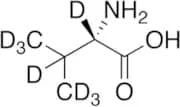
CAS:Purity:97%Molecular weight:272.3479919433594L-Valine-d8
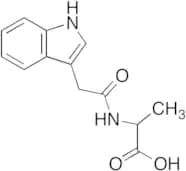
CAS:Controlled Product<p>Applications Labelled analogue of L-Vailne. L-Valine is an essential amino acid and one of 20 proteinogenic amino acids. L-Valine cannot be manufactured by the body and must be acquired through diet or supplementation. L-valine is found in grains, dairy products, mushrooms, meats, peanuts and soy proteins. L-Valine has been used in studies to attenuate arrhythmias and induce hypotensive effects.<br>References Choi, C.W. et al.: Anim. Feed Sci. Technol., 102, 15 (2002); Kolarski, D. et al.: Krmiva, 30, 155 (1988); Oba, M. et al.: J. Dairy Sci., 93, 2044 (2010); Mitrega, K. et al.: Pharmacol. Res., 64, 218 (2011);<br></p>Formula:C52H8H3NO2Color and Shape:NeatMolecular weight:125.20Indole-3-acetic-L-alanine
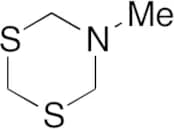
CAS:Controlled Product<p>Applications Indole-3-acetic-L-alanine is a derivative of the phytohormone indole-3-acetic acid (I577340) used in studies for the isolation and characterization of Arabdopsis thaliana mutants.<br>References Rampey, R.A., et al.: G3 (Bethesda), 3, 131-141 (2013)<br></p>Formula:C13H14N2O3Color and Shape:NeatMolecular weight:246.26Dihydro-5-methyl-4H-1,3,5-dithiazine
CAS:Controlled Product<p>Applications Dihydro-5-methyl-4H-1,3,5-dithiazine is used as a reagent in the synthesis of neovibsanin derivatives which have the ability to induce neuronal differentiation in PC12 cells.<br>References Annette, P.-J. C., et al.: Tetrahedron, 66, 6842 (2010)<br></p>Formula:C4H9NS2Color and Shape:NeatMolecular weight:135.251


![4-benzoyl-8-propyl-1-oxa-4,8-diazaspiro[4.5]decane-3-carboxylic acid](/_next/image/?url=https%3A%2Fstatic.cymitquimica.com%2Fproducts%2F10%2Fthumb-webp%2FF525714.webp&w=3840&q=75)


![1-[2-Nitro-4-(trifluoromethyl)phenyl]piperidine-4-carboxylic acid](/_next/image/?url=https%3A%2Fstatic.cymitquimica.com%2Fproducts%2F10%2Fthumb-webp%2FF034079.webp&w=3840&q=75)



![8-ethyl-4-(naphthalene-2-carbonyl)-1-oxa-4,8-diazaspiro[4.5]decane-3-carboxylic acid](/_next/image/?url=https%3A%2Fstatic.cymitquimica.com%2Fproducts%2F10%2Fthumb-webp%2FF525687.webp&w=3840&q=75)











![3-[(1-methyl-1H-pyrazolo[3,4-d]pyrimidin-4-yl)amino]benzoic acid](/_next/image/?url=https%3A%2Fstatic.cymitquimica.com%2Fproducts%2F10%2Fthumb-webp%2FF314870.webp&w=3840&q=75)
![4-(2-phenylbutanoyl)-8-propyl-1-oxa-4,8-diazaspiro[4.5]decane-3-carboxylic acid](/_next/image/?url=https%3A%2Fstatic.cymitquimica.com%2Fproducts%2F10%2Fthumb-webp%2FF525728.webp&w=3840&q=75)
![1-Isobutyl-2,3,4,9-tetrahydro-1H-pyrido[3,4-b]indole-3-carboxylic acid](/_next/image/?url=https%3A%2Fstatic.cymitquimica.com%2Fproducts%2F10%2Fthumb-webp%2FF695615.webp&w=3840&q=75)