


Amino Acids (AA)
Amino acids (AAs) are the fundamental building blocks of proteins, playing a crucial role in various biological processes. These organic compounds are essential for protein synthesis, metabolic pathways, and cell signaling. In this category, you will find a comprehensive range of amino acids, including essential, non-essential, and modified forms, which are vital for research in biochemistry, molecular biology, and nutritional sciences. At CymitQuimica, we provide high-quality amino acids to support your research and development needs, ensuring accuracy and reliability in your experimental outcomes.
Subcategories of "Amino Acids (AA)"
- Amino Acid Derivatives(3,955 products)
- Amino Acid and Amino Acid Related Compounds(3,464 products)
- Amino Acids with Oxygen or Sulphur(168 products)
- Boc- Amino Acids(351 products)
- Fmoc Amino Acids(1,710 products)
Found 38247 products of "Amino Acids (AA)"
Sort by
Purity (%)
0
100
|
0
|
50
|
90
|
95
|
100
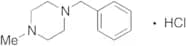
1-Methyl-4-(phenylmethyl)piperazine Hydrochloride
CAS:Controlled Product<p>Applications 1-Methyl-4-(phenylmethyl)piperazine hydrochloride is a useful synthetic intermediate.<br></p>Formula:C12H18N2·ClHColor and Shape:NeatMolecular weight:226.75a-Methacrylic Acid
CAS:Controlled Product<p>Stability Light Sensitive<br>Applications α-Methacrylic acid is used in chemistry as a stabilizing agent, forming a thin capping layer on the surface of nanoparticles. α-Methacrylic acid is also used as a surfactant, so that control is maintained during nanocrystal growth. α-Methacrylic acid is also used as a chelating agent.<br> Not a dangerous good if item is equal to or less than 1g/ml and there is less than 100g/ml in the package<br>References Peng, W., et al.: J. Cryst. Growth, 279, 454 (2005); Qu, S., et al.: Appl. Phys. Lett., 80, 3605 (2002); Zhao, G., et al.: Phys. C: Supercond., 468, 2317 (2008)<br></p>Formula:C4H6O2Color and Shape:ColourlessMolecular weight:86.092-Fluoro-3-methoxyphenylboronic acid
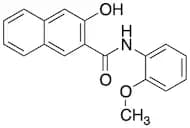
CAS:Controlled Product<p>Applications 2-Fluoro-3-methoxyphenylboronic acid<br></p>Formula:C7H8BFO3Color and Shape:NeatMolecular weight:169.953-Hydroxy-2'-methoxy-2-naphthanilide
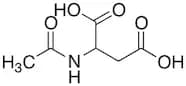
CAS:Controlled Product<p>Applications 3-Hydroxy-2'-methoxy-2-naphthanilide (cas# 135-62-6) is a useful research chemical.<br></p>Formula:C18H15NO3Color and Shape:NeatMolecular weight:293.31N-Acetyl-DL-aspartic Acid
CAS:Controlled Product<p>Applications N-Acetyl-DL-aspartic acid (cas# 2545-40-6) is a useful research chemical.<br></p>Formula:C6H9NO5Color and Shape:NeatMolecular weight:175.139Homocysteine-13C4,15N
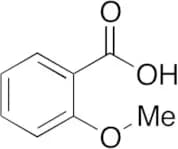
CAS:Controlled ProductFormula:C4H9NO2SColor and Shape:NeatMolecular weight:140.142-Methoxybenzoic Acid
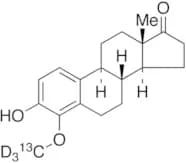
CAS:Controlled Product<p>Applications 2-Methoxybenzoic Acid is used in the preparation of benzohydroxamic acids as potent and selective anti-hepatitis C virus (HCV) agents.<br>References Kozlov, M.V., et al.: Bioorg. Med. Chem. Lett., 23, 5936 (2013)<br></p>Formula:C8H8O3Color and Shape:Off-WhiteMolecular weight:152.154-Methoxy Estrone-13C,d3
CAS:Controlled Product<p>Applications Labelled 4-Methoxyestrone (M226135). An endogenous estrogen metabolite, risk-factor for development of breast cancer.<br>References Beral, V., et al.: Lancet, 362, 419 (2003), Nelson, R., et al.: Clin. Chem., 50, 373 (2004), Malekinejad, H., et al.: J. Agric. Food Chem., 54, 9785 (2006),<br></p>Formula:CC182H3H21O3Color and Shape:Off-White To Light YellowMolecular weight:304.40(4S)-4-Hydroxy-L-isoleucine
CAS:Controlled Product<p>Applications (4S)-4-Hydroxy-L-isoleucine is 4S isomer of 4-Hydroxyisoleucine, which is used as a treatment for type II diabetes.<br>References Martinez-Force, E., et al.: Biotechnol. Tech., 5, 209 (1991); Sauvaire, Y., et al.: Diabetes, 47, 206 (1998), Narender, T., et al.: Bioorg. Med. Chem. Lett., 2006, 16, 293 (2006);<br></p>Formula:C6H13NO3Color and Shape:NeatMolecular weight:147.174-(3-fluorobenzoyl)-8-propyl-1-oxa-4,8-diazaspiro[4.5]decane-3-carboxylic acid
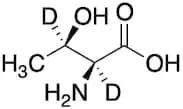
CAS:Purity:95.0%Molecular weight:350.3900146484375L-Threonine-2,3-d2
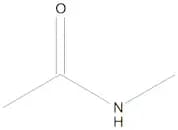
CAS:Controlled Product<p>Applications L-Threonine-2,3-d2 (CAS# 1202936-45-5) is a useful isotopically labeled research compound.<br></p>Formula:C4D2H7NO3Color and Shape:NeatMolecular weight:121.13N-Methylacetamide
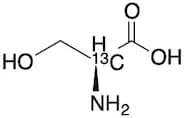
CAS:Controlled Product<p>Applications N-Methylacetamide can be used for the synthesis of N-sulfonyl amidines and acyl sulfonyl ureas.Environmental contaminants; food contaminants.<br>References Chow, S. Y., et al.: J. Org. Chem. 82, 2515 (2017)<br></p>Formula:C3H7NOColor and Shape:NeatMolecular weight:73.09L-Serine-2-13C
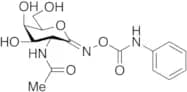
CAS:Controlled Product<p>Applications Isotope labelled L-Serine is used in the synthesis of purines and pyrimidines as antibacterial/antifungal agents, as well as acting as a proteinogenic compound.<br>References Olivella, M. et al.: Bioorg. Med. Chem., 20, 6109 (2012);<br></p>Formula:C213CH7NO3Color and Shape:NeatMolecular weight:106.09Galacto-PUGNAc (>90%)
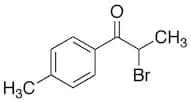
CAS:Controlled Product<p>Stability Moisture and Temperature Sensitive<br>Applications Galacto-PUGNAc is a highly selective inhibitor for β-hexosaminidases HEXA and HEXB is cell-permeable. Galacto-PUGNAc is able to modulate the activity of HEXA and HEXB in tissue culture, increasing ganglioside GM2 levels in neuroblastoma cells<br>References Stubbs, K.A. et al.: Angew. Chem. Int. Ed., 48, 1300 (2009);<br></p>Formula:C15H19N3O7Purity:>90%Color and Shape:NeatMolecular weight:353.332-Bromo-4'-methylpropiophenone
CAS:<p>Applications 2-Bromo-4'-methylpropiophenone (cas# 1451-82-7) is a compound useful in organic synthesis.<br></p>Formula:C10H11BrOColor and Shape:NeatMolecular weight:227.10L-Phenylalanine-13C6
CAS:Controlled Product<p>Applications Labelled analogue of L-Phenylalanine, an essential amino acid. L-Phenylalanine is biologically converted into L-tyrosine, another one of the DNA-encoded amino acids, which in turn is converted to L-DOPA and further converted into dopamine, norepinephrine, and epinephrine. L-Phenylalanine is produced for medical, feed, and nutritional applications such as in the preparation of Aspartame.<br>References Hollunger, G. et al.: Acta Pharmacol. Toxicol., 34, 391 (1974); Bagchi, S.P. et al.: Biochem. Pharmacol., 26, 900 (1977);<br></p>Formula:C313C6H11NO2Color and Shape:White To Off-WhiteMolecular weight:171.15L-Anserine Nitrate Salt
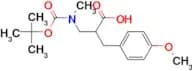
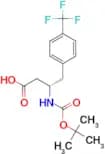
CAS:Controlled Product<p>Applications L-Anserine Nitrate Salt (cas# 10030-52-1) is a compound useful in organic synthesis.<br></p>Formula:C10H16N4O3·HNO3Color and Shape:NeatMolecular weight:303.272-N-Boc-3-(4-Methoxy-phenyl)-2-methylaminomethyl-propionic acid
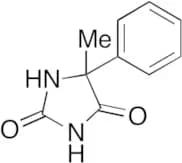
CAS:Formula:C17H25NO5Purity:97.0%Color and Shape:SolidMolecular weight:323.3895-Methyl-5-phenylhydantoin
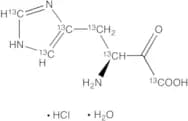
CAS:Controlled Product<p>Applications 5-Methyl-5-phenylhydantoin is a reactant for synthesis of beta-amino alcohols as inhibitors of anti-tubercular target N-acetyltransferase, chlorohydantoins and specific MMP inhibitors.<br>References Fullam, E., et al.: Bioorg. Med. Chem. Lett., 21, 1185 (2011); Whitehead, D., et al.: Tetrahedron Lett., 50, 3 (2009); Chollet, A., et al.: Bioorg. Med. Chem., 10, 531 (2002)<br></p>Formula:C10H10N2O2Color and Shape:NeatMolecular weight:190.20L-Histidine Hydrochloride Hydrate (<5% D) (13C6, 97-99%)
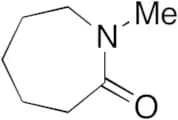
CAS:Controlled ProductFormula:C6H9N3O2•(HCl)•(H2O)Purity:97-99%Color and Shape:NeatMolecular weight:161.1136461802N-Methylcaprolactam
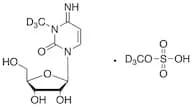
CAS:<p>Applications N-Methylcaprolactam is a reagent that is used in the synthesis of 3-Chloro-4-(dichloromethyl)-5-hydroxy-2(5H)-furanone-13C5, which is a chlorinated furanone that accounts for more of the mutagenic activity of drinking water than any other disinfection byproduct.<br></p>Formula:C7H13NOColor and Shape:NeatMolecular weight:127.183-Methyl Cytidine-d3 Methosulfate-d3
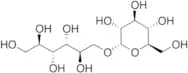
CAS:Controlled Product<p>Applications Labelled Cytidine derivative.<br>References Ueda, T., et al.: Chem. Pharmaceut. Bull., 22, 2377 (1974),<br></p>Formula:C10D3H12N3O5·CD3HO4SColor and Shape:NeatMolecular weight:375.3851-O-α-D-Glucopyranosyl-D-mannitol
CAS:Controlled Product<p>Applications 1-O-ALPHA-D-GLUCOPYRANOSYL-D-MANNITOL is used in the nutritional and biochemical investigations on disaccharide alcohols.<br>References Grupp, U., et al.: Nutr. Metab., 21, 63 (1977)<br></p>Formula:C12H24O11Color and Shape:NeatMolecular weight:344.31L-Histidinol Dihydrochloride
CAS:Controlled ProductFormula:C6H11N3O·2ClHColor and Shape:NeatMolecular weight:214.094-Methyl-2-(4-(trifluoromethyl)phenyl)thiazole-5-carboxylic Acid
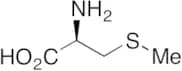
CAS:Controlled Product<p>Applications 4-methyl-2-(4-(trifluoromethyl)phenyl)thiazole-5-carboxylic acid (cas# 144059-86-9) is a useful research chemical.<br></p>Formula:C12H8F3NO2SColor and Shape:NeatMolecular weight:287.26S-Methyl-L-cysteine
CAS:Controlled Product<p>Applications S-Methyl-L-cysteine is a substrate in the catalytic antioxidant system mediated by methionine sulfoxide reductase A (MSRA). It has been studied as a theurapeutic for neurodegenerative diseases including Parkinson′s.<br>References Wassef, R., et al.: J. Neurosci., 21, 12808 (2007)<br></p>Formula:C4H9NO2SColor and Shape:NeatMolecular weight:135.19(±)-Aspartic Acid
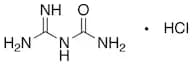
CAS:<p>Applications (±)-Aspartic Acid, is a non-essential amino acid found in food sources. Its conjugate base D-aspartate has potential use as a a therapeutic agent in the treatment of schizophrenia-related symptoms.<br>References Errico, F. et al.: J. Neurosci., 28, 10404 (2008); Denu, J.M. et al.: Biochem., 34, 3396 (1995); Chen, P.E. et al.: Mol. Pharmacol., 67, 1470 (2005);<br></p>Formula:C4H7NO4Color and Shape:NeatMolecular weight:133.10Carbamoyl-guanidine Amidino Urea
CAS:Controlled Product<p>Applications Carbamoyl-guanidine Amidino Urea Salt, Hydrochloride salt (cas# 926-72-7) is a compound useful in organic synthesis.<br></p>Formula:C2H6N4O·ClHColor and Shape:NeatMolecular weight:138.56KRN7000
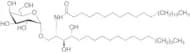
CAS:Controlled Product<p>Stability Hygroscopic<br>Applications Galactosylceramides play an important roles in promoting the regulation of nerve cells, regulating protein kinase C activities and modulating the function of the hormone receptor. It has shown to have significant immunostimulatory and anti-umor activity in mice with liver metastasis of the Colon26 adenocarcinoma.<br>References Morita, M., et al.: J. Med. Chem., 38, 2176 (1995), Sakai, T., et al.: J. Med. Chem., 42, 1836 (1999),<br></p>Formula:C50H99NO9Color and Shape:NeatMolecular weight:858.32D-Homocystine
CAS:Controlled Product<p>Applications D-Homocysteine is the stereoisomer of L-Homocystine, increased levels lead to hyperhomocysteinemia; a cardiovascular risk factor in prediction of coronary heart disease as well as being associated with congenital birth defects, pregnancy complications and cancer.<br>References Geisel, J. et al.: Clin. Chem. Lab. Med., 41, 1513 (2003); Geisel, J. et al.: Clin. Chem. Lab. Med., 41, 1513 (2003);<br></p>Formula:C8H16N2O4S2Color and Shape:WhiteMolecular weight:268.35{5-[1-(benzylamino)cyclohexyl]-1H-tetrazol-1-yl}acetic acid
CAS:Purity:95.0%Molecular weight:315.377014160156252-((4-Phenoxyphenyl)amino)-4-methyl-1,3-thiazole-5-carboxylic acid, 95%
Molecular weight:326.36999511718754-(3,4-dichlorobenzoyl)-8-ethyl-1-oxa-4,8-diazaspiro[4.5]decane-3-carboxylic acid
CAS:Purity:95.0%Molecular weight:387.260009765625(+)-a-Methyl-b-alanine
CAS:Controlled Product<p>Applications (+)-α-Methyl-β-alanine is a reactant for the chemoenzymatic assembly of cryptophycins as potent anticancer therapeutics.<br>References Magarvey, N.A., et al.: ACS Chem. Biol., 1, 766-779 (2006)<br></p>Formula:C4H9NO2Color and Shape:NeatMolecular weight:103.1204'-Methylacetanilide
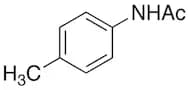
CAS:Controlled Product<p>Applications 4'-Methylacetanilide (cas# 103-89-9) is a compound useful in organic synthesis.<br></p>Formula:C9H11NOColor and Shape:NeatMolecular weight:149.191-(2-Isopropylthiazol-4-yl)-N-methylmethanamine Dihydrochloride
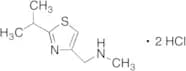
CAS:<p>Applications 1-(2-Isopropylthiazol-4-yl)-N-methylmethanamine dihydrochloride (cas# 1185167-55-8) is a useful research chemical.<br></p>Formula:C8H14N2S·2ClHColor and Shape:NeatMolecular weight:243.20N-Boc-3-cyclopentylamino-propionic acid
CAS:Purity:98.0%Color and Shape:Solid, Colourless powderMolecular weight:257.32998657226564-Hydroxymethyl-5-methylimidazole
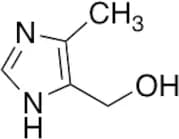
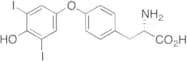
CAS:Controlled Product<p>Applications 4-Hydroxymethyl-5-methylimidazole (cas# 29636-87-1) is a useful research chemical.<br></p>Formula:C5H8N2OColor and Shape:NeatMolecular weight:112.133’,5’-Diiodo-L-thyronine
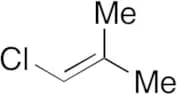
CAS:Controlled Product<p>Applications 3’,5’-Diiodo-L-thyronine is a thyroid hormone that has been shown to increase malic enzyme activity, and the activity of glucose-6-phosphate dehydrogenase in teleost Anabas testudineus. Thus, showing short term effect on lipid metabolism.<br>References Davey, K.G.: Insect Biochem. Mol. Bio., 30, 877 (2000); Shameena, B., et. al.: Endocr. Res., 26, 431 (2000)<br></p>Formula:C15H13I2NO4Color and Shape:NeatMolecular weight:525.081-Chloro-2-methylpropene
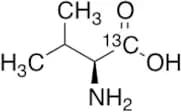
CAS:Controlled Product<p>Stability Volatile<br>Applications 1-Chloro-2-methylpropene is a reagent in the synthesis of pyrrolyl and indolyl diketo acids and esters as nucleotide-competitive non-nucleoside inhibitors of terminal deoxynucleotidyl transferase.<br> Not a dangerous good if item is equal to or less than 1g/ml and there is less than 100g/ml in the package<br>References Costi, R., et al.: J. Med. Chem., 56, 7431 (2013);<br></p>Formula:C4H7ClColor and Shape:NeatMolecular weight:90.55L-Valine-13C
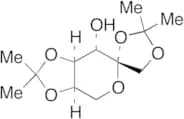
CAS:<p>Applications L-Valine (1-13c, 99%) (cas# 81201-85-6) is a useful research chemical.<br></p>Formula:C413CH11NO2Color and Shape:NeatMolecular weight:118.141,2:4,5-bis-O-(1-Methylethylidene)-β-D-Fructopyranose
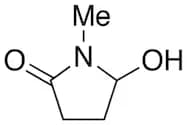
CAS:Controlled Product<p>Applications 1,2:4,5-bis-O-(1-Methylethylidene)-β-D-Fructopyranose is a reagent in the synthesis of antibacterial/antifungal monosaccaride esters. Also used in the synthesis of antihyperlipidemic novel compounds involving glycosyl fructose derivatives.<br>References Shen, Y. et al.: Molecules, 17, 8661 (2012); Tiwari, P. et al.: Bioorg. Med. Chem. Lett., 16, 6028 (2006);<br></p>Formula:C12H20O6Color and Shape:NeatMolecular weight:260.285-Hydroxy-N-methyl-2-pyrrolidinone
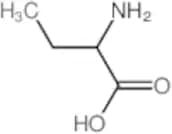
CAS:Controlled Product<p>Applications 5-Hydroxy-N-methyl-2-pyrrolidinone is a metabolite of N-methylpyrrolidone (NMP).<br>References Payan, J., et al.: Drug Metab. Dispos., 30, 1418 (2002), Carnerup, M., et al.: Food Chem. Toxicol., 43, 1441 (2005), Angerer, J., et al.: Toxicol. Sci., 93, 3 (2006),<br></p>Formula:C5H9NO2Color and Shape:NeatMolecular weight:115.13DL-2-aminobutyric acid
CAS:Controlled Product<p>Applications DL-2-aminobutyric acid<br></p>Formula:C4H9NO2Color and Shape:NeatMolecular weight:103.12β-Methylamino-L-alanine Dihydrochloride
CAS:Controlled ProductFormula:C4H10N2O2·2(HCl)Color and Shape:NeatMolecular weight:118.13 +2(36.46)8-propyl-4-(pyridine-4-carbonyl)-1-oxa-4,8-diazaspiro[4.5]decane-3-carboxylic acid
CAS:Purity:95.0%Molecular weight:333.38800048828125





![4-(3-fluorobenzoyl)-8-propyl-1-oxa-4,8-diazaspiro[4.5]decane-3-carboxylic acid](/_next/image/?url=https%3A%2Fstatic.cymitquimica.com%2Fproducts%2F10%2Fthumb-webp%2FF525731.webp&w=3840&q=75)






![{5-[1-(benzylamino)cyclohexyl]-1H-tetrazol-1-yl}acetic acid](/_next/image/?url=https%3A%2Fstatic.cymitquimica.com%2Fproducts%2F10%2Fthumb-webp%2FF313669.webp&w=3840&q=75)

![4-(3,4-dichlorobenzoyl)-8-ethyl-1-oxa-4,8-diazaspiro[4.5]decane-3-carboxylic acid](/_next/image/?url=https%3A%2Fstatic.cymitquimica.com%2Fproducts%2F10%2Fthumb-webp%2FF525681.webp&w=3840&q=75)



![8-propyl-4-(pyridine-4-carbonyl)-1-oxa-4,8-diazaspiro[4.5]decane-3-carboxylic acid](/_next/image/?url=https%3A%2Fstatic.cymitquimica.com%2Fproducts%2F10%2Fthumb-webp%2FF525739.webp&w=3840&q=75)