Amino Acids (AA)
Amino acids (AAs) are the fundamental building blocks of proteins, playing a crucial role in various biological processes. These organic compounds are essential for protein synthesis, metabolic pathways, and cell signaling. In this category, you will find a comprehensive range of amino acids, including essential, non-essential, and modified forms, which are vital for research in biochemistry, molecular biology, and nutritional sciences. At CymitQuimica, we provide high-quality amino acids to support your research and development needs, ensuring accuracy and reliability in your experimental outcomes.
Subcategories of "Amino Acids (AA)"
- Amino Acid Derivatives(3,955 products)
- Amino Acid and Amino Acid Related Compounds(3,469 products)
- Amino Acids with Oxygen or Sulphur(168 products)
- Boc- Amino Acids(351 products)
- Fmoc Amino Acids(1,710 products)
Found 38260 products of "Amino Acids (AA)"
Sort by
Purity (%)
0
100
|
0
|
50
|
90
|
95
|
100
N-Acetylisoleucine
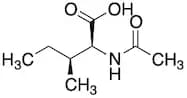
CAS:Controlled Product<p>Applications N-ACETYLISOLEUCINE (cas# 3077-46-1) is a useful research chemical.<br></p>Formula:C8H15NO3Color and Shape:NeatMolecular weight:173.2N-Methyl-p-tyramine
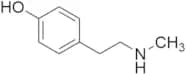
CAS:<p>Applications N-Methyl-p-tyramineúHCl (cas# 370-98-9) is a useful research chemical.<br></p>Formula:C9H13NOColor and Shape:BeigeMolecular weight:151.21L-Valine-13C
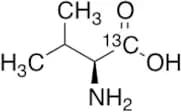
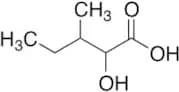
CAS:<p>Applications L-Valine (1-13c, 99%) (cas# 81201-85-6) is a useful research chemical.<br></p>Formula:C413CH11NO2Color and Shape:NeatMolecular weight:118.142-Hydroxy-3-methylpentanoic Acid (Mixture of Diastereomers)
CAS:Controlled Product<p>Applications 2-hydroxy-3-methylpentanoic acid (cas# 488-15-3) is a useful research chemical.<br></p>Formula:C6H12O3Color and Shape:NeatMolecular weight:132.15endo-9-Methyl-9-azabicyclo[3.3.1]nonan-3-amine Acetate
CAS:Controlled Product<p>Stability Hygroscopic<br>Applications endo-9-Methyl-9-azabicyclo[3.3.1]nonan-3-amine Acetate is an impurity of Granisetron HCl (G780000), a serotonin 5-HT3 receptor antagonist used as an antiemetic to treat nausea and vomiting following chemotherapy<br>References Kilpatrick, G.J., et al.: Nature, 330, 746 (1987), Durig, T., et al.: J. Pharm. Sci., 86, 1092 (1997), Yuasa, H., et al.: Chem. Pharm. Bull., 44, 1361 (1996),<br></p>Formula:C9H18N2·C2H4O2Color and Shape:NeatMolecular weight:214.31,1'-Carbonylbis(3-methylimidazolium) Triflate
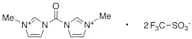
CAS:Controlled Product<p>Applications An efficient reagent for aminoacylations. Used in the synthesis of chiral Pilocarpine analogs via a C-8 ketone intermediate.<br>References Enz, A., et al.: Life Sci., 52, 513 (1993), Felder, C., et al.: J. Med. Chem., 43, 4333 (2000),<br></p>Formula:C9H12N4O·2CF3O3SColor and Shape:NeatMolecular weight:490.36Ethyl 3-(dimethylamino)-2-(2,4,5-trifluoro-3-methoxybenzoyl)acrylate
CAS:Formula:C15H16F3NO4Color and Shape:NeatMolecular weight:331.287L-Glutamine-amide-¹⁵N
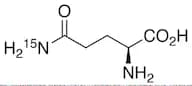
CAS:Controlled Product<p>Applications Labelled L-Glutamine (G597000). L-Glutamine is an essential amino acid that is a crucial component of culture media that serves as a major energy source for cells in culture. L-Glutamine is very stable as a dry powder and as a frozen solution. In liquid media or stock solutions, however, L-glutamine degrades relatively rapidly. Optimal cell performance usually requires supplementation of the media with L-glutamine prior to use.<br>References Rivett, A., et al.: J. Biol. Chem., 260, 300 (1985), Watford, M., et al.: Metabolism, 49, 141 (2000), Wilmore, D., et al.: J. Nutr., 131, 2543S (2001),<br></p>Formula:C5H1015NNO3Color and Shape:NeatMolecular weight:147.146-Chloro-2-methoxy-7-deazapurine
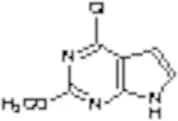
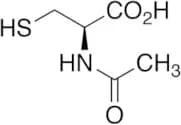
CAS:Controlled Product<p>Applications 6-Chloro-2-methoxy-7-deazapurine (cas# 90057-08-2) is a compound useful in organic synthesis.<br></p>Formula:C7H6ClN3OColor and Shape:NeatMolecular weight:183.60N-Acetyl-L-cysteine
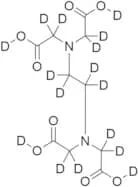
CAS:Controlled Product<p>Stability Air Sensitive<br>Applications A metabolite of Methyl Isocyanate.<br>References Slatter, J. G., et al.: Chem. Res. Toxicol., 4, 157 (1991),<br></p>Formula:C5H9NO3SColor and Shape:Light YellowMolecular weight:163.19Ethylenediaminetetraacetic Acid-d16
CAS:Controlled Product<p>Applications Ethylenediaminetetraacetic Acid-d16 (CAS# 203805-96-3) is a useful isotopically labeled research compound.<br></p>Formula:C10D16N2O8Color and Shape:White To Off-WhiteMolecular weight:308.34(2R)-2-Hydroxyglutaric Acid Disodium Salt
CAS:<p>Stability Hygroscopic<br>Applications A potential inhibitor of glutamate carboxypeptidase.<br>References Wolcott, T.G., et al.: Biochem. Biophys. Res. Commun., 57, 709 (1974), Knowles, P.F., et al.: Eur. J. Biochem., 114, 139 (1981),<br></p>Formula:C5H6O5·2NaColor and Shape:NeatMolecular weight:192.08L-Aspartic Acid
CAS:<p>Applications L-Aspartic Acid is a non-essential amino acid found in food sources. L-Aspartic Acid is one of the 20 proteinogenic amino acids; the building blocks of proteins. Its conjugate base L-aspartate is an excitatory neurotransmitter in the central nervous system.<br>References Ager, D.J. et al.: J. Mol. Catal. Enzym., 11, 199 (2001); Velisek, J. et al.: Cze. J. Food. Sci., 24, 1 (2006); Nagahama, M. et al.: Cell Tiss. Res., 318, 483 (2004);<br></p>Formula:C4H7NO4Color and Shape:WhiteMolecular weight:133.102-ACETAMIDO-2-(1-BOC-PIPERIDIN-4-YL)PROPANOIC ACID
CAS:Purity:95.0%Color and Shape:SolidMolecular weight:314.38198852539064-(2-chlorobenzoyl)-8-propyl-1-oxa-4,8-diazaspiro[4.5]decane-3-carboxylic acid
CAS:Purity:95.0%Molecular weight:366.83999633789062-(2,3-Dimethylphenyl)-2-[4-(2-fluorophenyl)piperazin-1-yl]acetic acid
CAS:Molecular weight:342.414001464843754-(3-fluorobenzoyl)-8-propyl-1-oxa-4,8-diazaspiro[4.5]decane-3-carboxylic acid
CAS:Purity:95.0%Molecular weight:350.39001464843752-Ethyl-4-methylpentyl Acrylate
Controlled Product<p>Stability Temperature Sensitive, Light Sensitive<br>Applications 2-Ethyl-4-methylpentyl Acrylate<br></p>Formula:C11H20O2Color and Shape:NeatMolecular weight:184.288-ethyl-4-(2,4,6-trimethylbenzoyl)-1-oxa-4,8-diazaspiro[4.5]decane-3-carboxylic acid
CAS:Purity:95.0%Molecular weight:360.45401000976562-[4-(2-Chlorophenyl)piperazin-1-yl]-2-(4-fluorophenyl)acetic acid
CAS:Molecular weight:348.799987792968752-Amino-5-butyl-6-methylpyrimidin-4(3H)-one
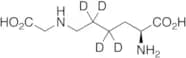
CAS:<p>Applications 2-amino-5-butyl-6-methylpyrimidin-4(3H)-one (cas# 4038-64-6) is a useful research chemical.<br></p>Formula:C9H15N3OColor and Shape:White To Off-WhiteMolecular weight:181.23Nε-(1-Carboxymethyl)-L-lysine-d4
CAS:Controlled Product<p>Stability Hygroscopic<br>Applications CEL and CML are two stable, nonenzymatic chemical modifications of protein lysine residues resulting from glycation and oxidation reactions.<br>References Fu, M.X., et al.: J. Biol. Chem., 271, 9982 (1996), Ahmed M.U., et al.: Biochem.J., 324, 565 (1997), Schleicher, E.D., et al.: J. Clin. Invest., 99, 457 (1997), Shibayama, R., et al.: Diabetes, 48, 1842 (1999),<br></p>Formula:C8H12D4N2O4Color and Shape:NeatMolecular weight:208.252-(3-Methoxyphenoxy)propanoic acid
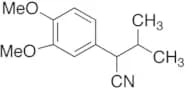
CAS:Controlled Product<p>Applications 2-(3-Methoxyphenoxy)propanoic acid<br></p>Formula:C10H12O4Color and Shape:NeatMolecular weight:196.23,4-Dimethoxy-a-(1-methylethyl)benzeneacetonitrile
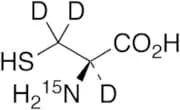
CAS:Controlled Product<p>Impurity Verapamil EP Impurity K<br>Applications (Verapamil EP Impurity K)<br></p>Formula:C13H17NO2Color and Shape:White To Light GreenMolecular weight:219.28L-Cysteine-15N,d3
CAS:Controlled ProductFormula:C3D3H415NO2SColor and Shape:NeatMolecular weight:125.174-(3-bromobenzoyl)-8-ethyl-1-oxa-4,8-diazaspiro[4.5]decane-3-carboxylic acid
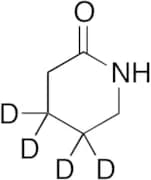
CAS:Purity:95.0%Molecular weight:397.2690124511719δ-Valerolactam-d4
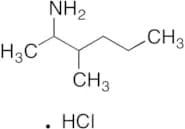
CAS:Controlled Product<p>Applications δ-Valerolactam-d4 is a labeled analog of δ-Valerolactam (V091440), which is a useful synthetic intermediate. It is an intermediate used to synthesize Cenicriviroc (C256550), an experimental drug candidate for the treatment of HIV infection. It is also a starting material for a new route to hexahydrojulolidines, using intramolecular 1,4-cycloaddition.<br>References Potts, K., et al. J. Org. Chem., 58, 5040 (1993); Klibanov, O., et al.: Curr. Opinion Invest. Drugs, 11, 940 (2010);<br></p>Formula:C5H5D4NOColor and Shape:NeatMolecular weight:103.163-Methyl-2-hexanamine Hydrochloride Salt
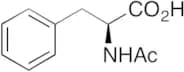
CAS:<p>Applications 3-Methyl-2-hexanamine HCl Salt is more stable and easier to purify compared to the free base.<br></p>Formula:C7H17N·HClColor and Shape:Off-White To BeigeMolecular weight:115.223646N-Acetyl-L-phenylalanine
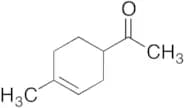
CAS:Controlled Product<p>Applications N-Acetyl-L-phenylalanine is an protected analogue of L-Phenylalanine (P319415), an essential amino acid produced for medical, feed, and nutritional applications such as in the preparation of Aspartame.<br>References Sriram, S., et al.: J. Med. Chem., 56, 2540 (2013); Parker, B.M., et al.: J. Biotech., 155, 396 (2011);<br></p>Formula:C11H13NO3Color and Shape:NeatMolecular weight:207.231-(4-Methyl-3-cyclohexen-1-yl)ethanone
CAS:<p>Applications 1-(4-methyl-3-cyclohexen-1-yl)ethanone is an essential oil found in Cedrus atlantica wood and orange peels.<br>References Uehara, Ayaka, et al.: Phytochemistry, 144, 208-215 (2017); Liu, Bo, et al.: Yancao Keji, (9), 52-56 (2014)<br></p>Formula:C9H14OColor and Shape:NeatMolecular weight:138.207N-Boc-propargylamine
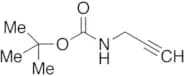
CAS:Controlled Product<p>Applications N-Boc-propargylamine is used in the preparation of triazolobenzylidene-thiazolopyrimidines which act as CDC25 phosphatase inhibitors. Also used in the synthesis of β-glucan polysaccharide analogs.<br>References Duval, R. et al.: J. Comb. Chem., 11, 947 (2009); Tanaka, H. et al.: Tetrahedron Lett., 53, 4104 (2012);<br></p>Formula:C8H13NO2Color and Shape:NeatMolecular weight:155.2Isodesmosine Chloride Hydrate (Synthetic)
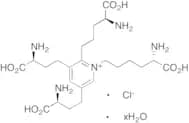
Controlled ProductFormula:C24H40N5O8·Cl·xH2OColor and Shape:NeatMolecular weight:526.61 + 35.45 + x(18.02)L-Leucic Acid
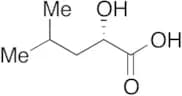
CAS:Controlled Product<p>Applications L-Leucic Acid is a reagent in the synthesis of cryptophycins based macrocyclic depsipeptides which are used as tubulin inhibitors.<br>References Kumar, A., et al.: Eur. J. Med. Chem., 93, 55 (2015)<br></p>Formula:C6H12O3Color and Shape:NeatMolecular weight:132.16Myristoyl-L-carnitine Hydrochloride
CAS:Controlled Product<p>Applications Myristoyl-L-carnitine Hydrochloride is a long-chain fatty ester of carnitine which is accumulated and released into the circulation, in fatty-acid oxidation defects. Pattern of Lauroyl-L-carnitine can be diagnostic for a number of ß-oxidation defects.<br>References Ventura, F., et al.: Clinica Chimica Acta, 281, 1 (1999); Pourfarzam, M., et al.: Clinical Chem,, 40, 2267 (1994); Schaefer, J., et al.: Pediatric Res., 37, 354 (1995)<br></p>Formula:C21H42ClNO4Color and Shape:NeatMolecular weight:408.023-Ethyl-3-methylheptane
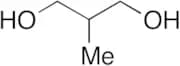
CAS:Controlled Product<p>Stability Volatile<br>Applications 3-ETHYL-3-METHYLHEPTANE (cas# 17302-01-1) is a useful research chemical.<br> Not a dangerous good if item is equal to or less than 1g/ml and there is less than 100g/ml in the package<br></p>Formula:C10H22Color and Shape:NeatMolecular weight:142.282-Methyl-1,3-propandiol (b-Hydroxyisobutanol)
CAS:Controlled Product<p>Applications β-Hydroxyisobutanol is used as a reagent in the synthesis of pyrazolo[1,5-a]pyridinecarbonyl-substituted spirocyclic piperidine ketals as inhibitors of HCV protein NS4B and of hepatitis C viral replication and their lack of cytotoxicity in human cells.<br>References Tai, V.W.-F., et al.: Bioorg. Med. Chem. Lett., 24, 2288 (2014);<br></p>Formula:C4H10O2Color and Shape:ColourlessMolecular weight:90.1214-Chloro-2-methylaniline Hydrochloride
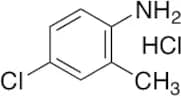
CAS:Controlled Product<p>Stability Hygroscopic<br>Applications 4-Chloro-2-methylaniline Hydrochloride (cas# 3165-93-3) is a useful research chemical.<br> Not a dangerous good if item is equal to or less than 1g/ml and there is less than 100g/ml in the package<br></p>Formula:C7H8ClN•HClColor and Shape:Off-WhiteMolecular weight:141.6036462,3-dihydroxy-3-methylbutanoic acid
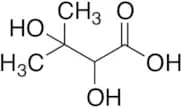
CAS:Controlled Product<p>Stability Moisture Sensitive<br>Applications 2,3-dihydroxy-3-methylbutanoic acid (cas# 1756-18-9) is a useful research chemical.<br></p>Formula:C5H10O4Color and Shape:NeatMolecular weight:134.13Hexanoyl-L-carnitine-(N-methyl-d3) Chloride
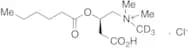
Controlled Product<p>Stability Hygroscopic<br>Applications Hexanoyl-L-carnitine-(N-methyl-d3) Chloride, is the labeled analogue of Hexanoyl-L-carnitine Hydrochloride (H294440), which is used as reactant in the synthesis of carnitine benzyl esters as prodrugs.<br>References Gong, X., et. al.: J. Chem. Res., 6, 327 (2008)<br></p>Formula:C13H23D3ClNO4Color and Shape:NeatMolecular weight:298.82S-Phenylmercapturic Acid-d5
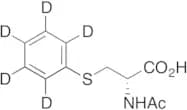
CAS:Controlled Product<p>Applications S-Phenylmercapturic Acid-d5 is the labelled analogue of S-Phenylmercapturic Acid (P335600), an important metabolite of Benzene.<br>References Qu, Q., et al.: Am. J. Ind. Med., 37, 522 (2000); Ghittori, S., et al.: Int. Arch. Occup. Environ. Health, 67, 195 (1995);<br></p>Formula:C11H8D5NO3SColor and Shape:NeatMolecular weight:244.32N-Acetyl-S-phenyl-d5-DL-cysteine
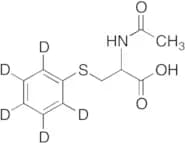
CAS:Controlled Product<p>Applications N-Acetyl-S-phenyl-d5-DL-cysteine is the deuterium labelled form of N-Acetyl-S-phenyl-DL-cysteine, which is used as a reactant in the preparation of potent HIV-1 protease inhibitors that use D-amino acids as P2/P3 ligands.<br>References Jungheim, L., et al.: J. Med. Chem., 39, 96 (1996);<br></p>Formula:C11D5H8NO3SColor and Shape:BrownMolecular weight:244.32Acetyl-d3 L-Carnitine Hydrochloride
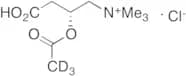
CAS:Controlled Product<p>Applications Acetyl-d3 L-Carnitine Hydrochloride is labelled Acetyl L-Carnitine Hydrochloride (A171990) which is used for transmembrane action potential studies. Acetylcarnitine has antinociceptive activity that may be mediated by enhanced activity of muscarinic cholinergic receptors or mGlu2 glutamate receptors.<br>References Matsui, K., et al.: Japanese J. Pharmcol., 39, 263 (1985); Chlechio, S., et al.: J. Endocrinol. Invest., 27, 171 (2004): Walker, R., et al.: Comparative General Pharmacol., 4, 65 (1973)<br></p>Formula:C92H3H15NO4·ClColor and Shape:NeatMolecular weight:242.72(R)-3-Amino-pentanoic acid
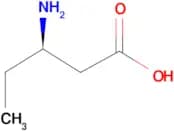
CAS:Formula:C5H11NO2Purity:95%Color and Shape:Solid, Light brown powderMolecular weight:117.148L-Homocystine
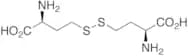
CAS:Controlled Product<p>Applications Increased levels lead to hyperhomocysteinemia; a cardiovascular risk factor in prediction of coronary heart disease as well as being associated with congenital birth defects, pregnancy complications and cancer.<br>References Geisel, J. et al.: Clin. Chem. Lab. Med., 41, 1513 (2003); Geisel, J. et al.: Clin. Chem. Lab. Med., 41, 1513 (2003);<br></p>Formula:C8H16N2O4S2Color and Shape:NeatMolecular weight:268.35

![endo-9-Methyl-9-azabicyclo[3.3.1]nonan-3-amine Acetate](/_next/image/?url=https%3A%2Fstatic.cymitquimica.com%2Fproducts%2FTR%2Fthumb-webp%2FM288615.webp&w=3840&q=75)




![4-(2-chlorobenzoyl)-8-propyl-1-oxa-4,8-diazaspiro[4.5]decane-3-carboxylic acid](/_next/image/?url=https%3A%2Fstatic.cymitquimica.com%2Fproducts%2F10%2Fthumb-webp%2FF525717.webp&w=3840&q=75)
![(4-bromophenyl)(1,4-dioxa-8-azaspiro[4.5]dec-8-yl)acetic acid](/_next/image/?url=https%3A%2Fstatic.cymitquimica.com%2Fproducts%2F10%2Fthumb-webp%2FF340545.webp&w=3840&q=75)
![2-(2,3-Dimethylphenyl)-2-[4-(2-fluorophenyl)piperazin-1-yl]acetic acid](/_next/image/?url=https%3A%2Fstatic.cymitquimica.com%2Fproducts%2F10%2Fthumb-webp%2FF300391.webp&w=3840&q=75)
![4-(3-fluorobenzoyl)-8-propyl-1-oxa-4,8-diazaspiro[4.5]decane-3-carboxylic acid](/_next/image/?url=https%3A%2Fstatic.cymitquimica.com%2Fproducts%2F10%2Fthumb-webp%2FF525731.webp&w=3840&q=75)

![8-ethyl-4-(2,4,6-trimethylbenzoyl)-1-oxa-4,8-diazaspiro[4.5]decane-3-carboxylic acid](/_next/image/?url=https%3A%2Fstatic.cymitquimica.com%2Fproducts%2F10%2Fthumb-webp%2FF525711.webp&w=3840&q=75)
![2-[4-(2-Chlorophenyl)piperazin-1-yl]-2-(4-fluorophenyl)acetic acid](/_next/image/?url=https%3A%2Fstatic.cymitquimica.com%2Fproducts%2F10%2Fthumb-webp%2FF300205.webp&w=3840&q=75)


![4-(3-bromobenzoyl)-8-ethyl-1-oxa-4,8-diazaspiro[4.5]decane-3-carboxylic acid](/_next/image/?url=https%3A%2Fstatic.cymitquimica.com%2Fproducts%2F10%2Fthumb-webp%2FF525689.webp&w=3840&q=75)