Amino Acids (AA)
Amino acids (AAs) are the fundamental building blocks of proteins, playing a crucial role in various biological processes. These organic compounds are essential for protein synthesis, metabolic pathways, and cell signaling. In this category, you will find a comprehensive range of amino acids, including essential, non-essential, and modified forms, which are vital for research in biochemistry, molecular biology, and nutritional sciences. At CymitQuimica, we provide high-quality amino acids to support your research and development needs, ensuring accuracy and reliability in your experimental outcomes.
Subcategories of "Amino Acids (AA)"
- Amino Acid Derivatives(3,957 products)
- Amino Acid and Amino Acid Related Compounds(3,472 products)
- Amino Acids with Oxygen or Sulphur(168 products)
- Boc- Amino Acids(351 products)
- Fmoc Amino Acids(1,710 products)
Found 38265 products of "Amino Acids (AA)"
Sort by
Purity (%)
0
100
|
0
|
50
|
90
|
95
|
100
(Lys4)-Sarafotoxin C acetate salt
CAS:<p>A component of snake venom, this product contains disulfide bonds between Cys1 and Cys15/Cys3 and Cys11. <br>Due to their structural and functional homology to the endothelin peptides, Sarafotoxins can enhance vasoconstriction through stimulating the class A G-protein-coupled, endothelin ETA and ETB receptors. This in turn leads to left ventricular dysfunction and bronchoconstriction.</p>Formula:C105H153N27O36S5Purity:Min. 95%Molecular weight:2,529.83 g/molTyrosinase (243-251) (human) acetate salt
CAS:<p>H-KCDICTDEY-OH peptide, corresponding to amino acids 243-251 of human Tyrosinase. The peptide is supplied as an acetate salt.</p>Formula:C44H68N10O18S2Purity:Min. 95%Molecular weight:1,089.2 g/molFmoc-N-Me-Arg(Pbf)-OH
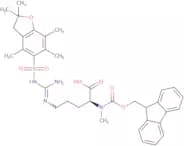
CAS:<p>Fmoc-N-Me-Arg(Pbf)-OH is a radiopharmaceutical that is used in binding assays for the detection of cancer. It is a synthetic analog of the natural amino acid, lysine. The Fmoc group attaches to the terminal amine on one end of the molecule and is linked to the carboxylic acid on the other end through an ester bond. This allows for attachment of different drugs or other molecules to create a variety of analogs. Fmoc-N-Me-Arg(Pbf)-OH has been shown to have good binding properties with respect to cancer cells in vivo and diagnostic applications.</p>Formula:C35H42N4O7SPurity:Min. 95%Color and Shape:White PowderMolecular weight:662.8 g/molMast Cell Degranulating (MCD) Peptide HR-2
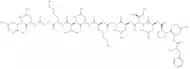
CAS:<p>Please enquire for more information about Mast Cell Degranulating (MCD) Peptide HR-2 including the price, delivery time and more detailed product information at the technical inquiry form on this page</p>Formula:C77H135N17O14Purity:Min. 95%Molecular weight:1,523 g/molH-D-Ala-Leu-Lys-AMC hydrochloride salt
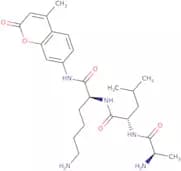
CAS:<p>H-D-Ala-Leu-Lys-AMC hydrochloride salt is a zymogen that is the substrate for tissue plasminogen activator (tPA). It has been shown to inhibit the activity of fibrinogen and thrombin, two proteins involved in coagulation. H-D-Ala-Leu-Lys-AMC hydrochloride salt also inhibits the hydrolysis of fibrin clots by serine proteases and prevents the formation of new clots by inhibiting the activation of annexin. This drug has been shown to be effective in animal models with established atherosclerosis.</p>Formula:C25H37N5O5Purity:Min. 95%Molecular weight:487.59 g/mol4-Bromo-2-methylbut-1-ene
CAS:<p>4-Bromo-2-methylbut-1-ene is an alkylating agent that reacts with DNA, RNA and proteins. It has been shown to be effective in the treatment of bladder cancer. 4-Bromo-2-methylbut-1-ene is used as a trifluoride source for boron trifluoride etherate, which is then reacted with plant tissues. This reaction yields a prenyl group, which can be further processed to yield an alkynyl group. The alkynyl group can be reacted with anhydrous sodium to form a chloride salt. This salt can then react with carbon monoxide to form a carbone molecule, which is the final product of this chemical process.</p>Purity:Min. 95%FA-Lys-Leu-OH
CAS:<p>Please enquire for more information about FA-Lys-Leu-OH including the price, delivery time and more detailed product information at the technical inquiry form on this page</p>Formula:C19H29N3O5Purity:Min. 95%Molecular weight:379.45 g/molTyr-Somatostatin-28
CAS:<p>Please enquire for more information about Tyr-Somatostatin-28 including the price, delivery time and more detailed product information at the technical inquiry form on this page</p>Formula:C146H216N42O41S3Purity:Min. 95%Molecular weight:3,311.73 g/molZ-Gly-Gly-Phe-bNA
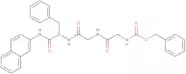
CAS:<p>Please enquire for more information about Z-Gly-Gly-Phe-bNA including the price, delivery time and more detailed product information at the technical inquiry form on this page</p>Formula:C31H30N4O5Purity:Min. 95%Molecular weight:538.59 g/molH-D-Lys(Z)-OMe·HCl
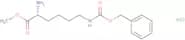
CAS:<p>H-D-Lys(Z)-OMe·HCl is a chemical compound that belongs to the group of organic nitrogen. It has been used in an experiment that monitored the population of a specific ecosystem. The experiment focused on the effects of organic nitrogen on the organisms living in this ecosystem. H-D-Lys(Z)-OMe·HCl was also used as a permission for an ecological research project, which focused on the behavioural patterns of animals in a natural environment. This compound has also been sponsored by science organisations, such as Ecological Society of America and Society for Experimental Biology.</p>Formula:C15H22N2O4·HClPurity:Min. 95%Molecular weight:330.81 g/molH-Gly-Gly-Ala-Gly-OH
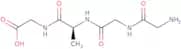
CAS:<p>Glycylglycine is a tetrapeptide antibiotic that belongs to the group of antibiotics. It is expressed in E. coli and has been shown to inhibit the growth of other bacteria through binding to metal ions, such as magnesium, which are necessary for their survival. Glycylglycine has also been shown to have a kinetic method with a high rate of inhibition. This compound was synthesized by an electrospray ionization process, and its enantiomeric form was detected using a spectrometer. The molecule has been found to be an overgrowth inhibitor in analytical chemistry studies.</p>Formula:C9H16N4O5Purity:Min. 95%Molecular weight:260.25 g/molZ-Phe-Leu-Glu-pNA
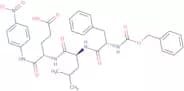
CAS:<p>Z-Phe-Leu-Glu-pNA is a synthetic substrate for proteolytic enzymes. This peptide is an optimal substrate for polymerase chain reaction (PCR) due to its high concentration of serine and reactive site. Z-Phe-Leu-Glu-pNA has been used as a synthetic substrate in the study of proteolytic enzymes, including trypsin treatment, subtilisin and chymotrypsin. This peptide has also been studied in clinical trials as a potential treatment for hormone disorders such as prostate cancer and breast cancer.</p>Formula:C34H39N5O9Purity:Min. 95%Color and Shape:PowderMolecular weight:661.7 g/molH-Ala-Ala-OtBu·HCl
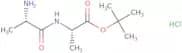
CAS:<p>Please enquire for more information about H-Ala-Ala-OtBu·HCl including the price, delivery time and more detailed product information at the technical inquiry form on this page</p>Formula:C10H20N2O3·HClPurity:Min. 95%Molecular weight:252.74 g/molRecA-Like Protein (193-212)
CAS:<p>Please enquire for more information about RecA-Like Protein (193-212) including the price, delivery time and more detailed product information at the technical inquiry form on this page</p>Formula:C93H152N28O29S2Purity:Min. 95%Molecular weight:2,190.51 g/molBz-Arg-OMe carbonate salt
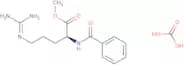
CAS:<p>Bz-Arg-OMe carbonate salt is a protease inhibitor that binds to the active site of serine proteases, inhibiting their activity. Bz-Arg-OMe carbonate salt has been shown to have inhibitory effects on Leishmania, a protozoan parasite. It is also an inhibitor of fibrinolysis, which may be due to its ability to bind calcium ions and serum albumin. Bz-Arg-OMe carbonate salt has affinity for carbohydrates and interacts with peptides.</p>Formula:C14H20N4O3Purity:Min. 95%Molecular weight:292.33 g/mol(D-Arg2,Lys4)-Dermorphin (1-4) amide
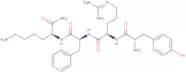
CAS:<p>Dermorphin is a neuropeptide that has been shown to reduce cortisol levels in badgers and has been shown to have biological activity in vitro. Dermorphin also has a number of pharmacokinetic properties, including water solubility, lipid solubility, and oral bioavailability. The drug binds to δ receptors and inhibits the enzyme activities of rat liver microsomes. Dermorphin is used as an analgesic for bowel disease, such as inflammatory bowel disease or hypogaea. Dermorphin has antinociceptive properties (pain-relieving).</p>Formula:C30H45N9O5Purity:Min. 95%Molecular weight:611.74 g/molZ-Gly-Pro-Arg-AMC·HCl
CAS:<p>Please enquire for more information about Z-Gly-Pro-Arg-AMC·HCl including the price, delivery time and more detailed product information at the technical inquiry form on this page</p>Formula:C31H37N7O7·HClPurity:Min. 95%Molecular weight:656.13 g/mol4-Methoxycarbonylphenylboronic acid
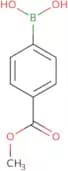
CAS:<p>4-Methoxycarbonylphenylboronic acid is an organic compound that can be synthesized from biphenyl. It is a diazonium salt with a bidentate ligand and a carbonyl group, which allows it to form an intermolecular hydrogen bond. The phenyl group of 4-methoxycarbonylphenylboronic acid can be oxidized to the corresponding carboxylic acid or reduced to the corresponding alcohol.<br>4-Methoxycarbonylphenylboronic acid is also soluble in halides, iodinations, and mercaptoacetic acid. This compound has been used as an acceptor in the oxidation of aluminium with diborane as a catalyst. 4-Methoxycarbonylphenylboronic acid has also been used to synthesize other compounds such as metronidazole (a drug) and erythromycin (an antibiotic).</p>Formula:C8H9BO4Purity:Min. 95%Color and Shape:White PowderMolecular weight:179.97 g/molAtrial Natriuretic Factor (3-28) (rat) trifluoroacetate salt
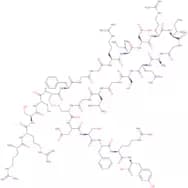
CAS:<p>Natriuretic factor is a peptide hormone that regulates blood pressure. This peptide is encoded by a gene located on chromosome 10 and is made up of 28 amino acids. Natriuretic factor binds to the membrane of mitochondria and zymogen granules, causing them to release their contents into the cytosol. The resulting increase in cytosolic volume causes an increased diastolic pressure, as well as an increased glomerular filtration rate and cardiac output. Natriuretic factors have also been shown to stimulate the production of natriuretic peptides, which are involved in water balance and electrolyte homeostasis.</p>Formula:C119H189N43O36S2Purity:Min. 95%Molecular weight:2,862.17 g/molHemokinin 1 (human) trifluoroacetate salt
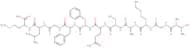
CAS:<p>Hemokinin-1 is a hematopoietic cell growth factor that belongs to the group of neuropeptides. This protein has been shown to stimulate the production of white blood cells and is used as an adjuvant in vaccines. Hemokinin-1 stimulates the production of inflammatory cytokines and other proinflammatory substances. It also has been found to be involved in autoimmune diseases, cancer, and infectious diseases. The antigen binding site on Hemokinin-1 is located at residues Thr-Gly-Lys-Ala-Ser-Gln-Phe-Phe-Gly-Leu (TGLKSGPFGL) and the receptor binding site at residues Met-NH2. The receptor for Hemokinin 1 is the neurokinin 1 receptor (NK1R).</p>Formula:C54H84N14O14SPurity:Min. 95%Molecular weight:1,185.4 g/molH-Phe-Met-D-Arg-Phe-NH2 acetate salt
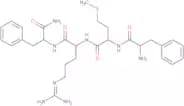
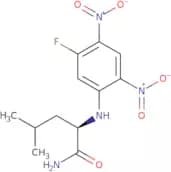
CAS:<p>Please enquire for more information about H-Phe-Met-D-Arg-Phe-NH2 acetate salt including the price, delivery time and more detailed product information at the technical inquiry form on this page</p>Formula:C29H42N8O4SPurity:Min. 95%Molecular weight:598.76 g/molNα-(5-fluoro-2,4-dinitrophenyl)-D-leucinamide
CAS:<p>Nalpha-(5-fluoro-2,4-dinitrophenyl)-D-leucinamide is a chemical compound that inhibits the activity of proteases. It has been shown to inhibit leukemia cells and actinomycetes. This chemical binds to the active site of proteases, inhibiting the hydrolysis of peptides by blocking the access of water molecules to the reactive site. In addition, Nalpha-(5-fluoro-2,4-dinitrophenyl)-D-leucinamide can also be used as a fluorescent probe for protease activity in analytical methods. The product research on this compound has shown that it is a potent inhibitor of cyclic peptide synthetases and can be used as an anti-inflammatory agent.</p>Formula:C12H15FN4O5Purity:Min. 95%Color and Shape:Off-White To Yellow SolidMolecular weight:314.27 g/molAbz-Amyloid β/A4 Protein Precursor770 (708-715)-Lys(Dnp)-D-Arg-D-Arg-D-Arg amide trifluoroacetate salt
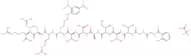
CAS:<p>Please enquire for more information about Abz-Amyloid beta/A4 Protein Precursor770 (708-715)-Lys(Dnp)-D-Arg-D-Arg-D-Arg amide trifluoroacetate salt including the price, delivery time and more detailed product information at the technical inquiry form on this page</p>Formula:C69H114N26O18Purity:Min. 95%Molecular weight:1,595.81 g/molTRH (free acid) Pyr-His-Pro-OH
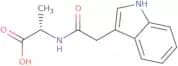
CAS:<p>TRH is a hormone that regulates the metabolic rate and stimulates the pancreas to release insulin. It also has been shown to be involved in regulating locomotor activity and is used in clinical trials for its potential therapeutic effects on Alzheimer’s disease. TRH binds to receptors on gland cells where it activates adenylate cyclase and increases intracellular levels of cAMP, which leads to an increase in cytosolic calcium concentration. TRH also binds to receptors on nerve cells and causes these cells to release neurotransmitters such as dopamine and serotonin. TRH is synthesized by the thyroid gland, pituitary gland, hypothalamus, or other tissues in response to stress or illness. TRH can be administered orally or injected intravenously; it is not active when taken orally because it is broken down by digestive enzymes before reaching the systemic circulation.</p>Formula:C16H21N5O5Purity:Min. 95%Molecular weight:363.37 g/molIndole-3-acetic-L-alanine
CAS:<p>Indole-3-acetic-L-alanine is a plant hormone that regulates root formation and transport. It is found in all plants, but the concentration varies depending on the plant, tissue type, and growth conditions. It has been shown to regulate root formation in triticum aestivum by inhibiting auxin transport to the roots. Indole-3-acetic acid also inhibits auxin transport to the shoot apex, leading to increased branching in triticum aestivum. This compound is hydrolyzed by root cell enzymes into indole-3-acetate and L-alanine. Genetic mechanisms underlying this phenomenon are not well understood at this time.</p>Formula:C13H14N2O3Purity:Min. 95%Color and Shape:PowderMolecular weight:246.26 g/molH-Phe-Ser-OH
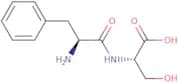
CAS:<p>H-Phe-Ser-OH is a molecule that is present in the bacterial strain. It can be used in diagnosis, where it can be detected by messenger RNA profiling and kinetic analysis of uptake. In vitro synthesis of H-Phe-Ser-OH was performed using caco-2 cells and metabolic profiles were obtained from this experiment. Hydroxyl groups are found on the molecule, which are important for diagnostic purposes. This molecule has been shown to form hydrogen bonds with other molecules, which may also be useful for diagnostic tests.</p>Formula:C12H16N2O4Purity:Min. 95%Molecular weight:252.27 g/molH-Ala-Ala-Tyr-OH
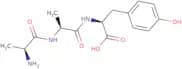
CAS:<p>Please enquire for more information about H-Ala-Ala-Tyr-OH including the price, delivery time and more detailed product information at the technical inquiry form on this page</p>Formula:C15H21N3O5Purity:Min. 95%Molecular weight:323.34 g/molSubstance P (6-11)
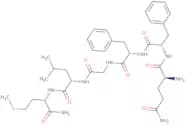
CAS:<p>Substance P (6-11) H-Gln-Phe-Phe-Gly-Leu-Met-NH2 is a fatty acid with a molecular weight of 609.82 Da. It is an immune reaction and antinociceptive agent, which also has the ability to stimulate protein synthesis in the central nervous system. Substance P (6-11) H-Gln-Phe-Phe-Gly-Leu-Met-NH2 binds to neurokinin receptor type 1, which is involved in syncytial virus infection and rotarod test.</p>Formula:C36H52N8O7SPurity:Min. 95%Molecular weight:740.91 g/mol(H-Cys-Ala-OH)2 (Disulfide bond)
CAS:<p>Please enquire for more information about (H-Cys-Ala-OH)2 (Disulfide bond) including the price, delivery time and more detailed product information at the technical inquiry form on this page</p>Formula:C12H22N4O6S2Purity:Min. 95%Molecular weight:382.46 g/mol((R)-4-Hydroxy-4-methyl-Orn (TRITC)7)-Phalloidin
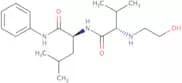
<p>Please enquire for more information about ((R)-4-Hydroxy-4-methyl-Orn (TRITC)7)-Phalloidin including the price, delivery time and more detailed product information at the technical inquiry form on this page</p>Formula:C60H70N12O13S2Purity:Min. 95%Molecular weight:1,231.4 g/molN-2-Hydroxyethyl-Val-Leu-anilide
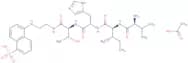
CAS:<p>Please enquire for more information about N-2-Hydroxyethyl-Val-Leu-anilide including the price, delivery time and more detailed product information at the technical inquiry form on this page</p>Formula:C19H31N3O3Purity:Min. 95%Molecular weight:349.47 g/molH-Val-Ile-His-Thr-EDANS acetate salt
CAS:Controlled Product<p>Please enquire for more information about H-Val-Ile-His-Thr-EDANS acetate salt including the price, delivery time and more detailed product information at the technical inquiry form on this page</p>Formula:C33H48N8O8SPurity:Min. 95%Molecular weight:716.85 g/molSubstance P (5-11) trifluoroacetate salt
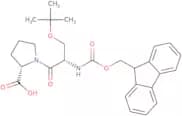
CAS:<p>Substance P is a bifunctional neuropeptide that acts as both a neurotransmitter and a neurohormone. The amino acid sequence of Substance P is H-Gln-Gln-Phe-Phe-Gly-Leu-Met-NH2. It is found in the brain and spinal cord, but also in other tissues such as the parotid gland and stomach. This peptide is released from nerve cells when they are stimulated by pain or anxiety, and it causes contraction of smooth muscles in the lungs, uterus, and gastrointestinal tract. Animal studies have shown that Substance P can be toxic to neonatal animals, leading to hypothyroidism and death. In vitro studies have shown that this peptide can induce the growth of glioma cells and tumors.</p>Formula:C41H60N10O9SPurity:Min. 95%Molecular weight:869.04 g/molFmoc-Ser(tBu)-Pro-OH
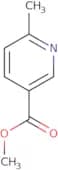
CAS:<p>Please enquire for more information about Fmoc-Ser(tBu)-Pro-OH including the price, delivery time and more detailed product information at the technical inquiry form on this page</p>Formula:C27H32N2O6Purity:Min. 95%Molecular weight:480.55 g/molMethyl 6-methylnicotinate
CAS:<p>Methyl 6-methylnicotinate is a synthetic compound that has been shown to have cholinergic properties. It is an oxidation catalyst that can be used in the synthesis of methyl nicotinate, which is a drug for the treatment of influenza virus. Methyl 6-methylnicotinate also has been shown to inhibit the replication of influenza virus in vitro and in vivo. Methyl 6-methylnicotinate inhibits viral growth by binding to the antigenic site on hemagglutinin, preventing it from attaching to host cells. This compound also has been shown to inhibit the release of chloride ions in animal models and inhibits neuromuscular transmission. The molecular modeling studies revealed that methyl 6-methylnicotinate binds with high affinity to the active site of acetylcholinesterase enzyme and is able to form a covalent bond with its serine residue, thereby inhibiting its activity.</p>Formula:C8H9NO2Purity:Min. 95%Color and Shape:Colorless PowderMolecular weight:151.16 g/mol1-Boc-pyrrolidine-2,4-dione
CAS:<p>Please enquire for more information about 1-Boc-pyrrolidine-2,4-dione including the price, delivery time and more detailed product information at the technical inquiry form on this page</p>Formula:C9H13NO4Purity:Min. 95%Molecular weight:199.2 g/mol2-Methoxy-6-picolinic acid
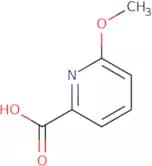
CAS:<p>2-Methoxy-6-picolinic acid (2MPA) is a picolinate that has been shown to be an effective catalyst for the conversion of alcohols into allylic alcohols. 2MPA is able to catalyze the reaction by abstracting hydrogen from the carbonyl group, and then adding it to the adjacent carbon. This reaction can produce peroxide as a byproduct, which is subsequently hydrolyzed to form water and alcohol. The β-unsaturated carbonyl group of 2MPA provides additional stability for this catalytic process.<br>2MPA can also be used as a catalyst in other reactions, such as the oxidation of benzylic alcohols with hydrogen peroxide to form benzylic carbonyl compounds.</p>Formula:C7H7NO3Purity:Min. 95%Color and Shape:PowderMolecular weight:153.14 g/mol2-(Aminomethyl)-2-methyl-1,3-propanediamine trihydrochloride
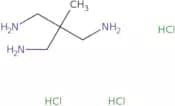
CAS:<p>Please enquire for more information about 2-(Aminomethyl)-2-methyl-1,3-propanediamine trihydrochloride including the price, delivery time and more detailed product information at the technical inquiry form on this page</p>Formula:C5H15N3•(HCl)3Purity:Min. 95%Color and Shape:PowderMolecular weight:226.57 g/molC5a Anaphylatoxin (37-53) (human) trifluoroacetate salt
CAS:<p>Please enquire for more information about C5a Anaphylatoxin (37-53) (human) trifluoroacetate salt including the price, delivery time and more detailed product information at the technical inquiry form on this page</p>Formula:C82H141N27O22SPurity:Min. 95%Molecular weight:1,889.23 g/molAc-Pen-Arg-Gly-Asp-Cys-OH (Disulfide bond)
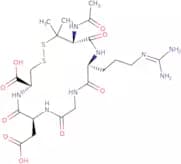
CAS:<p>Disulfide bond is an analytical method for the determination of the concentration-time curve. It is a cyclic peptide that competes with fibrinogen for binding to platelets. Disulfide bond has been shown to be an antagonist of receptor antagonist, and has potential applications in the treatment of autoimmune diseases. Disulfide bond can also be used as a model system for toxicological studies and experimental models in humans.</p>Formula:C22H36N8O9S2Purity:Min. 95%Molecular weight:620.7 g/molNeuropeptide S (rat) trifluoroacetate salt
CAS:<p>Please enquire for more information about Neuropeptide S (rat) trifluoroacetate salt including the price, delivery time and more detailed product information at the technical inquiry form on this page</p>Formula:C95H160N34O27Purity:Min. 95%Molecular weight:2,210.5 g/molH-Thr(Ac)-OH·HCl
CAS:<p>Please enquire for more information about H-Thr(Ac)-OH·HCl including the price, delivery time and more detailed product information at the technical inquiry form on this page</p>Formula:C6H11NO4·HClPurity:Min. 95%Molecular weight:197.62 g/molZ-Ala-Val-OH
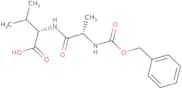
CAS:<p>Z-Ala-Val-OH is a prodrug that is hydrolyzed to ala-z-valine in vivo. It has been shown to be resistant to enzymes such as esterases, amidases, and proteases. Z-Ala-Val-OH has been modified in an effort to increase its affinity for the active site of the enzyme. This modification involves attaching a hydrophobic group onto the amide nitrogen of the amino acid residue. The resulting product is an active ester that can be used as an antihypertensive drug or for the treatment of Alzheimer's disease.</p>Formula:C16H22N2O5Purity:Min. 95%Molecular weight:322.36 g/molN-(3-(2-Furyl)Acryloyl-Ala-Lys TFA salt
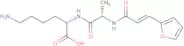
CAS:<p>FA-Ala-Lys-OH is a lysine derivative with a molecular weight of 243.2 daltons and a pKa of 6.5. It has been shown to be biologically active in humans and animals, and can be used as an amino acid supplement for patients with liver disease or kidney failure who require dialysis. FA-Ala-Lys-OH binds to the creatine kinase receptor on the surface of cells and causes cell lysis, which may be due to its ability to bind to the enzyme's allosteric site. This compound also has anti-viral properties, inhibiting the growth of recombinant virus mcf-7 in vitro by binding to erythrocyte membranes and disrupting protein synthesis. The 6-Fluoro-3-indoxyl beta D galactopyranoside is an antituberculosis drugs that belongs to the class of rifamycins. Rifapentine inhibits bacterial</p>Formula:C16H23N3O5Purity:Min. 95%Molecular weight:337.37 g/molSuc-Ala-Pro-Leu-Phe-pNA
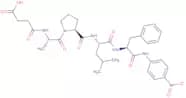
CAS:<p>Suc-Ala-Pro-Leu-Phe-pNA is a synthetic protease with regulatory, mycological, and proteolytic properties. It has been shown to be effective against anisopliae, nematodes, and serine proteases. Suc-Ala-Pro-Leu-Phe-pNA has been synthesized by the chemical coupling of three amino acids: alanine, proline, and phenylalanine. The sequence of this protease is SEQ ID NO:1. Suc-Ala-Pro-Leu-Phe-pNA has a pH optimum of 3.0 and exhibits significant activity at acidic pHs (less than 6). The enzyme also displays kinetic properties that are typical for serine proteases. The buffer used in the assay should be Tris or phosphate buffered saline (PBS) at pH 7.2 to 8.0 with a salt concentration of 150 mM NaCl or</p>Formula:C33H42N6O9Purity:Min. 95%Molecular weight:666.72 g/molMethyl 3-amino-2-phenylpropanoate HCl
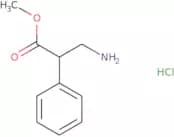
CAS:<p>Methyl 3-amino-2-phenylpropanoate HCl is a chemical intermediate that is synthesized in the biosynthesis of scopolamine and tenellin. It has been found to be an isotopically labeled analog of tropane alkaloids, which are a class of natural products that includes atropine, hyoscyamine, and scopolamine. Methyl 3-amino-2-phenylpropanoate HCl is one of many compounds that can provide structural insights into the biosynthesis and metabolism of these compounds.</p>Formula:C10H13NO2·HClPurity:Area-% Min. 95 Area-%Color and Shape:PowderMolecular weight:215.68 g/molH-Ala-D-Glu(Lys-D-Ala-D-Ala-OH)-OH
CAS:<p>Teicoplanin is an amide-linked glycopeptide antibiotic that binds to the bacterial cell wall. It is used for the treatment of infections caused by staphylococci and p. aeruginosa, which are resistant to other antibiotics. The drug binds to a specific site on the bacterial cell wall, forming a coordination complex with the peptidoglycan layer and making it easier for water molecules to penetrate the cell wall. This leads to increased rates of cell death by osmosis. Teicoplanin enhances the activity of other antibiotics against Gram-positive bacteria by preventing their binding to penicillin-binding proteins in the bacterial cell walls.</p>Formula:C20H36N6O8Purity:Min. 95%Molecular weight:488.54 g/molpTH (1-34) (rat)
CAS:<p>Please enquire for more information about pTH (1-34) (rat) including the price, delivery time and more detailed product information at the technical inquiry form on this page</p>Formula:C180H291N55O48S2Purity:Min. 95%Molecular weight:4,057.71 g/molMca-Lys-Pro-Leu-Gly-Leu-Dap (Dnp)-Ala-Arg-NH2 trifluoroacetate salt
CAS:<p>Please enquire for more information about Mca-Lys-Pro-Leu-Gly-Leu-Dap (Dnp)-Ala-Arg-NH2 trifluoroacetate salt including the price, delivery time and more detailed product information at the technical inquiry form on this page</p>Formula:C55H80N16O16Purity:Min. 95%Molecular weight:1,221.32 g/molEnterotoxin STp (E. coli) trifluoroacetate salt
CAS:Controlled Product<p>Please enquire for more information about Enterotoxin STp (E. coli) trifluoroacetate salt including the price, delivery time and more detailed product information at the technical inquiry form on this page</p>Formula:C81H110N20O26S6Purity:Min. 95%Molecular weight:1,972.26 g/mol