Amino Acids (AA)
Amino acids (AAs) are the fundamental building blocks of proteins, playing a crucial role in various biological processes. These organic compounds are essential for protein synthesis, metabolic pathways, and cell signaling. In this category, you will find a comprehensive range of amino acids, including essential, non-essential, and modified forms, which are vital for research in biochemistry, molecular biology, and nutritional sciences. At CymitQuimica, we provide high-quality amino acids to support your research and development needs, ensuring accuracy and reliability in your experimental outcomes.
Subcategories of "Amino Acids (AA)"
- Amino Acid Derivatives(3,955 products)
- Amino Acid and Amino Acid Related Compounds(3,472 products)
- Amino Acids with Oxygen or Sulphur(168 products)
- Boc- Amino Acids(351 products)
- Fmoc Amino Acids(1,710 products)
Found 38263 products of "Amino Acids (AA)"
Sort by
Purity (%)
0
100
|
0
|
50
|
90
|
95
|
100
FA-Ala-Arg-OH
CAS:<p>F-Ala-Arg-OH is a peptide hormone that has been shown to have antitumor, antiinflammatory, and antidiabetic properties. The peptide hormone binds to the creatine kinase enzyme and inhibits its activity, which leads to a decrease in phosphocreatine levels in the human serum. F-Ala-Arg-OH does not inhibit lysine residues of the creatine kinase enzyme. This inhibition can be reversed by adding ATP or adding an activator. F-Ala-Arg-OH also inhibits cancer cells through apoptosis. This inhibition of cancer cells may be due to the ability of this peptide to bind to lysine residues on cell membranes and activate them. F-Ala-Arg-OH is also able to destroy tumor cells by binding to their mitochondria and inducing their lysis.</p>Formula:C16H23N5O5Purity:Min. 95%Molecular weight:365.38 g/molZ-NHNH2·HCl
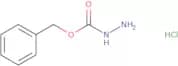
CAS:<p>Z-NHNH2·HCl is an amide containing a tetrapeptide. It has been used as a diagnostic agent for the detection of caerulein, a peptide that is produced by the pancreas in response to the presence of cholecystokinin (CCK). The monomers were prepared by reacting azide with benzyl chloroacetanilides and then cyclizing the product with triethylene glycol. The soybean extract was hydrolyzed with HCl to produce Z-NHNH2·HCl.</p>Formula:C8H10N2O2·HClPurity:Min. 95%Molecular weight:202.64 g/molFmoc-Cit-OPfp
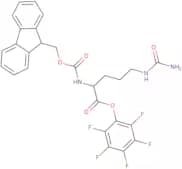
CAS:<p>Please enquire for more information about Fmoc-Cit-OPfp including the price, delivery time and more detailed product information at the technical inquiry form on this page</p>Formula:C27H22F5N3O5Purity:Min. 95%Molecular weight:563.47 g/molH-Leu-allyl ester·p-tosylate
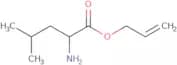
CAS:<p>H-Leu-allyl ester·p-tosylate is an amide with immobilized amino groups. It is an optically active compound that can be cumulated and used for biomolecular chemistry. H-Leu-allyl ester·p-tosylate has been shown to inhibit the growth of fungi by inhibiting the synthesis of tenuazonic acid, a mycotoxin that is found in contaminated grains.</p>Formula:C9H17NO2C7H8O3SPurity:Min. 95%Molecular weight:343.44 g/molH-Gly-Ala-Asp-OH
CAS:<p>H-Gly-Ala-Asp-OH is a pharmacological treatment for bacterial infection. The drug has been shown to be effective in treating the symptoms of bacterial infections, such as fever and headache, in animal models. H-Gly-Ala-Asp-OH binds to the GABA receptor and inhibits the production of GABA, which is an inhibitory neurotransmitter that regulates neuronal activity. This binding prevents the formation of an inhibitor complex with the enzyme decarboxylase that is required for GABA synthesis and thus inhibits protein synthesis and cell division.</p>Formula:C9H15N3O6Purity:Min. 98 Area-%Color and Shape:PowderMolecular weight:261.23 g/mol(Val34)-Amyloid b-Protein (1-40) trifluoroacetate salt
CAS:<p>Please enquire for more information about (Val34)-Amyloid b-Protein (1-40) trifluoroacetate salt including the price, delivery time and more detailed product information at the technical inquiry form on this page</p>Formula:C193H293N53O58SPurity:Min. 95%Molecular weight:4,315.78 g/molChloroac-DL-Phe-OH
CAS:<p>Chloroac-DL-Phe-OH is an amino acid sequence that has been synthesized in the laboratory. It is a ligand that binds to surface antigens on cancer cells and inhibits multidrug efflux pumps. Chloroac-DL-Phe-OH is able to inhibit the translation of proteins by binding to the ribosome, preventing protein synthesis. In addition, it can reduce the flow rate of extracellular fluid, which may be useful for cancer therapy. This compound can also be conjugated with other drugs or molecules for delivery through the bloodstream.</p>Formula:C11H12ClNO3Purity:Min. 95%Molecular weight:241.67 g/molH-Ser-Phe-NH2·HCl
CAS:<p>Please enquire for more information about H-Ser-Phe-NH2·HCl including the price, delivery time and more detailed product information at the technical inquiry form on this page</p>Formula:C12H17N3O3·HClPurity:Min. 95%Molecular weight:287.74 g/mol(Tyr0)-C-Type Natriuretic Peptide (32-53) (human, porcine, rat)
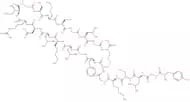
CAS:<p>Please enquire for more information about (Tyr0)-C-Type Natriuretic Peptide (32-53) (human, porcine, rat) including the price, delivery time and more detailed product information at the technical inquiry form on this page</p>Formula:C102H166N28O30S3Purity:Min. 95%Molecular weight:2,360.78 g/molSuc-Val-Pro-Phe-SBzl
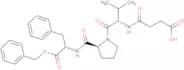
CAS:<p>Suc-Val-Pro-Phe-SBzl is a synthetic subtilisin that has been modified to have an enhanced binding affinity for the enzyme's substrate. The enzyme's specificity and reactivity has been improved by adding a chloromethyl ketone group to the amino acid sequence. Suc-Val-Pro-Phe-SBzl is a serine protease inhibitor and has been shown to inhibit the activity of subtilisins, including subtilisin BPN' and Bacillus amyloliquefaciens subtilisin. It also inhibits peptidases and proteinases, which may be due to its ability to bind to the active site of these enzymes.</p>Formula:C30H37N3O6SPurity:Min. 95%Molecular weight:567.7 g/mol(D-Trp6)-LHRH (2-10) trifluoroacetate salt
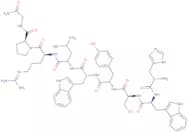
CAS:<p>Please enquire for more information about (D-Trp6)-LHRH (2-10) trifluoroacetate salt including the price, delivery time and more detailed product information at the technical inquiry form on this page</p>Formula:C59H77N17O11Purity:Min. 95%Molecular weight:1,200.35 g/molZ-Lys(Z)-ONp
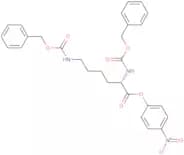
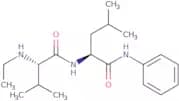
CAS:<p>Z-Lys(Z)-ONp is an intermediate in the synthesis of lysergic acid diethylamide (LSD). It is a hypotensive agent that has analgesic properties. Z-Lys(Z)-ONp has been patented for use as a hypotensive agent, although it has not yet been approved for this use.</p>Formula:C28H29N3O8Purity:Min. 95%Molecular weight:535.55 g/molN-Et-Val-Leu-anilide
CAS:<p>Please enquire for more information about N-Et-Val-Leu-anilide including the price, delivery time and more detailed product information at the technical inquiry form on this page</p>Formula:C19H31N3O2Purity:Min. 95%Molecular weight:333.47 g/mol1-Methylethyl N-((S)-(((1R)-2-(6-amino-9H-purin-9-yl)-1-methylethoxy)methyl)phenoxyphosphinoyl)-L-alaninate
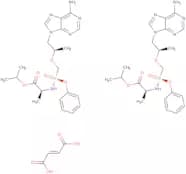
CAS:<p>Tenofovir is a nucleoside analog reverse transcriptase inhibitor that binds to the RNA-dependent polymerase. This compound is used in combination with other antiviral agents for the treatment of HIV-1 infection and for prophylaxis against HIV-1 infection. Tenofovir has been shown to be effective against infections caused by strains of HIV-1, such as the drug resistant virus. Tenofovir is absorbed rapidly after oral administration, with a bioavailability of over 80%. The prodrug fumarate is hydrolyzed to tenofovir in vivo and this conversion occurs more efficiently in acidic conditions. Alafenamide, a prodrug of tenofovir, has been approved by the FDA as an alternative to tenofovir disoproxil fumarate (TDF) for the treatment of HIV-1 infection. Alafenamide is an acyclic nucleoside phosphonate that inhibits viral replication by inhibiting reverse</p>Formula:C46H62N12O14P2Purity:Min. 95%Color and Shape:PowderMolecular weight:1,069 g/molH-Lys-Pro-4MbNA·2 HCl
CAS:<p>Please enquire for more information about H-Lys-Pro-4MbNA·2 HCl including the price, delivery time and more detailed product information at the technical inquiry form on this page</p>Formula:C22H30N4O3·2HClPurity:Min. 95%Molecular weight:471.42 g/molH-D-Tyr(tBu)-allyl ester·HCl
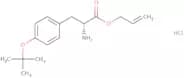
CAS:<p>Please enquire for more information about H-D-Tyr(tBu)-allyl ester·HCl including the price, delivery time and more detailed product information at the technical inquiry form on this page</p>Formula:C16H23NO3·HClPurity:Min. 95%Molecular weight:313.82 g/molPz-Pro-Leu-OH
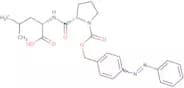
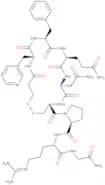
CAS:<p>Pz-Pro-Leu-OH is a proteolytic enzyme that cleaves proteins by hydrolysis at the peptide bond. It has been shown to be active against Clostridium and has been used in colorimetric methods for the measurement of this bacterium. Pz-Pro-Leu-OH is produced by subtilisin, which is expressed in Escherichia coli. The amount of this enzyme can be monitored and optimized by cloning. Thermolysin, another protease, also cleaves proteins at the peptide bond and has been used to measure the activity of Pz-Pro-Leu-OH.</p>Formula:C25H30N4O5Purity:Min. 95%Molecular weight:466.53 g/mol(Deamino-Cys1,b-(3-pyridyl)-D-Ala2,Arg8)-Vasopressin trifluoroacetate salt
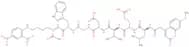
CAS:<p>DDAVP is an analogue of vasopressin, which belongs to the class of inositol phosphates. It is a potent agonist for the V1 receptor and has a higher affinity for this receptor than vasopressin. DDAVP also has antagonist properties at the V2 receptor. The biological activity of DDAVP is mediated by its ability to increase phospholipase A2 activity and cause the release of arachidonic acid from membrane phospholipids. This activation causes an increase in prostaglandin synthesis, leading to increased vascular permeability and hypotension. DDAVP may also have antidiuretic effects due to its antagonism of oxytocin receptors.</p>Formula:C45H63N15O11S2Purity:Min. 95%Molecular weight:1,054.21 g/molMca-Leu-Glu-Val-Asp-Gly-Trp-Lys(Dnp)-NH2
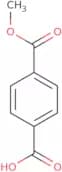
CAS:<p>Please enquire for more information about Mca-Leu-Glu-Val-Asp-Gly-Trp-Lys(Dnp)-NH2 including the price, delivery time and more detailed product information at the technical inquiry form on this page</p>Formula:C57H70N12O19Purity:Min. 95%Molecular weight:1,227.24 g/molmono-Methyl terephthalate
CAS:<p>Mono-methyl terephthalate (MMT) is a monomer used in the manufacturing of polyester and other types of plastic. It is produced from terephthalic acid, which is derived from crude oil or natural gas. The oxidation catalyst used in this process is usually manganese dioxide. MMT has been shown to inhibit bacterial growth by binding to DNA-dependent RNA polymerase, thereby preventing transcription and replication. This active form is metabolized through a number of metabolic transformations, including hydrolysis by esterases or glucuronidases, oxidation by cytochrome P450 enzymes, reduction by glutathione reductase, or conjugation with glucuronic acid. MMT also specifically binds to markers expressed at high levels in Mycobacterium tuberculosis strains (e.g., ESX-1 secretion system protein) and inhibits cell growth in culture.</p>Formula:C9H8O4Purity:Min. 95%Color and Shape:PowderMolecular weight:180.16 g/molH-Val-Ala-pNA acetate salt
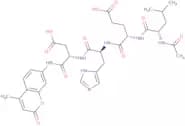
CAS:<p>Please enquire for more information about H-Val-Ala-pNA acetate salt including the price, delivery time and more detailed product information at the technical inquiry form on this page</p>Formula:C14H20N4O4Purity:Min. 95%Molecular weight:308.33 g/molAc-Leu-Glu-His-Asp-AMC trifluoroacetate salt
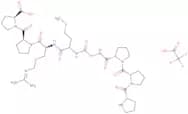
CAS:<p>Ac-Leu-Glu-His-Asp-AMC trifluoroacetate salt is a synthetic peptide that is derived from the amino acid sequence of caspases. Ac-Leu-Glu-His-Asp-AMC trifluoroacetate salt induces apoptosis in insect and E. coli cells by protease activity, which leads to cell death. The sequence of this peptide is found in Drosophila melanogaster and has been shown to induce apoptosis in insect cells. Caspases are enzymes that regulate apoptosis and play a key role in cell death.</p>Formula:C33H41N7O11Purity:Min. 95%Molecular weight:711.72 g/molH-Pro-Pro-Pro-Gly-Met-Arg-Pro-Pro-OH trifluoroacetate salt
CAS:<p>Please enquire for more information about H-Pro-Pro-Pro-Gly-Met-Arg-Pro-Pro-OH trifluoroacetate salt including the price, delivery time and more detailed product information at the technical inquiry form on this page</p>Formula:C38H61N11O9SPurity:Min. 95%Molecular weight:848.03 g/mol(Tyr38,Phe42·46)-Osteocalcin (38-49) (human)
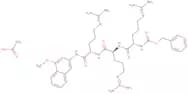
CAS:<p>Please enquire for more information about (Tyr38,Phe42·46)-Osteocalcin (38-49) (human) including the price, delivery time and more detailed product information at the technical inquiry form on this page</p>Formula:C73H101N19O17Purity:Min. 95%Molecular weight:1,516.7 g/molZ-Arg-Arg-Arg-4MbetaNA acetate salt
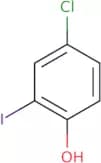
CAS:Controlled Product<p>Please enquire for more information about Z-Arg-Arg-Arg-4MbetaNA acetate salt including the price, delivery time and more detailed product information at the technical inquiry form on this page</p>Formula:C37H53N13O6Purity:Min. 95%Molecular weight:775.9 g/mol4-Chloro-2-iodo-phenol
CAS:<p>Please enquire for more information about 4-Chloro-2-iodo-phenol including the price, delivery time and more detailed product information at the technical inquiry form on this page</p>Formula:C6H4ClIOPurity:Min. 95%Molecular weight:254.45 g/molMatrix Protein M1 (58-66) (Influenza A virus) trifluoroacetate salt
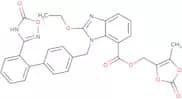
CAS:<p>Please enquire for more information about Matrix Protein M1 (58-66) (Influenza A virus) trifluoroacetate salt including the price, delivery time and more detailed product information at the technical inquiry form on this page</p>Formula:C49H75N9O11·C2HF3O2Purity:Min. 95%Molecular weight:1,080.2 g/molAzilsartan medoxomil
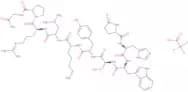
CAS:<p>Azilsartan medoxomil is an antihypertensive drug, which is a prodrug of the angiotensin II receptor blocker azilsartan. It is synthesized through a chemical process involving the modification of the medoxomil ester, converting it into its active form upon absorption in the gastrointestinal tract. The primary mode of action of azilsartan medoxomil involves selective antagonism of the angiotensin II type 1 (AT1) receptor. By blocking the effects of angiotensin II—a potent vasoconstrictor—azilsartan medoxomil effectively reduces vascular resistance, leading to decreased blood pressure.</p>Formula:C30H24N4O8Purity:Min. 95%Color and Shape:White PowderMolecular weight:568.53 g/mol(D-Lys6)-LHRH trifluoroacetate salt
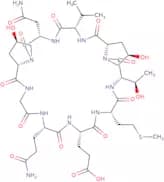
CAS:<p>Please enquire for more information about (D-Lys6)-LHRH trifluoroacetate salt including the price, delivery time and more detailed product information at the technical inquiry form on this page</p>Formula:C59H84N18O13·xC2HF3O2Purity:Min. 95%Color and Shape:White To Off-White SolidMolecular weight:1,253.41 g/mol(Hyp 474·477,Gln479)-cyclo-a-Fetoprotein (471-479) (human, lowland gorilla)
CAS:<p>Please enquire for more information about (Hyp 474·477,Gln479)-cyclo-a-Fetoprotein (471-479) (human, lowland gorilla) including the price, delivery time and more detailed product information at the technical inquiry form on this page</p>Formula:C40H63N11O16SPurity:Min. 95%Molecular weight:986.06 g/molH-Gly-Arg-Gly-Asp-Ser-Pro-Cys-OH trifluoroacetate salt
CAS:<p>H-Gly-Arg-Gly-Asp-Ser-Pro-Cys-OH trifluoroacetate salt is a peptide that has been shown to inhibit the growth of tumor cells. It has also been shown to have biological properties in a number of experimental models, including in vitro and in vivo studies. H-Gly-Arg-Gly-Asp-Ser-Pro-Cys-OH trifluoroacetate salt inhibits muscle cell proliferation by binding to the extracellular matrix protein collagen type I. This inhibition leads to reduced tissue formation and body growth. This peptide also inhibits the proliferation of cancer cells by blocking the production of growth factor beta 1 (GFβ1).</p>Formula:C25H42N10O11SPurity:Min. 95%Molecular weight:690.73 g/molSuc-Ala-Leu-Pro-Phe-OH
CAS:<p>Please enquire for more information about Suc-Ala-Leu-Pro-Phe-OH including the price, delivery time and more detailed product information at the technical inquiry form on this page</p>Formula:C27H38N4O8Purity:Min. 95%Molecular weight:546.61 g/molSerpinin (mouse, rat) trifluoroacetate salt
CAS:<p>Please enquire for more information about Serpinin (mouse, rat) trifluoroacetate salt including the price, delivery time and more detailed product information at the technical inquiry form on this page</p>Formula:C123H202N32O46Purity:Min. 95%Molecular weight:2,865.11 g/mol(H-Cys-betaNA)2·2 HCl (Disulfide bond)
CAS:<p>Please enquire for more information about (H-Cys-betaNA)2·2 HCl (Disulfide bond) including the price, delivery time and more detailed product information at the technical inquiry form on this page</p>Formula:C26H26N4O2S2·2HClPurity:Min. 95%Molecular weight:563.56 g/molSuc-Ala-Pro-pNA
CAS:<p>Suc-Ala-Pro-pNA is a glycoprotein that has been shown to have a number of different functions. It is an inhibitor of tissue culture, and it has been shown to inhibit the growth of cervical cancer cells by binding to epidermal growth factor (EGF). It also inhibits peptide hormones such as prolactin and insulin, which can lead to breast cancer. Suc-Ala-Pro-pNA may be clinically relevant for treatment of carcinoma cell lines due to its ability to bind platinum-based chemotherapy drugs. This protein has been shown to be expressed on the surface of mammary carcinoma cells, where it acts as a receptor for the monoclonal antibody mcf7. The protein's function as a surface glycoprotein means that it can act as a marker for cancerous tumors in the body.</p>Formula:C18H22N4O7Purity:Min. 95%Molecular weight:406.39 g/mol(Nle 8·18,Tyr34)-pTH (3-34) amide (bovine)
CAS:<p>Please enquire for more information about (Nle 8·18,Tyr34)-pTH (3-34) amide (bovine) including the price, delivery time and more detailed product information at the technical inquiry form on this page</p>Formula:C177H279N53O48Purity:Min. 95%Molecular weight:3,917.44 g/molBig Endothelin-1 (human)
CAS:<p>Please enquire for more information about Big Endothelin-1 (human) including the price, delivery time and more detailed product information at the technical inquiry form on this page</p>Formula:C189H282N48O56S5Purity:Min. 95%Molecular weight:4,282.88 g/molH-Gly-Gly-Lys-Ala-Ala-OH acetate salt
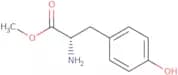
CAS:<p>Please enquire for more information about H-Gly-Gly-Lys-Ala-Ala-OH acetate salt including the price, delivery time and more detailed product information at the technical inquiry form on this page</p>Formula:C16H30N6O6Purity:Min. 95%Molecular weight:402.45 g/molMethyl L-tyrosinate
CAS:<p>Methyl-L-tyrosinate is a drug that has been shown to increase the activity of tyrosinase, an enzyme involved in the production of melanin. It also prevents the oxidation of tyrosine and phenylalanine, which are precursors to melanin. Methyl L-tyrosinate has been studied for its potential effects on hepatitis and Parkinson's disease. This drug binds to the hydroxyl group of tyrosinase and inhibits its activity. The inhibition of this enzyme leads to a decrease in melanin synthesis, which may be beneficial for those with vitiligo or other skin disorders where pigment loss is desired. This drug also prevents oxidative carbonylation and functional assays have shown that it has an affinity for potassium ion coordination chemistry.</p>Formula:C10H13NO3Purity:Min. 95%Molecular weight:195.22 g/molS-Fcme
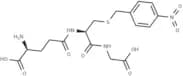
CAS:<p>S-Fcme activates multidrug resistance transporter by boosting ATPase activity and competing for drug binding.</p>Formula:C19H33NO2SColor and Shape:SolidMolecular weight:339.54S-(p-Nitrobenzyl)glutathione
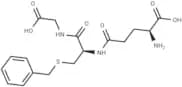
CAS:<p>S-(p-Nitrobenzyl)glutathione acts as a competitive inhibitor of glutathionase.</p>Formula:C17H22N4O8SColor and Shape:SolidMolecular weight:442.44S-Benzylglutathione
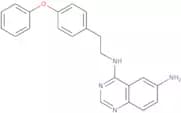
CAS:<p>S-Benzylglutathione acts as a competitive inhibitor of glutathionase and undergoes conversion by rat kidney microsomes into its cysteine derivatives.</p>Formula:C17H23N3O6SColor and Shape:SolidMolecular weight:397.45EVP4593
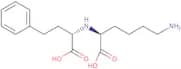
CAS:<p>6-Amino-4-(4-phenoxyphenylethylamino)quinazoline is a potential anticancer drug that has been shown to inhibit the polymerase chain reaction in human osteosarcoma cells. It also inhibits the signaling pathway of nuclear factor-κB (NF-κB), which is involved in cell death and tumorigenesis. 6-Amino-4-(4-phenoxyphenylethylamino)quinazoline has shown significant cytotoxicity against murine hepatoma cells and bowel disease cells, but not against normal tissue. This drug is also an inhibitor of the drug transporter Pgp. 6-Amino-4-(4-phenoxyphenylethylamino)quinazoline has been shown to be effective in experimental models for cancer, AIDS, and other infectious diseases.</p>Formula:C22H20N4OPurity:Min. 95%Color and Shape:PowderMolecular weight:356.42 g/molN2-(S)-1-Carboxy-3-phenylpropyl-L-lysine
CAS:<p>Please enquire for more information about N2-(S)-1-Carboxy-3-phenylpropyl-L-lysine including the price, delivery time and more detailed product information at the technical inquiry form on this page</p>Formula:C16H24N2O4Purity:Min. 95%Molecular weight:308.37 g/mol1-Palmitoyl-rac-glycero-3-phosphocholine
CAS:<p>1-Palmitoyl-rac-glycero-3-phosphocholine is a biological lipid that has been shown to be a potent growth factor for cells in culture. It binds to DNA and modulates transcriptional regulation. 1-Palmitoyl-rac-glycero-3-phosphocholine also inhibits the production of lysophosphatidylcholine, which is an inflammatory mediator that promotes the release of histamine from mast cells. This compound may be useful as an antimicrobial agent, as it has been shown to inhibit the growth of bacteria and fungi.</p>Formula:C24H50NO7PPurity:Min. 95%Molecular weight:495.63 g/mol4-Methyl-3-nitrophenyl isocyanate
CAS:<p>4-Methyl-3-nitrophenyl isocyanate (4MPN) is a chiral diisocyanate that can be used as an activated diisocyanate. 4MPN is prepared by the carbonylation of 3-nitrobenzaldehyde and xylene with hydrogen chloride in the presence of a catalyst. Impurities, such as chlorides or sulfurs, can be detected using surface methodology techniques. The feedstock for this compound is usually xylene, which has a high boiling point. This product contains reactive functional groups that can be used to modify surfaces and create polyurethane products.</p>Formula:C8H6N2O3Purity:Min. 95%Color and Shape:PowderMolecular weight:178.14 g/molH-Glu(Gly-OH)-OH trifluoroacetate
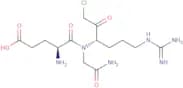
<p>Please enquire for more information about H-Glu(Gly-OH)-OH trifluoroacetate including the price, delivery time and more detailed product information at the technical inquiry form on this page</p>Formula:C7H12N2O5•(C2HF3O2)xPurity:Min. 95%Color and Shape:PowderH-Glu-Gly-Arg-chloromethylketone trifluoroacetate salt
CAS:<p>H-Glu-Gly-Arg-chloromethylketone trifluoroacetate salt is an anticoagulant drug that prevents the formation of blood clots by inhibiting the enzyme thrombin. This drug is effective in enhancing blood flow and oxygen supply to the heart and other organs. H-Glu-Gly-Arg-chloromethylketone trifluoroacetate salt has been shown to have a positive effect on patients with congestive heart failure. It has also been used as an adjuvant therapy in bypassing procedures, where clotting occurs at the site of an artificial conduit placed in the body to allow blood flow between two points. In vitro studies have demonstrated that this drug inhibits protease activity, which may be due to its ability to inhibit fibrinogen and serine protease activity.</p>Formula:C14H25ClN6O5Purity:Min. 95%Molecular weight:392.84 g/mol4-Methyl-5-(2-phosphorylethyl)thiazole
CAS:<p>Please enquire for more information about 4-Methyl-5-(2-phosphorylethyl)thiazole including the price, delivery time and more detailed product information at the technical inquiry form on this page</p>Formula:C6H10NO4PSPurity:Min. 95%Molecular weight:223.19 g/molN3-PEG(45)-OH
<p>N3-PEG(45)-OH is a PEG polymer categorised as monofunctional (OH-PEG-X). Used as a linker, N3-PEG(45)-OH is used to attached PEG to proteins, peptides, oligonucleotides, nanoparticles and small molecules via pegylation, a bioconjugation technique.</p>Formula:C90H181N3O45Purity:Min. 95%Color and Shape:PowderMolecular weight:2,025.39 g/mol