Amino Acids (AA)
Amino acids (AAs) are the fundamental building blocks of proteins, playing a crucial role in various biological processes. These organic compounds are essential for protein synthesis, metabolic pathways, and cell signaling. In this category, you will find a comprehensive range of amino acids, including essential, non-essential, and modified forms, which are vital for research in biochemistry, molecular biology, and nutritional sciences. At CymitQuimica, we provide high-quality amino acids to support your research and development needs, ensuring accuracy and reliability in your experimental outcomes.
Subcategories of "Amino Acids (AA)"
- Amino Acid Derivatives(3,957 products)
- Amino Acid and Amino Acid Related Compounds(3,472 products)
- Amino Acids with Oxygen or Sulphur(168 products)
- Boc- Amino Acids(351 products)
- Fmoc Amino Acids(1,710 products)
Found 38265 products of "Amino Acids (AA)"
Sort by
Purity (%)
0
100
|
0
|
50
|
90
|
95
|
100
Poly ε L-lysine HCl approx MW 4500Da
CAS:<p>Poly epsilon L-lysine HCl is a water soluble, biodegradable, cationic peptide that can be produced via fermentation by Streptomyces albulus. It shows a wide range of antimicrobial activity against microorganisms such as bacteria, yeasts and molds and is stable at high temperatures and under both acidic and alkaline conditions. This non-toxic poly-L-lysine is commonly used as a supplement or preservative in various food, beverage and cosmetics products. It can also be used for microscopy glass slides coating.</p>Formula:(C6H12N2O•HCl)nPurity:Min. 95.0 Area-%Color and Shape:Off-White Yellow Powder(1R,2S,3S,5S)-3-(4-Iodophenyl)-8-methyl-8-azabicyclo[3.2.1]octane-2-carboxylicacid methyl ester
CAS:Controlled Product<p>(1R,2S,3S,5S)-3-(4-Iodophenyl)-8-methyl-8-azabicyclo[3.2.1]octane-2-carboxylicacid methyl ester is a molecule that has been shown to be effective in lowering the symptoms of Parkinson's disease. It also prevents the uptake of dopamine and serotonin in the brain by binding to dopamine and serotonin transporters on the cell membrane. This drug has been shown to be safe at doses up to 100 mg/kg/day in rats, but has not been tested in humans. The drug is stable in neutral pH environments and does not degrade upon exposure to light or oxygen.</p>Formula:C16H20INO2Purity:Min. 95%Molecular weight:385.24 g/mol3,4-Methylenedioxy propiophenone
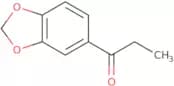
CAS:Controlled Product<p>3,4-Methylenedioxy propiophenone is a synthetic compound with a fatty acid chain. It has been shown to have potent activity against leishmania and has been used as an intermediate in the synthesis of other drugs. 3,4-Methylenedioxy propiophenone can be synthesized by acylation reactions with chloride and acetylcholinesterase inhibition. This product also has molecular docking properties, which have been analyzed using computational methods, such as profiling and profile analysis.</p>Formula:C10H10O3Purity:Min. 98 Area-%Color and Shape:Slightly Brown PowderMolecular weight:178.18 g/molN,N'-Di-Boc-(L)-cystine-dimethyl ester
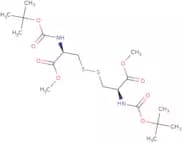
CAS:<p>N,N'-Di-boc-(L)-cystine-dimethyl ester is a fine chemical that can be used as a versatile building block. It is a complex compound with CAS No. 77826-55-2 and can be used as a reagent or speciality chemical in research. This chemical is also useful for the synthesis of various compounds and has been proven to be an excellent scaffold for chemical reactions.</p>Formula:C18H32N2O8S2Purity:Min. 95%Color and Shape:PowderMolecular weight:468.59 g/molRef: 3D-FD21565
Discontinued product2-Amino-3-methylpyridine
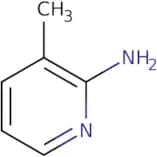
CAS:<p>2-Amino-3-methylpyridine is a colorless crystalline compound. It has the molecular formula of CHN and a molecular weight of 115.2 g/mol. 2-Amino-3-methylpyridine has an asymmetric carbon atom, so it is chiral and can be found in two different forms, enantiomers. The intermolecular hydrogen bond between nitrogen atoms is responsible for the high melting point of -40°C. The coordination geometry of group P2 is pyramidal with the nitrogen atom at the apex and two hydrogen atoms bonded to each other on either side of the nitrogen atom at 120° angles. X ray crystal structures have shown that 2-amino-3-methylpyridine exists as a molecule with an acylation reaction mechanism and intramolecular hydrogen bonding. Methanol solvent was used in this study to dissolve 2 amino 3 methyl pyridine because it does not react with copper chloride</p>Formula:C6H8N2Purity:Min. 98 Area-%Color and Shape:Solidified MassMolecular weight:108.14 g/mol(Fluoro-Methylphosphoryl)Oxycyclohexane
CAS:Controlled Product<p>(Fluoro-Methylphosphoryl)Oxycyclohexane is an organophosphorus compound that acts as a nerve agent. It inhibits the enzyme acetylcholinesterase, which is responsible for breaking down acetylcholine, leading to excess cholinergic stimulation. This can cause excessive contraction of muscles or even death. The exposure to (Fluoro-Methylphosphoryl)Oxycyclohexane can be detected by analytical methods such as gas chromatography/mass spectrometry. Oximes are used in the reactivation of acetylcholinesterase and are effective in preventing neuronal death. They bind to the phosphonyl group in (Fluoro-Methylphosphoryl)Oxycyclohexane and prevent it from inhibiting the enzyme acetylcholinesterase.</p>Formula:C7H14FO2PPurity:Min. 95%Molecular weight:180.16 g/molDL-Proline
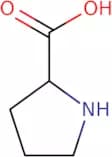
CAS:<p>DL-Proline is a biological molecule that has been shown to bind to the DNA binding domains of proteins. This binding can be seen with the crystal structures of DL-proline and protein. The reaction mechanism for DL-proline is as follows:<br><br>DL-Proline + Protein → Proline + Protein<br><br>The equilibrium constant for this reaction is 1.0 at 298 K. The pKa value for the amide group in DL-proline is 4.8, which means that it will react with water and form an amine group at physiological pH levels. DL-Proline has been shown to have metabolic disorders.</p>Formula:C5H9NO2Purity:Min. 95%Color and Shape:PowderMolecular weight:115.13 g/molRef: 3D-FP15447
Discontinued productGly-Asp-OH
CAS:<p>Gly-Asp-OH is a medicine that has proliferative activity. It is also an immunoregulatory and biologically active substance, which suppresses the production of cytokines IL-10 in mononuclear cells. Gly-Asp-OH is a synthetic compound with medicinal properties. The structure of this compound was elucidated by chemical analysis and spectroscopic methods. It can be used as an anti-inflammatory agent or to prevent cell death induced by necrosis or apoptosis.</p>Formula:C6H10N2O5Purity:Min. 95 Area-%Color and Shape:PowderMolecular weight:190.15 g/molPoly ε L-lysine HCl - Average MW 2000~4700Da
CAS:<p>Antimicrobial cationic peptide; used for microscopy glass slides coating</p>Formula:(C6H12N2O•HCl)nPurity:Min. 95 Area-%Color and Shape:White Yellow PowderRef: 3D-FP159079
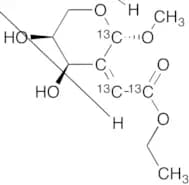
Discontinued product(Z)-Ethyl 2-((2S,4R,5S)-4,5-Dihydroxy-2-methoxydihydro-2H-pyran-3(4H)-ylidene)acetate-13C3
Controlled Product<p>Applications (Z)-Ethyl 2-((2S,4R,5S)-4,5-Dihydroxy-2-methoxydihydro-2H-pyran-3(4H)-ylidene)acetate-13C3 is a by-product intermediate in synthesizing Patulin-13C3 (P206502), a labelled Patulin (PAT). It is a mycotoxin produced by certain species of Penicillium, Aspergillus, and Byssochlamys, is mainly found in ripe apple and apple products. Patulin-induced genotoxicity and modulation of glutathione in Hep G2 cells. Antibiotic.<br>References Scott, P., et al.: J. Agric. Food Chem., 20, 450 (1972); Aden, D., et al.: Nature, 282, 615 (1979); Surralles, J., et al.: Mutat. Res., 341, 169 (1995); Alves, I., et al.: Mutagenesis, 15, 229 (2000); Liu, B., et al.: Toxicol. Appl. Pharmacol., 191, 255 (2003)<br></p>Formula:C3C7H16O6Color and Shape:NeatMolecular weight:235.2083-Acetylthio-2-methylpropanoic Acid-d5
CAS:Controlled Product<p>Applications 3-Acetylthio-2-methylpropanoic Acid-d5 (cas# 1189969-31-0) is a compound useful in organic synthesis.<br></p>Formula:C6H5D5O3SColor and Shape:NeatMolecular weight:167.24Tetrahydro-5-methyl-2-furanol 2-Benzoate
CAS:Controlled Product<p>Applications Tetrahydro-5-methyl-2-furanol 2-Benzoate is an intermediate in synthesizing 2,3-Dihydro-2-methylfuran (D447355), which is a general reagent used in next generation of biofuels. Dihydrofuranyl derivative.<br>References Simmie, J. et al.: J. Phys Chem., 116, 4528 (2012);<br></p>Formula:C12H14O3Color and Shape:NeatMolecular weight:206.245-Hydroxy-7-methoxy-2,2-dimethyl-4H-benzo[d][1,3]dioxin-4-one-d3
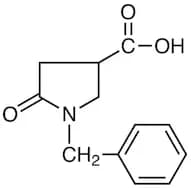
CAS:Controlled Product<p>Applications 5-Hydroxy-7-methoxy-2,2-dimethyl-4H-benzo[d][1,3]dioxin-4-one-d3 is an intermediate for the synthesis of Alternariol Monomethyl Ether-d3 (A575771), labelled methyl este analog fo Alternariol. An alternaria mycotoxin and genotoxin, found in common edible crops. It inhibits the activity of various DNA-topoisomerases, increasing the rate of DNA strand breaks.<br>References Asam, S., et al.: J. Agric. Food Chem., 57, 5152 (2009); Fehr, M., et al.: Mol. Nut. Food Res., 53, 441 (2009); Tiemann, U., et al.: Toxicol. Lett., 186, 139 (2009)<br></p>Formula:C11D3H9O5Color and Shape:NeatMolecular weight:227.2281-Benzyl-5-oxopyrrolidine-3-carboxylic Acid
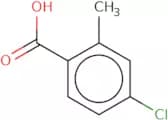
CAS:Formula:C12H13NO3Purity:>98.0%(GC)(T)Color and Shape:White to Almost white powder to crystalMolecular weight:219.244-Chloro-2-methylbenzoic acid
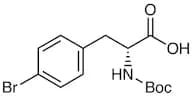
CAS:<p>4-Chloro-2-methylbenzoic acid is a high quality chemical that is used as an intermediate in the preparation of other compounds. It belongs to the group of complex compounds and has CAS No. 7499-07-2. This reagent can be used to synthesize speciality chemicals, research chemicals, and versatile building blocks. 4-Chloro-2-methylbenzoic acid is also useful as a reaction component for the synthesis of fine chemicals, pharmaceuticals, and agrochemicals.</p>Formula:C8H7ClO2Purity:Min. 95%Molecular weight:170.59 g/molN-(tert-Butoxycarbonyl)-4-bromo-D-phenylalanine
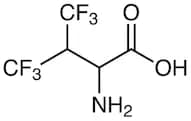
CAS:Formula:C14H18BrNO4Purity:>98.0%(HPLC)Color and Shape:White to Almost white powder to crystalMolecular weight:344.214,4,4,4',4',4'-Hexafluoro-DL-valine
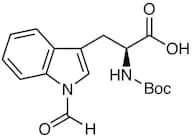
CAS:Formula:C5H5F6NO2Purity:>98.0%(T)Color and Shape:White to Almost white powder to crystalMolecular weight:225.09Nα-(tert-Butoxycarbonyl)-N1-formyl-L-tryptophan
CAS:Formula:C17H20N2O5Purity:>98.0%(T)Color and Shape:White to Light gray to Light yellow powder to crystalMolecular weight:332.365-Hydroxy-L-Tryptophan extrapure, 98%
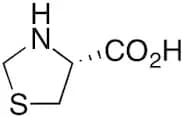
CAS:Formula:C11H12N2O3Purity:min. 99%Color and Shape:White to off - white to pale brown, PowderMolecular weight:220.23L-Thioproline extrapure, 98%
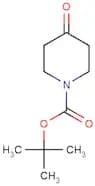
CAS:Formula:C4H7NO2SPurity:min. 98%Color and Shape:White to off - white, Crystalline powderMolecular weight:133.171-BOC-4-Piperidone extrapure, 99%
CAS:Formula:C10H17NO3Purity:min. 99%Color and Shape:White to pale yellow to brown, Crystalline powderMolecular weight:199.25FMOC-N-Trityl-L-Asparagine (FMOC-Asn(Trt)-OH) extrapure, 99%
CAS:Formula:C38H32N2O5Purity:min. 99%Color and Shape:White to off-white, Crystalline powderMolecular weight:596.672-Chloro-N-cyclohexyl-N-phenylpropanamide
<p>Please enquire for more information about 2-Chloro-N-cyclohexyl-N-phenylpropanamide including the price, delivery time and more detailed product information at the technical inquiry form on this page</p>Purity:Min. 95%Ref: 3D-FC169156
Discontinued product2-Chloro-N-(4-methoxyphenyl)propanamide
CAS:<p>2-Chloro-N-(4-methoxyphenyl)propanamide (2CMPP) is an acetanilide with a chloro substituent. It is used in research and yields better results than 2-chlorobenzoyl chloride. Acetanilides are prepared by the catalytic reduction of nitrobenzenes or chlorobenzenes with sodium or potassium borohydride in the presence of water. The reaction is exothermic and produces a white solid, which can be purified by recrystallization or column chromatography. Preparative methods for acetanilides include reaction of phenols with acetic anhydride and formaldehyde, followed by hydrolysis of the resulting ester to yield the corresponding amide.</p>Formula:C10H12ClNO2Purity:Min. 95%Molecular weight:213.66 g/molRef: 3D-FC114008
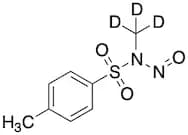
Discontinued productDiazald-d3
CAS:<p>Applications N-Methyl-d3-N-nitroso-p-toluenesulfonamide is the labeled version of Diazald; Diazomethane precursor.<br>References Takizawa, et al.: J. Pharm. Soc. Jpn., 70, 490 (1950)<br></p>Formula:C8D3H7N2O3SColor and Shape:Pale Yellow to Light Yellow SolidMolecular weight:217.06004N,N-[Iminobis(trimethylene)]bis-D-gluconamide
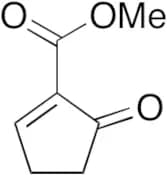
CAS:Controlled Product<p>Applications N,N-[Iminobis(trimethylene)]bis-D-gluconamide (cas# 86303-20-0) is a compound useful in organic synthesis.<br></p>Formula:C18H37N3O12Color and Shape:NeatMolecular weight:487.502-Methoxycarbonylcyclopent-2-enone
CAS:Controlled ProductFormula:C7H8O3Color and Shape:NeatMolecular weight:140.1373-((2-Chlorothiazol-5-yl)methyl)-5-methyl-1,3,5-oxadiazinan-4-imine Hydrochloride
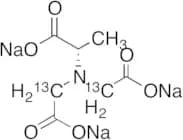
CAS:Controlled Product<p>Applications 3-((2-Chlorothiazol-5-yl)methyl)-5-methyl-1,3,5-oxadiazinan-4-imine Hydrochloride is an intermediate for the synthesis of N-(3-((2-Chlorothiazol-5-yl)methyl)-5-methyl-1,3,5-oxadiazinan-4-ylidene)benzenesulfonamide (C385860), which is an impurity of Thiamethoxam (T344180), a neonicotinoid insecticide.<br>References Oliver, J., et al.: J. Environ. Horticult., 28, 135 (2010), Ghosh, A., et al.: J. Entomol. Res., 34, 35 (2010), Chem. and Eng. News 90: 10 (2012)<br></p>Formula:C8H11ClN4OS·ClHColor and Shape:NeatMolecular weight:283.178N,N-Bis(carboxymethyl-13C)-L-alanine
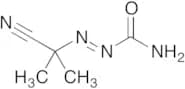
CAS:Controlled ProductFormula:C513C2H11NO6Color and Shape:Off White SolidMolecular weight:273.102-(1-Cyano-1-methylethyl)azocarboxamide
CAS:<p>Applications 2-(1-Cyano-1-methylethyl)azocarboxamide, cna be used in the synthesis of azobenzene side chain polymers derived from the bifunctional fumaric acid and itaconic acid.<br>References Kim, s. et al.: Polymer, Vol 55. P: 871-877 (2014);<br></p>Formula:C5H8N4OColor and Shape:Light Yellow SolidMolecular weight:140.144-Chloro-2-(methyl-phenyl-sulfamoyl)-benzoic acid methylester
CAS:<p>4-Chloro-2-(methyl-phenyl-sulfamoyl)-benzoic acid methylester is an industrial chemical that is used in the production of other chemicals. It can be produced by the esterification of 4-chlorophenylacetic acid with methyl phenyl sulfonyl chloride, followed by diazotization and chlorination. This chemical also has the ability to form a condensation product with hydrazine.</p>Formula:C15H14ClNO4SPurity:Min. 95%Molecular weight:339.79 g/molRef: 3D-FC150757
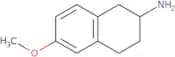
Discontinued product6-Methoxy-1,2,3,4-tetrahydronaphthalen-2-ylamine
CAS:Controlled Product<p>Please enquire for more information about 6-Methoxy-1,2,3,4-tetrahydronaphthalen-2-ylamine including the price, delivery time and more detailed product information at the technical inquiry form on this page</p>Formula:C11H15NOPurity:Min. 95%Molecular weight:177.24 g/molRef: 3D-FM51661
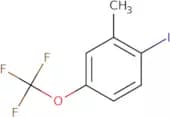
Discontinued product2-Methyl-4-(trifluoromethoxy)iodobenzene
CAS:<p>Please enquire for more information about 2-Methyl-4-(trifluoromethoxy)iodobenzene including the price, delivery time and more detailed product information at the technical inquiry form on this page</p>Formula:C8H6F3IOPurity:Min. 95%Molecular weight:302.03 g/molRef: 3D-FM85964
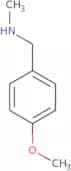
Discontinued product4-Methoxy-N-methylbenzylamine
CAS:<p>4-Methoxy-N-methylbenzylamine is a synthesized compound that is structurally similar to piperazine. It has been synthesized using the Chloramine T method and has been shown to be active as an amine receptor ligand. This molecule binds to the amine receptor site of the GABAA receptor with high affinity, inhibiting chloride ion flow. The functional groups on this molecule are likely responsible for its binding activity. 4-Methoxy-N-methylbenzylamine may be useful in the treatment of scopolamine-induced amnesia, due to its ability to bind to specific receptors in the brain.</p>Formula:C9H13NOPurity:Min. 95%Color and Shape:Clear LiquidMolecular weight:151.21 g/molRef: 3D-FM35189
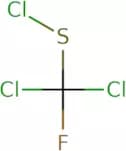
Discontinued product1,1-Dichloro-1-fluoro-methanesulfenylchloride
CAS:<p>1,1-Dichloro-1-fluoro-methanesulfenylchloride is a hazardous chemical that belongs to the group of chlorine compounds. It has been used as an antibacterial agent in the past and has been shown to be effective against nematodes, helminths, and some microorganisms. It is also used as a solvent in the production of dyes and perfumes. 1,1-Dichloro-1-fluoro-methanesulfenylchloride is not active against bacteria that are resistant to sulfonic acids or amines.</p>Formula:CCl3FSPurity:Min. 95%Color and Shape:Clear LiquidMolecular weight:169.43 g/molRef: 3D-FD88966
Discontinued productDiethoxy-Methyl-Thioxo-Phosphorane
CAS:Controlled Product<p>Diethoxy-methyl-thioxo-phosphorane is a chemical compound that is used in the manufacture of industrial chemicals. It has a vapor pressure of 0.0014 mmHg at 25°C, and can be quantified by chemical ionization with gas chromatography/mass spectrometry. Diethoxy-methyl-thioxo-phosphorane reacts with radiation to produce reactive oxygen species and other free radicals, which can damage DNA and cause cancer. The reaction rate is rapid, with an analogy to humans being exposed to nitrate compounds. Diethoxy-methyl-thioxo-phosphorane is also used in devices such as radiators and heaters, where it causes damage when combined with nitrates.</p>Formula:C5H13O2PSPurity:Min. 95%Molecular weight:168.2 g/molRef: 3D-FD58753
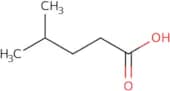
Discontinued product4-Methylpentanoic acid
CAS:<p>4-Methylpentanoic acid is a fatty acid that is the product of anaerobic fermentation in the colon and can be found as an end product in the body. It can be used as a substrate in film tests for detecting bacteria, such as Escherichia coli, which are associated with bowel diseases. 4-Methylpentanoic acid has been shown to have inhibitory effects against nuclear dna replication, mitochondrial membrane potential, and energy metabolism. 4-Methylpentanoic acid also has antiinflammatory properties and has been shown to decrease body mass index. The 6-Fluoro-3-indoxyl-beta-D-galactopyranoside is an antituberculosis drug that belongs to the class of rifamycins. It is the most active of the rifamycins for the treatment of tuberculosis. Rifapentine inhibits bacterial growth by binding to DNA-dependent RNA polymerase, thereby preventing transcription</p>Formula:C6H12O2Purity:Min. 95%Molecular weight:116.16 g/molRef: 3D-FM35595
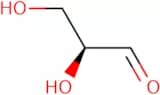
Discontinued productL-(-)-Glyceraldehyde - Technical grade aqueous solution
CAS:<p>Please enquire for more information about L-(-)-Glyceraldehyde - Technical grade aqueous solution including the price, delivery time and more detailed product information at the technical inquiry form on this page</p>Formula:C3H6O3Purity:Min. 95%Color and Shape:Clear Viscous LiquidMolecular weight:90.08 g/molRef: 3D-FG12041
Discontinued productMethyl 5-chloro-1-methyl-1H-indole-2-carboxylate
CAS:Controlled Product<p>Please enquire for more information about Methyl 5-chloro-1-methyl-1H-indole-2-carboxylate including the price, delivery time and more detailed product information at the technical inquiry form on this page</p>Formula:C11H10ClNO2Purity:Min. 95%Molecular weight:223.66 g/molRef: 3D-FM118368
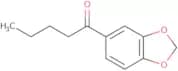
Discontinued product3,4-Methylenedioxyphenyl butyl ketone
CAS:Controlled Product<p>3,4-Methylenedioxyphenyl butyl ketone (MBK) is a synthetic drug that is structurally related to the amphetamines. MBK has been shown to induce locomotor hyperactivity in mice and exhibits pharmacokinetic properties similar to other amphetamine-type stimulants. MBK has a high affinity for the glutamate transporter, leading to an increase in extracellular concentrations of this neurotransmitter. This may lead to neurotoxicity with repeated use. MBK also interacts with the glutamate receptor and affects glutamate homeostasis. The administration of ceftriaxone, a cephalosporin antibiotic, has been found to attenuate the effects of MBK on dopamine levels and motor activity in rats.</p>Formula:C12H14O3Purity:Min. 95%Molecular weight:206.24 g/molRef: 3D-FM25833
Discontinued product4-[(4-Methyl-1H-pyrazol-1-yl)methyl]piperidine dihydrochloride
CAS:Controlled Product<p>Please enquire for more information about 4-[(4-Methyl-1H-pyrazol-1-yl)methyl]piperidine dihydrochloride including the price, delivery time and more detailed product information at the technical inquiry form on this page</p>Formula:C10H17N3Purity:Min. 95%Molecular weight:179.26 g/molRef: 3D-FM122832
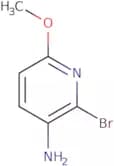
Discontinued product2-Bromo-6-methoxypyridin-3-amine
CAS:<p>2-Bromo-6-methoxypyridin-3-amine is a perovskite that has been shown to have a high photoluminescence quantum yield and can be used in solar cells. This compound interacts with both the ligands and the acceptors, boosting the efficiency of these compounds. The 2-bromo-6 methoxypyridin-3 amine is a semiconductor with an electron affinity of 1.9 eV and a band gap of 1.6 eV. It has been shown to be efficient as a photoluminescent material in nanocrystals.</p>Formula:C6H7BrN2OPurity:Min. 95%Molecular weight:203.04 g/molRef: 3D-FB140331
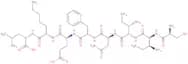
Discontinued productC3d Peptide P16
CAS:<p>C3d Peptide P16 H-Lys-Asn-Arg-Trp-Glu-Asp-Pro-Gly-Lys-Gln-Leu-Tyr-Asn-Val-Glu-Ala is a molecule that can be used as a diagnostic tool for cancer and other diseases. It is a hydroxylated analog of the amino acid Lysine, and has been shown to bind to tumor vasculature. C3d Peptide P16 H Lys Asn Arg Trp Glu Asp Pro Gly Lys Gln Leu Tyr Asn Val Glu Ala OH is a β amino acid with a carboxy terminal hydroxyl group. The reactive hydroxyl group reacts with other molecules in order to form conjugates, which are then attached to polymer surfaces for diagnostic purposes. C3d Peptide P16 H Lys Asn Arg Trp Glu Asp Pro Gly Lys Gl</p>Formula:C86H131N25O27Purity:Min. 95%Molecular weight:1,947.11 g/molRef: 3D-FC108426
Discontinued productOvalbumin (257-264) (chicken) trifluoroacetate salt
CAS:<p>Please enquire for more information about Ovalbumin (257-264) (chicken) trifluoroacetate salt including the price, delivery time and more detailed product information at the technical inquiry form on this page</p>Formula:C45H74N10O13·C2HF3O2Purity:Min. 95%Molecular weight:1,077.15 g/molRef: 3D-FO109383
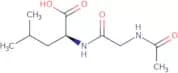
Discontinued productAc-Gly-Leu-OH
CAS:<p>L-phenylalanine is an amino acid that has a sweet taste. It is one of the 20 amino acids encoded by the universal genetic code, and is classified as a polar amino acid because it has a hydroxyl group on its side chain. L-Phenylalanine is used in the food industry as a sweetener and to enhance salty or acidic flavors. Phenylalanine has been shown to be an important precursor for several important neurotransmitters in the brain. This includes serotonin, dopamine, and norepinephrine. Phenylalanine also plays a role in protein metabolism and enzyme activity, including aminopeptidases and racemases, which are enzymes that catalyze reactions involving racemic mixtures.</p>Formula:C10H18N2O4Purity:Min. 95%Molecular weight:230.26 g/molRef: 3D-FA107943
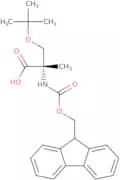
Discontinued productFmoc-α-Me-Ser(tBu)-OH
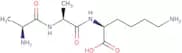
CAS:<p>Please enquire for more information about Fmoc-α-Me-Ser(tBu)-OH including the price, delivery time and more detailed product information at the technical inquiry form on this page</p>Formula:C23H27NO5Purity:Min. 95%Color and Shape:White PowderMolecular weight:397.46 g/molH-Ala-Ala-Lys-OH hydrochloride salt
CAS:<p>H-Ala-Ala-Lys-OH hydrochloride salt is a tripeptide with a reactive side chain. The protonated form of the molecule can be analyzed by acid analysis, and the ligand can be synthesized in a laboratory. Amino acid analysis has shown that this tripeptide contains lysine residues, which are important for binding to the peptide transporter. This compound is taken up through the intestine and is found in porcine tissue. H-Ala-Ala-Lys-OH hydrochloride salt has been used as a model compound in structural studies of peptide transporters.</p>Formula:C12H24N4O4Purity:Min. 95%Molecular weight:288.34 g/molRef: 3D-FA108443
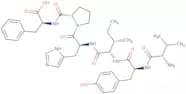
Discontinued productAngiotensin I/II (3-8)
CAS:<p>Angiotensin I/II (3-8) H-Val-Tyr-Ile-His-Pro-Phe-OH is a peptide that has physiological effects and is used as a drug. It is an active analogue of the peptide hormone angiotensin II, which regulates blood pressure and fluid volume. Angiotensin I/II (3-8) H-Val-Tyr-Ile-His-Pro-Phe-OH binds to angiotensin receptors and stimulates the release of calcium ions from cytosolic stores in cells, leading to increased muscle contractions and vasoconstriction. This drug may also have effects on dopamine levels in the brain, locomotor activity, and biochemical properties such as enzyme activity or protein binding.br><br>Angiotensin I/II (3-8) H-Val-Tyr-Ile-His Pro Phe OH has been shown to reduce the level of dopamine</p>Formula:C40H54N8O8Purity:Min. 95%Molecular weight:774.91 g/molRef: 3D-FA110283
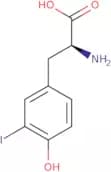
Discontinued product3-Iodo-L-tyrosine
CAS:<p>Please enquire for more information about 3-Iodo-L-tyrosine including the price, delivery time and more detailed product information at the technical inquiry form on this page</p>Formula:C9H10INO3Purity:Min. 96.0 Area-%Color and Shape:PowderMolecular weight:307.09 g/molRef: 3D-FI12110
Discontinued product

![(1R,2S,3S,5S)-3-(4-Iodophenyl)-8-methyl-8-azabicyclo[3.2.1]octane-2-carboxylicacid methyl ester](/_next/image/?url=https%3A%2Fstatic.cymitquimica.com%2Fproducts%2F3D%2Fthumb-webp%2FFI76761.webp&w=3840&q=75)




![5-Hydroxy-7-methoxy-2,2-dimethyl-4H-benzo[d][1,3]dioxin-4-one-d3](/_next/image/?url=https%3A%2Fstatic.cymitquimica.com%2Fproducts%2FTR%2Fthumb-webp%2FH446716.webp&w=3840&q=75)





![N,N-[Iminobis(trimethylene)]bis-D-gluconamide](/_next/image/?url=https%3A%2Fstatic.cymitquimica.com%2Fproducts%2FTR%2Fthumb-webp%2FI400500.webp&w=3840&q=75)




![4-[(4-Methyl-1H-pyrazol-1-yl)methyl]piperidine dihydrochloride](/_next/image/?url=https%3A%2Fstatic.cymitquimica.com%2Fproducts%2F3D%2Fthumb-webp%2FFM122832.webp&w=3840&q=75)