Amino Acids (AA)
Amino acids (AAs) are the fundamental building blocks of proteins, playing a crucial role in various biological processes. These organic compounds are essential for protein synthesis, metabolic pathways, and cell signaling. In this category, you will find a comprehensive range of amino acids, including essential, non-essential, and modified forms, which are vital for research in biochemistry, molecular biology, and nutritional sciences. At CymitQuimica, we provide high-quality amino acids to support your research and development needs, ensuring accuracy and reliability in your experimental outcomes.
Subcategories of "Amino Acids (AA)"
- Amino Acid Derivatives(3,955 products)
- Amino Acid and Amino Acid Related Compounds(3,472 products)
- Amino Acids with Oxygen or Sulphur(168 products)
- Boc- Amino Acids(351 products)
- Fmoc Amino Acids(1,710 products)
Found 38263 products of "Amino Acids (AA)"
Sort by
Purity (%)
0
100
|
0
|
50
|
90
|
95
|
100
Cholecystokinin Octapeptide (1-4) (desulfated)
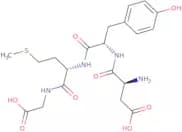
CAS:<p>Cholecystokinin octapeptide (1-4) (desulfated) H-Asp-Tyr-Met-Gly-OH is a peptide hormone that is a member of the glucagon family. It has stimulatory effects on the gastrointestinal tract, pancreas and liver, and inhibits gastric acid secretion. Cholecystokinin octapeptide (1-4) (desulfated) H-Asp-Tyr-Met-Gly-OH also stimulates the release of bile from the gallbladder, which may be due to its ability to activate aminopeptidase in the cytoplasm. Captopril is an angiotensin converting enzyme inhibitor that can inhibit cholesteryl ester transfer protein activity by binding to its catalytic site. Studies have shown that captopril can increase levels of cholecystokinin octapeptide (1-4) (des</p>Formula:C20H28N4O8SPurity:Min. 95%Color and Shape:SolidMolecular weight:484.52 g/mol4-Benzoyl-4'-methyldiphenyl sulfide
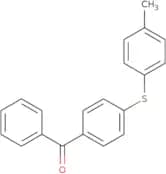
CAS:<p>4-Benzoyl-4'-methyldiphenyl sulfide is a monomer that can be used as a photoinitiator in the polymerization of acrylate and methacrylate polymers. It has been used to seal and label polyethylene pipes with dibutyltin dilaurate. 4-Benzoyl-4'-methyldiphenyl sulfide is also an important reagent in the synthesis of 2-hydroxybenzophenone by reacting with benzophenone, 2-methylbenzophenone, or 3-methylbenzophenone. The compound has been analysed by constant temperature chemical ionization mass spectrometry and found to have a molecular weight of 194. The average molar mass calculated from this information is 564.</p>Formula:C20H16OSPurity:Min. 95%Molecular weight:304.41 g/mol1-Phenyl-piperidine
CAS:<p>1-Phenyl-piperidine is a psychoactive compound that has been shown to have strong binding affinity for the κ-opioid receptors. It has also been shown to increase locomotor activity in mice and produce hallucinations. 1-Phenyl-piperidine has a number of biological properties including inhibition of dopamine uptake, induction of myocardial infarcts, and toxicity to the ischemic brain. It binds with high affinity to the multidrug efflux pumps such as P-glycoprotein (Pgp) and MDR1, which are responsible for removing drugs from cells. Pgp is induced by cytochrome P450 3A4 (CYP3A4) inhibitors such as ketoconazole, erythromycin, fluconazole, itraconazole, clarithromycin, telithromycin, nefazodone, and grapefruit juice.</p>Formula:C11H15NPurity:Min. 95%Color and Shape:PowderMolecular weight:161.24 g/moltert-Butyl 4'-methylbiphenyl-2-carboxylate
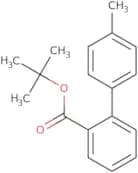
CAS:<p>Tert-Butyl 4'-methylbiphenyl-2-carboxylate is a versatile building block that can be used to synthesize complex compounds. It has CAS No. 114772-36-0 and is a fine chemical, which means it is not intended for use as a food additive, drug or cosmetic ingredient. Tert-Butyl 4'-methylbiphenyl-2-carboxylate is also a reagent, speciality chemical and useful scaffold for the synthesis of pharmaceuticals, pesticides and other chemicals.</p>Formula:C18H20O2Purity:Min. 95%Color and Shape:Slightly Yellow PowderMolecular weight:268.35 g/mol3-Amino-4-methoxybenzoic acid methyl ester
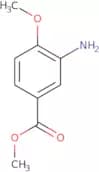
CAS:<p>3-Amino-4-methoxybenzoic acid methyl ester is a modified quinoline derivative that exhibits potent antioxidant activity. It has been shown to inhibit the activation of p38 kinase, which is a proinflammatory enzyme. This leads to decreased levels of inflammatory cytokines and chemokines. 3-Amino-4-methoxybenzoic acid methyl ester also has anti-cancer effects and can be used as an anti-cancer agent in the treatment of cancer, such as lung cancer. It induces apoptosis by inhibiting the synthesis of DNA and proteins. The synthesized drug has been shown to have a chiral center, making it a potential candidate for use in pharmaceuticals.</p>Formula:C9H11NO3Purity:Min. 95%Color and Shape:PowderMolecular weight:181.19 g/mol2-Methoxy-4-vinylphenol
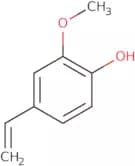
CAS:<p>2-Methoxy-4-vinylphenol is a chlorogenic acid that has been shown to inhibit the growth of Candida glabrata. It binds to ferulic acid and caffeic acids, which are natural compounds found in plants. The optimum concentration at which 2-methoxy-4-vinylphenol inhibits the growth of C. glabrata is between 0.5 and 1 mM. This compound can be readily analyzed using an analytical method with high selectivity for chlorogenic acids, such as liquid chromatography coupled with mass spectrometry (LC/MS). The binding of 2-methoxy-4-vinylphenol to ferulic acid and caffeic acid may also have implications for its use as an anti-inflammatory agent.</p>Formula:C9H10O2Purity:Min. 98%Color and Shape:Clear LiquidMolecular weight:150.17 g/mol4'-Hydroxy-2'-methylacetophenone
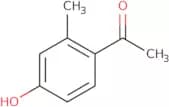
CAS:<p>4'-Hydroxy-2'-methylacetophenone is a synthetic sesquiterpene lactone that is used in cosmetics and as an active ingredient in skin care products. This compound has been shown to have medicinal values, with the ability to inhibit the growth of bacteria, fungi, and viruses. It also has carbon tetrachloride (CCl) solubilizing properties and can be used for fatty acid analysis. 4'-Hydroxy-2'-methylacetophenone is available as a sample preparation reagent for gas chromatography. The chemical composition of this compound includes a hydroxy group, which may be important for its biological activity. A linear regression analysis on the inhibitory concentration values showed that this compound has an IC50 value of 2.6 µg/mL.</p>Formula:C9H10O2Purity:Min. 95%Color and Shape:Off-White Clear LiquidMolecular weight:150.17 g/mol3-Amino-3-methylbutanoic acid
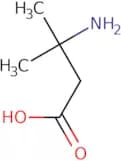
CAS:<p>3-Amino-3-methylbutanoic acid is a carbonaceous compound that can be synthesized from b-alanine and perchloroethylene. It is used in the manufacture of butanoic acid, which is an important industrial chemical. 3-Amino-3-methylbutanoic acid has been shown to exist as four isomers, each with a different molecular weight. The isomers are produced by a synthetic process involving the reaction of b-alanine and perchloroethylene. In an amination reaction, the compounds are heated in the presence of ammonia gas or ammonium chloride to form 3-amino-3-methylbutanoic acid.</p>Formula:C5H11NO2Purity:Min 95%Color and Shape:PowderMolecular weight:117.15 g/mol2-Amino-3-methoxybenzoic acid hydrochloride
CAS:<p>2-Amino-3-methoxybenzoic acid hydrochloride is a synthetic monosubstituted hydroxy analog of the natural alkaloids, which are substituted with an amino group. It is produced by the demethylation of 2-amino-3-hydroxypyridine and reacts with caprolactam to form 2,6-dihydroxybenzaldehyde. It has been used in the synthesis of methoxyanthranilic acid, which is a synthetic analogue of anthranilic acid. Hydrochloric acid can be added to 2-amino-3-methoxybenzoic acid hydrochloride to produce 2,6-dihydroxybenzoyl chloride. This compound also undergoes condensation reactions with methoxyanthranilic acid to form 2,6-dimethoxybenzaldehyde.</p>Formula:C8H9NO3•HClPurity:Min. 95%Color and Shape:PowderMolecular weight:203.62 g/molH-Leu-Trp-OH
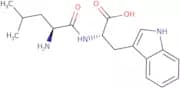
CAS:<p>H-Leu-Trp-OH is a synthetic peptide that is used to lower blood pressure. H-Leu-Trp-OH has been shown to be stereoselective and has antihypertensive activity. It also inhibits the oxidation of amino acids, and its production in the intestine may contribute to lowering blood pressure. This peptide is composed of three amino acids: H-leucine, L-tryptophan, and L-phenylalanine. The diastereomer of this peptide contains two chiral centers at carbons 3 and 4, while the cyclic peptide contains only one chiral center at carbon 3. H-Leu-Trp-OH was synthesized by reacting wheat germ with tripeptides.</p>Formula:C17H23N3O3Purity:Min. 95%Color and Shape:PowderMolecular weight:317.38 g/mol3-Hydroxymethyl-3-methyloxetane
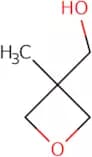
CAS:<p>3-Hydroxymethyl-3-methyloxetane is a biphenyl derivative that has been used as an additive to magnesium oxide. It is a cationic polymerization cross-linking agent that can be used for the preparation of polymeric films. The degree of cross-linking can be controlled by varying the concentration of 3-hydroxymethyl-3-methyloxetane and the ratio of chloride to oxetane. This type of polymerization has been shown to produce a film with good mechanical properties, such as flexibility, tensile strength, and elongation at break. 3-Hydroxymethyl-3-methyloxetane is biodegradable and does not contain functional groups that may cause toxicity in humans or animals. Its ring opening polymerization results in 4 vinylbenzyl alcohol (4VBA) as the main product, which can be converted into other products such as n-dimethyl formamide (DMF).</p>Formula:C5H10O2Purity:Min. 95%Color and Shape:Clear LiquidMolecular weight:102.13 g/molD,L-Azatryptophan hydrate
CAS:<p>Azatryptophan hydrate is an organic compound that is a useful building block, reagent, and intermediate in the synthesis of many complex compounds. Azatryptophan hydrate is soluble in water and reacts readily with a variety of other compounds. It can be used as a starting material to prepare complex molecules such as heterocycles and natural products. Azatryptophan hydrate has been shown to have high purity and quality and is often used as a research chemical or speciality chemical for commercial purposes.</p>Formula:C10H13N3O3Purity:Min. 95%Color and Shape:White To Light (Or Pale) Yellow SolidMolecular weight:223.23 g/molN-Methyl-N-vinylacetamide
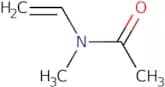
CAS:<p>N-Methyl-N-vinylacetamide is a colorless liquid with a boiling point of 105.6°C. It is produced by the reaction of acetamide and vinyl chloride in the presence of hydrochloric acid, glycol ether, and methyl ethyl ketone. The viscosity of this compound is low, which makes it an ideal solvent for paints and coatings. N-Methyl-N-vinylacetamide also has genetic damaging effects and can cause mutations in bacteria that are exposed to this compound in high concentrations. This product has an unusual chemical structure due to its hydrogen bonding interactions.br>br><br>br>br><br>Hydrogen bonds are weak intermolecular forces between polar molecules, such as water or alcohols, that are formed by the attraction between a partially positive hydrogen atom on one molecule and the negative end of another nearby molecule. Hydrogen bonds stabilize certain molecular structures because they provide partial shielding from electrostatic interactions with</p>Formula:C5H9NOPurity:Min. 97.5%Color and Shape:Clear LiquidMolecular weight:99.13 g/molN-(2-Indol-3-ylethyl)(4-methylphenyl)formamide
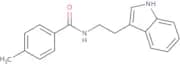
CAS:<p>Please enquire for more information about N-(2-Indol-3-ylethyl)(4-methylphenyl)formamide including the price, delivery time and more detailed product information at the technical inquiry form on this page</p>Formula:C18H18N2OPurity:Min. 95%Color and Shape:PowderMolecular weight:278.35 g/molMethyl 3-methylsalicylate
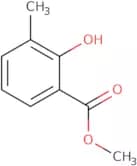
CAS:<p>Methyl 3-methylsalicylate is a member of the class of organic compounds known as phenols. It has a molecular formula of C6H5OCH3 and a molecular weight of 126.08 g/mol. The compound possesses three methoxy groups, two hydroxyl groups, and one methyl group. Methyl 3-methylsalicylate is used in dyestuffs and as an intermediate in the synthesis of pyrazole derivatives. Methyl 3-methylsalicylate has been shown to induce behavioral responses in model organisms such as honeybees and ants, which may be due to its ability to affect their cuticular hydrocarbons.</p>Formula:C9H10O3Purity:Min. 95%Color and Shape:Colorless PowderMolecular weight:166.17 g/mol(S)-(+)-6-Methyl-1-octanol
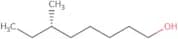
CAS:<p>The (+)-isomer of 6-methyl-1-octanol is a chiral, primary alcohol that has been synthesized and characterized. It is an analytical reagent for the determination of hydroxy groups on a molecule. The (+)-isomer is also used as a synthetic intermediate in the synthesis of other bioactive molecules.</p>Formula:C9H20OPurity:Min. 95%Molecular weight:144.25 g/mol(4S,5S)-4-Methyl-5-phenyl-2-oxazolidinone
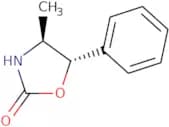
CAS:<p>(4S,5S)-4-Methyl-5-phenyl-2-oxazolidinone is a crystalline solid that hydrolyzes in water to form hydrogen chloride and (4S,5S)-4-methyl-5-(phenyl)oxazolidinone. It has been used as an intermediate for the synthesis of pharmaceuticals.</p>Formula:C10H11NO2Purity:Min. 95%Color and Shape:White PowderMolecular weight:177.2 g/mol2-((4-Methylphenyl)sulfonyl)-N-(((2-thienylcarbonylamino)thioxomethyl)amino)ethanamide
CAS:<p>Please enquire for more information about 2-((4-Methylphenyl)sulfonyl)-N-(((2-thienylcarbonylamino)thioxomethyl)amino)ethanamide including the price, delivery time and more detailed product information at the technical inquiry form on this page</p>Formula:C15H15N3O4S3Purity:Min. 95%Color and Shape:PowderMolecular weight:397.5 g/mol2-Hydroxy-5-methylbenzamide
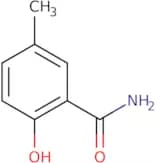
CAS:<p>Labetalol is a β-blocker that is used to treat high blood pressure. Labetalol hydrochloride, the active form of labetalol, is a white, crystalline compound with a melting point of 200 °C. It is soluble in water and has an acidic pH of 2. Labetalol hydrochloride is synthesized by reacting methylbenzene with labetalol, which forms intermediates such as methyl 4-hydroxylbenzoate and methyl 3-hydroxylbenzoate in the process. The intermediates are then recrystallized to form the final product. Labetalol hydrochloride undergoes thermal analysis using thermogravimetry, calorimetry, and residue analysis to determine its purity. This product also undergoes carbonaceous and oxidative analysis by GC-MS for quality control purposes.</p>Formula:C8H9NO2Purity:Min. 95%Color and Shape:PowderMolecular weight:151.16 g/molBoc-Thionoala-1-(6-nitro)benzotriazolide
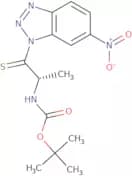
CAS:<p>Please enquire for more information about Boc-Thionoala-1-(6-nitro)benzotriazolide including the price, delivery time and more detailed product information at the technical inquiry form on this page</p>Formula:C14H17N5O4SPurity:Min. 95%Molecular weight:351.38 g/mol