Amino Acids (AA)
Amino acids (AAs) are the fundamental building blocks of proteins, playing a crucial role in various biological processes. These organic compounds are essential for protein synthesis, metabolic pathways, and cell signaling. In this category, you will find a comprehensive range of amino acids, including essential, non-essential, and modified forms, which are vital for research in biochemistry, molecular biology, and nutritional sciences. At CymitQuimica, we provide high-quality amino acids to support your research and development needs, ensuring accuracy and reliability in your experimental outcomes.
Subcategories of "Amino Acids (AA)"
- Amino Acid Derivatives(3,957 products)
- Amino Acid and Amino Acid Related Compounds(3,472 products)
- Amino Acids with Oxygen or Sulphur(168 products)
- Boc- Amino Acids(351 products)
- Fmoc Amino Acids(1,710 products)
Found 38265 products of "Amino Acids (AA)"
Sort by
Purity (%)
0
100
|
0
|
50
|
90
|
95
|
100
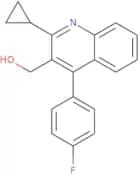
2-Cyclopropyl-4-(4-fluorophenyl)-quinolyl-3-methanol
CAS:<p>2-Cyclopropyl-4-(4-fluorophenyl)-quinolyl-3-methanol is a crystalline compound that has been obtained by reacting 3-methoxyquinoline with cyclopropyl bromide. It has the dihedral angle of about 120 degrees and is stabilized by hydrogen bonds. The compound crystallizes in an asymmetric unit cell with two molecules in the asymmetric unit and space group P2/n. The target compound can be obtained in high yield, and it is soluble in organic solvents such as benzene and triphenylphosphine. 2-Cyclopropyl-4-(4-fluorophenyl)-quinolyl-3-methanol can be used to suppress wastewater containing halogenated aromatic compounds, such as quinoline.</p>Formula:C19H16FNOPurity:Min. 95%Molecular weight:293.33 g/mol2-(2-aza-1-(4-methoxyphenyl)-2-(amino)vinyl)indane-1,3-dione
CAS:<p>Please enquire for more information about 2-(2-aza-1-(4-methoxyphenyl)-2-(amino)vinyl)indane-1,3-dione including the price, delivery time and more detailed product information at the technical inquiry form on this page</p>Formula:C17H14N2O3Purity:Min. 95%Color and Shape:PowderMolecular weight:294.3 g/molVal-Cit-PAB-MMAE
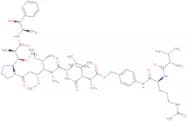
CAS:<p>Val-Cit-PAB-MMAE is a linker that has been conjugated to a monoclonal antibody (Val-Cit) and a cytotoxic agent (MMAE). This linker is designed to provide predictable strategies for site-specific conjugation of therapeutic agents to antibodies. The Val-Cit sequence facilitates the attachment of the linker to the antibody, while MMAE targets cancer cells through its chemotherapeutic effect. The linker provides an anti-cancer drug with an increased halflife in vivo, which may be due to its physicochemical properties. Val-Cit-PAB-MMAE also has the potential for use in other applications such as diagnostics and biosensors.</p>Formula:C58H94N10O12Purity:Min. 95 Area-%Color and Shape:PowderMolecular weight:1,123.43 g/molL-Proline tert-butyl ester
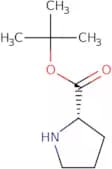
CAS:<p>L-Proline tert-butyl ester is an organic compound that is used in the synthesis of amino acids and pharmaceuticals. It is chiral, and can be synthesized by a stepwise, asymmetric synthesis. The hydrochloric acid treatment of L-lysine with trifluoroacetic acid yields the corresponding L-proline tert-butyl ester. The stereoselectivity of this process depends on the type of catalyst used for demethylation and alkylation reactions.</p>Formula:C9H17NO2Purity:Min. 95%Color and Shape:PowderMolecular weight:171.24 g/mol3-Phenethyl-phenol
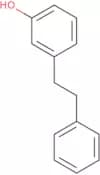
CAS:<p>3-Phenethylphenol is a hydrophobic, sterically-interacting compound that binds to molybdenum. It has been shown to inhibit the growth of fungi such as Poria and Coriolus. 3-Phenethylphenol also has functionalities such as peroxide, acetonitrile, and nature. This compound is not soluble in water and must be dissolved in solvents such as acetonitrile or polyvinyl acetate before use. 3-Phenethylphenol has been shown to have chromatographic properties, allowing it to be used as an adsorbent for the separation of organic compounds.</p>Formula:C14H14OPurity:Min. 95%Color and Shape:PowderMolecular weight:198.26 g/mol2-Phenyladamantane
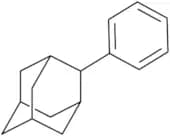
CAS:<p>2-Phenyladamantane is an organic chemical compound. It is a colorless liquid with a sweet aromatic odor. 2-Phenyladamantane has two isomers, one axial and the other equatorial. The axial isomer is more stable than the equatorial isomer because of steric hindrance in the equatorial position. The resonance structures for the axial configuration are shown on the left and those for the equatorial configuration are shown on the right.</p>Formula:C16H20Purity:Min. 98 Area-%Color and Shape:PowderMolecular weight:212.33 g/molH-Arg-Arg-AMC hydrochloride salt
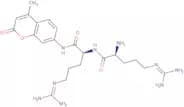
CAS:<p>H-Arg-Arg-AMC hydrochloride salt is a proteolytic inhibitor that binds to the active site of aminopeptidases and prevents their proteolytic activity. This inhibition leads to increased muscle mass in juveniles, as well as higher concentrations of magnesium ions in sarcoplasmic and myofibrillar proteins. H-Arg-Arg-AMC hydrochloride salt also has an inhibitory effect on ion exchange and chloride transport in muscle cells. The biochemical effects of this drug are due to its ability to inhibit the aminopeptidase enzymes, which play a role in the metabolism of amino acids.</p>Formula:C22H33N9O4Purity:Min. 95%Color and Shape:PowderMolecular weight:487.56 g/molAc-Val-Glu-Ile-Asp-AMC
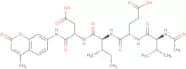
CAS:<p>Ac-Val-Glu-Ile-Asp-AMC is a cell death inducer that is used to study the mechanisms of apoptosis. It has been shown to cause neuronal death in culture and also to inhibit the growth of cultured cells by inducing the activation of caspase-9, which causes protease activity. Ac-Val-Glu-Ile-Asp-AMC has been shown to induce heart function in vivo, as well as to stimulate mitochondrial membrane potential and mitochondrial cytochrome c release. This compound also induces autophagy in vitro and can affect fatty acid metabolism.</p>Formula:C32H43N5O11Purity:Min. 93 Area-%Color and Shape:PowderMolecular weight:673.71 g/molBoc-L-serine-b-lactone
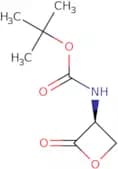
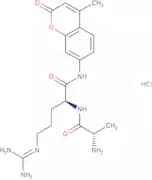
CAS:<p>Boc-L-serine-b-lactone is a chemical compound that can be used as a reagent and reaction component. It can also be used to produce other compounds, such as pharmaceuticals, pesticides, or coatings. Boc-L-serine-b-lactone can be produced in high quality through our advanced manufacturing processes. This chemical is useful for research purposes and has many applications in the production of speciality chemicals. Boc-L-serine-b-lactone is a versatile building block that can also be used as an intermediate or building block to create complex compounds. This chemical is fine and should only be handled by professionals with experience in handling chemicals.</p>Formula:C8H13NO4Purity:Min. 95%Color and Shape:White PowderMolecular weight:187.19 g/molH-Ala-Arg-AMC hydrochloride
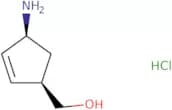
CAS:<p>H-Ala-Arg-AMC hydrochloride is a reagent that can be used in the synthesis of various complex compounds. This reagent is a useful scaffold for high quality research chemicals. It is also a versatile building block, which can be used as an intermediate or a building block. H-Ala-Arg-AMC hydrochloride is easily soluble in organic solvents and has a CAS number of 83363-71-7.</p>Formula:C19H26N6O4·HClPurity:Min. 95 Area-%Color and Shape:PowderMolecular weight:438.91 g/mol(1R,4S)-4-Amino-2-cyclopentene-1-methanol hydrochloride
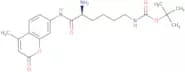
CAS:<p>(1R,4S)-4-Amino-2-cyclopentene-1-methanol hydrochloride is a chemical compound that is used as a building block in the synthesis of other compounds. It is also known to be a speciality chemical and a research chemical. (1R,4S)-4-Amino-2-cyclopentene-1-methanol hydrochloride can be used as an intermediate in the production of fine chemicals, pharmaceuticals and agrochemicals. The compound has been found to have high quality and good purity by the manufacturer.</p>Formula:C6H11NO•HClPurity:Min. 95%Color and Shape:Brown SolidMolecular weight:149.62 g/molH-Lys(Boc)-AMC
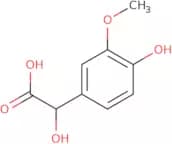
CAS:<p>H-Lys(Boc)-AMC is a useful building block for the synthesis of peptides, nucleic acids, and other complex molecules. It is a fine chemical that can be used as a reagent or speciality chemical in research laboratories. H-Lys(Boc)-AMC is also a versatile building block that can be used to synthesize complex compounds and scaffolds. This compound has been assigned CAS number 222037-62-9.</p>Formula:C21H29N3O5Purity:Min. 95%Color and Shape:PowderMolecular weight:403.47 g/molDL-4-Hydroxy-3-methoxymandelic acid
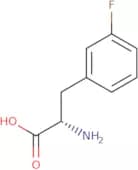
CAS:<p>DL-4-Hydroxy-3-methoxymandelic acid is a metabolite of the catecholamines, norepinephrine and epinephrine. It is found in the blood, urine and cerebrospinal fluid of humans. DL-4-Hydroxy-3-methoxymandelic acid is derived from the amino acid tyrosine. When the body's production of catecholamines exceeds its ability to break them down, these molecules accumulate and are excreted in urine as DL-4-hydroxy-3-methoxymandelic acid or as other metabolites. The concentration of DL-4-hydroxy 3 methoxymandelic acid in urine may be used to diagnose pheochromocytoma or neuroblastoma.</p>Formula:C9H10O5Purity:Min. 95%Color and Shape:White PowderMolecular weight:198.17 g/mol3-Fluoro-L-phenylalanine
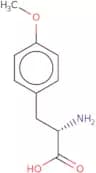
CAS:<p>3-Fluoro-L-phenylalanine is a fluorinated analog of the amino acid phenylalanine. It is an endophytic fungus that has been found in the leaves of wheat and rice plants. 3-Fluoro-L-phenylalanine is synthesized by 4-fluoro-l-phenylalanine, a plant metabolite, through the addition of a fluoride ion. This molecule can be used to produce gels with high glass transition temperatures. The synthesis of 3-fluoro-L-phenylalanine and its derivatives can be studied using NMR spectroscopy because these molecules are acidic and have low energy levels.</p>Formula:C9H10FNO2Purity:Min. 95%Color and Shape:White/Off-White SolidMolecular weight:183.18 g/molO-Methyl-L-tyrosine
CAS:<p>O-Methyl-L-tyrosine is a non-protein amino acid that inhibits protein synthesis by preventing the formation of peptide bonds. It has been shown to be an effective inhibitor of methionyl and cysteyl synthetases, which are enzymes that synthesize proteins. O-Methyl-L-tyrosine has also been used in clinical studies to treat translation defects associated with Duchenne muscular dystrophy (DMD) and spinal muscular atrophy (SMA). This drug is a synthetic amino acid that is not found in nature. Its structure consists of two methyl groups bonded to the oxygen atom on the tyrosine side chain, making it more stable than L-tyrosine. OMT binds to the enzyme methionyl synthetase in its active site, preventing formation of peptide bonds during protein synthesis. In addition, this drug has been shown to inhibit methyltetrahydrofolate reductase, an enzyme involved</p>Formula:C10H13NO3Purity:Min. 95%Color and Shape:White PowderMolecular weight:195.22 g/molN-Amino-D-proline
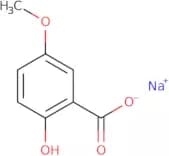
CAS:<p>N-Amino-D-proline is a hydrogen bond donor that has phytotoxic properties. It is synthesized from the reaction of ethanolamine, sulfoxide, and hydrochloric acid in the presence of lysine residues. N-Amino-D-proline may be used to treat death due to tissue injury or degeneration. The compound can also be used in chromatographic techniques as a hydrogen bond acceptor.</p>Formula:C5H10N2O2Purity:Min. 95%Color and Shape:PowderMolecular weight:130.15 g/mol5-Methoxysalicylic acid sodium
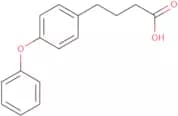
CAS:<p>5-Methoxysalicylic acid sodium (MSAS) is a drug that is used to treat intestinal ulcers. It is also used to reduce the viscosity of blood and as an adjuvant in the treatment of rheumatoid arthritis. The bioavailability of MSAS is increased when it is administered with cefmetazole, which enhances the absorption of this drug in the small intestine. MSAS has a hypoglycemic effect and can be used to treat high blood sugar levels. This drug binds to muscle cells and prevents their contraction, which can lead to relief from muscle pain or spasms. MSAS may also have a pharmacological effect on ligation, which occurs when tissue is cut off from its blood supply.</p>Formula:C8H7O4·NaPurity:Min. 95%Color and Shape:PowderMolecular weight:190.13 g/mol4-(4-Phenoxyphenyl)butyric acid
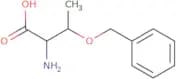
CAS:<p>4-(4-Phenoxyphenyl)butyric acid is a versatile building block that can be used in the synthesis of many different compounds. It has been used as a reaction component or intermediate in the synthesis of pharmaceuticals and agrochemicals, such as atorvastatin and methyltetrahydrofolate. 4-(4-Phenoxyphenyl)butyric acid is also used as a research chemical and has been shown to have antibacterial properties. This compound is soluble in water, making it easy to use in reactions with other reagents. 4-(4-Phenoxyphenyl)butyric acid is an important building block for many organic syntheses because it can be converted into a wide variety of useful compounds.</p>Formula:C16H16O3Purity:Min. 95%Color and Shape:PowderMolecular weight:256.3 g/molO-Benzyl-L-threonine
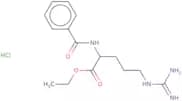
CAS:<p>O-Benzyl-L-threonine is a polymer that can be used to treat inflammatory diseases. It is an ionic polymer that reacts with calcium carbonate and forms nanosized architectures. O-Benzyl-L-threonine has been shown to cause the disassembly of inflammatory cells and induce cell death through necrosis factor. This polymer has been shown to have an optimal reaction when combined with a target cell in the presence of calcium carbonate. The phenolic group on the threonine molecule is responsible for this reaction's success.</p>Formula:C11H15NO3Purity:Min. 95%Color and Shape:White To Off-White SolidMolecular weight:209.24 g/molN-α-Benzoyl-L-arginine ethyl ester hydrochloride
CAS:<p>Benzoyl-L-arginine ethyl ester hydrochloride is a white or beige crystalline solid with a melting point of 85°C. It is soluble in water and ethanol. It has been used as a reagent, speciality chemical, and reaction component for the synthesis of complex compounds. Benzoyl-L-arginine ethyl ester hydrochloride is used as a building block in the synthesis of an intermediate, which is then used to create scaffold drugs.</p>Formula:C15H23ClN4O3Purity:Min. 98 Area-%Color and Shape:White PowderMolecular weight:342.82 g/mol