Amino Acids (AA)
Amino acids (AAs) are the fundamental building blocks of proteins, playing a crucial role in various biological processes. These organic compounds are essential for protein synthesis, metabolic pathways, and cell signaling. In this category, you will find a comprehensive range of amino acids, including essential, non-essential, and modified forms, which are vital for research in biochemistry, molecular biology, and nutritional sciences. At CymitQuimica, we provide high-quality amino acids to support your research and development needs, ensuring accuracy and reliability in your experimental outcomes.
Subcategories of "Amino Acids (AA)"
- Amino Acid Derivatives(3,971 products)
- Amino Acid and Amino Acid Related Compounds(3,477 products)
- Amino Acids with Oxygen or Sulphur(168 products)
- Boc- Amino Acids(351 products)
- Fmoc Amino Acids(1,710 products)
Found 38321 products of "Amino Acids (AA)"
Sort by
Purity (%)
0
100
|
0
|
50
|
90
|
95
|
100
N-Acetyl-L-methionine
CAS:<p>N-Acetyl-L-methionine is a form of the amino acid methionine. It is an intermediate in the conversion of L-methionine to S-adenosylmethionine, which is involved in methylation reactions in cells. N-Acetyl-L-methionine has been shown to be effective against nitrite ion, a reactive nitrogen species that causes oxidative stress and damage to DNA, RNA, and proteins. It also has been shown to have biological properties for the prevention of ischemia reperfusion injury following cardiac arrest and liver transplantation. N-acetyl-L-methionine may also have benefits for individuals with high body mass index or rats with liver microsomes.</p>Formula:C7H13NO3SPurity:Min. 95%Color and Shape:White PowderMolecular weight:191.25 g/molZ-Gly-Ala-Met-AMC
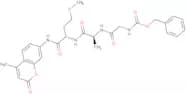
CAS:<p>Z-Gly-Ala-Met-AMC is a protease inhibitor that has been shown to inhibit the amyloidogenic processing of β-amyloid and reduce the formation of amyloid plaques in vivo. It also inhibits the degradation of normal proteins by proteases, which leads to cell death. Z-Gly-Ala-Met-AMC is used as a marker for identifying and quantifying proteolytic activity in cells with high levels of proteolytic activity. The drug has been shown to be effective in assays using cell populations and homogenous assays.</p>Formula:C28H32N4O7SPurity:Min. 95 Area-%Color and Shape:PowderMolecular weight:568.64 g/molN-Boc-hydroxylamine
CAS:<p>N-Boc-hydroxylamine is an efficient method for the preparation of epoxides from carboxylic acids. The reaction system is a ruthenium complex in trifluoroacetic acid with an effective reaction time of 20 minutes and a stereoselective transfer mechanism. The carbamic acid group on the amine reacts with the epoxide to form a hydroxamic ester. Preparation of N-Boc-hydroxylamine can be accomplished by reacting hydroxylamine with a boc-protected alcohol, which then undergoes decarboxylation.</p>Formula:C5H11NO3Purity:Min. 95%Color and Shape:White PowderMolecular weight:133.15 g/molN6-Cbz-L-lysine
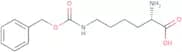
CAS:<p>N6-Cbz-L-lysine is a compound that has been shown to inhibit the activity of enzymes involved in disulfide bond formation, such as protein tyrosine phosphatase (PTP), and other enzymes implicated in cancer. N6-Cbz-L-lysine binds to the enzyme bromoacetic acid complex, which is involved in the uptake of substances into cells. This compound also has a high resistance to ring-opening, making it a good candidate for cancer therapy. The structural biology and molecular modelling of N6-Cbz-L-lysine has shown that this drug may be an active substance with anti-cancer activities. Magnetic resonance spectroscopy studies have revealed that N6-Cbz-L-lysine may have potential as an antihypertensive agent.</p>Formula:C14H20N2O4Purity:Min. 95%Color and Shape:White/Off-White SolidMolecular weight:280.32 g/mol9,10-Dihydro-5-methoxy-9-oxo-4-acridinecarboxylic acid
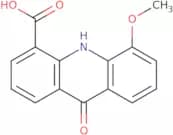
CAS:<p>Please enquire for more information about 9,10-Dihydro-5-methoxy-9-oxo-4-acridinecarboxylic acid including the price, delivery time and more detailed product information at the technical inquiry form on this page</p>Formula:C15H11NO4Purity:Min. 95%Color and Shape:PowderMolecular weight:269.25 g/mol6-Methoxy-2-naphthaldehyde
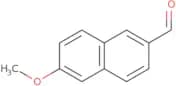
CAS:<p>6-Methoxy-2-naphthaldehyde is a nonsteroidal antiinflammatory drug that belongs to the class of naphthalenes. It inhibits the formation of inflammatory prostaglandins, which are mediators of pain and inflammation. 6-Methoxy-2-naphthaldehyde has been shown to have cytotoxic effects on cancer cells and in vitro studies have shown that it can induce cell lysis. It has also been shown to be a potent fluorescence probe for use in biological applications. This compound binds to human serum proteins by hydrogen bonding interactions, which may affect its pharmacokinetic properties. In addition, this compound has been shown to inhibit the activity of detoxification enzymes such as CYP 2C9 and 2D6 at high concentrations, which may lead to unwanted side effects such as nausea or vomiting. The molecular docking analysis of 6-Methoxy-2-naphthaldehyde with the active site of human liver alcohol dehydrogen</p>Formula:C12H10O2Purity:Min. 98 Area-%Color and Shape:PowderMolecular weight:186.21 g/molIndole-3-acetyl-L-tryptophan
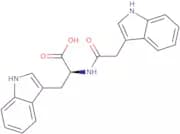
CAS:<p>Indole-3-acetyl-L-tryptophan is a water soluble anion that can be used as a recovery agent in the analysis of salicylic acid. It has been shown to quantitatively recover ammonium formate, which is an indicator for the presence of salicylic acid in a sample. Indole-3-acetyl-L-tryptophan also has been shown to quantitatively recover indole-3-acetyl-l -aspartic acid, which is another indicator for the presence of salicylic acid in a sample. Indole-3-acetyl L tryptophan can also be used to quantify and identify indoles. This compound has been proposed as a possible regulatory molecule for abscisic acid, which regulates plant growth and seed germination. Indole 3 acetyl tryptophan can also be used to measure the level of salicylic acid in plants and plant extracts by using UV spectrosc</p>Formula:C21H19N3O3Purity:Min. 98 Area-%Color and Shape:White Slightly Brown PowderMolecular weight:361.39 g/mol3,5-Diiodo-4(4'-methoxyphenoxy)benzoic acid methyl ester
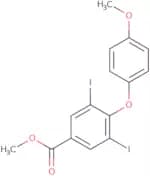
CAS:<p>3,5-Diiodo-4(4'-methoxyphenoxy)benzoic acid methyl ester (DIMBOA) is a hormone analogue that inhibits the growth of cancer cells by interfering with mitochondrial function. DIMBOA binds to the mitochondria of animal cells and prevents adenosine triphosphate (ATP) production. DIMBOA also blocks the synthesis of DNA and RNA in animal cells, which may be due to its ability to interfere with enzyme activities such as protein synthesis, cell proliferation, and apoptosis. 3,5-Diiodo-4(4'-methoxyphenoxy)benzoic acid methyl ester has been shown to inhibit cellular growth by autophagy. This drug has been shown to have no adverse effects on normal fibroblasts or antigen presenting cells in animals.</p>Formula:C15H12I2O4Purity:Min. 95%Color and Shape:PowderMolecular weight:510.06 g/mol5-Methoxy-3-methylbenzonitrile
CAS:<p>5-Methoxy-3-methylbenzonitrile is a versatile chemical with a wide range of applications in pharmaceuticals, agrochemicals, and other industries. It is used as a reaction component in the synthesis of drugs such as indomethacin and methotrexate. It is also useful for the production of high-quality research chemicals. 5-Methoxy-3-methylbenzonitrile has been shown to be an efficient building block for the synthesis of complex compounds with diverse structures.</p>Formula:C9H9NOPurity:Min. 95%Color and Shape:PowderMolecular weight:147.17 g/molH-Leu-Asp-OH
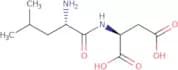
CAS:<p>H-Leu-Asp-OH is a phenolic compound that is synthesized by the esterification of L-leucine and L-aspartic acid. The solubility of H-Leu-Asp-OH in organic solvents, such as dichloromethane and ethanol, is higher than in water. This product can be used as a solvent for other substances and as a boosting agent for other products during clinical trials. It has been shown to have health effects on humans, but more research is needed to determine any possible side effects or long term health problems.</p>Formula:C10H18N2O5Purity:Min. 95%Color and Shape:White PowderMolecular weight:246.26 g/mol(S)-Sarpogrelate
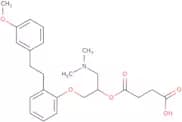
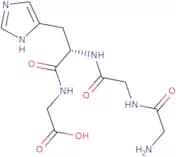
CAS:<p>Serotonin receptor 5-HT2A antagonist</p>Formula:C24H31NO6Purity:Min. 95%Molecular weight:429.51 g/molH-Gly-Gly-His-Gly-OH
CAS:<p>H-Gly-Gly-His-Gly-OH is a tripeptide with a molecular weight of 778.09 g/mol. It is crosslinked to the side chain of lysine residues and can be used for the crosslinking of protein fibers, such as wool or silk, to form hydrophobic materials that are both resistant to shrinkage and have good thermal stability. The crosslinking reaction can be achieved by either the hypobromous acid oxidation or by inorganic oxidants such as hydrogen peroxide. H-Gly-Gly-His-Gly-OH has axial reactive radicals at its center which facilitates the formation of covalent links with other molecules.br><br>br><br>The yield depends on the type of reactant used and ranges from 47% (hydrogen peroxide) to 60% (hypobromous acid). The residue obtained after hydrolysis is an alpha amino acid consisting of</p>Formula:C12H18N6O5Purity:Min. 95%Color and Shape:PowderMolecular weight:326.31 g/mol5-Bromo-2-chloro-3-methoxypyridine
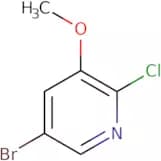
CAS:<p>5-Bromo-2-chloro-3-methoxypyridine is a kinase inhibitor that belongs to the class of compounds called analogues. This compound has been shown to be an efficient, selective and potent inhibitor of the csf1R protein kinase. 5-Bromo-2-chloro-3-methoxypyridine has also been shown to inhibit the activity of other kinases such as cdc2, cdk4, cdk6 and cdk7. The structure of this compound was used as a starting point in the development of a new class of kinase inhibitors.</p>Formula:C6H5BrClNOPurity:Min. 95%Color and Shape:SolidMolecular weight:222.47 g/molGly-Gly-Gly-Gly-OH
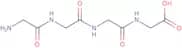
CAS:<p>Gly-Gly-Gly-Gly-OH is a peptide that is used as an absorption enhancer. It has been shown to absorb ultraviolet light and convert it into visible light, which can increase the effectiveness of photosensitive drugs in the treatment of cancer. Gly-Gly-Gly-Gly-OH has also been shown to have protonation properties and can hydrogen bond with other molecules, including proteins. This molecule is activated by oxidation, which converts it from its amide form to its imine form. This activation process can be catalyzed by an oxidation catalyst such as manganese dioxide or nickel chloride. The imine form reacts with an electron donor such as hydrogen peroxide to produce an aromatic ring compound, which then undergoes intramolecular hydrogen transfer reactions to produce a second aromatic ring compound. These two compounds react with each other and release a water molecule (H2O) and energy in the form of heat or light. The frequency shift</p>Formula:C8H14N4O5Purity:Min. 95%Color and Shape:PowderMolecular weight:246.22 g/mol2,6-Di-tert-butyl-4-methylpyridine
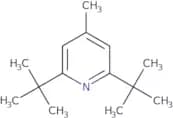
CAS:<p>2,6-Di-tert-butyl-4-methylpyridine (2,6-DBMP) is a thianthrene derivative that has been used in asymmetric synthesis and transfer reactions. 2,6-DBMP is synthesized by reacting the appropriate carbonyl chloride with the corresponding 2,6-di-tert butylpyridine. It can also be prepared by the palladium catalyzed coupling of a benzyl halide and an allyl bromide. The compound's stereoselectivity depends on the reactants' configuration at C2. This property makes it useful for the preparation of chiral molecule such as oligosaccharides and methyl glycosides. 2,6-DBMP has shown to have immunomodulatory activity against mutant strains of human erythrocytes in vitro.</p>Formula:C14H23NPurity:Min. 97%Color and Shape:Solidified MassMolecular weight:205.34 g/molTertiapin-Q trifluoroacetate salt
CAS:<p>A peptide found in honey bee venom; Potassium channel inhibitor</p>Formula:C106H175N35O24S4Purity:Min. 95%Molecular weight:2,452.01 g/mol2,4-Dioxo-4-phenylbutanoic acid
CAS:<p>2,4-Dioxo-4-phenylbutanoic acid is an inhibitor of the influenza virus that binds to its surface proteins and inhibits the replication of the virus. 2,4-Dioxo-4-phenylbutanoic acid is a stable complex that has been shown to be active against HIV. This compound has been shown to inhibit viral life by binding to the subunits of influenza A and B viruses. 2,4-Dioxo-4-phenylbutanoic acid has been synthesized as an active analogue of zanamivir and it is believed that this compound binds to the same site on the influenza A virus as zanamivir. The molecule is also tautomerizable, which means it can exist in two forms: ketone (the more stable form) or enol (less stable).</p>Formula:C10H8O4Purity:Min. 95%Color and Shape:PowderMolecular weight:192.17 g/molBoc-Pro-Phe-OH
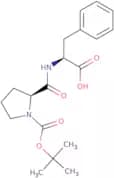
CAS:<p>Boc-Pro-Phe-OH is an ionic liquid that contains a chloride anion. It has been shown to have the ability to dissolve organic compounds, such as 1-methylimidazole, imidazolium, proline, and chloride ions. It has been observed using FTIR and mass spectroscopy that Boc-Pro-Phe-OH forms hydrogen bonds with the chloride ion. The thermal stability of Boc-Pro-Phe-OH has been measured at 250°C for one hour in air with no decomposition observed. This compound also has a low vapor pressure and can be stored in a liquid state at room temperature.</p>Formula:C19H26N2O5Purity:Min. 95%Color and Shape:PowderMolecular weight:362.42 g/mol2-Methoxy-3-nitropyridine
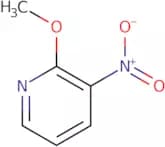
CAS:<p>2-Methoxy-3-nitropyridine is a chemical compound with the molecular formula CHNO. It is classified as an amine and has a molecular weight of 140.24 g/mol. 2-Methoxy-3-nitropyridine is a colorless liquid that can be used to make other compounds, such as nitroarenes, boronic acids, and dyes. The molecule consists of a central carbon atom with four nitrogen atoms at the corners of a tetrahedron. The electron configuration for this molecule is 1s22s22p4. This means that the outer shell electrons are in orbitals with principal quantum numbers s=1 and p=2. These orbitals are located near the middle of the molecule rather than on the periphery as in ethane (CH3CH2). This orientation provides more space for other atoms to attach to the central carbon atom, which increases its affinity for nucleophilic attack. 2-M</p>Formula:C6H6N2O3Purity:Min. 95%Color and Shape:PowderMolecular weight:154.12 g/molDL-α-Methyltryptophan
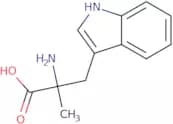
CAS:<p>DL-alpha-Methyltryptophan is a metabolite of the amino acid tryptophan. It is a monoamine neurotransmitter that has been implicated in brain function and inflammatory lesions. DL-alpha-Methyltryptophan can be used as a potential drug target for the treatment of Parkinson's disease, depression, and anxiety disorders. The hydroxyl group on the indole ring of DL-alpha-Methyltryptophan gives it an increased reactivity with oxygen, which allows it to be oxidized by monoamine oxidase B (MAO B) to 3-hydroxyanthranilic acid. This reaction can be inhibited by MAO A inhibitors such as clorgyline or selegiline. The oxidation of DL-alpha-Methyltryptophan leads to increased concentrations of serotonin in the brain and increased activity of aminotransferases.</p>Formula:C12H14N2O2Purity:Min. 98 Area-%Color and Shape:PowderMolecular weight:218.25 g/mol