Amino Acids (AA)
Amino acids (AAs) are the fundamental building blocks of proteins, playing a crucial role in various biological processes. These organic compounds are essential for protein synthesis, metabolic pathways, and cell signaling. In this category, you will find a comprehensive range of amino acids, including essential, non-essential, and modified forms, which are vital for research in biochemistry, molecular biology, and nutritional sciences. At CymitQuimica, we provide high-quality amino acids to support your research and development needs, ensuring accuracy and reliability in your experimental outcomes.
Subcategories of "Amino Acids (AA)"
- Amino Acid Derivatives(3,971 products)
- Amino Acid and Amino Acid Related Compounds(3,477 products)
- Amino Acids with Oxygen or Sulphur(168 products)
- Boc- Amino Acids(351 products)
- Fmoc Amino Acids(1,710 products)
Found 38321 products of "Amino Acids (AA)"
Sort by
Purity (%)
0
100
|
0
|
50
|
90
|
95
|
100
(4-Methoxyphenyl)-(2,4,5-trimethoxybenzylidene)-amine
CAS:<p>4-Methoxyphenyl-(2,4,5-trimethoxybenzylidene)-amine is a chemical compound that is used as a research chemical and a building block for the synthesis of other chemicals. It has been shown to be useful as an intermediate in the synthesis of complex compounds. The product is typically used as a reaction component in organic chemistry. It can also be used as a reagent or as an additive to other chemicals. 4-Methoxyphenyl-(2,4,5-trimethoxybenzylidene)-amine is high quality and has many uses in research and industry.</p>Formula:C16H16BrNO3Purity:Min. 95%Molecular weight:350.21 g/mol4-(1-Hydroxy-1-methylethyl)-2-propyl-1H-imidazole-5-carboxylic acid ethyl ester
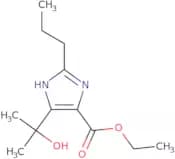
CAS:<p>4-(1-Hydroxy-1-methylethyl)-2-propyl-1H-imidazole-5-carboxylic acid ethyl ester is a synthetic drug with pharmacological properties that are similar to those of the natural product medoxomil. It has been shown to be a potent blocker of the GABA receptor and is used for the treatment of epilepsy. 4-(1-Hydroxy-1-methylethyl)-2-propyl-1H-imidazole-5-carboxylic acid ethyl ester has been shown to be an inhibitor of rat liver microsomes and also has a high affinity for the enzyme cilexetil, which is responsible for the conversion of cilexetil into its active form.</p>Formula:C12H20N2O3Purity:Min. 95%Color and Shape:PowderMolecular weight:240.3 g/mol3,4-diaza-5-(tert-butyl)-2-hydroxy-3-((4-methylphenyl)sulfonyl)tricyclo[6.4.0.0<2,6>]dodeca-1(8),4,9,11-tetraen-7-one
CAS:<p>Please enquire for more information about 3,4-diaza-5-(tert-butyl)-2-hydroxy-3-((4-methylphenyl)sulfonyl)tricyclo[6.4.0.0<2,6>]dodeca-1(8),4,9,11-tetraen-7-one including the price, delivery time and more detailed product information at the technical inquiry form on this page</p>Purity:Min. 95%5,5,5-Trifluoro-DL-leucine
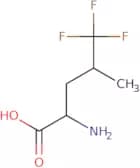
CAS:<p>5,5,5-Trifluoro-DL-leucine is a chemical compound that has been shown to be stable in the presence of hydrogen and can be used as an analog for leucine. It has been shown to bind with the ribosome and inhibit protein synthesis in bacteria. 5,5,5-Trifluoro-DL-leucine binds to the ribosomal A site and blocks peptide bond formation. It also inhibits glucose monitoring by interfering with the binding of glucose to the G protein. 5,5,5-Trifluoro-DL-leucine also has structural properties that are similar to those of 2,3,-dihydrobenzofuran (DHF). This similarity may account for its ability to denature proteins.</p>Formula:C6H10F3NO2Purity:Min. 95%Color and Shape:PowderMolecular weight:185.14 g/molBoc-D-alanine
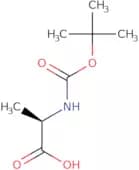
CAS:<p>Boc-D-alanine is a nicotinic acetylcholine receptor agonist that is used for the treatment of Parkinson's disease. Boc-D-alanine is an acid conjugate of D-alanine, which has been shown to increase the activity of the nicotinic acetylcholine receptor. This drug has been found in urine samples and may be useful as a diagnostic tool for detecting Parkinson's disease. The conformational properties of Boc-D-alanine have been investigated through molecular modeling and X-ray crystallography. It has also been shown to be a synthetic substrate for enzymes such as carboxypeptidase A and aminopeptidase P. Although Boc-D-alanine can exist in two forms, one with an acidic environment (Boc) and one with a neutral environment (HOC), it usually exists in its protonated form due to the acidic environment in which it is found.</p>Formula:C8H15NO4Purity:Min. 95%Color and Shape:White Off-White PowderMolecular weight:189.21 g/mol5-Chloro-1,10-phenanthroline
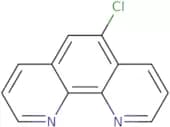
CAS:<p>5-Chloro-1,10-phenanthroline (5CP) is a molecule that has been used in the study of DNA oxidation. 5CP has been shown to be an effective inhibitor of oxidative dna damage and can be used for the prevention of mutations caused by reactive oxygen species. This compound was also found to inhibit the growth of L1210 murine leukemia cells, which is due to its ability to bind to potassium ions. 5CP has been shown to have significant binding constants with DNA and protein molecules. It also has a very high level of ancillary activity and can be used as a catalyst in transfer reactions.</p>Formula:C12H7ClN2Purity:Min. 97.5 Area-%Color and Shape:Red PowderMolecular weight:214.65 g/mol3-(4-bromophenyl)-5-(1-methylindol-3-yl)-1H,4H,5H-1,2-diazin-6-one
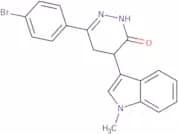
CAS:<p>Please enquire for more information about 3-(4-bromophenyl)-5-(1-methylindol-3-yl)-1H,4H,5H-1,2-diazin-6-one including the price, delivery time and more detailed product information at the technical inquiry form on this page</p>Purity:Min. 95%3-[[(2S,4S)-4-[4-(3-Methyl-1-phenyl-1H-pyrazol-5-yl)-1-piperazinyl]-2-pyrrolidinyl]carbonyl]-thiazolidine hydrobromide
CAS:<p>Canagliflozin is a pharmaceutical drug that is used to treat type 2 diabetes. It is an oral medication that works by blocking the absorption of glucose in the intestine, which lowers blood sugar levels and improves insulin sensitivity. Canagliflozin has been shown to have a number of effects on metabolism, including increased bile acid production and decreased fat absorption. This drug also has a number of side effects, including diarrhea, nausea, and vomiting. Canagliflozin is used in combination with metformin or insulin for the treatment of type 2 diabetes. The drug's most common side effect is diarrhea, which can be managed by eating more fiber-rich foods and drinking plenty of fluids.</p>Formula:(C22H30N6OS)2•(HBr)5Purity:Min. 95%Color and Shape:White/Off-White SolidMolecular weight:1,257.72 g/molN-tert-Boc-L-aspartic acid tert-butyl ester
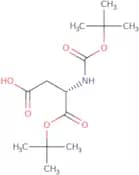
CAS:<p>N-tert-Boc-L-aspartic acid tert-butyl ester is a chemical compound that is synthesized in the laboratory. It has been shown to have an insulinotropic effect on plasma samples and may be used in the treatment of cancer. The ring opening of N-tert-Boc-L-aspartic acid tert-butyl ester yields L-aspartic acid, which can be used for the synthesis of collagen or glycopeptide. This chemical is also found to stimulate T cells and has been shown to inhibit proliferation of cancer cells in vitro.</p>Formula:C13H23NO6Purity:Min. 95%Color and Shape:White PowderMolecular weight:289.32 g/molN-[(1-Methyl-1H-indol-3-yl)methyl]cyclohexanamine
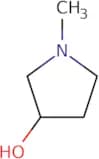
CAS:Controlled ProductPlease enquire for more information about N-[(1-Methyl-1H-indol-3-yl)methyl]cyclohexanamine including the price, delivery time and more detailed product information at the technical inquiry form on this pageFormula:C16H22N2Purity:Min. 95%Molecular weight:242.36 g/mol1-Methyl-3-pyrrolidinol
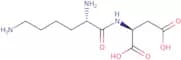
CAS:<p>1-Methyl-3-pyrrolidinol is a synthetic, organic compound that is soluble in organic solvents. It has been shown to have potent inducers of systemic effect and receptor binding. The structural formula for 1-methyl-3-pyrrolidinol is CHNO. It has been shown to have anticholinergic properties, which may be due to its ability to bind to nicotinic acetylcholine receptors.</p>Formula:C5H11NOPurity:Min. 97 Area-%Color and Shape:Colorless Clear LiquidMolecular weight:101.15 g/molH-Lys-Asp-OH
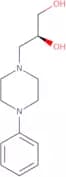
CAS:<p>H-Lys-Asp-OH is a molecule that binds to the receptor binding molecule for the colony stimulating factor. It has been shown to be effective in protecting against experimental models of hepatic steatosis and monoclonal antibody induced liver injury. The therapeutic potential of H-Lys-Asp-OH is being investigated as a treatment for human hepatic steatosis, which is a condition characterized by high levels of fat in the liver. This drug also has pharmacokinetic properties that are important in its use as an experimental model for studying the effects of antibiotics on bacterial DNA synthesis, and as a diagnostic tool for detecting antibiotic resistant bacteria.</p>Formula:C10H19N3O5Purity:Min. 95%Color and Shape:White PowderMolecular weight:261.28 g/mol(S)-3-(4-Phenyl-1-piperazinyl)-1,2-propanediol
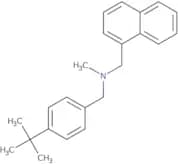
CAS:(S)-3-(4-Phenyl-1-piperazinyl)-1,2-propanediol is a synthetic compound that has been shown to have antiinflammatory activity in rat urine and human bronchial tissue. The antiinflammatory effect of (S)-3-(4-Phenyl-1-piperazinyl)-1,2-propanediol may be due to its ability to inhibit the release of leukotrienes and prostaglandins. The drug is currently being tested as a treatment for chronic cough in children. This drug has not been approved by the FDA for use in children under 12 years old.Formula:C13H20N2O2Purity:Min. 95%Color and Shape:White To Off-White SolidMolecular weight:236.31 g/molButenafine
CAS:<p>Butenafine hydrochloride is a mycological agent that is used to treat tinea. It has been shown to have an antifungal activity in vitro against wild-type strains of c. glabrata. Butenafine hydrochloride inhibits the synthesis of ergosterol, which is a vital component of fungal cell membranes, by blocking the conversion of squalene to lanosterol through inhibition of 14alpha-demethylase. It also has antimicrobial properties, which may be due to its ability to inhibit bacterial growth.</p>Formula:C23H27NPurity:Min. 95%Molecular weight:317.47 g/molCbz-Ser(bzl)-OH
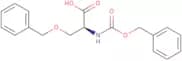
CAS:<p>Cbz-Ser(bzl)-OH is an alcohol that can be used in the synthesis of a variety of compounds. This compound has been shown to have high yields, and can be synthesized from sulfides, phenols, and carboxylic acids. It is neutral and has a carboxylic linkage.</p>Formula:C18H19NO5Purity:Min. 95%Color and Shape:PowderMolecular weight:329.35 g/mol2,4-Dihydroxy-6-methoxyquinoline
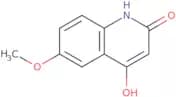
CAS:<p>2,4-Dihydroxy-6-methoxyquinoline is a compound that exhibits antifungal properties. It has been shown to have activity against Aspergillus flavus, Aspergillus fumigatus, Candida albicans and other fungi. 2,4-Dihydroxy-6-methoxyquinoline also inhibits the growth of E. coli and A. aureus in vitro. Elemental analysis showed that this compound possesses antibacterial properties and can inhibit the growth of Staphylococcus aureus.</p>Formula:C10H9NO3Purity:Min. 95%Color and Shape:PowderMolecular weight:191.18 g/molNalpha,Nalpha-Bis-(carboxymethyl)-L-lysine
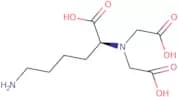
CAS:<p>Nalpha,Nalpha-Bis-(carboxymethyl)-L-lysine is a synthetic amino acid that has been used to immobilize proteins and enzymes. It can be used as an inhibitor in cell culture because it binds to the ryanodine receptor, which regulates calcium release from the sarcoplasmic reticulum. This amino acid has also been shown to inhibit kinesin, a protein involved in the movement of organelles along microtubules. In addition, Nalpha,Nalpha-Bis-(carboxymethyl)-L-lysine has been found to be effective against colony-stimulating factor (CSF) and may serve as a model system for enzymatic reactions.</p>Formula:C10H18N2O6Purity:Area-% Max. 95 Area-%Color and Shape:White Off-White PowderMolecular weight:262.26 g/mol6-Methyl-DL-tryptophan
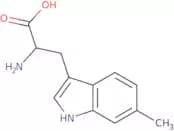
CAS:6-Methyl-DL-tryptophan is a naturally occurring amino acid that is used as a precursor in the synthesis of the neurotransmitter serotonin. 6-Methyl-DL-tryptophan is synthesized from the amino acid L-tryptophan by the enzyme tryptophan synthase. It is also found in dietary sources such as nuts and seeds, but not in significant quantities. 6-Methyl-DL-tryptophan has been shown to inhibit cancer cells in vitro and has been shown to be effective against prostate cancer cells. The inhibition mechanism for this drug has not yet been elucidated, but it may be due to frameshifting and/or inhibition of protein synthesis.Formula:C12H14N2O2Purity:Min. 95%Color and Shape:White PowderMolecular weight:218.25 g/molN-Acetyl-L-Phenylalanine
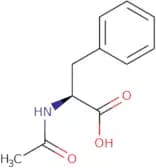
CAS:<p>N-Acetyl-L-Phenylalanine is a reactive compound that is involved in the metabolism of amino acids. It has been shown to inhibit liver cell growth and induce apoptosis. The reaction mechanism of N-acetyl-L-phenylalanine has been extensively studied, with studies showing it to react with carbonyl oxygens, hydrogen bond, and intramolecular hydrogen. N-Acetyl-L-phenylalanine has also been shown to have an optimum pH of 6.5 and its chemical formula is C10H11NO2.</p>Formula:C11H13NO3Purity:Min. 95%Color and Shape:PowderMolecular weight:207.23 g/mol2-Methylbenzophenone
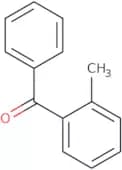
CAS:<p>2-Methylbenzophenone is a derivative of benzophenone that has been synthesized from a symmetrical molecule by the addition of two methyl groups on opposite sides of the benzene ring. The intramolecular hydrogen bonding in 2-methylbenzophenone allows for unsymmetrical molecules to form, which have a directional orientation. This makes 2-methylbenzophenone an excellent candidate for use in asymmetric synthesis. The reaction mechanism for the synthesis of 2-methylbenzophenone involves nucleophilic substitution with sodium carbonate and chlorine atom, followed by removal of the chloride ion with methyl ethyl ether or benzyl chloride. In this stepwise process, the first step is carried out at low temperature and then heated to increase the yield. The final step involves hydrogenation of the carbonyl group to form a keto group. Synthesis methods include condensation reactions, such as with sodium acetate and benzoic acid, or hydroly</p>Formula:C14H12OPurity:Min. 95%Color and Shape:Colorless Clear LiquidMolecular weight:196.24 g/mol


![3,4-diaza-5-(tert-butyl)-2-hydroxy-3-((4-methylphenyl)sulfonyl)tricyclo[6.4.0.0<2,6>]dodeca-1(8),4…](/_next/image/?url=https%3A%2Fstatic.cymitquimica.com%2Fproducts%2F3D%2Fthumb-webp%2FFD169677.webp&w=3840&q=75)
![3-[[(2S,4S)-4-[4-(3-Methyl-1-phenyl-1H-pyrazol-5-yl)-1-piperazinyl]-2-pyrrolidinyl]carbonyl]-thiaz…](/_next/image/?url=https%3A%2Fstatic.cymitquimica.com%2Fproducts%2F3D%2Fthumb-webp%2FFM61598.webp&w=3840&q=75)
![N-[(1-Methyl-1H-indol-3-yl)methyl]cyclohexanamine](/_next/image/?url=https%3A%2Fstatic.cymitquimica.com%2Fproducts%2F3D%2Fthumb-webp%2FFM128410.webp&w=3840&q=75)