Amino Acids (AA)
Amino acids (AAs) are the fundamental building blocks of proteins, playing a crucial role in various biological processes. These organic compounds are essential for protein synthesis, metabolic pathways, and cell signaling. In this category, you will find a comprehensive range of amino acids, including essential, non-essential, and modified forms, which are vital for research in biochemistry, molecular biology, and nutritional sciences. At CymitQuimica, we provide high-quality amino acids to support your research and development needs, ensuring accuracy and reliability in your experimental outcomes.
Subcategories of "Amino Acids (AA)"
- Amino Acid Derivatives(3,971 products)
- Amino Acid and Amino Acid Related Compounds(3,477 products)
- Amino Acids with Oxygen or Sulphur(168 products)
- Boc- Amino Acids(351 products)
- Fmoc Amino Acids(1,710 products)
Found 38321 products of "Amino Acids (AA)"
Sort by
Purity (%)
0
100
|
0
|
50
|
90
|
95
|
100
(S)-3-Thienylglycine
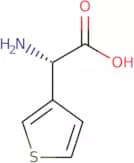
CAS:<p>(S)-3-Thienylglycine is a versatile building block that has been used in the synthesis of complex compounds. It is a product of the amino acid glycine, and can be synthesized from 3-thiophenecarboxylic acid. The compound has been shown to be a useful intermediate in research chemical synthesis, as well as a reagent or speciality chemical. It is also used as a reaction component and scaffold for the production of other chemicals. (S)-3-Thienylglycine has been shown to be useful in the preparation of pharmaceuticals, agrochemicals, and other products.</p>Formula:C6H7NO2SPurity:Min. 95%Color and Shape:White To Yellow SolidMolecular weight:157.19 g/mol7-[4-(4-Fluorophenyl)-6-(1-methylethyl)-2-(N-methyl-N-methylsulfonyl-amino)-pyrimidin-5-yl]-3,5-dihydroxy-hept-6-enoic acid ethyl es ter
CAS:<p>Rosuvastatin is a statin drug that inhibits cholesterol synthesis by inhibiting the enzyme HMG-CoA reductase. Rosuvastatin has been shown to reduce high-sensitivity C-reactive protein (hsCRP) and low-density lipoprotein cholesterol (LDL-C), which are risk factors for cardiovascular disease, in patients with hypercholesterolemia. Rosuvastatin also has a high degree of potency and specificity for the HMG-CoA reductase enzyme and shows no significant cross-reactivity with other HMG-CoA reductase inhibitors. Rosuvastatin is metabolized by CYP3A4 and CYP2C9. Drugs that inhibit these enzymes may increase the plasma levels of rosuvastatin, while drugs that induce these enzymes may decrease the plasma levels of rosuvastatin.</p>Formula:C24H32FN3O6SPurity:Min. 95%Color and Shape:PowderMolecular weight:509.59 g/mol3-Amino-4-methylpentan-2-one hydrochloride
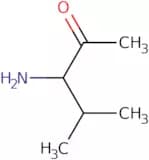
CAS:<p>3-Amino-4-methylpentan-2-one hydrochloride is a versatile building block that is used for the synthesis of high quality research chemicals, useful scaffolds, and speciality chemicals. It is also used as a reagent in organic syntheses. This chemical has a wide range of uses and is a fine chemical that can be used as an intermediate or reaction component. 3-Amino-4-methylpentan-2-one hydrochloride can be reacted with other compounds to form complex molecules that have many different applications.</p>Formula:C6H13NO•HClPurity:Min. 95%Color and Shape:SolidMolecular weight:151.63 g/mol4-Methoxy-2-nitroaniline
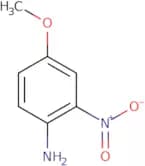
CAS:<p>4-Methoxy-2-nitroaniline is a molecule that has been shown to be able to form an intramolecular hydrogen bond with the 5' carbon of the sugar ring. This reaction leads to the formation of an alkoxy radical, which reacts with chloride ions in acidic conditions. The formation of this intermediate product is reversible, and can be used for analysis of hydrochloric acid. 4-Methoxy-2-nitroaniline has also been shown to react with diazonium salt in the presence of acid, forming a molecule that contains two amines. This reaction can be reversed by adding hydrogen chloride to the solution and analyzing the solution's acidity.</p>Formula:C7H8N2O3Purity:Min. 98 Area-%Color and Shape:PowderMolecular weight:168.15 g/mol(+/-)-Fmoc-cis-2-aminocyclopentane carboxylic acid
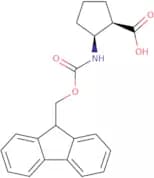
CAS:<p>Fmoc-cis-(1R,2S)-2-aminocyclopentane carboxylic acid is a versatile building block that is used in the synthesis of many important compounds. It can be used as a scaffold for organic synthesis and can be converted to an intermediate for peptides and proteins. Fmoc-cis-(1R,2S)-2-aminocyclopentane carboxylic acid is also useful in chemical reactions due to its high reactivity, including reactions with thiols, amines, alcohols, and others. This compound has been shown to form complexes with metals such as palladium or platinum.</p>Formula:C21H21NO4Purity:Min. 96 Area-%Color and Shape:White PowderMolecular weight:351.4 g/molFmoc-Val-Gly-OH
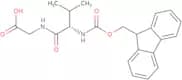
CAS:<p>Fmoc-Val-Gly-OH is a Research Chemical that is commonly used in the field of efficient synthesis. It is an amino acyl compound that can be utilized for the synthesis of various molecules. Fmoc-Val-Gly-OH is known for its high efficiency and reliability in producing desired results. It can be easily analyzed using spectrometry techniques, allowing researchers to accurately determine its composition and purity. This versatile compound can react with azides, alcohols, and other compounds to create new chemical entities. With its efficient properties, Fmoc-Val-Gly-OH is an essential tool for scientists and researchers in their quest for innovative discoveries.</p>Formula:C22H24N2O5Purity:Min. 95%Molecular weight:396.44 g/mol4-Amino-1-Boc-piperidine
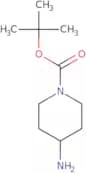
CAS:<p>4-Amino-1-Boc-piperidine is a potent inhibitor of the CCR5 receptor. It is an x-ray crystal structure with a hydroxide solution that inhibits the growth of cancer cells. The inhibitor binding site for 4-Amino-1-Boc-piperidine was determined to be the CCR5 receptor, which is located on the surface of hematopoietic cells. The compound has been shown to inhibit human T lymphocyte proliferation in vitro and inhibit HIV replication in infected patients. 4-Amino-1-Boc-piperidine is able to inhibit the growth of cancer cells by blocking the production of cytokines, such as interleukin 2, that are needed for cell division and growth.</p>Formula:C10H20N2O2Purity:Min. 95%Color and Shape:PowderMolecular weight:200.28 g/mol4-Methoxy-2-(trifluoromethyl)aniline
CAS:<p>4-Methoxy-2-(trifluoromethyl)aniline is a chemical compound that is used as a research chemical, reagent, and speciality chemical. It is a versatile building block that can be used in reactions to produce complex compounds. 4-Methoxy-2-(trifluoromethyl)aniline has been identified by the Chemical Abstracts Service (CAS) as having high quality and is useful for preparing fine chemicals. This substance also has uses in the field of medicinal chemistry and can be used as a scaffold for pharmaceutical products.</p>Formula:C8H8F3NOPurity:Min. 95%Color and Shape:Clear LiquidMolecular weight:191.15 g/mol4-Methoxy-2,3,6-trimethylbenzaldehyde
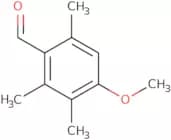
CAS:4-Methoxy-2,3,6-trimethylbenzaldehyde (MTMB) is a chemical intermediate that can be used as a building block for the synthesis of complex compounds. It has a high quality and is a versatile building block. MTMB is also known to react with other chemical compounds to form an aromatic ring. This compound is used in research and development as well as in fine chemical production.Formula:C11H14O2Purity:Min. 95%Color and Shape:PowderMolecular weight:178.23 g/mol1-Methyl-4-pyrrolidin-3-ylpiperazine
CAS:<p>1-Methyl-4-pyrrolidin-3-ylpiperazine is a versatile building block that has been used as a reagent, speciality chemical, and intermediate. It is a complex compound that has been shown to be useful in the synthesis of other compounds. 1-Methyl-4-pyrrolidin-3-ylpiperazine is also a precursor to many pharmaceuticals. The National Institute for Occupational Safety and Health (NIOSH) lists this chemical as "reasonably anticipated to be a human carcinogen."</p>Formula:C9H19N3Purity:Min. 95%Color and Shape:Clear LiquidMolecular weight:169.27 g/molH-Gly-Gly-Trp-OH
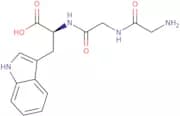
CAS:<p>H-Gly-Gly-Trp-OH is a versatile building block that is used in the synthesis of many complex compounds. It is a fine chemical that may be useful as a reagent, speciality chemical, or reaction component in research. This compound can also be used as an intermediate in the synthesis of other compounds. The compound has been shown to have a high quality and usefulness as a scaffold for synthesizing peptides, proteins, and other biomolecules.</p>Formula:C15H18N4O4Purity:Min. 95%Color and Shape:White To Yellow SolidMolecular weight:318.33 g/mol1-(4-Bromophenyl)-4-methylpiperazine
CAS:Controlled Product<p>Please enquire for more information about 1-(4-Bromophenyl)-4-methylpiperazine including the price, delivery time and more detailed product information at the technical inquiry form on this page</p>Formula:C11H15BrN2Purity:Min. 95%Color and Shape:PowderMolecular weight:255.15 g/molL-Alaninamide
CAS:<p>L-Alaninamide is a protonated amino acid that reacts with the bacterial cell membrane and causes it to rupture. L-Alaninamide is synthesized by hydrolysis of the ester bond between butyric acid and serine protease in the presence of immobilized d-alanine. The reaction is carried out at a pH of 5.5, and the release of pressor is observed. This reaction takes place in an aqueous solution containing fatty acids as solvents. The type strain of this amino acid is E. coli.</p>Formula:C3H8N2OPurity:Min. 95%Color and Shape:PowderMolecular weight:88.11 g/mol4-Phenyl-2-pyrrolidone
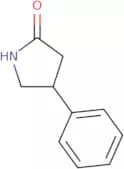
CAS:<p>4-Phenyl-2-pyrrolidone (4PP) is a chemical that inhibits bacterial growth by binding to the fatty acids required for cellular membrane synthesis. 4PP has been shown to inhibit the production of gamma-aminobutyric acid (GABA), an inhibitory neurotransmitter, and also has an aromatic hydrocarbon structure, which may be important for its antibacterial activity. The effective dose of 4PP is 10 µg/mL and it can be used in aerobic environments. This chemical also has a kinetic effect on the production of RNA sequences, which could play a role in its ability to inhibit bacterial growth.</p>Formula:C10H11NOPurity:Min. 95%Color and Shape:PowderMolecular weight:161.2 g/mol(3E)-4-(1,3-Benzodioxol-4-yl)-3-butenoic acid
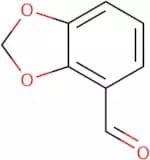
CAS:2,3-Methylenedioxybenzaldehyde is an organic compound that has been used as a chemical ionization reagent in the development of chemosensors. The formyl group in this molecule reacts with chloride to produce the corresponding formate salt, which can be detected by gas chromatography. This compound has also been shown to inhibit bacterial growth in vitro and may have potential applications as a drug substance. 2,3-Methylenedioxybenzaldehyde is an isomer of 2,4-methylenedioxybenzaldehyde, which has been shown to inhibit bacterial growth via hydrogen bonding with amines and electron deficient molecules such as chlorides. 2,3-Methylenedioxybenzaldehyde can be used for chromatographic science and the detection of drugs in urine samples.Formula:C11H10O4Purity:Min. 95%Color and Shape:PowderMolecular weight:206.19 g/mol4-Hydroxy-3-methoxybenzoic acid ethyl ester
CAS:<p>4-Hydroxy-3-methoxybenzoic acid ethyl ester is a synthetic compound that is converted to protocatechuic acid, an antioxidant found in wine. It has been shown to have antioxidative properties in inflammatory bowel disease by inhibiting the formation of reactive oxygen species. Protocatechuic acid also inhibits the growth of bacterial strains such as Listeria monocytogenes and Bacillus cereus, which are often resistant to antibiotics. The mechanism of action is not well understood, but it may be due to its ability to inhibit the production of p-hydroxybenzoic acid, a precursor for bacterial cell wall synthesis. Protocatechuic acid also has anti-inflammatory properties and can be used as a bioactive phenolic in topical preparations such as creams or ointments.</p>Formula:C10H12O4Purity:Min. 95%Color and Shape:PowderMolecular weight:196.2 g/molProlintane hydrochloride
CAS:Controlled Product<p>Prolintane hydrochloride is a drug that has been shown to inhibit the activity of enzymes in the inflammatory and immune responses. It also inhibits the uptake of caffeine, which may be due to its ability to bind with the toll-like receptor (TLR) and CB2 receptor. Prolintane hydrochloride has been used to treat bowel disease, depression, and autoimmune diseases such as rheumatoid arthritis. This drug has a depressant effect on the central nervous system, which may lead to symptoms such as drowsiness and fatigue. The drug is metabolized through a synthetic pathway that involves N-deacetylation by acetyltransferase enzymes. Prolintane hydrochloride also inhibits inflammatory bowel disease by reducing cytokine production in mice with colitis.</p>Purity:Min. 95%Cyclo(L-prolyl-L-leucyl)
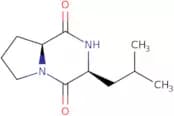
CAS:<p>Cyclo(L-prolyl-L-leucyl) is a cyclic lipopeptide that inhibits the transcription of DNA. It binds to the polymerase chain and blocks the transcription process, which prevents the production of RNA. Cyclo(L-prolyl-L-leucyl) has been shown to have an inhibitory effect on human pathogens such as fungi, protozoa, or bacteria. Cyclo(L-prolyl-L-leucyl) also has anti-cancer properties and is used for cancer treatment. Cyclo(L-prolyl-L-leucyl) is extracted from an acetate extract and purified by chromatography. The purified product is then tested in vitro using assays including magnetic resonance spectroscopy.</p>Formula:C11H18N2O2Purity:Min. 95%Color and Shape:PowderMolecular weight:210.27 g/mol5-Fluoro-2-methylphenylhydrazine hydrochloride
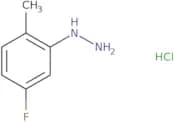
CAS:<p>5-Fluoro-2-methylphenylhydrazine hydrochloride is a crystalline solid that is soluble in water. It is used as a reagent in organic synthesis, but it also has application as an intermediate in the production of calcium hydroxide and calcium fluoride. 5-Fluoro-2-methylphenylhydrazine hydrochloride reacts with methacrylate to produce an ultrafine powder, which can be difficult to hydrate because of its high molecular weight. The hydration reaction requires the addition of large amounts of water and heat. This process can be accelerated by adding a solution of calcium ions or calcium hydroxide to the reaction mixture. Hydrogen fluoride gas (HF) may also be generated during this process. Crystallization occurs when the solids are heated or placed in contact with a nonpolar solvent such as hexane.</p>Formula:C7H9FN2•HClPurity:Min. 95%Color and Shape:PowderMolecular weight:176.62 g/mol2-Fluoro-3-methylbenzoic acid methyl ester
CAS:<p>2-Fluoro-3-methylbenzoic acid methyl ester is a small molecule that has been shown to possess 5-HT3 receptor antagonist activity in the range of nanomolar potencies. This drug has also been shown to be orally active in mice. The physicochemical properties of 2-fluoro-3-methylbenzoic acid methyl ester include a melting point of 155.5° C, solubility in methanol and acetone, and a molecular weight of 168.2 g/mol.<br>2-Fluoro-3-methylbenzoic acid methyl ester is being developed as a targeted agent for the treatment of bowel syndrome, which is characterized by abdominal pain, nausea and diarrhea.</p>Formula:C9H9FO2Purity:Min. 95%Color and Shape:Clear LiquidMolecular weight:168.16 g/mol

![7-[4-(4-Fluorophenyl)-6-(1-methylethyl)-2-(N-methyl-N-methylsulfonyl-amino)-pyrimidin-5-yl]-3,5-di…](/_next/image/?url=https%3A%2Fstatic.cymitquimica.com%2Fproducts%2F3D%2Fthumb-webp%2FFF35383.webp&w=3840&q=75)