Amino Acids (AA)
Amino acids (AAs) are the fundamental building blocks of proteins, playing a crucial role in various biological processes. These organic compounds are essential for protein synthesis, metabolic pathways, and cell signaling. In this category, you will find a comprehensive range of amino acids, including essential, non-essential, and modified forms, which are vital for research in biochemistry, molecular biology, and nutritional sciences. At CymitQuimica, we provide high-quality amino acids to support your research and development needs, ensuring accuracy and reliability in your experimental outcomes.
Subcategories of "Amino Acids (AA)"
- Amino Acid Derivatives(3,969 products)
- Amino Acid and Amino Acid Related Compounds(3,474 products)
- Amino Acids with Oxygen or Sulphur(168 products)
- Boc- Amino Acids(351 products)
- Fmoc Amino Acids(1,710 products)
Found 38282 products of "Amino Acids (AA)"
Sort by
Purity (%)
0
100
|
0
|
50
|
90
|
95
|
100
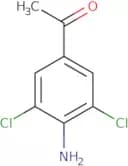
1-(4-Amino-3,5-dichloro-phenyl)-2-ethanone
CAS:<p>1-(4-Amino-3,5-dichloro-phenyl)-2-ethanone is a beta-adrenergic agent. It has been used as a stable isotope label for the study of the pharmacokinetics and metabolism of drugs in humans. In addition, it has been shown to have a good stability profile in acidic solutions and can be easily converted to other derivatives by simple chemical methods. The compound's UV spectrum is linear with respect to concentration over the range from 0.1 to 1 mg/mL, with maxima at 227 nm and 254 nm. This compound has been characterized using analytical methods such as diffraction, spectroscopy, and chromatography.</p>Formula:C8H7Cl2NOPurity:Min. 95%Color and Shape:PowderMolecular weight:204.05 g/mol4-Methyl-2(5H)-furanone
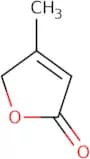
CAS:<p>4-Methyl-2(5H)-furanone is an isomeric compound that can be isolated from various plant sources including isoprene, chalcones, and other plant extracts. It has been shown to inhibit the formation of dental plaque and the growth of oral bacteria in a functional group study. 4-Methyl-2(5H)-furanone is also known as a chalcone and has been shown to have antibacterial properties. This chemical reaction can be used as an alternative to chlorhexidine for the treatment of dental plaque.</p>Formula:C5H6O2Purity:Min. 95%Color and Shape:Clear LiquidMolecular weight:98.1 g/mol2-Fluoro-4-methoxyphenol
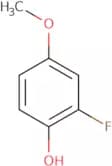
CAS:<p>2-Fluoro-4-methoxyphenol is a white crystalline solid with a melting point of 100°C. It is soluble in water, ethanol and ether and insoluble in chloroform. The compound has been shown to be an intermediate for the synthesis of other organic compounds, such as 2-fluoro-4-(2,2,2-trifluoroethoxy)benzaldehyde, 2-fluoro-4-(3,3,3-trifluoropropoxy)benzaldehyde and 4-(2,2,2-trifluoroethoxy)-3'-nitroacetophenone. 2-Fluoro-4-methoxyphenol can also be used as a building block for speciality chemicals including research chemicals.</p>Formula:C7H7FO2Purity:Min. 95%Color and Shape:Clear LiquidMolecular weight:142.13 g/molBoc-3-nitro-L-phenylalanine
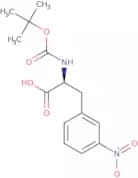
CAS:<p>Boc-3-nitro-L-phenylalanine is a chemical intermediate that is useful for the synthesis of a wide variety of compounds. It is a versatile building block with many applications in research and industry. Boc-3-nitro-L-phenylalanine has been used as a reaction component in organic synthesis, as well as in the production of pharmaceuticals and other specialized chemicals. This compound can be used as a reagent or starting material for the synthesis of other organic compounds. Boc-3-nitro-L-phenylalanine is an important chemical with high quality, which can be used in the production of many different types of products.</p>Formula:C14H18N2O6Purity:Min. 98 Area-%Color and Shape:PowderMolecular weight:310.3 g/molD-Phenylalanyl-prolyl-arginyl chloromethyl ketone
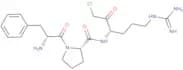
CAS:<p>D-Phenylalanyl-prolyl-arginyl chloromethyl ketone is a chemical compound that inhibits the proteolytic activity of serine proteases. It binds to the thrombin receptor on the surface of cells and prevents activation of fibrinogen by thrombin, which is an enzyme that promotes clotting. D-Phenylalanyl-prolyl-arginyl chloromethyl ketone also blocks platelet aggregation and has shown an ability to induce muscle cell proliferation. This drug has been used in pharmacological experiments as an inhibitor binding agent.</p>Formula:C21H31ClN6O3Purity:Min. 90 Area-%Color and Shape:PowderMolecular weight:450.96 g/molFmoc-3-nitro-L-tyrosine
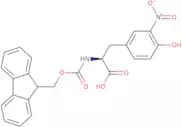
CAS:<p>Fmoc-3-nitro-L-tyrosine is an intermediate in the synthesis of a fluorogenic substrate for the determination of tyrosine residues in peptides by reverse phase high performance liquid chromatography (RP-HPLC). The product is synthesized by solid phase methods. Fmoc-3-nitro-L-tyrosine is prepared by reacting 3,4,5,6-tetrafluoroacetophenone with L-tyrosine in piperidine. The product can be cleaved to yield the residues and hydroxyl groups. The fluorogenic nature of Fmoc-3-nitro-L-tyrosine enables it to be used as a quenching reagent for the fluorescence of other compounds. This product can also be modified to become fluorescent or enzymatically active.</p>Formula:C24H20N2O7Purity:Min. 95%Color and Shape:PowderMolecular weight:448.42 g/mol2-Methyl-1,2-benzisothiazolin-3-one
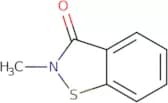
CAS:<p>2-Methyl-1,2-benzisothiazolin-3-one (MBIT) is a water soluble microbiocide which is active against bacteria, yeasts and moulds and has potential applications as a preservative in paints, sealants and coatings. Similar compounds (BIT, MIT) have found use as preservatives in detergents and cleaning products due to their relative stability in solution and compatibility with enzymes.</p>Formula:C8H7NOSPurity:Min. 96 Area-%Color and Shape:White Off-White PowderMolecular weight:165.21 g/mol[(1-Methyl-1H-indol-5-yl)methyl]amine acetate
CAS:<p>[(1-Methyl-1H-indol-5-yl)methyl]amine acetate is a versatile building block that can be used in the preparation of a wide range of chemicals. This compound has been shown to react with a variety of reagents, such as phenyliodine diacetate and chloroacetic acid to give various products. [(1-Methyl-1H-indol-5-yl)methyl]amine acetate also reacts with potassium hydroxide (KOH) to produce indole. It is an important intermediate in the synthesis of other chemical compounds and has been reported in more than 200 scientific publications. The chemical formula for [(1-Methyl-1H-indol-5-yl)methyl]amine acetate is C13H14N2O4.</p>Formula:C10H12N2·C2H4O2Purity:Min. 95%Color and Shape:White PowderMolecular weight:220.27 g/molL-Valinol
CAS:<p>L-Valinol is a model system that is used to study the reaction of aziridines with oxygen nucleophiles. It has been shown that this reaction proceeds through the formation of an intermediate, hydrogen tartrate, followed by a second step with nitrogen atoms as the nucleophile and alcohol residue as the substrate. The use of L-valinol in asymmetric synthesis was also demonstrated. In this process, amides were obtained with high enantioselectivity by reacting L-valinol with amines in acidic conditions. This synthetic pathway was found to be synergic with other reactions, such as nitroolefination and benzoylation.</p>Formula:C5H13NOPurity:Min. 95%Color and Shape:Solidified MassMolecular weight:103.16 g/mol5-Chloro-DL-tryptophan
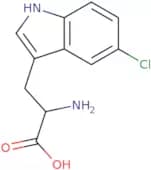
CAS:<p>5-Chloro-DL-tryptophan is a research chemical that is used as a building block in the synthesis of other chemicals.</p>Formula:C11H11ClN2O2Molecular weight:238.68 g/mol5-Methylthiophene-3-carbohydrazide
CAS:<p>5-Methylthiophene-3-carbohydrazide is a white powder that is soluble in water and ethanol. It is used as a reagent for organic synthesis, especially for the production of heterocycles. The chemical name for 5-methylthiophene-3-carbohydrazide is methyl 3-(aminocarbonyl)-5-methylthiophenecarboxylate. It has a molecular weight of 160.06 grams per mole and a melting point of 35°C. It reacts with acid to form an N-methylthiophthalimide, which can then be reacted with various amines to produce diverse products. This compound is also used as a building block in the synthesis of complex molecules such as pharmaceuticals, agrochemicals, or fragrances.</p>Formula:C6H8N2OSPurity:Min. 95 Area-%Color and Shape:PowderMolecular weight:156.21 g/mol6-Phenyl-2-thiouracil
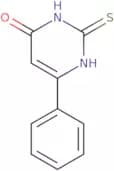
CAS:<p>6-Phenyl-2-thiouracil (6PTU) is an alkylthio group that inhibits the growth of microorganisms by binding to DNA. 6PTU binds to the oxygen nucleophiles in DNA and prevents transcription and replication. It also has a positive effect on the synthesis of proteins, which may be due to its ability to regulate gene transcription. 6PTU has been shown to inhibit cell growth in culture by blocking protein synthesis. This drug is used as an analytical method for determining urinary glucose levels in animals because it reacts with glucose in urine samples. The reaction produces a chromatographic peak that can be quantified using an electrochemical detector.</p>Formula:C10H8N2OSPurity:Min. 95%Color and Shape:PowderMolecular weight:204.25 g/molFmoc-a-Me-D-Trp(Boc)-OH
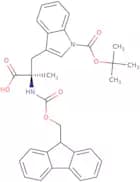
CAS:<p>Fmoc-a-Me-D-Trp(Boc)-OH is a building block that is used in the synthesis of peptides and proteins. It is an intermediate for the production of pharmaceuticals, which can be used as a reagent or speciality chemical. Fmoc-a-Me-D-Trp(Boc)-OH has been reported to be useful as a reactant in organic synthesis reactions such as condensation reactions, reductive aminations and peptide coupling reactions. This compound is also a versatile scaffold for the preparation of complex compounds with high purity and quality.</p>Formula:C32H32N2O6Purity:Min. 95%Color and Shape:White PowderMolecular weight:540.61 g/molN-Methyl-N-trimethylsilylacetamide
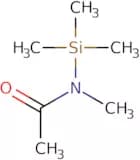
CAS:<p>N-Methyl-N-trimethylsilylacetamide is a bifunctional amide that can react with an electrophile, such as hexane, to form an N-methylated product. The amide group of the molecule can also be deprotonated by a strong base to form an enolate, which can then react with a nucleophile. The NMR spectra of this compound show that it has a multinuclear structure and contains two tautomers. It is used in analytical chemistry for sample preparation, chromatographic science for reaction intermediates, and chemical study for its reactivity.</p>Formula:C6H15NOSiPurity:Min. 97 Area-%Color and Shape:Clear LiquidMolecular weight:145.27 g/molFmoc-4-bromo-D-phenylalanine
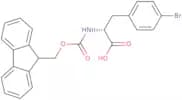
CAS:<p>Fmoc-4-bromo-D-phenylalanine is a reaction component that is used in the synthesis of complex compounds. It can be used as a building block for the synthesis of many types of compounds, such as pharmaceuticals, agrochemicals and speciality chemicals. Fmoc-4-bromo-D-phenylalanine has been shown to be a useful intermediate in the preparation of halogenated phenylalanines. It is also an important reagent in organic synthesis. This chemical belongs to the group of speciality chemicals and research chemicals with CAS No. 198545-76-5.</p>Formula:C24H20BrNO4Purity:Min. 98 Area-%Color and Shape:PowderMolecular weight:466.32 g/mol2-Methylbenz[c,d]indole
CAS:<p>2-Methylbenz[c,d]indole is an indole. It exhibits a number of spectroscopic properties including the presence of a strong absorption band at 290 nm and a weak one at 430 nm. 2-Methylbenz[c,d]indole is not active against bacteria.</p>Formula:C12H9NPurity:Min. 95 Area-%Color and Shape:PowderMolecular weight:167.21 g/molBoc-4-iodo-L-phenylalanine
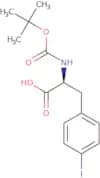
CAS:<p>Boc-4-iodo-L-phenylalanine is a chemical compound belonging to the category of amino acid derivatives. It is widely used in research for various applications, including peptide synthesis and drug discovery.<br>The L-phenylalanine derivative, has a Boc protecting group (tert-butoxycarbonyl) on the amino group and an iodine atom at the 4-position of the phenyl ring. The Boc group protects the amino group from unwanted reactions during peptide synthesis, while the iodine atom serves as a useful group for further modifications.</p>Formula:C14H18IHO4Purity:Min. 95%Color and Shape:PowderMolecular weight:378.2 g/mol2-(1-Methylindol-3-yl)-4-oxo-4-phenylbutanoic acid
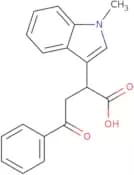
CAS:<p>Please enquire for more information about 2-(1-Methylindol-3-yl)-4-oxo-4-phenylbutanoic acid including the price, delivery time and more detailed product information at the technical inquiry form on this page</p>Purity:Min. 95%Fmoc-Cit-OH
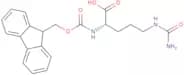
CAS:<p>Fmoc-Cit-OH, or N-Fmoc-L-citrulline, is a protected amino acid derivative commonly used in peptide synthesis. The "Fmoc" portion refers to the fluorenylmethyloxycarbonyl group, a protecting group that shields the amino group of citrulline, preventing unwanted side reactions during peptide chain elongation. Citrulline, the core amino acid in Fmoc-Cit-OH, is a non-proteinogenic amino acid, which is not directly incorporated into proteins during translation. In peptide synthesis, Fmoc-Cit-OH is incorporated into peptide chains using solid-phase peptide synthesis (SPPS). This technique allows for the stepwise assembly of peptides on a solid support, with Fmoc-protected amino acids added sequentially. The Fmoc group is then removed using a mild base, exposing the free amino group for the addition of the next amino acid. Fmoc-Cit-OH is particularly valuable in the synthesis of peptides containing citrulline residues, which are often found in biologically active peptides and proteins. These peptides may have therapeutic potential in various fields, including drug discovery and prodrug synthesis.</p>Formula:C21H23N3O5Purity:Min. 98 Area-%Color and Shape:White Off-White PowderMolecular weight:397.42 g/molL-Serine β-lactone tetrafluoroborate
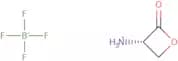
CAS:<p>L-Serine beta-lactone tetrafluoroborate salt is a fine chemical that is used as a reagent, complex compound and building block in the synthesis of other compounds. It is also an important intermediate for the production of pharmaceuticals and agrochemicals. L-Serine beta-lactone tetrafluoroborate salt has been shown to be a versatile building block in organic synthesis. This product may react with acids to produce hydrogen fluoride gas, which can cause injury or death through inhalation or contact with skin, eyes or clothing.</p>Formula:C3H5NO2•BF4•HPurity:Min. 95%Color and Shape:White/Off-White SolidMolecular weight:174.89 g/mol

![[(1-Methyl-1H-indol-5-yl)methyl]amine acetate](/_next/image/?url=https%3A%2Fstatic.cymitquimica.com%2Fproducts%2F3D%2Fthumb-webp%2FFM124972.webp&w=3840&q=75)


![2-Methylbenz[c,d]indole](/_next/image/?url=https%3A%2Fstatic.cymitquimica.com%2Fproducts%2F3D%2Fthumb-webp%2FFM148927.webp&w=3840&q=75)