


Amino Acids (AA)
Amino acids (AAs) are the fundamental building blocks of proteins, playing a crucial role in various biological processes. These organic compounds are essential for protein synthesis, metabolic pathways, and cell signaling. In this category, you will find a comprehensive range of amino acids, including essential, non-essential, and modified forms, which are vital for research in biochemistry, molecular biology, and nutritional sciences. At CymitQuimica, we provide high-quality amino acids to support your research and development needs, ensuring accuracy and reliability in your experimental outcomes.
Subcategories of "Amino Acids (AA)"
- Amino Acid Derivatives(3,955 products)
- Amino Acid and Amino Acid Related Compounds(3,436 products)
- Amino Acids with Oxygen or Sulphur(168 products)
- Boc- Amino Acids(351 products)
- Fmoc Amino Acids(1,710 products)
Found 38216 products of "Amino Acids (AA)"
Sort by
Purity (%)
0
100
|
0
|
50
|
90
|
95
|
100
(Des-Gly10,D-Tyr5,D-Trp6,Pro-NHEt 9)-LHRH trifluoroacetate salt
CAS:<p>Please enquire for more information about (Des-Gly10,D-Tyr5,D-Trp6,Pro-NHEt 9)-LHRH trifluoroacetate salt including the price, delivery time and more detailed product information at the technical inquiry form on this page</p>Formula:C64H83N17O12Purity:Min. 95%Color and Shape:PowderMolecular weight:1,282.45 g/molL-a-Glycerophosphorylcholine
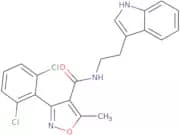
CAS:<p>Precursor of neurotransmitter acetylcholine</p>Formula:C8H20NO6PPurity:(%) Min. 95%Color and Shape:White PowderMolecular weight:257.22 g/mol(3-(2,6-dichlorophenyl)-5-methylisoxazol-4-yl)-N-(2-indol-3-ylethyl)formamide
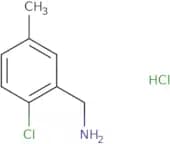
CAS:<p>Please enquire for more information about (3-(2,6-dichlorophenyl)-5-methylisoxazol-4-yl)-N-(2-indol-3-ylethyl)formamide including the price, delivery time and more detailed product information at the technical inquiry form on this page</p>Purity:Min. 95%2-Chloro-5-methylbenzylamine hydrochloride
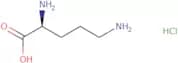
CAS:<p>2-Chloro-5-methylbenzylamine hydrochloride is a chemical that is used as a versatile building block in the synthesis of complex compounds. It has a wide range of uses, including as a research chemical, reagent, and speciality chemical. 2-Chloro-5-methylbenzylamine hydrochloride is also used as an intermediate in the synthesis of other chemicals and can be used as an organic building block, reaction component, and scaffold. This product can be used to produce high-quality products, such as pharmaceuticals and agrochemicals.</p>Formula:C8H10ClN•HClPurity:Min. 95%Molecular weight:192.09 g/molL-Ornithine hydrochloride
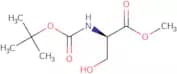
CAS:<p>Ornithine is an amino acid that is a precursor for the synthesis of arginine, creatine, and polyamines. It can be found in a variety of protein-rich foods or can be synthesized from glutamate by the enzyme ornithine transcarbamylase. Ornithine HCl is used as an additive to animal feed to promote growth and improve feed conversion rates. This compound has been shown to increase nitrogen retention and utilization in cattle, which may be due to its ability to inhibit GABA degradation or its ability to stimulate endogenous arginine production. Ornithine HCl also enhances the activity of dietary fatty acids, which may be due to its ability to increase intracellular levels of citric acid cycle intermediates such as succinic acid.</p>Formula:C5H12N2O2•HClPurity:Min. 95%Color and Shape:PowderMolecular weight:168.62 g/molN-tert-Butoxycarbonyl D-serine methyl ester
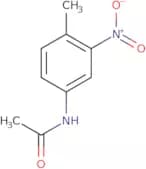
CAS:<p>N-tert-Butoxycarbonyl D-serine methyl ester is a galactose-derived specific glycosylation inhibitor that inhibits the synthesis of glycoconjugates in cells. It prevents the transfer of sugar moieties from activated glycosyl donors to acceptors, which are often proteins. NBDMSEM has been shown to have anti-cancer properties and may be useful in cancer therapy. In addition, NBDMSEM is a potent inhibitor of transglycosylation reactions, which are involved in the synthesis of sideritis and morpholines, two chemical compounds with biological relevance. The reaction yield for this compound is high and it can be used as an alternative to other more toxic inhibitors.</p>Formula:C9H17NO5Purity:Min. 95%Color and Shape:Colorless Clear LiquidMolecular weight:219.24 g/molN-(4-Methyl-3-nitrophenyl)acetamide
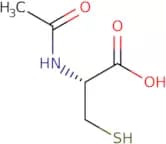
CAS:<p>3-Methyl-4-nitro-N-acetylbenzeneamine is a biodegradable chemical that acts as an inhibitor of the growth rate of bacteria in wastewater treatment. It has been shown to be effective in both aerobic and anaerobic environments. 3-Methyl-4-nitro-N-acetylbenzeneamine is a racemic mixture, consisting of two isomers that are easily separated by chromatography. The primary mechanism for degradation of this chemical is acetylation, which converts it into acetic acid and methyl acetate. 3-Methyl-4-nitro-N-acetylbenzeneamine can also be degraded by aerobic soil bacteria with the help of fatty acids. This chemical is not toxic to humans or animals and does not affect crop plants.br></p>Formula:C9H10N2O3Purity:Min. 95%Color and Shape:PowderMolecular weight:194.19 g/molN-Acetyl-L-cysteine - Non-animal and non-human origin
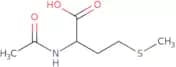
CAS:<p>Antioxidant; mucolytic agent; anti-viral against influenza A viruses</p>Formula:C5H9NO3SPurity:Min. 95%Color and Shape:White PowderMolecular weight:163.2 g/molN-Acetyl-DL-methionine
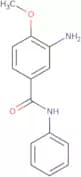
CAS:<p>N-Acetyl-DL-methionine is an amide of the amino acid methionine and acetyl coenzyme A. It has a number of biological properties including being a precursor to protein synthesis, a regulator of fatty acid metabolism, and an inhibitor of glutamate pyruvate transaminase. It can be found in bacterial strains as well as in human serum. N-Acetyl-DL-methionine is synthesized by the reaction of methylamine with acetyl coenzyme A in the presence of ammonia or other nitrogenous bases. The chemical structure of this compound consists of two nitrogen atoms and an acetyl group bonded to a carbon atom that is attached to a methyl group and another carbon atom that forms part of an amide bond with the amino acid methionine. This molecule has been observed using nmr spectroscopic data to form hydrogen bonds with proteins.</p>Formula:C7H13NO3SPurity:Min. 95%Color and Shape:PowderMolecular weight:191.25 g/mol3-Amino-4-methoxybenzanilide
CAS:<p>3-Amino-4-methoxybenzanilide is a white, crystalline solid that is soluble in organic solvents. It reacts with hydrochloric acid to form hydrogen chloride and 3-amino-4-methoxybenzoic acid. 3-Amino-4-methoxybenzanilide is used as an analytical reagent for determining the chloride content of various materials. The heat energy needed for the reaction to occur optimally is between 55 and 75 degrees Celsius. The optimal reaction system includes hydrochloric acid, an organic solvent, and diazonium salt activated by hydrogen chloride gas. The reaction time is 2 hours at room temperature and the analytical method used is titrimetric analysis using triticum aestivum as the particle.</p>Formula:C14H14N2O2Purity:Min. 95%Color and Shape:PowderMolecular weight:242.27 g/mol2-Methylstyrene
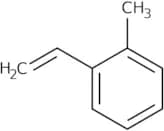
CAS:<p>2-Methylstyrene is a synthetic compound that is used in the manufacture of various industrial chemicals and plastics. It is produced by the catalytic polymerization of styrene with sodium salts, calcium stearate, and sodium carbonate. 2-Methylstyrene can also be synthesized from chloroacetic acid and hydrogen chloride. This chemical has been shown to undergo cationic polymerization when it reacts with an amine or a hydroxyl group. 2-Methylstyrene is soluble in organic solvents such as benzene or chloroform. It has been used as a film-forming polymer in analytical chemistry due to its high volatility and low viscosity.</p>Formula:C9H10Purity:Min. 95%Molecular weight:118.18 g/mol5-Chloro-2-methoxyacetophenone
CAS:<p>5-Chloro-2-methoxyacetophenone is a byproduct of the synthesis of 2-hydroxybenzofuran. It is also used in the synthesis of tetracyclic benzopyrans, which are known to be potent analgesics and have been found to have anti-inflammatory properties. 5-Chloro-2-methoxyacetophenone can be obtained by decarbonylation (loss of carbon) or elimination reactions.</p>Formula:C9H9ClO2Purity:Min. 95%Color and Shape:Clear LiquidMolecular weight:184.62 g/molN-Acetyl-L-glutamine
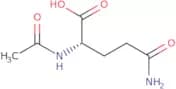
CAS:<p>N-Acetylglutamine is an amino acid that is not synthesized by the human body and must be obtained through diet. It is a precursor to glutamate, which is an important neurotransmitter in the brain. N-Acetyl-L-glutamine has been shown to have neuroprotective effects against various metabolic disorders including diabetes, bowel disease, and microdialysis probes. The effect of N-acetyl-L-glutamine on neuronal death can be observed using a reaction solution containing sodium citrate and glucose injection. N-acetylglutamine has been shown to increase the activity of enzymes such as citrate synthase in this reaction solution.</p>Formula:C7H12N2O4Purity:Min. 95%Color and Shape:White PowderMolecular weight:188.18 g/mol5-Chloro-3-methyl-1H-indole-2-carboxylic acid
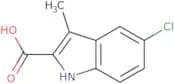
CAS:<p>5-Chloro-3-methyl-1H-indole-2-carboxylic acid (5CMC) is a versatile building block and research chemical. It has been shown to be an effective intermediate for the synthesis of many complex compounds with interesting pharmacological properties. 5CMC is also used as a speciality chemical in the production of pharmaceuticals, agrochemicals, and other chemicals. The compound is a fine chemical that can be used in various research and industrial applications.</p>Formula:C10H8ClNO2Purity:Min. 95 Area-%Color and Shape:PowderMolecular weight:209.63 g/mol3-Amino-4-methylpyridine
CAS:<p>3-Amino-4-methylpyridine is a chemical compound that belongs to the group of organic compounds. It is used as an intermediate in the synthesis of podophyllotoxin, a cytotoxic agent that inhibits protein synthesis and cell division. 3-Amino-4-methylpyridine binds to mammalian cells with high affinity and inhibits protein synthesis by inhibiting the enzyme ribosomal protein S6 kinase. This compound also has an inhibitory effect on tofacitinib citrate, which is a drug used for treatment of rheumatoid arthritis. 3-Amino-4-methylpyridine has been shown to be effective against chloride ions in its reaction mechanism, making it suitable for use in organic synthesis.</p>Formula:C6H8N2Purity:Min. 98 Area-%Color and Shape:PowderMolecular weight:108.14 g/mol2,4,6-Trimethoxy-3-methylbenzaldehyde
CAS:<p>2,4,6-Trimethoxy-3-methylbenzaldehyde is a flavanone that is structurally related to the drug ciprofloxacin. The two molecules share a common molecular framework with the addition of a hydroxyl group on the 2 position of the benzene ring. In molecular docking studies, 2,4,6-Trimethoxy-3-methylbenzaldehyde has shown antitubercular activity against Mycobacterium tuberculosis and Mycobacterium avium complex. It is also an inhibitor of protein tyrosine phosphatase and has been shown to have antibacterial activity against various strains of bacteria.</p>Formula:C11H14O4Purity:Min. 95%Color and Shape:PowderMolecular weight:210.23 g/mol5-Hydroxy-N-methyl-2-pyrrolidinone
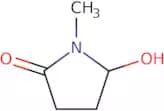
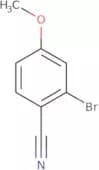
CAS:<p>5-Hydroxy-N-methyl-2-pyrrolidinone (5HMP) is a metabolite that is produced in the body after ingestion of pyrrolidinones. It can be detected in urine and blood samples to assess the exposure to these compounds. 5HMP is also used as an analytical method for detecting the presence of pyrrolidinones in biological samples, such as urine and blood. The reaction products are measured using a spectrometer at 270 nm. The monoclonal antibody can be used to detect 5HMP in human liver cells. In animal experiments, 5HMP was found to have no significant effect on the uptake of glucose by the liver or other organs.</p>Formula:C5H9NO2Purity:Min. 95%Color and Shape:PowderMolecular weight:115.13 g/mol2-Bromo-4-methoxybenzonitrile
CAS:<p>2-Bromo-4-methoxybenzonitrile is a high quality reagent that is used as a versatile building block in the synthesis of complex organic compounds. It is a useful intermediate and can be used to form 2,4-dimethoxybenzaldehyde. This compound has been used as a reaction component in the production of pharmaceuticals, pesticides, and other fine chemicals. The chemical formula for 2-bromo-4-methoxybenzonitrile is C6H5BrO2.</p>Formula:C8H6BrNOPurity:Min. 95%Molecular weight:212.04 g/molb-N-Methyl-guanadinopropionic acid
<p>b-N-Methyl-guanadinopropionic acid is a versatile, high quality, and useful building block that is used as a reagent and speciality chemical. It is also an intermediate in the synthesis of research chemicals, which are synthesized using b-N-Methyl-guanadinopropionic acid as a reactant. This compound can be used as a building block in the synthesis of complex compounds with high molecular weight. The CAS number for b-N-Methyl-guanadinopropionic acid is</p>Purity:Min. 95%2-[Ethyl-[2-(3-hydroxy-2,6-dimethyl-anilino)-2-oxo-ethyl]amino]-N-(3-hydroxy-2,6-dimethyl-phenyl)acetamide
CAS:<p>2-[Ethyl-[2-(3-hydroxy-2,6-dimethyl-anilino)-2-oxo-ethyl]amino]-N-(3-hydroxy-2,6-dimethylphenyl)acetamide is a reaction component that is used in the synthesis of complex compounds. It is a versatile building block and useful intermediate for the synthesis of fine chemicals. This chemical has been shown to be an effective reagent for the preparation of high quality research chemicals. CAS No. 2200280-96-0</p>Formula:C22H29N3O4Purity:Min. 95%Color and Shape:White to off-white solid.Molecular weight:399.48 g/mol





![2-[Ethyl-[2-(3-hydroxy-2,6-dimethyl-anilino)-2-oxo-ethyl]amino]-N-(3-hydroxy-2,6-dimethyl-phenyl)a…](/_next/image/?url=https%3A%2Fstatic.cymitquimica.com%2Fproducts%2F3D%2Fthumb-webp%2FFE145458.webp&w=3840&q=75)