Amino Acids (AA)
Amino acids (AAs) are the fundamental building blocks of proteins, playing a crucial role in various biological processes. These organic compounds are essential for protein synthesis, metabolic pathways, and cell signaling. In this category, you will find a comprehensive range of amino acids, including essential, non-essential, and modified forms, which are vital for research in biochemistry, molecular biology, and nutritional sciences. At CymitQuimica, we provide high-quality amino acids to support your research and development needs, ensuring accuracy and reliability in your experimental outcomes.
Subcategories of "Amino Acids (AA)"
- Amino Acid Derivatives(3,957 products)
- Amino Acid and Amino Acid Related Compounds(3,472 products)
- Amino Acids with Oxygen or Sulphur(168 products)
- Boc- Amino Acids(351 products)
- Fmoc Amino Acids(1,710 products)
Found 38265 products of "Amino Acids (AA)"
Sort by
Purity (%)
0
100
|
0
|
50
|
90
|
95
|
100
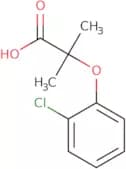
2-(2-Chlorophenoxy)-2-methylpropanoic acid
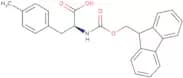
CAS:<p>2-(2-Chlorophenoxy)-2-methylpropanoic acid is a plant hormone that is involved in the mediation of plant responses to various biotic and abiotic stressors. It is synthesized from salicylic acid by the enzyme phenylalanine ammonia-lyase and its structure resembles that of hydrogen peroxide. Its linear growth-promoting activity is mediated by the formation of 2,4-dichlorophenoxyacetic acid, which activates the production of hydrogen peroxide and induces cell expansion. The biosynthesis of this compound has been shown in plants through studies on excised tissues.</p>Formula:C10H11ClO3Purity:Min. 95%Color and Shape:PowderMolecular weight:214.65 g/molFmoc-4-methyl-L-phenylalanine
CAS:<p>Fmoc-4-methyl-L-phenylalanine is a versatile building block that can be used as a reagent, speciality chemical, or useful intermediate. It is a high quality compound with many applications in the field of research chemicals and pharmaceuticals. Fmoc-4-methyl-L-phenylalanine can be used as an important reaction component in the synthesis of various complex compounds. The versatility of this compound makes it an excellent scaffold for synthesizing new compounds.</p>Formula:C25H23NO4Purity:Min. 95%Color and Shape:White PowderMolecular weight:401.45 g/mol2-tert-Butyl-6-(5-chloro-2H-benzotriazol-2-yl)-4-methylphenol
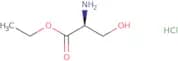
CAS:<p>2-tert-Butyl-6-(5-chloro-2H-benzotriazol-2-yl)-4-methylphenol is the chemical compound with formula C12H7ClO3. It is a white solid that is soluble in water and ethanol, but not in ether or hexane. 2,6-Tertiarybutylphenol has been used as a cell nucleus marker to study locomotion of cells, as well as to analyze other samples including metal ions and water vapor. The method involves the use of a laser ablation technique, which can be used for complex sample analysis. The compound is structurally similar to 2,4,6-trimethylphenol, which has an OH group in place of the CH3 group on the tertiary butyl side chain. This difference makes it more reactive than 2,4,6-trimethylphenol because it has a higher concentration of hydroxyl groups.</p>Formula:C17H18ClN3OPurity:Min. 98 Area-%Color and Shape:Slightly Yellow PowderMolecular weight:315.8 g/molL-Serine ethyl ester hydrochloride
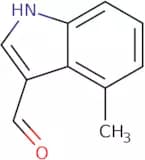
CAS:<p>L-Serine ethyl ester hydrochloride is a metabolite of L-serine that has been found to inhibit the growth of cancer cells. It has been shown to inhibit the proliferation of muscle cells and reduce the size of pancreatitis. L-Serine ethyl ester hydrochloride has also been shown to have an inhibitory effect on stenosis in animal models. This drug inhibits microbial growth by inhibiting protein synthesis in bacteria, which may be due to its hydroxyl group. L-Serine ethyl ester hydrochloride also enhances endothelial cell growth and prevents autoimmune diseases in mice.</p>Formula:C5H11O3N•HClPurity:Min. 95%Molecular weight:169.61 g/mol4-Methylindole-3-carboxaldehyde
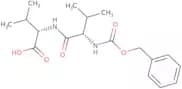
CAS:<p>4-Methylindole-3-carboxaldehyde is a lipophilic extract that inhibits the growth of fungi. It has been shown to be effective against phytopathogenic fungi, and it has been used as an antibiotic in the treatment of bacterial infections. 4-Methylindole-3-carboxaldehyde is an analog of streptochlorin, which inhibits protein synthesis by binding to the ribosome. This leads to cell death by inhibiting the production of proteins vital for cell division. 4-Methylindole-3-carboxaldehyde also has antifungal activity against Candida albicans and Trichophyton mentagrophytes.</p>Formula:C10H9NOPurity:Min. 95%Molecular weight:159.18 g/molZ-Val-Val-OH trifluoroacetic acid
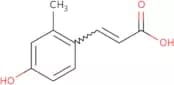
CAS:<p>Z-Val-Val-OH trifluoroacetic acid is a gelator that belongs to the group of amides. It has long chain and intermolecular hydrogen bonding and can be used in the treatment of bacterial infections. Z-Val-Val-OH trifluoroacetic acid has been shown to have thermodynamic parameters for liquids that are more favorable than those for gels, which may account for its ability to form a gel at room temperature. This compound is not electron-micrographable in the solid state but can be tracked by electron microscopy when in solution.</p>Formula:C18H26N2O5•C2HF3O2Purity:Min. 95%Color and Shape:PowderMolecular weight:464.43 g/mol4-Hydroxy-2-methylcinnamic acid
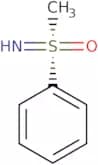
CAS:<p>4-Hydroxy-2-methylcinnamic acid is a chemical intermediate that can be used in organic synthesis as a building block or reagent. It has been shown to have a high quality and purity, and is also an excellent reaction component. This compound is used as a speciality chemical, versatile building block, and complex compound. 4-Hydroxy-2-methylcinnamic acid has been used in the production of drugs such as amiodarone, sotalol, and tacrolimus. It can also be used in the production of other fine chemicals such as benzaldehyde, cinnamyl alcohol, cinnamaldehyde, and hydroxyacetophenone.</p>Formula:C10H10O3Purity:Min. 95%Color and Shape:PowderMolecular weight:178.18 g/mol(S)-(+)-Methyl phenyl sulfoximine
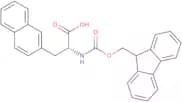
CAS:<p>(S)-(+)-Methyl phenyl sulfoximine, or MMPS, is a synthetic chiral organocatalyst that has been shown to be a highly effective catalyst for the asymmetric synthesis of benzothiazines. It is used in a variety of reactions including cross-coupling, catalytic asymmetric synthesis, desymmetrization and solvents. MMPS has been shown to be enantiopure and stereochemically pure. The yield of this reaction using MMPS as a catalyst was about 98%.</p>Formula:C7H9NOSPurity:Min. 95%Color and Shape:Colorless PowderMolecular weight:155.22 g/molFmoc-3-(2-naphthyl)-D-alanine
CAS:<p>Fmoc-3-(2-naphthyl)-D-alanine is a fluorescent pressor agent that can be used in supramolecular chemistry. It has an anion form and a cation form, which are both present in the filtrate. The chemical will also form micelles when mixed with water. Fmoc-3-(2-naphthyl)-D-alanine is acetylated and can be used to study the nature of agarose. Fmoc-3-(2-naphthyl)-D-alanine can be used to measure the concentration of sorbitol in chromatography. This chemical has been shown to bind to DNA under microscopy, making it useful for fluorescence microscopy studies.</p>Formula:C28H23NO4Purity:Min. 95%Color and Shape:PowderMolecular weight:437.49 g/mol2-Methylbenzamide
CAS:<p>2-Methylbenzamide is an amide with a carbonyl group and an intramolecular hydrogen. It has been shown to have synergic effects when combined with piperonyl butoxide in the treatment of autoimmune diseases. This synergistic effect is due to the inhibition of inflammatory mediator release, which can be achieved by blocking the enzyme cyclooxygenase-2. 2-Methylbenzamide has also been shown to inhibit deuterium isotope effect in cd-1 mice, which could make it beneficial for patients who are unable to tolerate other drugs.</p>Formula:C8H9NOPurity:Min. 95%Color and Shape:White PowderMolecular weight:135.16 g/mol2-Bromo-4'-methylpropiophenone
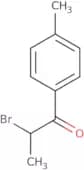
CAS:Controlled Product<p>2-Bromo-4'-methylpropiophenone is a chemical compound that belongs to the group of phenols. It is used as a solvent in silicone rubber and as a colorant in plastics, paints, and enamels. 2-Bromo-4'-methylpropiophenone has been shown to be an effective antioxidant for china, silica gel, and silicone rubber. This chemical also produces red color when heated and can be used as a connector or monochrome panel on copper plates. 2-Bromo-4'-methylpropiophenone is soluble in water but insoluble in organic solvents such as alcohols and ethers. This chemical has been found to have the ability to produce solar modules with high efficiency by converting sunlight into electricity.</p>Formula:C10H11BrOPurity:(%) Min. 85%Color and Shape:PowderMolecular weight:227.1 g/molH-Gly-Gly-Gly-NH2·HCl
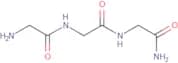
CAS:<p>Glycine is a non-essential amino acid with a pKa of 9.3. It is a building block of proteins and can be used to synthesize polypeptides. Glycine has been shown to function as an antigen in humans and has been used in pharmaceutical preparations and clinical studies as an immunological agent, such as in the treatment of hepatitis B virus infection. Glycine is also a component of protonated glycoconjugates, which are found in human serum. In addition to its role as an important amino acid, glycine is also an important molecule for kinetic studies because it has a high transfer rate between molecules and macrocyclic structures. This transfer rate can be used to study the conjugation reactions that occur with fluorescent compounds, like fluorescein, which can be used for labeling antibodies.</p>Formula:C6H12N4O3·HClPurity:Min. 95%Color and Shape:PowderMolecular weight:224.65 g/mol(R)-4-(Boc-amino)-3-(Z-amino)butyric acid
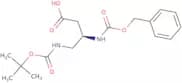
CAS:<p>(R)-4-(Boc-amino)-3-(Z-amino)butyric acid is a synthetic ligand that binds to dna. The binding of this ligand can be monitored by the thermodynamic interaction between the ligand and dna. (R)-4-(Boc-amino)-3-(Z-amino)butyric acid has been shown to bind to the phosphate groups on dna, which are apolar in nature. This ligand also interacts with the vector group of dna, and it has a multivalency of two. It is water soluble and neutral, making it suitable for use in supramolecular chemistry. (R)-4-(Boc-amino)-3-(Z-amino)butyric acid is not very polar and does not have any charges or functional groups that would make it an ionizable species. It can form complexes with carbohydrates because it is neutral, and its interactions with them are</p>Formula:C17H24N2O6Purity:Min. 98 Area-%Color and Shape:PowderMolecular weight:352.38 g/mol3-Hydroxy-1-methylazetidine
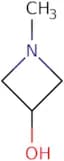
CAS:<p>3-Hydroxy-1-methylazetidine is a reagent that has a high quality and is useful as an intermediate, scaffold, or building block. It can be used in the synthesis of complex compounds. 3-Hydroxy-1-methylazetidine has been shown to be useful in reactions to produce fine chemicals and research chemicals. This chemical has versatile uses including being a reaction component for the synthesis of speciality chemicals.</p>Formula:C4H9NOPurity:Min. 95%Color and Shape:Clear LiquidMolecular weight:87.12 g/molH-D-Cys-OH·HCl·H2O
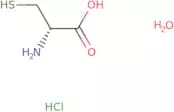
CAS:<p>D-Cysteine hydrochloride monohydrate (Cys-OH·HCl·H2O) is a derivative of the amino acid D-Cysteine. It has potential application in research and chemical synthesis.</p>Formula:C3H7NO2S·HCl·H2OPurity:Min. 95%Color and Shape:White PowderMolecular weight:175.64 g/mol4-Methoxyphenoxyacetic acid
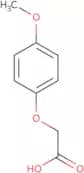
CAS:<p>4-Methoxyphenoxyacetic acid is a chemical compound with molecular formula C10H12O4. It is an alpha-hydroxy acid and is also known as 4-methoxybenzoic acid. 4-Methoxyphenoxyacetic acid has been shown to have reactive properties and can be used as a reagent in organic synthesis. A molecular modeling study of 4-methoxyphenoxyacetic acid has revealed that it could form hydrogen bonding interactions with the hydroxyl group of coumarin derivatives, which may lead to irreversible oxidation reactions. The human serum contains high affinity binding sites for this chemical compound, which is detected by the mefexamide test.</p>Formula:C9H10O4Purity:Min. 95%Color and Shape:PowderMolecular weight:182.17 g/molL-Histidine
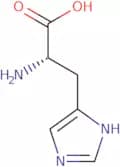
CAS:<p>L-histidine is a molecule that chelates metal ions and inhibits their function. L-Histidine is used as an analytical reagent for the determination of metal ions in water, a polymerase chain reaction (PCR) inhibitor, and an immunosuppressant. L-histidine is also used to treat bowel disease and cancer by inhibiting the production of certain molecules. L-histidine has been shown to bind to toll-like receptor 4 (TLR4) in intestinal cells, which activates the immune system to produce cytokines such as IL-8. In addition, L-histidine can act as a cofactor for enzymes involved in protein synthesis by protecting them from oxidation. L histidine can also be found in the protein that binds with gold particles, forming colloidal gold</p>Formula:C6H9N3O2Color and Shape:White PowderMolecular weight:155.15 g/mol1,2-Dioleoyl-sn-glycero-3-phosphatidylethanolamino (+)-biotin
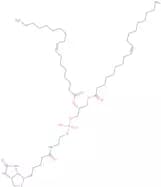
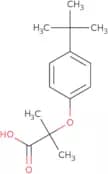
CAS:<p>This is a speciality chemical and is not intended for use in food, drug, or cosmetic applications. This fine chemical is a useful building block, which can be used to synthesize complex compounds. It has been shown to have high reactivity with a variety of reagents, making it an excellent research component.</p>Formula:C51H92N3O10PSPurity:Min. 95%Color and Shape:PowderMolecular weight:970.33 g/mol2-(4-tert-Butylphenoxy)-2-methylpropanoic acid
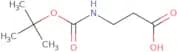
CAS:<p>2-(4-tert-Butylphenoxy)-2-methylpropanoic acid is a versatile building block and reagent for the synthesis of complex compounds. It has been used in research as a possible treatment for inflammatory diseases, including asthma and rheumatoid arthritis. This product is also a useful scaffold for the development of new drugs. 2-(4-tert-Butylphenoxy)-2-methylpropanoic acid has been shown to have antiviral properties against human immunodeficiency virus (HIV) and hepatitis C virus (HCV).</p>Formula:C14H20O3Purity:Min. 95%Color and Shape:PowderMolecular weight:236.31 g/molBOC-β-alanine
CAS:<p>BOC-β-alanine is a trifluoroacetic acid derivative that is activated with carbodiimides to form the ester hydrochloride. It has been shown to have anticancer activity in vitro and in vivo. BOC-β-alanine inhibits the synthesis of polypeptides by binding to the carboxyl group on the amino acid, thereby preventing protein formation. This compound also has an inhibitory effect on cell proliferation of 3T3-L1 preadipocytes in culture, which may be due to its ability to deplete fibrinogen from cells and inhibit activation of adenyl cyclase.</p>Formula:C8H15NO4Color and Shape:White PowderMolecular weight:189.21 g/mol