Amino Acids (AA)
Amino acids (AAs) are the fundamental building blocks of proteins, playing a crucial role in various biological processes. These organic compounds are essential for protein synthesis, metabolic pathways, and cell signaling. In this category, you will find a comprehensive range of amino acids, including essential, non-essential, and modified forms, which are vital for research in biochemistry, molecular biology, and nutritional sciences. At CymitQuimica, we provide high-quality amino acids to support your research and development needs, ensuring accuracy and reliability in your experimental outcomes.
Subcategories of "Amino Acids (AA)"
- Amino Acid Derivatives(3,957 products)
- Amino Acid and Amino Acid Related Compounds(3,472 products)
- Amino Acids with Oxygen or Sulphur(168 products)
- Boc- Amino Acids(351 products)
- Fmoc Amino Acids(1,710 products)
Found 38265 products of "Amino Acids (AA)"
Sort by
Purity (%)
0
100
|
0
|
50
|
90
|
95
|
100
N-a-Acetyl-L-arginine dihydrate
CAS:<p>N-a-Acetyl-L-arginine dihydrate (NAD) is a patented arithmetic expansion device that measures the surface area of a section. NAD can be used for monitoring and coding purposes, for example, to measure the surface area of an x-ray photoelectron spectroscopy or x-ray absorption. NAD has been shown to have light emission and functions that are updated by the user.</p>Formula:C8H16N4O3·2H2OPurity:Min. 95%Color and Shape:White To Cream SolidMolecular weight:252.27 g/mol4-(5-Methoxy-1,2-dimethyl-1H-indol-3-yl)-1,3-thiazol-2-amine
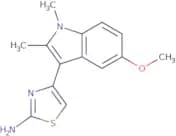
CAS:<p>Please enquire for more information about 4-(5-Methoxy-1,2-dimethyl-1H-indol-3-yl)-1,3-thiazol-2-amine including the price, delivery time and more detailed product information at the technical inquiry form on this page</p>Formula:C14H15N3OSPurity:Min. 95%Color and Shape:PowderMolecular weight:273.35 g/molGly-Met-OH
CAS:<p>Gly-met-OH (glycolic acid methyl ether) is a carboxylate that has the ability to bind to nitrogen atoms. It is also an amide and is derived from the amino acid glycine. Gly-met-OH can be used for the synthesis of peptides, proteins, nucleotides, and other biological molecules. The uptake of gly-met-OH by bacteria was found to be dependent on the ternary complex formation between gly-met-OH, protein synthesis and membrane enzymes. This compound is reactive with chemical reactions in cells and has been shown to have a physiological effect on cells by inhibiting protease activity.</p>Formula:C7H14N2O3SPurity:Min. 95%Color and Shape:White PowderMolecular weight:206.26 g/mol3-Bromo-6-chloro-7-methylchromone
CAS:<p>3-Bromo-6-chloro-7-methylchromone is a fine chemical that is useful as a building block in organic synthesis. It is a versatile intermediate, and can be used as a reaction component in various chemical reactions. 3-Bromo-6-chloro-7-methylchromone has a CAS number of 263365-48-6 and is classified as a complex compound. This chemical is mainly used for the preparation of other chemicals with more desirable properties.</p>Formula:C10H6BrClO2Purity:Min. 95%Color and Shape:PowderMolecular weight:273.51 g/molN-(5,5-dimethyl-7-oxo(4,5,6-trihydrobenzothiazol-2-yl))(4-methoxyphenyl)formamide
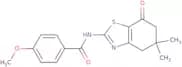
CAS:<p>Please enquire for more information about N-(5,5-dimethyl-7-oxo(4,5,6-trihydrobenzothiazol-2-yl))(4-methoxyphenyl)formamide including the price, delivery time and more detailed product information at the technical inquiry form on this page</p>Purity:Min. 95%2-Phenyl-4-quinolinecarboxylic acid
CAS:<p>2-Phenyl-4-quinolinecarboxylic acid is a nonsteroidal anti-inflammatory drug that is commonly used to treat bronchoconstrictor response and inflammatory bowel disease. It is also an antimicrobial agent, which can be used to treat infectious diseases. The compound was found to have structural similarity to other nonsteroidal anti-inflammatory drugs, such as ibuprofen and naproxen. 2-Phenyl-4-quinolinecarboxylic acid has shown the ability to inhibit leukemia inhibitory factor (LIF) production by lymphocytes, which may have a role in the development of leukemia. This drug also possesses antioxidative properties and has been shown to have high values in group P2 polymerase chain reactions.</p>Formula:C16H11NO2Purity:Min. 98.5%Color and Shape:PowderMolecular weight:249.26 g/molD-Phenylalaninol
CAS:<p>D-Phenylalaninol is a chiral, optically active molecule. It is a salt of hydrochloride that is used as a chemical intermediate in the synthesis of other drugs. D-Phenylalaninol has been shown to inhibit mitochondrial membrane potential and decrease hydrogen bond interactions, which may be due to its ability to bind to chloride ions. In addition, this compound has been shown to inhibit pancreatic lipase activity and l-phenylalanine oxidase activity in mammalian cells.</p>Formula:C9H13NOPurity:Min. 95%Molecular weight:151.21 g/mol2-Ethoxy-4-methoxybenzoic acid
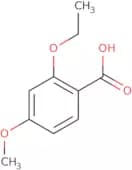
CAS:<p>2-Ethoxy-4-methoxybenzoic acid is a versatile chemical compound that can be used as a building block in the synthesis of complex compounds. It has been used as an intermediate in the production of other chemicals and has been shown to be useful as a scaffold for drug design. 2-Ethoxy-4-methoxybenzoic acid is also used in research to study bacterial resistance to antibiotics and its ability to inhibit DNA replication. CAS No. 55085-15-9</p>Formula:C10H12O4Purity:Min. 95%Color and Shape:PowderMolecular weight:196.2 g/mol3,4-Dihydroxy-L-phenylalanine
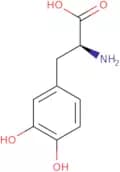
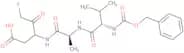
CAS:Controlled Product<p>Precursor of catecholamine neurotransmitters; anti-parkinsonian therapy</p>Formula:C9H11NO4Purity:Min. 98 Area-%Color and Shape:White PowderMolecular weight:197.19 g/molZ-Val-Ala-DL-Asp-fluoromethylketone
CAS:<p>Z-Val-Ala-DL-Asp-fluoromethylketone is a drug that is used for the treatment of cancer. It can be used in combination with other chemotherapeutic drugs, such as z-vad-fmk, to induce apoptosis in cancer cells. Z-Val-Ala-DL-Asp-fluoromethylketone also inhibits autophagy and neuronal death by inhibiting caspase activation, which prevents the release of proapoptotic proteins from mitochondria into the cytosol. This drug has been shown to have antiinflammatory effects on IL2 receptor signaling pathways and inhibits the production of proinflammatory cytokines by binding to IL2.</p>Formula:C21H28FN3O7Purity:Min. 95%Color and Shape:PowderMolecular weight:453.46 g/mol9-Methylxanthine
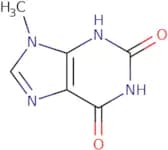
CAS:Controlled Product<p>9-Methylxanthine is a purine alkaloid that is structurally related to caffeine. It is used as a bronchodilator and to treat cardiac arrhythmias. 9-Methylxanthine has been shown to have an effect on the rate of DNA replication by binding to the enzyme xanthosine phosphorylase, which converts xanthosine monophosphate (XMP) to xanthosine diphosphate (XDP). The drug's effect on other nucleobases, such as adenosine monophosphate (AMP), cannot be ruled out. 9-Methylxanthine also has a strong affinity for macrochelates, which are compounds that contain chelating agents with a large number of ethylenediaminetetraacetic acid (EDTA) groups. This property is due to the high number of nitrogen atoms in the molecule and its ability to form hydrogen bonds between water molecules</p>Formula:C6H6N4O2Purity:Min. 95%Color and Shape:PowderMolecular weight:166.14 g/mol(8S,9S,11R,13S,14S,17S)-11-(2-Fluoroethyl)-13-Methyl-6,7,8,9,11,12,14,15,16,17-Decahydrocyclopenta[a]Phenanthrene-3,17-Diol
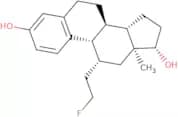
CAS:Controlled Product<p>(8S,9S,11R,13S,14S,17S)-11-(2-Fluoroethyl)-13-Methyl-6,7,8,9,11,12,14,15,16,17-Decahydrocyclopenta[a]Phenanthrene-3,17-Diol is a light emitting diode (LED) that emits light in the near infrared spectrum. This LED is composed of a single layer of CdTe nanowires and has an emission wavelength of 760 nm. It also has a high quantum efficiency and low energy requirements for fabrication. The lifetime of this device is also long and its optical properties are stable over time. This device can be used to replace traditional incandescent bulbs or to emit light in specific wavelengths for biomedical applications.</p>Formula:C20H27FO2Purity:Min. 95%Molecular weight:318.43 g/mol3-Methoxybenzhydrazide
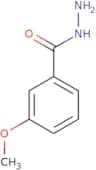
CAS:<p>3-Methoxybenzhydrazide is a molecule that has been studied for its biological properties. It has the ability to inhibit tyrosinase, an enzyme involved in melanin production, and is a potent inhibitor of bacterial growth. 3-Methoxybenzhydrazide also has the property of fluorescence, which can be used to detect its presence in cells. The stability of this molecule has been studied by x-ray crystallography and it is found to have high structural stability. 3-Methoxybenzhydrazide has been shown to be potentially useful for cancer research due to its ability to suppress tumor growth in mice.</p>Formula:C8H10N2O2Purity:Min. 95%Color and Shape:PowderMolecular weight:166.18 g/mol2-Methoxy benzyl chloride
CAS:<p>2-Methoxy benzyl chloride is an organometallic compound that has potent antagonist activity against a wide variety of organometallic and non-organometallic compounds. It is used in the treatment of inflammatory diseases, such as myocardial infarct, and also displays antimicrobial properties. 2-Methoxy benzyl chloride is a potent competitive inhibitor of many enzymes, including xanthine oxidase, hydroxylase, and tyrosinase. This molecule also has the ability to bind to cationic polymers and inhibit polymerization reactions by interfering with the formation of hydrogen bonds between monomers. The chlorine atom in this molecule can be replaced by a hydrogen atom for use as an antimicrobial agent. 2-Methoxy benzyl chloride binds to nitrogen atoms on amides and other nitrogen containing compounds, which may account for its antiinflammatory effects.</p>Formula:C8H9ClOPurity:Min. 95%Color and Shape:PowderMolecular weight:156.61 g/mol3,4-Methylenedioxycinnamic acid
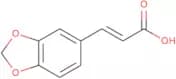
CAS:<p>3,4-Methylenedioxycinnamic acid is a nucleophilic reagent that has been used for the synthesis of polymers and pharmaceuticals. It has been shown to react with electron-rich aromatic compounds such as anilines and phenols to form cinnamates. The compound is also a ligand for metal ions. 3,4-Methylenedioxycinnamic acid has been analysed by vibrational spectroscopy and thermodynamic parameters have been determined using hydration reactions. The carboxylate group on the molecule can be protonated or deprotonated depending on the pH of the solution.</p>Formula:C10H8O4Purity:Min. 95%Color and Shape:PowderMolecular weight:192.17 g/mol3,4-Dehydro-L-proline methyl ester hydrochloride
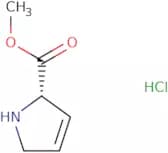
CAS:<p>3,4-Dehydro-L-proline methyl ester hydrochloride is a reagent that is used in the synthesis of complex compounds. It is a versatile building block for the synthesis of fine chemicals and can be used as a research chemical or as a speciality chemical. 3,4-Dehydro-L-proline methyl ester hydrochloride has CAS No. 186145-08-4 and can be used as an intermediate in reactions to create high quality reaction components.</p>Formula:C6H9NO2•HClPurity:Min. 95%Color and Shape:SolidMolecular weight:163.6 g/molBoc-D-alanine
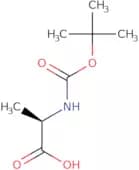
CAS:<p>Boc-D-alanine is a nicotinic acetylcholine receptor agonist that is used for the treatment of Parkinson's disease. Boc-D-alanine is an acid conjugate of D-alanine, which has been shown to increase the activity of the nicotinic acetylcholine receptor. This drug has been found in urine samples and may be useful as a diagnostic tool for detecting Parkinson's disease. The conformational properties of Boc-D-alanine have been investigated through molecular modeling and X-ray crystallography. It has also been shown to be a synthetic substrate for enzymes such as carboxypeptidase A and aminopeptidase P. Although Boc-D-alanine can exist in two forms, one with an acidic environment (Boc) and one with a neutral environment (HOC), it usually exists in its protonated form due to the acidic environment in which it is found.</p>Formula:C8H15NO4Purity:Min. 95%Color and Shape:White Off-White PowderMolecular weight:189.21 g/molBis(7-methyloctyl) cyclohexane-1,2-dicarboxylate
CAS:<p>Bis(7-methyloctyl) cyclohexane-1,2-dicarboxylate is an ester that can be found in the blood of humans and animals. It can also be found in the air as a result of the release of phthalates, which are used to soften plastics. Bis(7-methyloctyl) cyclohexane-1,2-dicarboxylate is used as a catalyst and a reagent in analytical chemistry. This substance is also commonly used as a plasticizer in polyvinyl chloride products and other plastics.</p>Formula:C26H48O4Purity:Min. 95%Color and Shape:Clear LiquidMolecular weight:424.66 g/molH-Gly-Ala-AMC monohydrochloride
CAS:<p>H-Gly-Ala-AMC monohydrochloride is a chemical that is used as a reaction component or reagent in pharmaceutical and research laboratories. It has been shown to be a useful scaffold for the synthesis of complex compounds. This compound is also used as an intermediate in the synthesis of other fine chemicals. H-Gly-Ala-AMC monohydrochloride can be used as a building block for the production of versatile building blocks, which are useful for making speciality chemicals.</p>Formula:C15H17N3O4·HClPurity:Min. 95 Area-%Color and Shape:PowderMolecular weight:339.77 g/mol2-Amino-3-bromo-5-methylbenzoic acid
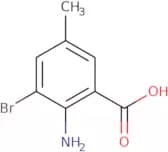
CAS:<p>2-Amino-3-bromo-5-methylbenzoic acid is a fatty acid that belongs to the group of undescribed organic acids. It is found in soil as well as in organisms such as bacteria and fungi. The 2-Amino-3-bromo-5-methylbenzoic acid molecule has been shown to be an antibiotic, inhibiting the growth of bacterial strains belonging to the phyla Actinobacteria and Proteobacteria. It may also be present in plants, where it is channeled out through the roots. This fatty acid also has nucleobase properties, which are essential for DNA replication.br>br><br>span style="font-size: 12px;">2 Amino 3 bromo 5 methyl benzoic acid (2ABMB) was first isolated from soil samples collected from a site near Beijing, China. It is one of many undescribed organic acids that are found</p>Formula:C8H8BrNO2Purity:Min. 95%Color and Shape:PowderMolecular weight:230.06 g/mol