Amino Acids (AA)
Amino acids (AAs) are the fundamental building blocks of proteins, playing a crucial role in various biological processes. These organic compounds are essential for protein synthesis, metabolic pathways, and cell signaling. In this category, you will find a comprehensive range of amino acids, including essential, non-essential, and modified forms, which are vital for research in biochemistry, molecular biology, and nutritional sciences. At CymitQuimica, we provide high-quality amino acids to support your research and development needs, ensuring accuracy and reliability in your experimental outcomes.
Subcategories of "Amino Acids (AA)"
- Amino Acid Derivatives(3,970 products)
- Amino Acid and Amino Acid Related Compounds(3,476 products)
- Amino Acids with Oxygen or Sulphur(168 products)
- Boc- Amino Acids(351 products)
- Fmoc Amino Acids(1,710 products)
Found 38286 products of "Amino Acids (AA)"
Sort by
Purity (%)
0
100
|
0
|
50
|
90
|
95
|
100
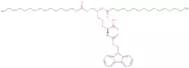
Fmoc-Cys((S)-2,3-di(palmitoyloxy)-propyl)-OH
CAS:<p>Fmoc-Cys((S)-2,3-di(palmitoyloxy)-propyl)-OH is a reagent used in the synthesis of complex compounds. It is also a useful scaffold for the synthesis of speciality chemicals and versatile building blocks. This compound is an intermediate that can be used in the preparation of fine chemicals and pharmaceuticals. Fmoc-Cys((S)-2,3-di(palmitoyloxy)-propyl)-OH has a CAS number of 139573-78-7 and can be purchased as a high quality chemical.</p>Formula:C53H83NO8SPurity:Min. 95 Area-%Color and Shape:Slightly Yellow PowderMolecular weight:894.29 g/molN-Methyl-β-alaninenitrile
CAS:<p>N-Methyl-beta-alaninenitrile is a fine chemical that is used as a versatile building block in the synthesis of complex compounds. It can be used as a reagent to synthesize other chemicals, or as an intermediate in the production of pharmaceuticals. N-Methyl-beta-alaninenitrile is also useful in the synthesis of high quality and useful scaffolds.</p>Formula:C4H8N2Purity:Min. 98.0 Area-%Molecular weight:84.12 g/mol4-Chloro-3-methoxybenzoic acid
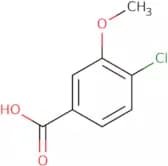
CAS:<p>4-Chloro-3-methoxybenzoic acid (4CMB) is a putative cancer drug that belongs to the group of imidazole derivatives. 4CMB has been shown to inhibit the growth of human breast and colon cancer cells in culture by altering the metabolism of 3-hydroxyanthranilic acid, which is an acceptor for aromatic amino acid hydroxylase. The effect of 4CMB on this enzyme leads to a decrease in the production of kynurenine, which is a molecule involved in the production of melanin. This reduced amount of kynurenine results in a loss of pigment and decreases the ability of melanocytes to produce pigments such as melanin. This may help explain how 4CMB works against malignant cells and cancer.</p>Formula:C8H7ClO3Purity:Min. 95%Color and Shape:PowderMolecular weight:186.59 g/mol5-Methoxyuracil
CAS:<p>5-Methoxyuracil is a labile, colorless and crystalline compound that occurs spontaneously in the presence of oxygen. It has a chemical structure similar to thiourea, with one methyl group substituted for the amino group on the heterocycle. 5-Methoxyuracil is used as a precursor for synthesis of thymine and uracil. It also acts as an antioxidant, preventing reactive oxygen species from causing cellular damage. 5-Methoxyuracil can be used in regenerative medicine to increase the production of messenger RNA (mRNA) and ribosomal RNA (rRNA). This drug is used as a prebiotic agent and can be synthetically produced by dimethylation of uridine followed by ethyl formate oxidation.</p>Formula:C5H6N2O3Purity:Min. 95%Color and Shape:PowderMolecular weight:142.11 g/mol2-Fluoro-6-phenoxybenzonitrile
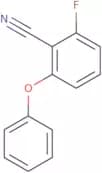
CAS:<p>2-Fluoro-6-phenoxybenzonitrile is activated by calcium oxide to form a reactive intermediate that participates in the polymerization reaction. It is also used as a building block for the synthesis of other compounds. 2-Fluoro-6-phenoxybenzonitrile can be used as a crosslinker and toughening agent in polymers, and has been shown to have nucleophilic properties. The mechanisms of its activation by calcium oxide are not yet fully understood, but it is known that this process produces reactive intermediates that are capable of forming ester bonds with other molecules.</p>Formula:C13H8FNOPurity:Min. 95%Color and Shape:PowderMolecular weight:213.21 g/mol4'-Methoxyacetophenone
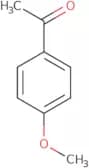
CAS:<p>4'-Methoxyacetophenone is a compound that belongs to the group of detergent compositions. It has a phase transition temperature of about 75°C and meets the requirements for use in laundry detergents. 4'-Methoxyacetophenone is an antimicrobial agent that can be used in personal care products, such as soaps and lotions. It has been shown to be effective against bacteria, such as Staphylococcus aureus, Pseudomonas aeruginosa, and Escherichia coli. The antibacterial activity of 4'-methoxyacetophenone may be due to its hydroxyl group and phosphotungstic acid moiety. This compound also reacts with thione compounds and carbonyl groups to form acylation reactions.</p>Formula:C9H10O2Purity:Min. 95%Color and Shape:White Or Clear Colourless Solid Or Liquid (May Vary)Molecular weight:150.17 g/molN-Acetyl-S-methyl-L-cysteine
CAS:<p>N-Acetyl-S-methyl-L-cysteine (NAC) is an acetylated form of L-cysteine that has been shown to prevent oxidative damage and promote protein homeostasis. It is a methylating agent for the synthesis of methionine and glutathione, which are important for the maintenance of cellular function. NAC has been shown to be a matrix effect modifier in liquid chromatography with mass spectrometry (LC-MS/MS) analysis. This chemical can be found in urine samples as a normal metabolite, but it also has health effects such as the prevention of carcinogenic potential in animals. NAC can also be used as an antioxidant, anti-inflammatory, or anticarcinogenic drug.</p>Formula:C6H11NO3SPurity:Min. 95%Color and Shape:PowderMolecular weight:177.22 g/mol1,2-O-Dihexadecyl-sn-glycero-3-phosphocholine
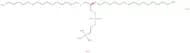
CAS:<p>1,2-O-Dihexadecyl-sn-glycero-3-phosphocholine is a phosphoglyceride that is used in structural biology. It has been shown to form an inclusion complex with the antibiotic erythromycin. This complex was found to be stable at physiological pH and temperature, while the antibiotic alone was not. 1,2-O-Dihexadecyl-sn-glycero-3-phosphocholine also can be used as a surfactant with sodium dodecyl sulfate (SDS) to form micelles and vesicles. The micelles can be used as a model system for studying the interaction of amphiphilic molecules in solution. The chemical stability of 1,2-O-Dihexadecyl-sn-glycero-3-phosphocholine makes it suitable for use as a model system for studying fatty acid ester linkages and cyclic lipopept</p>Formula:C40H84NO6PPurity:Min. 95%Color and Shape:SolidMolecular weight:706.07 g/mol3,4-Dimethoxy-2-methylcinnamic acid
CAS:<p>3,4-Dimethoxy-2-methylcinnamic acid is a fine chemical that can be used as a building block to produce complex compounds. It is also an intermediate in the synthesis of chemicals such as cinnamyl alcohol, cinnamaldehyde, and 2-methyl-3-(4'-methoxyphenyl)propanoic acid. This compound is useful for research purposes as it has been shown to be an effective reaction component in organic reactions. 3,4-Dimethoxy-2-methylcinnamic acid is a high quality reagent with CAS No. 868562-26-9.</p>Formula:C12H14O4Purity:Min. 95%Color and Shape:PowderMolecular weight:222.24 g/molL-Tyrosinol hydrochloride
CAS:<p>L-Tyrosinol hydrochloride is a chiral molecule that is the hydrogenated form of L-tyrosine. It is an intermediate in the synthesis of L-dopa, which is used to treat Parkinson's disease. The enzymatic reaction that converts L-tyrosinol hydrochloride to L-dopa requires adenosine 5'-phosphosulfate as cofactor and histidine as a catalyst. The conversion of L-tyrosinol hydrochloride to L-dopa occurs with high yield and has been shown to be stereoselective. This synthetic pathway has been shown to have an activation energy of 53 kcal/mol and a reaction time of 30 minutes at room temperature.</p>Formula:C9H13NO2·HClColor and Shape:White Off-White PowderMolecular weight:203.67 g/mol4-Methoxy-3-methylbenzyl alcohol
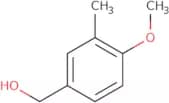
CAS:4-Methoxy-3-methylbenzyl alcohol is a high quality and versatile chemical reagent. It is a complex compound with the CAS number 114787-91-6. 4-Methoxy-3-methylbenzyl alcohol is useful as an intermediate in the synthesis of other fine chemicals, such as pesticides, dyes, and pharmaceuticals. It is also used as a speciality chemical for research purposes or as a building block for more complicated compounds. This compound can be used in reactions to produce new products, such as reaction components that are versatile building blocks.Formula:C9H12O2Purity:Min. 95%Color and Shape:Clear LiquidMolecular weight:152.19 g/moltert-Butyl glycinate
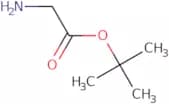
CAS:<p>tert-Butyl glycinate is a synthetic reagent that contains a tert-butyl group. It is used in analytical chemistry to determine the concentrations of cinchonidine and ester hydrochloride in the reaction solution. This can be done by adding trifluoroacetic acid to the reaction solution, which causes the formation of tert-butyl glycinate. The hydrogen chloride from this reaction will react with sodium carbonate, forming hydrogen gas and sodium bicarbonate. The presence of nitrogen atoms on the tert-butyl glycinate molecule allows for an asymmetric synthesis, which can be used to synthesize serine protease.</p>Formula:C6H13NO2Purity:Min. 95%Color and Shape:Clear LiquidMolecular weight:131.17 g/molFmoc-a-Me-Phe(2,6-DiF)-OH
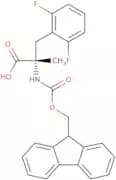
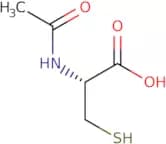
CAS:<p>Fmoc-a-Me-Phe(2,6-DiF)-OH is a versatile building block useful in the synthesis of complex compounds. The compound is a reagent that has been used in the synthesis of various research chemicals and speciality chemicals. Fmoc-a-Me-Phe(2,6-DiF)-OH has also been used as an intermediate for the synthesis of other compounds that are useful as reaction components or scaffolds.</p>Formula:C25H21F2NO4Purity:Min. 95%Color and Shape:PowderMolecular weight:437.44 g/molN-Acetyl-L-cysteine
CAS:<p>Antioxidant; mucolytic agent; anti-viral against influenza A viruses</p>Formula:C5H9NO3SColor and Shape:White PowderMolecular weight:163.2 g/mol4-Methoxybenzyl alcohol
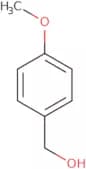
CAS:<p>4-Methoxybenzyl alcohol is an inhibitor that inhibits the enzyme hydroxylase, which catalyzes the conversion of 4-methylphenol to 4-hydroxymandelic acid. The inhibition of this enzyme leads to a decrease in the production of pro-inflammatory factors, such as leukotrienes and prostaglandins. The inhibition of this enzyme also prevents the release of lysosomal enzymes, which may be a therapeutic target for degenerative diseases. Kinetic data has been collected by measuring the rate at which 4-methoxybenzyl alcohol reacts with hydroxylase in vitro and in vivo. This reaction was found to be second order with respect to substrate concentration, with a half-life of 2.8 hours at 37 degrees Celsius and pH 7.4.</p>Formula:C8H10O2Purity:Min. 98%Color and Shape:Clear LiquidMolecular weight:138.16 g/molCyclo(-Gly-Pro)
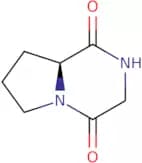
CAS:<p>Cyclo(-Gly-Pro) is a cyclic peptide that has been shown to be neuroprotective. It acts as an analog of the neurotransmitter glutamate and inhibits the binding of glutamate to its receptors. Cyclo(-Gly-Pro) also blocks the release of serotonin from nerve cells and inhibits the proliferation of nerve cells in culture. Cyclo(-Gly-Pro) has been shown to increase locomotor activity in mice, which may be due to its ability to activate 5-HT2A receptors in the brain.</p>Formula:C7H10N2O2Purity:Min. 95%Color and Shape:PowderMolecular weight:154.17 g/mol3-Fluoro-2-methoxybenzaldehyde
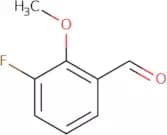
CAS:<p>3-Fluoro-2-methoxybenzaldehyde is a synthetic chemical that has been used as a precursor in the synthesis of pharmaceuticals and other organic compounds. 3-Fluoro-2-methoxybenzaldehyde can be prepared through the lithiation, chloromethylation, or trimethylation of 3-fluoroacetophenone. The compound can be oxidized to 3,4-dihydrobenzofuran with peroxide at low temperature. This conversion can be achieved using a variety of reagents, such as boron tribromide or boron trichloride.</p>Formula:C8H7FO2Purity:Min. 95%Color and Shape:Colorless PowderMolecular weight:154.14 g/molIndole-3-glyoxylamide
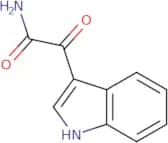
CAS:<p>Indole-3-glyoxylamide is a synthetic compound that was originally developed as a potential anti-cancer drug. It has been shown to inhibit glycogen synthase kinase 3 (GSK-3) and thereby reduce the production of proinflammatory cytokines in bowel disease. Indole-3-glyoxylamide also inhibits inflammatory bowel disease by inhibiting secretory phospholipase A2, which prevents the release of arachidonic acid from phospholipids. This synthesis is required for the production of prostaglandins and leukotrienes, which are involved in the inflammatory process. The compound has been shown to have immunomodulatory effects in chronic bronchitis, with an inhibitory effect on neutrophil chemotaxis, macrophage activity, and cytokine production. Indole-3-glyoxylamide has also been shown to be effective against cancer cells in vitro and in vivo animal models. It is metabolized through</p>Formula:C10H8N2O2Purity:Min. 95%Color and Shape:PowderMolecular weight:188.18 g/molMethyl 5-methylsalicylate
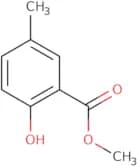
CAS:<p>Methyl 5-methylsalicylate is a synthetic compound that belongs to the group of aldehydes. It is used in coatings, nigrum, and as an intermediate in the synthesis of other compounds. Methyl 5-methylsalicylate has been shown to have synergistic effects with methyl salicylate and can be used for the treatment of exocrine gland disorders such as hyperhidrosis or erythrasma. The hydroxyl group on the methyl group increases its polarity and its ability to form hydrogen bonds, which may account for its high volatility. This compound also has photophysical properties that allow it to show different colors when exposed to light. Methyl 5-methylsalicylate has been shown to be homochiral because it has two identical enantiomers.</p>Formula:C9H10O3Purity:Min. 95%Color and Shape:Colorless Clear LiquidMolecular weight:166.17 g/mol2-Bromo-4-methoxyaniline hydrochloride
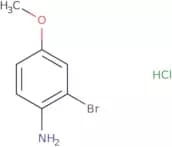
CAS:<p>2-Bromo-4-methoxyaniline hydrochloride is a high quality, reagent that is used as a useful intermediate in the production of fine chemicals. This compound has been shown to be a useful scaffold for the synthesis of speciality chemicals and research chemicals. It also functions as an excellent building block for versatile chemical reactions. 2-Bromo-4-methoxyaniline hydrochloride can be used as a reaction component in the preparation of compounds with diverse functional groups.</p>Formula:C7H8BrNO·ClHPurity:Min. 95%Color and Shape:White PowderMolecular weight:238.51 g/mol