Amino Acids (AA)
Amino acids (AAs) are the fundamental building blocks of proteins, playing a crucial role in various biological processes. These organic compounds are essential for protein synthesis, metabolic pathways, and cell signaling. In this category, you will find a comprehensive range of amino acids, including essential, non-essential, and modified forms, which are vital for research in biochemistry, molecular biology, and nutritional sciences. At CymitQuimica, we provide high-quality amino acids to support your research and development needs, ensuring accuracy and reliability in your experimental outcomes.
Subcategories of "Amino Acids (AA)"
- Amino Acid Derivatives(3,955 products)
- Amino Acid and Amino Acid Related Compounds(3,420 products)
- Amino Acids with Oxygen or Sulphur(168 products)
- Boc- Amino Acids(351 products)
- Fmoc Amino Acids(1,710 products)
Found 38200 products of "Amino Acids (AA)"
Sort by
Purity (%)
0
100
|
0
|
50
|
90
|
95
|
100
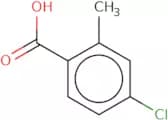
4-Chloro-2-methylbenzoic acid
CAS:<p>4-Chloro-2-methylbenzoic acid is a high quality chemical that is used as an intermediate in the preparation of other compounds. It belongs to the group of complex compounds and has CAS No. 7499-07-2. This reagent can be used to synthesize speciality chemicals, research chemicals, and versatile building blocks. 4-Chloro-2-methylbenzoic acid is also useful as a reaction component for the synthesis of fine chemicals, pharmaceuticals, and agrochemicals.</p>Formula:C8H7ClO2Purity:Min. 95%Molecular weight:170.59 g/mol2-Bromo-4-methylphenol
CAS:<p>2-Bromo-4-methylphenol is an organic compound that has interactive effects with hydrochloric acid, molybdenum, and trifluoromethanesulfonic acid. It is soluble in water vapor, but insoluble in polyvinyl. 2-Bromo-4-methylphenol reacts with sodium hydroxide solution to form a hydroxide solution and sodium carbonate. The reaction product of 2-bromo-4-methylphenol with triterpenoid saponin produces fatty acids. This reaction occurs because the hydroxide ion from the sodium hydroxide solution attacks the ester group of the saponin, forming an alcohol group on one end and a carboxylic acid group on the other end. The benzyl groups are removed by hydrogenation to produce phenol.</p>Formula:C7H7BrOPurity:Min. 95%Molecular weight:187.03 g/molN-Benzyloxycarbonyl-L-proline
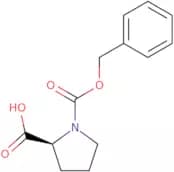
CAS:<p>N-Benzyloxycarbonyl-L-proline is a cationic polymerization inhibitor that has been shown to inhibit the growth of Pseudomonas aeruginosa. It inhibits bacterial growth by inhibiting the production of collagen, an important component in the cell wall. N-Benzyloxycarbonyl-L-proline is also used as a histological staining agent and has been shown to be effective against breast cancer cells resistant to tamoxifen therapy.</p>Formula:C13H15NO4Purity:Min. 95%Color and Shape:PowderMolecular weight:249.26 g/mol2'-Hydroxy-5'-methoxyacetophenone
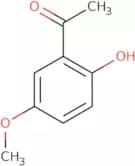
CAS:<p>2'-Hydroxy-5'-methoxyacetophenone is a molecule that has been shown to have anticancer activity. It inhibits the production of molecules in cancer cells, such as carbonic anhydrase and nitric oxide synthase. This molecule also binds to DNA and prevents the transcription of genes involved in cell proliferation, including NF-κB DNA. 2'-Hydroxy-5'-methoxyacetophenone also has inhibitory properties on the growth of cancer cells, including MCF-7 cells.</p>Formula:C9H10O3Purity:Min. 95%Color and Shape:Off-White PowderMolecular weight:166.17 g/molFmoc-Dab(Fmoc-Dab(Boc))-OH
<p>Fmoc-Dab(Fmoc-Dab(Boc))-OH is a water soluble, high quality reagent that is used in peptide synthesis. This compound is a versatile building block for the preparation of complex compounds and fine chemicals. The chemical structure of this compound is not yet known. Fmoc-Dab(Fmoc-Dab(Boc))-OH reacts with DBU to form an active ester that can be used as a coupling agent for peptide synthesis.</p>Formula:C43H46N4O9Purity:Min. 95%Color and Shape:PowderMolecular weight:762.85 g/mol2-Amino-4-(2,4-dichlorophenyl)-5-methylthiophene-3-carbonitrile
CAS:<p>The frequency range of 2-Amino-4-(2,4-dichlorophenyl)-5-methylthiophene-3-carbonitrile is between 0.1 and 1.0 GHz. The channel is between 1 and 10 MHz. The algorithm used for this frequency is the Gaussian algorithm. This frequency has been shown to have a frequency range of 0.1 to 1.0 GHz with a channel of 1 to 10 MHz and an algorithm of the Gaussian algorithm.</p>Formula:C12H8Cl2N2SPurity:Min. 95%Color and Shape:Brown PowderMolecular weight:283.18 g/mol4-Methylpyrimidine
CAS:<p>4-Methylpyrimidine is a molecule used in the treatment of cancer. It is an inhibitor of the enzyme topoisomerase II, which is involved in DNA replication and repair. 4-Methylpyrimidine binds to the active site of topoisomerase II and blocks its activity. 4-Methylpyrimidine has been shown to be effective against Covid-19 pandemic, which was responsible for a severe outbreak of pneumonia in 2009. The reaction mechanism of 4-methylpyrimidine involves methylpyrazine, a chloride ligand, and molybdenum as the metal center. FT-IR spectroscopy has been used to identify the structural analysis of this molecule.</p>Formula:C5H6N2Purity:Min. 95%Color and Shape:Clear LiquidMolecular weight:94.12 g/mol4-Methoxy-2,3,5-trimethylpyridine
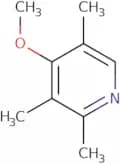
CAS:<p>4-Methoxy-2,3,5-trimethylpyridine is an efficient hydrogenolysis catalyst that can be used for the synthesis of ethers from alcohols. It is a member of the methoxides family and can be produced by condensation of chloroform with acetaldehyde and formaldehyde. 4-Methoxy-2,3,5-trimethylpyridine inhibits palladium chloride from catalyzing hydrogenation reactions. The compound also has an inhibiting activity against acidic amines and n-Oxides. Its high yield makes it useful in organic synthesis as a precursor to diethyl malonate.</p>Formula:C9H13NOPurity:Min. 95%Color and Shape:Colourless To Yellow LiquidMolecular weight:151.21 g/molN-Methyl-N-(1-naphthyl)-1-chlorobenzamide
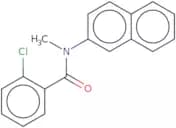
CAS:<p>N-Methyl-N-(1-naphthyl)-1-chlorobenzamide is a versatile and useful chemical that can be used in the preparation of many different compounds. It is a reaction component and reagent, as well as a useful scaffold for the synthesis of many different compounds. It has high quality and is used in research chemicals. N-Methyl-N-(1-naphthyl)-1-chlorobenzamide has CAS No. 74881-60-0 and is a speciality chemical. It can also be used as a versatile building block or intermediates for the synthesis of more complex compounds.</p>Formula:C18H14ClNOPurity:Min. 95%Molecular weight:295.76 g/molBis(2-methacryloyloxyethyl) hydrogen phosphate
CAS:<p>Crosslinking monomer</p>Formula:C12H19O8PPurity:Min. 95%Color and Shape:Clear LiquidMolecular weight:322.25 g/mol3,5-Dimethyl-4-methoxybenzoic acid
CAS:<p>3,5-Dimethyl-4-methoxybenzoic acid is a disulphide monomer with the chemical formula C7H8O2S. It can be used as a building block for organic synthesis. This compound has been widely studied because it contains a benzyl group, which is the simplest aromatic system. The symmetric and asymmetric vibrational frequencies of 3,5-dimethyl-4-methoxybenzoic acid have been measured by nmr spectroscopy and theory. The thermodynamic properties of this compound have also been studied by molecular dynamics simulations and quantum chemical calculations.</p>Formula:C10H12O3Purity:Min. 95%Molecular weight:180.2 g/molZ-Gly-Ala-Gln-AMC
CAS:<p>Z-Gly-Ala-Gln-AMC is a fluorescent substrate that can be used to detect vacuolar activity in cells. It is a peptide that has been shown to bind to the antigen of organisms, such as viruses and bacteria, which are then digested by endopeptidases. This product has various applications in cancer research, including elucidation of mechanisms of action and identification of targets for anti-cancer therapies. Z-Gly-Ala-Gln-AMC is also used as a molecular target for strategies against organisms such as Acinetobacter baumannii or Mycobacterium tuberculosis.</p>Formula:C28H31N5O8Purity:Min. 98 Area-%Color and Shape:PowderMolecular weight:565.57 g/molTrt-cysteamine hydrochloride
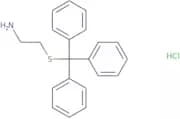
CAS:<p>Trt-cysteamine hydrochloride is a prodrug that is metabolized to cysteamine in vivo. Cysteamine inhibits the production of tumor necrosis factor (TNF) by binding to its receptor and blocking NF-κB signaling pathways. In vitro models have shown that trt-cysteamine hydrochloride has minimal effects on cells, but when used in vivo, it can inhibit oxidative stress and induce cell death. Trt-cysteamine hydrochloride also binds to molecular targets with disulfide bonds, which may be potential therapeutic targets for cancer treatment.</p>Formula:C21H21NS·HClPurity:Min. 95%Color and Shape:White Off-White PowderMolecular weight:355.92 g/molS-Benzyl-L-cysteine methyl ester hydrochloride
CAS:<p>S-Benzyl-L-cysteine methyl ester hydrochloride is a thioether that can be synthesized from benzyl mercaptan and cysteine. It is used as an optical reagent in the determination of amines. This chemical has a helical conformation and it has been shown to have a transition at 280 nm. S-Benzyl-L-cysteine methyl ester hydrochloride is also a monomer in porphyrins, which are important for the production of heme and chlorophyll. This chemical is also catalytic, and its conformation changes when it reacts with amines.</p>Formula:C11H15NO2S·HClPurity:Min. 95%Color and Shape:PowderMolecular weight:261.77 g/molBoc-L-norleucine dicyclohexylammonium salt
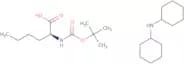
CAS:Controlled Product<p>Boc-L-norleucine dicyclohexylammonium salt is a cyclic peptide that has been shown to function as an anticoagulant. It is found in the sequence of protein and inhibits the coagulation process by inhibiting platelet aggregation. Boc-L-norleucine dicyclohexylammonium salt also acts as a molecular marker for c1-6 alkyl chains, which are found in viruses, and can be used to identify these molecules. This drug has antiviral activity against herpes simplex virus and inorganic acids such as hydrochloric acid.</p>Formula:C11H21NO4·C12H23NPurity:Min. 95%Color and Shape:SolidMolecular weight:412.61 g/molN-Phenyl-2,4,6-triphenyl pyridinium tetrafluoroborate
CAS:<p>N-Phenyl-2,4,6-triphenyl pyridinium tetrafluoroborate is a crystalline material that is insoluble in water and organic solvents. It can be used as a monomer in the synthesis of polymers and for immobilization of enzymes. N-Phenyl-2,4,6-triphenyl pyridinium tetrafluoroborate can be used to reprocess technetium and has been shown to diffract x-rays with high resolution. This compound is also fluorescent with a long wavelength (620 nm) and can be used as a radioactive tracer.</p>Formula:C29H22N·BF4Purity:Min. 95%Molecular weight:471.3 g/mol3-Methylcinnamic acid
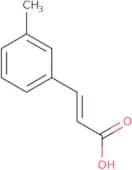
CAS:<p>3-Methylcinnamic acid is an organic acid that is a phenylpropanoid metabolite. It is synthesized from malonic acid by hydroxylation and sulfonation, and then converted to cinnamic acid derivatives. 3-Methylcinnamic acid has been shown to inhibit the activity of heterocyclic amine-producing enzymes and has a strong inhibitory effect on the formation of triticum aestivum. 3-Methylcinnamic acid has been found to have diverse chemical properties that are useful for industrial purposes.</p>Formula:C10H10O2Purity:Min. 95%Color and Shape:PowderMolecular weight:162.19 g/molFmoc-α-Me-Asp(OtBu)-OH
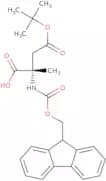
CAS:<p>Fmoc-α-Me-Asp(OtBu)-OH is a versatile building block that can be used as an intermediate for the synthesis of a broad range of compounds. It is a very high quality compound, with a purity of 99% and an assay of 98%. Fmoc-α-Me-Asp(OtBu)-OH has been used in the synthesis of complex molecules and substances, such as pharmaceuticals, flavors and fragrances, vitamins, dyes, pesticides and herbicides. This molecule is also a useful scaffold for organic chemistry reactions. Fmoc-α-Me-Asp(OtBu)-OH has been used to synthesize various drugs including carboxylic acid derivatives, amino acid derivatives and peptides.</p>Formula:C24H27NO6Purity:Min. 95%Color and Shape:PowderMolecular weight:425.47 g/mol3-Chloro-4-methoxybenzoic acid
CAS:<p>3-Chloro-4-methoxybenzoic acid is a hydroxamic acid that is synthesized by the reaction of 3-chloro-4-methoxybenzaldehyde with hydroxylamine. It has anticancer activity and can inhibit the growth of cancer cells. 3-Chloro-4-methoxybenzoic acid has a low potency, which means that it needs to be used in high concentrations in order to be effective as an anticancer agent. The drug is also structurally similar to sorafenib, but has less potent anticancer activity.</p>Formula:C8H7ClO3Purity:Min. 95%Molecular weight:186.59 g/molN-Methyl-N-(1-naphthyl)-2-bromobenzamide
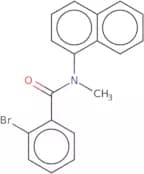
CAS:<p>N-Methyl-N-(1-naphthyl)-2-bromobenzamide is a high quality reagent that is used as a complex compound. It has CAS No. 74881-58-6 and it can be used as a useful intermediate, fine chemical or speciality chemical. N-Methyl-N-(1-naphthyl)-2-bromobenzamide is also a versatile building block that is used in reactions to synthesize other compounds.</p>Formula:C18H14BrNOPurity:Min. 95%Molecular weight:340.21 g/mol