


Amino Acids (AA)
Amino acids (AAs) are the fundamental building blocks of proteins, playing a crucial role in various biological processes. These organic compounds are essential for protein synthesis, metabolic pathways, and cell signaling. In this category, you will find a comprehensive range of amino acids, including essential, non-essential, and modified forms, which are vital for research in biochemistry, molecular biology, and nutritional sciences. At CymitQuimica, we provide high-quality amino acids to support your research and development needs, ensuring accuracy and reliability in your experimental outcomes.
Subcategories of "Amino Acids (AA)"
- Amino Acid Derivatives(3,955 products)
- Amino Acid and Amino Acid Related Compounds(3,420 products)
- Amino Acids with Oxygen or Sulphur(168 products)
- Boc- Amino Acids(351 products)
- Fmoc Amino Acids(1,710 products)
Found 38200 products of "Amino Acids (AA)"
Sort by
Purity (%)
0
100
|
0
|
50
|
90
|
95
|
100
1-Hexyl-3-methylimidazolium hexafluorophosphate
CAS:<p>1-Hexyl-3-methylimidazolium hexafluorophosphate is a cationic surfactant that is soluble in water. It has been shown to be effective for the removal of heavy metals, organic pollutants, and radioactive substances from wastewater by anion exchange resin. This compound also interacts with potassium hexafluorophosphate (KFP) to form a highly efficient ion pair. The transport properties of 1-hexyl-3-methylimidazolium hexafluorophosphate are due to its concentration dependent interactions with water molecules, which are affected by the temperature and pressure. The Langmuir adsorption isotherm has been used to describe the equilibrium between 1-hexyl-3-methylimidazolium hexafluorophosphate and KFP.</p>Formula:C10H19F6N2PPurity:Min. 95%Color and Shape:Colourless To Yellow LiquidMolecular weight:312.24 g/mol4-Bromo-5-methyl-1H-indole-2,3-dione
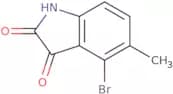
CAS:<p>4-Bromo-5-methyl-1H-indole-2,3-dione is a synthetic molecule that has been shown to have neuroprotective effects. It inhibits the production of proinflammatory cytokines, such as tnf-α and il-6, by binding to survivin. 4Bromo-5 methyl 1Hindole 2,3 dione also binds to the viral capsid protein and blocks virus infection. This compound has been shown to inhibit viral replication in vitro as well as provide protection against alphavirus infection in mice.</p>Formula:C9H6BrNO2Purity:Min. 95%Molecular weight:240.05 g/mol2,2-Dimethyl-5-(1-methylprop-1-enyl)tetrahydrofuran
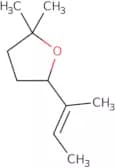
CAS:<p>2,2-Dimethyl-5-(1-methylprop-1-enyl)tetrahydrofuran is a compound that is used in coatings and foodstuff. It has synergistic effects when combined with other compounds such as citric acid, hydrogen peroxide, or terpineol.</p>Formula:C10H18OPurity:Min. 95%Color and Shape:Clear LiquidMolecular weight:154.25 g/molNα-(tert-Butoxycarbonyl)-τ-(p-toluenesulfonyl)-L-histidine
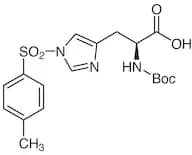
CAS:Formula:C18H23N3O6SPurity:>98.0%(T)Color and Shape:White to Almost white powder to crystalMolecular weight:409.465,6-Dimethyl-1,10-phenanthroline
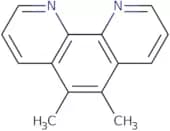
CAS:<p>5,6-Dimethyl-1,10-phenanthroline (DMPA) is a molecule with the chemical formula H2C8N4O2. It has been shown to have antioxidant and anticancer properties. DMPA binds to DNA to form an adduct that denatures the DNA. This prevents DNA from being transcribed into RNA, which prevents gene expression and cell division. The anticancer activity of DMPA may be due to its ability to increase oxidative dna damage in cancer cells, leading to apoptosis. DMPA has also been shown to bind redox potentials of metals such as copper, iron and nickel that are found in the environment or in cancer cells. This binding alters the electron transfer reactions involving these metals and leads to a change in the viscosity of the solution. The molecular modeling studies have shown that DMPA binds with nitrogen atoms in coordination geometry with oxygen atoms on two sites on one molecule (see Figure 1). This binding is characterized by</p>Formula:C14H12N2Purity:Min. 95%Color and Shape:PowderMolecular weight:208.26 g/mol2-Iodo-N-methyl-N-p-tolylbenzamide
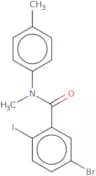
CAS:<p>2-Iodo-N-methyl-N-p-tolylbenzamide is a fine chemical that has the CAS No. 1387529-49-8 and is a versatile building block with a wide range of applications, including research chemicals, reaction components and speciality chemicals. 2-Iodo-N-methyl-N-p-tolylbenzamide is soluble in organic solvents such as ethers, chloroform and benzene, while insoluble in water. It has been shown to be a useful intermediate for the synthesis of complex compounds and can be used as a reagent to prepare other compounds. 2Iodo-Nmethyl--Np--tolylbenzamide has been shown to have high quality and is an excellent building block for synthesizing pharmaceuticals.</p>Formula:C15H13BrINOPurity:Min. 95%Molecular weight:430.08 g/molFmoc-3-pyrenyl-L-alanine
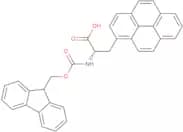
CAS:<p>Fmoc-3-pyrenyl-L-alanine is a chemical building block that can be used as an intermediate in the synthesis of complex compounds. It has a CAS number of 183071-07-0 and is used for research purposes. This compound is soluble in organic solvents, allowing it to be used as a reaction component or reagent. Fmoc-3-pyrenyl-L-alanine can be synthesized from the corresponding acid chloride and 3-(pyridiniummethyl)-2,5-dioxopyrrolidine. It has a molar mass of 206.2 g/mol and its melting point is 190°C.</p>Formula:C34H25NO4Purity:Min. 99 Area-%Molecular weight:511.57 g/molCyclo(-L-Trp-L-Tyr)
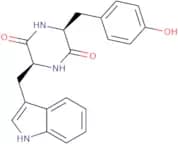
CAS:<p>Cyclo(-L-Trp-L-Tyr) is a cyclic peptide with a heterologous expression system, which can be expressed in the coelicolor bacteria. It is a highly specific and regiospecific analytical method that can be used for quantitative determination of the amino acid tryptophan in proteins. The product yield from the reaction between cyclo(-L-Trp-L-Tyr) and oxidase is enhanced when this compound is treated with hydrogen peroxide. This analytical method has been applied to the analysis of tryptophanyl residues in peptides and proteins.</p>Formula:C20H19N3O3Purity:Min. 95%Color and Shape:PowderMolecular weight:349.38 g/mol(-)-Phenylephrine hydrogentartrate
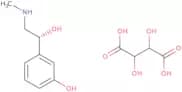
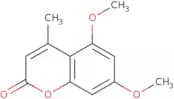
CAS:<p>(-)Phenylephrine is a medication that belongs to the group of drugs called sympathomimetics. This drug is a potent vasoconstrictor that causes blood vessels to narrow and increases blood pressure. (-)Phenylephrine is used in humans as a pharmaceutical dosage for treatment of chronic bronchitis, hay fever, and other allergic reactions. It also has been shown to inhibit guanylate cyclase activity and can be used for the treatment of asthma. (-)Phenylephrine inhibits the action of two enzymes: cyclase and phosphodiesterase. This inhibition leads to an increased level of cAMP, which binds with G protein-coupled receptors in tissues that are rich in smooth muscle cells such as the airways or urinary bladder. The binding of cAMP with these receptors causes an increase in intracellular calcium ion levels, leading to relaxation of smooth muscles and improved breathing or urination.</p>Formula:C9H13NO2·C4H6O6Purity:Min. 98 Area-%Color and Shape:PowderMolecular weight:317.29 g/mol4-Methyl-5,7-dimethoxycoumarin
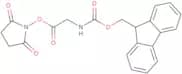
CAS:<p>4-Methyl-5,7-dimethoxycoumarin is a coumarin derivative that has been synthesized from acetonitrile and aluminium. It is used as an antiplatelet drug in the treatment of cardiovascular diseases such as unstable angina, myocardial infarction, and transient ischemic attack. 4-Methyl-5,7-dimethoxycoumarin reversibly inhibits platelet aggregation by blocking the platelet receptor P2Y12 on the surface of platelets. This drug also has antioxidant effects and can be used to identify markers associated with cardiovascular disease.</p>Formula:C12H12O4Purity:Min. 95%Molecular weight:220.22 g/molFmoc-glycine N-hydroxysuccinimide ester
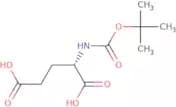
CAS:<p>Fmoc-glycine N-hydroxysuccinimide ester is a reagent and building block that is used in the synthesis of peptides and other organic compounds. It has many uses, including as a reaction component, a speciality chemical, and a versatile building block. Fmoc-glycine N-hydroxysuccinimide ester is also a useful intermediate for complex compounds or fine chemicals. This product is available to purchase at wholesale pricing in quantities ranging from 1 gram to 5 kilograms.</p>Formula:C21H18N2O6Purity:Min. 95 Area-%Color and Shape:White Off-White PowderMolecular weight:394.38 g/molBoc-L-glu-OH
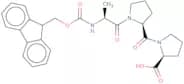
CAS:<p>Boc-L-glu-OH is a synthetic, predictive model system that can be used to study the interaction of acidic ligands with receptors. It has been shown that this molecule is able to bind to bacterial enzyme and inhibit its activity. The molecular modeling studies of Boc-L-glu-OH with bacterial enzyme have revealed that it is possible for the molecule to interfere with the catalytic site of the enzyme by binding to an amino acid residue. The crystal structure of Boc-L-glu-OH bound to bacterial serine protease (Bsp) has also been determined using bioconjugate chemistry. Synthetic Boc-L-glu-OH can be prepared in high yield from glutamate and L-(+)-glutamic acid methyl ester hydrochloride at ambient temperature.</p>Formula:C10H17NO6Purity:Min. 95%Color and Shape:White PowderMolecular weight:247.25 g/molFmoc-Ala-Pro-Pro-OH
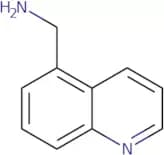
CAS:<p>Fmoc-Ala-Pro-Pro-OH is an amino acid that belongs to the class of speciality chemicals. It is a versatile building block for organic synthesis, with applications in pharmaceuticals, agrochemicals, and other chemical industries. The CAS number for Fmoc-Ala-Pro-Pro-OH is 386768-25-8.</p>Formula:C28H31N3O6Purity:Min. 95%Color and Shape:PowderMolecular weight:505.56 g/molQuinolin-5-yl-methylamine
CAS:<p>Quinolin-5-yl-methylamine is a fine chemical that is used as a research chemical. It can be used as a reagent and as a speciality chemical. This compound has a high quality and is versatile in its use. Quinolin-5-yl-methylamine can be used in the synthesis of complex compounds, such as pharmaceuticals, agrochemicals, and polymers. It is also an intermediate that can be used to create other useful compounds, such as building blocks or scaffolds. The CAS number for this compound is 58123-57-2.</p>Formula:C10H10N2Purity:Min. 95%Color and Shape:SolidMolecular weight:158.2 g/mol3-Chloro-4-methylbenzonitrile
CAS:<p>3-Chloro-4-methylbenzonitrile is a versatile building block that can be used as a reagent, intermediate, or scaffold for the synthesis of complex compounds. It is an important chemical in the pharmaceutical and chemical industries. 3-Chloro-4-methylbenzonitrile has been shown to react with many different types of functional groups including alcohols, amines, thiols, and halides. This compound has also been shown to have a high yield and purity when synthesized.</p>Formula:C8H6ClNPurity:Min. 95%Molecular weight:151.59 g/mol3-Methyl-3,8-diaza-bicyclo[3.2.1]octane dihydrochloride
CAS:<p>3-Methyl-3,8-diaza-bicyclo[3.2.1]octane dihydrochloride is a high quality reagent that is useful as an intermediate in the synthesis of complex compounds and as a reagent for fine chemicals. 3-Methyl-3,8-diaza-bicyclo[3.2.1]octane dihydrochloride can be used as a versatile building block in the synthesis of speciality chemicals and research chemicals. It can also be used to synthesize a variety of reaction components, such as amines, carboxylic acids, alcohols, amides, and nitriles.</p>Formula:C7H16Cl2N2Purity:Min. 95%Color and Shape:PowderMolecular weight:199.12 g/molO-Methyldomesticine
CAS:<p>O-Methyldomesticine is a type of alkaloid, which is a naturally occurring organic compound primarily found in certain plant species. These compounds often have complex structures and are typically derived from plant secondary metabolites. O-Methyldomesticine’s mode of action is thought to involve interactions with central nervous system receptors, although the precise mechanisms remain under investigation. Its chemical structure allows it to potentially modulate biochemical pathways, making it of interest to pharmacological research.</p>Formula:C20H21NO4Purity:Min. 95%Molecular weight:339.39 g/mol1-(2-Chlorophenyl)-5-phenyl-1-H-pyrazole-3-carboxylic acid
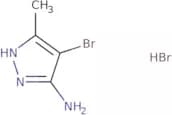
CAS:Controlled Product<p>1-(2-Chlorophenyl)-5-phenyl-1H-pyrazole-3-carboxylic acid is a high quality, reagent, complex compound that has been shown to be useful as an intermediate in the synthesis of a number of different compounds. It has been shown to be useful as a speciality chemical and research chemicals with versatile building blocks that can be used for the synthesis of other compounds. The CAS number for 1-(2-chlorophenyl)-5-phenyl-1H-pyrazole-3-carboxylic acid is 116572-69-1.</p>Formula:C16H11ClN2O2Purity:Min. 95%Molecular weight:298.72 g/mol5-Amino-4-bromo-3-methylpyrazole hydrobromide
CAS:<p>5-Amino-4-bromo-3-methylpyrazole hydrobromide is an intermediate in the synthesis of a variety of compounds. It is also a building block for the synthesis of heterocycles, such as pyrazoles, indazoles, benzoxazoles, and benzothiazoles. 5-Amino-4-bromo-3-methylpyrazole hydrobromide can be used as a reagent to synthesize pharmaceuticals and other useful compounds.<br>5-Amino-4-bromo-3-methylpyrazole hydrobromide is a versatile building block that can be used in the synthesis of many different types of compounds. This compound has been shown to react with various groups on organic molecules to form new chemical structures.</p>Formula:C4H6BrN3•BrHPurity:Min. 95%Color and Shape:PowderMolecular weight:256.93 g/molNα-[(9H-Fluoren-9-ylmethoxy)carbonyl]-N1-tert-butoxycarbonyl-L-tryptophan
CAS:Formula:C31H30N2O6Purity:>97.0%(HPLC)Color and Shape:White to Orange to Green powder to crystalMolecular weight:526.59




![3-Methyl-3,8-diaza-bicyclo[3.2.1]octane dihydrochloride](/_next/image/?url=https%3A%2Fstatic.cymitquimica.com%2Fproducts%2F3D%2Fthumb-webp%2FFM140947.webp&w=3840&q=75)


![Nα-[(9H-Fluoren-9-ylmethoxy)carbonyl]-N1-tert-butoxycarbonyl-L-tryptophan](/_next/image/?url=https%3A%2Fstatic.cymitquimica.com%2Fproducts%2F3B%2Fthumb-webp%2FF0507.webp&w=3840&q=75)