Amino Acids (AA)
Amino acids (AAs) are the fundamental building blocks of proteins, playing a crucial role in various biological processes. These organic compounds are essential for protein synthesis, metabolic pathways, and cell signaling. In this category, you will find a comprehensive range of amino acids, including essential, non-essential, and modified forms, which are vital for research in biochemistry, molecular biology, and nutritional sciences. At CymitQuimica, we provide high-quality amino acids to support your research and development needs, ensuring accuracy and reliability in your experimental outcomes.
Subcategories of "Amino Acids (AA)"
- Amino Acid Derivatives(3,955 products)
- Amino Acid and Amino Acid Related Compounds(3,420 products)
- Amino Acids with Oxygen or Sulphur(168 products)
- Boc- Amino Acids(351 products)
- Fmoc Amino Acids(1,710 products)
Found 38200 products of "Amino Acids (AA)"
Sort by
Purity (%)
0
100
|
0
|
50
|
90
|
95
|
100
Fmoc-Asp(OtBu)-Ser(Psi(Me,Me)pro)-OMe
<p>Fmoc-Asp(OtBu)-Ser(Psi(Me,Me)pro)-OMe is a versatile building block that can be used in a variety of chemical reactions. Fmoc-Asp(OtBu)-Ser(Psi(Me,Me)pro)-OMe is a reagent and speciality chemical that is useful as an intermediate or reaction component for the synthesis of complex compounds. Fmoc-Asp(OtBu)-Ser(Psi(Me,Me)pro)-OMe has been used in the synthesis of many fine chemicals and research chemicals. This compound has also been shown to have high quality and is a useful scaffold for drug discovery.</p>Formula:C30H36N2O8Purity:Min. 95%Color and Shape:PowderMolecular weight:552.62 g/mol4-Fluoro-3-methoxytoluene
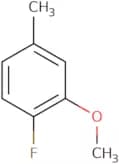
CAS:<p>4-Fluoro-3-methoxytoluene (4FMET) is a polymeric organic compound that has an index of refraction of 1.5. It is soluble in common solvents, such as chloroform, acetone and ethanol, but insoluble in water. 4FMET can be used as a copolymerization additive to improve the chemical stability of polymers and plastics. It also has antibacterial properties that are due to its ability to disrupt bacterial membranes and inhibit protein synthesis. 4FMET is FDA approved for use in ophthalmic solutions that transmit ultraviolet light, such as UV-A or UV-B radiation.</p>Formula:C8H9FOPurity:Min. 95%Color and Shape:Clear LiquidMolecular weight:140.15 g/molFmoc-glycine N-hydroxysuccinimide ester
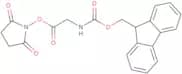
CAS:<p>Fmoc-glycine N-hydroxysuccinimide ester is a reagent and building block that is used in the synthesis of peptides and other organic compounds. It has many uses, including as a reaction component, a speciality chemical, and a versatile building block. Fmoc-glycine N-hydroxysuccinimide ester is also a useful intermediate for complex compounds or fine chemicals. This product is available to purchase at wholesale pricing in quantities ranging from 1 gram to 5 kilograms.</p>Formula:C21H18N2O6Purity:Min. 95 Area-%Color and Shape:White Off-White PowderMolecular weight:394.38 g/mol2-Methyl-1-nitroprop-1-ene
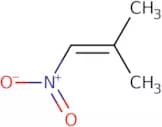
CAS:<p>2-Methyl-1-nitroprop-1-ene is a labile molecule that can be readily synthesized from 2-methyl propanal and nitrous acid. The postulated reaction mechanism for the formation of 2-methyl-1-nitroprop-1-ene begins with the nucleophilic attack of the azide anion on the carbonyl group of 2 methyl propanal, forming a tetrahedral intermediate. This intermediate undergoes a stepwise reaction to form 2 methyl 1 nitropropane. Nitro groups have been observed in both the product and starting material, which could indicate a transfer mechanism.</p>Formula:C4H7NO2Purity:Min. 95%Color and Shape:Clear LiquidMolecular weight:101.1 g/mol2-Phenylindole-5-sulfonic acid monosodium salt
CAS:<p>2-Phenylindole-5-sulfonic acid monosodium salt is a fine chemical that can be used as a building block for research chemicals, reagents, and speciality chemicals. It is also used as a reaction component for the synthesis of various complex compounds, such as pharmaceuticals and dyes. 2-Phenylindole-5-sulfonic acid monosodium salt is a versatile building block that can be used in the synthesis of useful scaffolds. The CAS number for this compound is 119205-39-9.</p>Formula:C14H10NO3S·NaPurity:Min. 95%Color and Shape:White PowderMolecular weight:295.29 g/mol2-Methyl-5-(prop-1-en-2-yl)cyclohex-2-enone
CAS:<p>2-Methyl-5-(prop-1-en-2-yl)cyclohex-2-enone is a monoterpene that is found in essential oils of many plants, such as caraway, dill, and peppermint. It has been shown to have antimicrobial activity against a wide range of bacteria. 2-Methyl-5-(prop-1-en-2-yl)cyclohex-2-enone has also been shown to be an effective treatment for infectious diseases such as tuberculosis and leprosy. In vitro assays have shown that this compound inhibits the growth of bacteria by lysing the cells of the bacteria. This chemical also minimally affects the locomotor activity in mice and does not cause death at high doses when given orally to rats.</p>Formula:C10H14OPurity:Min. 95%Color and Shape:Slightly Yellow PowderMolecular weight:150.22 g/molIndole-3-acetyl-L-alanine acid methyl ester
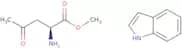
CAS:<p>Please enquire for more information about Indole-3-acetyl-L-alanine acid methyl ester including the price, delivery time and more detailed product information at the technical inquiry form on this page</p>Formula:C14H16N2O3Purity:Min. 95%Molecular weight:260.29 g/molFmoc-Asp-Ser(Psi(Me,Me)pro)-OH
<p>Fmoc-Asp-Ser(Psi(Me,Me)pro)-OH is a fine chemical that is used as a building block in the synthesis of complex compounds. It is also a reagent and speciality chemical with CAS No. 115890-01-7. This compound has been shown to be an intermediate for the synthesis of useful scaffold compounds. Fmoc-Asp-Ser(Psi(Me,Me)pro)-OH can be used for the preparation of peptides and proteins with different functional groups at either end. It has versatile applications in organic synthesis and can be used as a reaction component or building block in many reactions.</p>Formula:C25H26N2O8Purity:Min. 95%Color and Shape:PowderMolecular weight:482.48 g/molN-Boc-L-tert-leucine
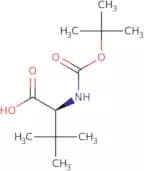
CAS:<p>N-Boc-L-tert-leucine is a β-amino acid that is used as an inhibitor in profiling. It has been shown to inhibit the activity of NS3 protease, which is involved in the synthesis of proteins, and to reduce the production of proinflammatory cytokines. N-Boc-L-tert-leucine has been found to be potent inhibitors of T cell leukemia cells, which may be due to its ability to inhibit protein synthesis. This drug also possesses potential therapeutic effects on metabolic profiles in women.</p>Formula:C11H21NO4Purity:Min. 98 Area-%Color and Shape:PowderMolecular weight:231.29 g/mol4,5-Dimethyl-1,2-phenylenediamine
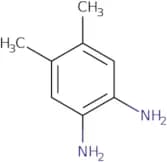
CAS:<p>4,5-Dimethyl-1,2-phenylenediamine is a fluorescent derivative of an unlabeled amine that is used in analytical chemistry. It has been shown to react with hydrogen bond donors and acceptors in aqueous solution to produce a new compound with a different fluorescence spectrum. This reaction mechanism can be used for sample preparation prior to analysis by various analytical methods. The coordination geometry of 4,5-dimethyl-1,2-phenylenediamine has been determined using x-ray crystal structures obtained from the compound in fetal bovine serum. A model system that mimics the disease activity of diabetic patients has been constructed using this compound as the analyte.</p>Formula:C8H12N2Purity:Min. 95%Color and Shape:PowderMolecular weight:136.19 g/mol2-Amino-4-(2,4-dichlorophenyl)-5-methylthiophene-3-carbonitrile
CAS:<p>The frequency range of 2-Amino-4-(2,4-dichlorophenyl)-5-methylthiophene-3-carbonitrile is between 0.1 and 1.0 GHz. The channel is between 1 and 10 MHz. The algorithm used for this frequency is the Gaussian algorithm. This frequency has been shown to have a frequency range of 0.1 to 1.0 GHz with a channel of 1 to 10 MHz and an algorithm of the Gaussian algorithm.</p>Formula:C12H8Cl2N2SPurity:Min. 95%Color and Shape:Brown PowderMolecular weight:283.18 g/mol5-Methyl-1,3-oxazolidin-2-one
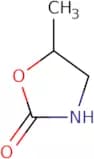
CAS:<p>5-Methyl-1,3-oxazolidin-2-one is a synthetic compound that has been studied for its antiproliferative effects. It inhibits the growth of cancer cells by inducing cell cycle arrest and apoptosis. The structural changes in 5-Methyl-1,3-oxazolidin-2-one are responsible for these effects. The asymmetric carbon atom in the molecule allows for stereoisomeric forms to be produced. When this molecule is exposed to metal halides, it undergoes an epoxidation reaction to form an aziridine ring. This ring can then react with hydrotalcite and water to produce hydrogen gas and a carboxylic acid salt.</p>Formula:C4H7NO2Purity:Min. 95%Color and Shape:PowderMolecular weight:101.1 g/mol(1-Methyl-1H-imidazol-4-yl)methanol
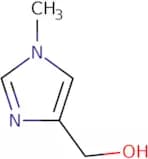
CAS:<p>(1-Methyl-1H-imidazol-4-yl)methanol is a chemical that can be used as a building block for the synthesis of complex compounds. It is an intermediate in organic synthesis, and has been used as a reagent for research and as a speciality chemical. (1-Methyl-1H-imidazol-4-yl)methanol is also a versatile building block for the construction of complex molecules. This compound has been used in the manufacture of pesticides, pharmaceuticals, and dyes. The CAS number for (1-methyl-1H-imidazol-4-yl)methanol is 172892577.</p>Formula:C5H8N2OPurity:Min. 95%Color and Shape:SolidMolecular weight:112.13 g/mol3-(3-Fluoro-4-methoxybenzoyl)propionic acid
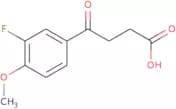
CAS:<p>3-(3-Fluoro-4-methoxybenzoyl)propionic acid is a versatile building block that is used in the synthesis of many organic compounds. 3-(3-Fluoro-4-methoxybenzoyl)propionic acid has been used as a reagent in the synthesis of pharmaceuticals and other chemicals. 3-(3-Fluoro-4-methoxybenzoyl)propionic acid can be used to produce high quality research chemicals, speciality chemicals, and fine chemicals. This compound is also used to produce complex compounds and useful intermediates. 3-(3-Fluoro-4-methoxybenzoyl)propionic acid is available through chemical suppliers such as Sigma Aldrich or Acros Organics.</p>Formula:C11H11FO4Purity:Min. 95%Molecular weight:226.2 g/molN-[(9H-Fluoren-9-ylmethoxy)carbonyl]-L-homoarginine
CAS:Formula:C22H26N4O4Purity:>97.0%(T)(HPLC)Color and Shape:White to Almost white powder to crystalMolecular weight:410.47Z-O-tert-Butyl-L-tyrosine
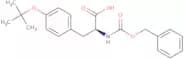
CAS:<p>Z-O-tert-Butyl-L-tyrosine is a fine chemical that is soluble in water and has a wide range of uses. It is a versatile scaffold for the synthesis of complex compounds, and can be used as a building block or reaction component in research chemicals. Z-O-tert-Butyl-L-tyrosine is an important reagent for organic synthesis, especially when combined with other chemicals. This chemical can also be used as a speciality chemical to produce high quality products.</p>Formula:C21H25NO5Purity:Min. 95%Color and Shape:White PowderMolecular weight:371.43 g/mol3'-(Tetrafluoroethoxy)-β-methyl-β-nitrostyrene
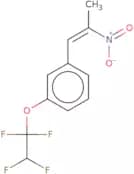
CAS:<p>3'-(Tetrafluoroethoxy)-beta-methyl-beta-nitrostyrene is a versatile building block that can be used as a reaction component for the synthesis of more complex compounds. This compound is also known to have speciality chemical and research chemical properties. 3'-(Tetrafluoroethoxy)-beta-methyl-beta-nitrostyrene has been shown to be an effective reagent for the synthesis of high quality complex compounds.</p>Formula:C11H9F4NO3Purity:Min. 95%Molecular weight:279.19 g/molBoc-N-Ethylglycine
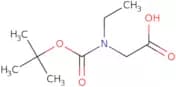
CAS:<p>Building block</p>Formula:C9H17NO4Purity:Min. 95%Color and Shape:White PowderMolecular weight:203.24 g/molEthyl 2-phenylbutyrate
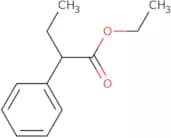
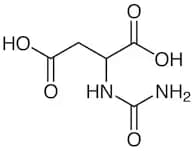
CAS:<p>Ethyl 2-phenylbutyrate is a synthetic, non-steroidal compound that has been shown to inhibit the activity of cyclooxygenase enzymes. It is used as an intermediate in organic synthesis and as a reagent in the cross-coupling reaction between arenes and magnesium. The compound is synthesized by reacting cyclopentyl bromide with an alkyl halide, followed by treatment with an alkanoic acid. The enantiomers of ethyl 2-phenylbutyrate can be separated by chromatography or by crystallization. This chemical is soluble in benzene and ether, but not in water.</p>Formula:C12H16O2Purity:Min. 95%Color and Shape:PowderMolecular weight:192.25 g/molN-Carbamoyl-DL-aspartic Acid
CAS:Formula:C5H8N2O5Purity:>98.0%(T)Color and Shape:White to Almost white powder to crystalMolecular weight:176.13





![N-[(9H-Fluoren-9-ylmethoxy)carbonyl]-L-homoarginine](/_next/image/?url=https%3A%2Fstatic.cymitquimica.com%2Fproducts%2F3B%2Fthumb-webp%2FF1014.webp&w=3840&q=75)