Amino Acids (AA)
Amino acids (AAs) are the fundamental building blocks of proteins, playing a crucial role in various biological processes. These organic compounds are essential for protein synthesis, metabolic pathways, and cell signaling. In this category, you will find a comprehensive range of amino acids, including essential, non-essential, and modified forms, which are vital for research in biochemistry, molecular biology, and nutritional sciences. At CymitQuimica, we provide high-quality amino acids to support your research and development needs, ensuring accuracy and reliability in your experimental outcomes.
Subcategories of "Amino Acids (AA)"
- Amino Acid Derivatives(3,955 products)
- Amino Acid and Amino Acid Related Compounds(3,436 products)
- Amino Acids with Oxygen or Sulphur(168 products)
- Boc- Amino Acids(351 products)
- Fmoc Amino Acids(1,710 products)
Found 38216 products of "Amino Acids (AA)"
Sort by
Purity (%)
0
100
|
0
|
50
|
90
|
95
|
100
Fmoc-4-amino-L-phe(t-butyl-carbamoyl)-OH
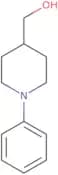
<p>Fmoc-4-amino-L-phe(t-butyl-carbamoyl)-OH is a versatile building block that is used in the synthesis of complex compounds. This compound has been found to be useful as a reagent, speciality chemical, and reaction component for the synthesis of high quality and useful intermediates. Fmoc-4-amino-L-phe(t-butyl carbamoyl)-OH is also a useful scaffold for the production of novel compounds.</p>Formula:C29H31N3O5Purity:Min. 95%Color and Shape:PowderMolecular weight:501.57 g/mol(1-Phenylpiperidin-4-yl)methanol
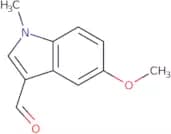
CAS:<p>1-Phenylpiperidin-4-yl)methanol is a versatile building block that is used in the synthesis of many complex compounds. It is also a reagent and intermediate for the production of fine chemicals, speciality chemicals, and research chemicals. 1-Phenylpiperidin-4-yl)methanol has a CAS number of 697306-45-9 and it's molecular formula is C14H21NO.</p>Formula:C12H17NOPurity:Min. 95%Color and Shape:Red PowderMolecular weight:191.27 g/mol5-Methoxy-1-methyl-1H-indole-3-carbaldehyde
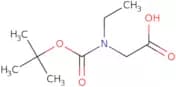
CAS:<p>5-Methoxy-1-methyl-1H-indole-3-carbaldehyde is a synthetic compound that has been shown to inhibit the growth of human tumour cells in vitro. This compound is a regioisomeric mixture of two enantiomers, with the (S) isomer being the more potent inhibitor. The (R) isomer was found to be less active against human tumour cells and may have an antimicrobial activity. 5-Methoxy-1-methyl-1H-indole-3-carbaldehyde has been shown to be bioreductive towards electron donors such as NADPH and glutathione. It also inhibits dt diaphorase and aerobic metabolism in human tumour cells.</p>Formula:C11H11NO2Purity:Min. 95%Color and Shape:Off-White PowderMolecular weight:189.21 g/molBoc-N-Ethylglycine
CAS:<p>Building block</p>Formula:C9H17NO4Purity:Min. 95%Color and Shape:White PowderMolecular weight:203.24 g/mol6-Methyl-4-hydroxycoumarin
CAS:<p>6-Methyl-4-hydroxycoumarin is a coumarin derivative that has been shown to have potent inhibitory activity against both Gram-positive and Gram-negative bacteria. It also inhibits the growth of leukemia cells and shows anti-inflammatory properties. The photophysical studies of this molecule show that it has absorption bands in the visible region, which may be attributed to its hydroxyl group. 6-Methyl-4-hydroxycoumarin has also been shown to be an effective inhibitor of LPS (lipopolysaccharide)-stimulated RAW 264.7 cells, as well as benzofuran derivatives that have been shown to have inflammatory propertys.</p>Formula:C10H8O3Purity:Min. 95%Color and Shape:PowderMolecular weight:176.17 g/molO-tert-Butyl-L-serine
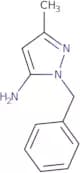
CAS:<p>O-tert-Butyl-L-serine is a chemical compound that is a derivative of the amino acid L-phenylalanine. It is used as a linker to attach benzene molecules to other compounds. Its kinetics and properties have been studied in detail, and it has been shown to be a high molecular weight, hydrophobic, organic solvent ester. O-tert-Butyl-L-serine can be synthesized by reacting benzyl chloride with an ester hydrochloride in the presence of catalytic amounts of pyridine and DMAP. The resulting product is an amide hydrochloride that can then be converted into the tertiary amine using base hydrolysis. This tertiary amine can then be reacted with benzene in the presence of base to produce O-tert-butyl-L-serine.</p>Formula:C7H15NO3Purity:Min. 98 Area-%Color and Shape:PowderMolecular weight:161.2 g/mol1-Benzyl-3-methyl-1H-pyrazol-5-amine HCl
CAS:<p>1-Benzyl-3-methyl-1H-pyrazol-5-amine HCl is a fine chemical that can be used as a versatile building block in research or as an intermediate in the synthesis of complex compounds. It has been shown to be a useful reagent for the preparation of speciality chemicals and reaction components. 1-Benzyl-3-methyl-1H-pyrazol-5-amine HCl has been shown to be a high quality compound with CAS No. 113482–3, which is listed on the Chemical Abstracts Service registry.</p>Formula:C11H13N3·HClPurity:Min. 95%Color and Shape:Off-White PowderMolecular weight:223.7 g/molL-Alaninol
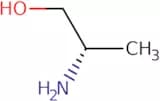
CAS:<p>L-Alaninol is a natural amino acid that can be synthesized in an asymmetric way. It has been used as a palladium complex catalyst to produce the inorganic acid, l-alaninol. L-Alaninol is biologically active and has shown antiviral and antimicrobial activities against mycobacterium avium and human lymphocytes. It also has been shown to have anticancer properties in animal models. In addition, it has been used as a model system for the study of organic chemistry reactions. L-Alaninol has also been shown to exhibit magnetic resonance spectroscopy properties that are similar to those of l-phenylalaninol.</p>Formula:C3H9NOColor and Shape:Colorless Slightly Yellow Clear LiquidMolecular weight:75.11 g/molFmoc-α-Me-Asp(OtBu)-OH
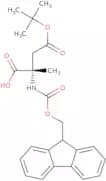
CAS:<p>Fmoc-α-Me-Asp(OtBu)-OH is a versatile building block that can be used as an intermediate for the synthesis of a broad range of compounds. It is a very high quality compound, with a purity of 99% and an assay of 98%. Fmoc-α-Me-Asp(OtBu)-OH has been used in the synthesis of complex molecules and substances, such as pharmaceuticals, flavors and fragrances, vitamins, dyes, pesticides and herbicides. This molecule is also a useful scaffold for organic chemistry reactions. Fmoc-α-Me-Asp(OtBu)-OH has been used to synthesize various drugs including carboxylic acid derivatives, amino acid derivatives and peptides.</p>Formula:C24H27NO6Purity:Min. 95%Color and Shape:PowderMolecular weight:425.47 g/mol2-Anilino-6-dibutylamino-3-methylfluoran
CAS:<p>2-Anilino-6-dibutylamino-3-methylfluoran is a switchable fluorescent dye that has been used to detect and measure biochemically active substances in living cells. The dye is introduced into the cell, where it binds to specific proteins or nucleic acids, causing a change in fluorescence. This change can then be detected using a microscope with an ultraviolet light source. 2-Anilino-6-dibutylamino-3-methylfluoran has also been used to detect bacteria in wastewater samples. An experiment was conducted to determine the effects of temperature on the reaction time of 2AADMF and metal ion concentration. Increasing the temperature resulted in an increase in reaction time, while increasing the concentration of metal ions had no effect on reaction time. 2AADMF also reacts differently depending on whether it is inside microcapsules or not. Microcapsules with 2AADMF reacted faster than those without it when</p>Formula:C35H36N2O3Purity:Min. 95%Color and Shape:White PowderMolecular weight:532.67 g/mol5-Methoxy-3-(1,2,5,6-tetrahydro-4-pyridinyl)-1H-indole hemisuccinate
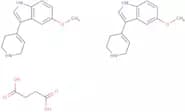
CAS:<p>5-Methoxy-3-(1,2,5,6-tetrahydro-4-pyridinyl)-1H-indole hemisuccinate is a serotonin receptor agonist that has been shown to stimulate the 5HT1A receptor. It stimulates insulin secretion and glucose uptake in rats and inhibits feeding behavior in mice. It has also been shown to have antihypertensive effects on rats by blocking the 5HT2 receptors. In addition, it stimulates regeneration of injured nerve cells. This drug has potential uses as a treatment for neurological diseases such as Parkinson's disease and depression.</p>Formula:C14H16N2O•(C4H6O4)0Purity:Min. 95%Color and Shape:Yellow solid.Molecular weight:287.33 g/mol2,9-Diphenyl-1,10-phenanthroline
CAS:<p>2,9-Diphenyl-1,10-phenanthroline is a yellow crystalline compound. This molecule has been shown to be an effective anticancer drug and is used in the study of ultrafast electron reduction. It exhibits photophysical properties that are dependent on its coordination geometry and the surrounding environment.<br>2,9-Diphenyl-1,10-phenanthroline is a coordination complex that can be synthesized by electropolymerization of copper complexes with phenanthrolines. The polymer film has been shown to have high stability constants and is resistant to water or organic solvents.</p>Formula:C24H16N2Purity:Min. 95%Color and Shape:White PowderMolecular weight:332.4 g/mol5,6-Dimethyl-1,10-phenanthroline
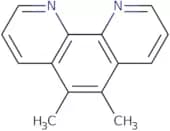
CAS:<p>5,6-Dimethyl-1,10-phenanthroline (DMPA) is a molecule with the chemical formula H2C8N4O2. It has been shown to have antioxidant and anticancer properties. DMPA binds to DNA to form an adduct that denatures the DNA. This prevents DNA from being transcribed into RNA, which prevents gene expression and cell division. The anticancer activity of DMPA may be due to its ability to increase oxidative dna damage in cancer cells, leading to apoptosis. DMPA has also been shown to bind redox potentials of metals such as copper, iron and nickel that are found in the environment or in cancer cells. This binding alters the electron transfer reactions involving these metals and leads to a change in the viscosity of the solution. The molecular modeling studies have shown that DMPA binds with nitrogen atoms in coordination geometry with oxygen atoms on two sites on one molecule (see Figure 1). This binding is characterized by</p>Formula:C14H12N2Purity:Min. 95%Color and Shape:PowderMolecular weight:208.26 g/molN-α-Z-L-histidine
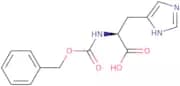
CAS:<p>N-alpha-Z-L-histidine is a nitrogenous compound that is an amide formed by the reaction of histidine and trifluoroacetic acid. It has been shown to be anticancer and to have an effect on tumor vasculature, with efficacy against solid tumors. N-alpha-Z-L-histidine inhibits the cell cycle at the G1 phase and blocks DNA synthesis, which arrests cells in the M phase. This drug also inhibits tumor angiogenesis by blocking vascular endothelial growth factor (VEGF) signaling. N-alpha-Z-L-histidine is a molecule that has been synthesized using solid phase chemistry and purified by high performance liquid chromatography.</p>Formula:C14H15N3O4Purity:Min. 95%Color and Shape:PowderMolecular weight:289.29 g/molN-α-Boc-L-2,3-diaminopropionic acid
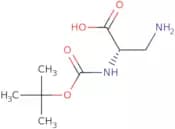
CAS:<p>N-alpha-Boc-L-2,3-diaminopropionic acid is a synthetic amino acid that has been shown to have anticancer properties. The amino acid contains a functional group with two carboxylates and a disulfide bond. It has also been shown to inhibit the nuclear factor kappa B ligand (NFκB) and hepg2 cells, leading to cell death. This agent is a glycopeptide conjugate that inhibits the growth of mammalian cells by preventing protein synthesis. N-alpha-Boc-L-2,3-diaminopropionic acid has been shown to be cytotoxic in vitro against human leukemia HL60 cells.</p>Formula:C8H16N2O4Purity:Min. 95%Color and Shape:White PowderMolecular weight:204.22 g/molL-Valinamide hydrochloride
CAS:<p>L-Valinamide hydrochloride is an amide with a reactive group. It binds to the CB2 receptor and the CB1 receptor, which are found in the brain and immune system. L-Valinamide hydrochloride has been shown to have anti-inflammatory effects in animal models of inflammatory diseases, such as rheumatoid arthritis. L-Valinamide hydrochloride has also been shown to be a synthetic cannabinoid that inhibits pain transmission by binding to the same receptors as delta-9 tetrahydrocannabinol (THC), one of the active components of cannabis.</p>Formula:C5H12N2O·HClColor and Shape:White Off-White PowderMolecular weight:152.62 g/molNα,Nε-Di-Boc-L-lysine
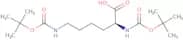
CAS:<p>Nalpha,Nepsilon-Di-Boc-L-lysine is a synthetic peptide that has been shown to be reactive with neutrophils and is being developed for the treatment of heart disease. This peptide has been shown to have an antioxidant effect in rat neutrophils by preventing oxidative injury to DNA and protein. Nalpha,Nepsilon-Di-Boc-L-lysine also has an anticancer effect on liver cancer cells, which may be due to its ability to induce antibody responses and inhibit cell proliferation. It has also been shown that this peptide does not cause any adverse effects in rats when administered at high doses.</p>Formula:C16H30N2O6Purity:Min. 95%Color and Shape:Colorless PowderMolecular weight:346.42 g/molEthyl 4-methyloctanoate
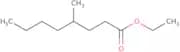
CAS:<p>Ethyl 4-methyloctanoate is a synthetic compound that is used as a pesticide. It has been shown to be effective in controlling virus infections on crops, such as cucumber and lettuce. The compound can be detected using a variety of detection methods, including gas chromatography, high performance liquid chromatography, or thin layer chromatography. Ethyl 4-methyloctanoate has shown pesticidal activity against aphids and thrips larvae. The effective dose for control of aphids is 0.5 ppm for three days and 1 ppm for one day; the effective dose for control of thrips larvae is 2 ppm for five days. Ethyl 4-methyloctanoate inhibits protrusion from cells by binding to the amino acid histidine at the active site of the enzyme protoporphyrinogen oxidase, which prevents the formation of protoporphyrin IX in this reaction. This inhibition leads to an accumulation of protoporphyrin IX in cells and its subsequent release</p>Formula:C11H22O2Purity:Min. 95%Color and Shape:Colorless Clear LiquidMolecular weight:186.29 g/molN-Heptanoylglycine
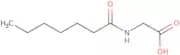
CAS:<p>N-Heptanoylglycine is an organic molecule that belongs to the family of fatty acids. It is a natural product, which can be found in various human tissues and body fluids. N-heptanoylglycine has been detected in the blood and urine of patients with metabolic disorders, such as fatty acid oxidation disorder (FAOD) and mitochondrial dysfunction. It has also been identified as a potential biomarker for infectious diseases, such as tuberculosis (TB). The detection sensitivity of N-heptanoylglycine has been shown to be higher than that of other biomarkers currently used in diagnostic tests for TB.</p>Formula:C9H17NO3Purity:Min. 95%Color and Shape:White PowderMolecular weight:187.24 g/mol(S)-3-Methylamino-1-(2-thienyl)-1-propanol
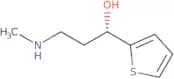
CAS:<p>(S)-3-Methylamino-1-(2-thienyl)-1-propanol is a chiral molecule with two stereogenic centers. It is synthesized by the demethylation of acetylthiophene and the crystallization of the reaction mixture. The class of compounds to which (S)-3-Methylamino-1-(2-thienyl)-1-propanol belongs includes those that have hydroxy groups or diastereomeric salts. The hydroxy group on (S)-3-Methylamino-1-(2-thienyl)-1-propanol can be removed by demethylation, which leads to a mixture of products, including hydroxy and demethylated compounds.</p>Formula:C8H13NOSPurity:Min. 95%Color and Shape:White PowderMolecular weight:171.26 g/mol