Amino Acids (AA)
Amino acids (AAs) are the fundamental building blocks of proteins, playing a crucial role in various biological processes. These organic compounds are essential for protein synthesis, metabolic pathways, and cell signaling. In this category, you will find a comprehensive range of amino acids, including essential, non-essential, and modified forms, which are vital for research in biochemistry, molecular biology, and nutritional sciences. At CymitQuimica, we provide high-quality amino acids to support your research and development needs, ensuring accuracy and reliability in your experimental outcomes.
Subcategories of "Amino Acids (AA)"
- Amino Acid Derivatives(3,971 products)
- Amino Acid and Amino Acid Related Compounds(3,477 products)
- Amino Acids with Oxygen or Sulphur(168 products)
- Boc- Amino Acids(351 products)
- Fmoc Amino Acids(1,710 products)
Found 38321 products of "Amino Acids (AA)"
Sort by
Purity (%)
0
100
|
0
|
50
|
90
|
95
|
100
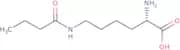
Lysine(butyryl)-OH
CAS:<p>Lysine(butyryl)-OH is a high-quality reagent that is useful in the synthesis of a variety of complex compounds, including fine chemicals and research chemicals. This compound can also be used as an intermediate for the production of other substances and is a versatile building block for reactions involving amino acids. It has CAS number 75396-30-4.</p>Formula:C10H20N2O3Purity:Min. 95%Color and Shape:White PowderMolecular weight:216.28 g/mol2,6-Dinitro-1,4-phenylenediamine
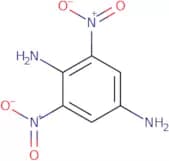
CAS:<p>2,6-Dinitro-1,4-phenylenediamine is a versatile building block that can be used in the synthesis of complex compounds. It is a high quality chemical with excellent stability and purity. This chemical is also useful as an intermediate for the synthesis of other chemicals, and as a reagent for research purposes. 2,6-Dinitro-1,4-phenylenediamine is also useful in organic chemistry as a scaffold for synthesizing important organic molecules.</p>Formula:C6H6N4O4Purity:Min. 95%Molecular weight:198.14 g/mol4'-Trifluoromethoxy-β-methyl-β-nitrostyrene
CAS:<p>4'-Trifluoromethoxy-beta-methyl-beta-nitrostyrene is a fine chemical that is a useful building block in organic synthesis. It can be used as a reagent, specialty chemical, or intermediate for the preparation of more complex compounds. This compound has been shown to be useful in the synthesis of natural products and pharmaceuticals.</p>Formula:C10H8F3NO3Purity:Min. 95%Molecular weight:247.17 g/mol2-Anilino-6-dibutylamino-3-methylfluoran
CAS:<p>2-Anilino-6-dibutylamino-3-methylfluoran is a switchable fluorescent dye that has been used to detect and measure biochemically active substances in living cells. The dye is introduced into the cell, where it binds to specific proteins or nucleic acids, causing a change in fluorescence. This change can then be detected using a microscope with an ultraviolet light source. 2-Anilino-6-dibutylamino-3-methylfluoran has also been used to detect bacteria in wastewater samples. An experiment was conducted to determine the effects of temperature on the reaction time of 2AADMF and metal ion concentration. Increasing the temperature resulted in an increase in reaction time, while increasing the concentration of metal ions had no effect on reaction time. 2AADMF also reacts differently depending on whether it is inside microcapsules or not. Microcapsules with 2AADMF reacted faster than those without it when</p>Formula:C35H36N2O3Purity:Min. 95%Color and Shape:White PowderMolecular weight:532.67 g/mol5-(2-Chlorophenyl)-1-phenyl-1,3,4-triazole
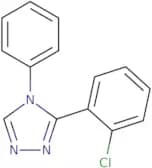
CAS:<p>5-(2-Chlorophenyl)-1-phenyl-1,3,4-triazole is a useful reagent and building block for the synthesis of various chemical compounds. It has been used as a reaction component in organic synthesis as well as a useful scaffold for new chemical compounds. 5-(2-Chlorophenyl)-1-phenyl-1,3,4-triazole is an intermediate in the production of pharmaceuticals and pesticides. It is also used as a speciality chemical for research purposes. Additionally, this compound can be used to make fine chemicals such as dyes and perfumes.</p>Formula:C14H10N3ClPurity:Min. 95%Color and Shape:PowderMolecular weight:255.7 g/molL-tert-Leucine
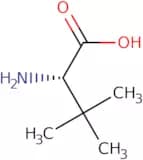
CAS:<p>L-tert-Leucine is a chiral compound that inhibits the activity of metalloproteases, enzymes that catalyze the breakdown of proteins. L-tert-Leucine has been shown to inhibit proteolytic activity in recombinant cells and bacterial strain such as Escherichia coli, Pseudomonas aeruginosa, and Bacillus subtilis. L-tert-Leucine binds to the active site of metalloproteases by competitive inhibition, inhibiting the breakdown of proteins. This compound also prevents degradation of dinucleotide phosphate and chiral synthesis. The enantiopure form of this compound is used as a substrate for kinetic studies with type strains of various metalloprotease enzymes.</p>Formula:C6H13NO2Purity:(%) Min. 95%Color and Shape:White PowderMolecular weight:131.17 g/molRengasin-4'-O-glucoside
<p>Rengasin-4'-O-glucoside (RG4G) is a natural glycoside that belongs to the category of sugar derivatives. It has versatile uses and can be used as a building block for complex compounds, as well as in research chemicals, pharmaceuticals, and cosmetics. RG4G also has many applications in chemistry, including being used as a reagent or speciality chemical. RG4G is also an important intermediate in organic synthesis, which can be used to synthesize many useful compounds. The compound is often used as a scaffold for larger molecules.</p>Purity:Min. 95%5-Methoxy-1-methyl-1H-indole-3-carbaldehyde
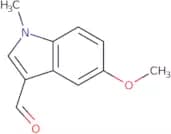
CAS:<p>5-Methoxy-1-methyl-1H-indole-3-carbaldehyde is a synthetic compound that has been shown to inhibit the growth of human tumour cells in vitro. This compound is a regioisomeric mixture of two enantiomers, with the (S) isomer being the more potent inhibitor. The (R) isomer was found to be less active against human tumour cells and may have an antimicrobial activity. 5-Methoxy-1-methyl-1H-indole-3-carbaldehyde has been shown to be bioreductive towards electron donors such as NADPH and glutathione. It also inhibits dt diaphorase and aerobic metabolism in human tumour cells.</p>Formula:C11H11NO2Purity:Min. 95%Color and Shape:Off-White PowderMolecular weight:189.21 g/mol1-Methylbenzimidazole
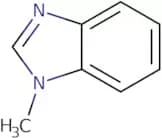
CAS:<p>1-Methylbenzimidazole is an organic molecule with a molecular weight of 97.06 g/mol. It is a chalcogen, and has one nitrogen atom, one carbon atom, and four hydrogen atoms. The molecule has a planar structure with three amine groups and one chloride ion in the form of a trigonal pyramid. 1-Methylbenzimidazole has significant antifungal activity against Trichomonas vaginalis at concentrations of 10 μg/mL or higher, which may be due to its ability to inhibit the growth factor epidermal growth factor (EGF). This drug also shows high cytotoxicity against human cancer cells when used in combination with epidermal growth factor (EGF).</p>Formula:C8H8N2Purity:Min. 95%Color and Shape:White To Beige To Pink To Brown SolidMolecular weight:132.16 g/molBoc-(3S)-1,2,3,4-Tetrahydroisoquinoline-3-carboxylic acid
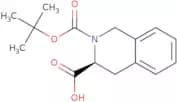
CAS:<p>Boc-(3S)-1,2,3,4-Tetrahydroisoquinoline-3-carboxylic acid is an amino acid that has the δ-opioid receptor antagonist activity. It can be synthesized by a stepwise synthesis with an asymmetric center. The δ-opioid receptor antagonist activity of Boc-(3S)-1,2,3,4-Tetrahydroisoquinoline-3-carboxylic acid was found to be comparable to naloxone in terms of affinity constants and functional groups.</p>Formula:C15H19NO4Purity:Min. 95%Color and Shape:SolidMolecular weight:277.32 g/mol3-Methoxy-4-(difluoromethoxy)benzaldehyde
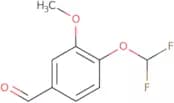
CAS:<p>3-Methoxy-4-(difluoromethoxy)benzaldehyde is a chemical compound that has been found to have anti-tumor properties. It inhibits tumor cells by inducing cell apoptosis. 3-Methoxy-4-(difluoromethoxy)benzaldehyde induces apoptosis in human carcinoma cells, with optimal activity at doses of 10 micromolar and higher. This chemical can be used as an anti-tumor agent because it shows no genotoxic effects, and has high yield with a low toxicity profile. When this compound is exposed to UV radiation, the formation of reactive oxygen species (ROS) increases the rate of cell death. 3-Methoxy-4-(difluoromethoxy)benzaldehyde also has anti-inflammatory properties, which may be due to its ability to inhibit prostaglandin synthesis.</p>Formula:C9H8F2O3Purity:Min. 95%Color and Shape:Colourless To Pale Yellow LiquidMolecular weight:202.15 g/mol4-Nitro-D-phenylalanine hydrate
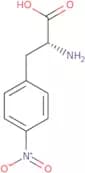
CAS:<p>4-Nitro-D-phenylalanine hydrate is a cytosolic enzyme that catalyzes the conversion of phenylpropionic acid to its conjugate base, 4-nitrophenol. This reaction is important in the synthesis of antimicrobial peptides and extractants. The enzyme also has hemolytic activity and can be used as an extractant for pancreatic juice. 4-Nitro-D-phenylalanine hydrate is a catalyst for acylation reactions, which are involved in the production of various pharmaceuticals. 4-Nitro-D-phenylalanine hydrate binds to receptors on the surface of bacterial cells, making it an effective antibacterial agent.</p>Formula:C9H10N2O4·H2OPurity:Min. 95%Color and Shape:PowderMolecular weight:228.2 g/molFmoc-6-aminohexanoic acid
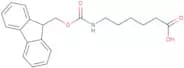
CAS:<p>Fmoc-6-aminohexanoic acid is an amino acid that can be used as a building block for peptides and proteins. It has a hydroxide group that can be reacted with other molecules in order to form a covalent bond. The compound reacts with sodium hydroxide solution to produce a particle that is soluble in water and organic solvents. Fmoc-6-aminohexanoic acid also inhibits the protease activity of subtilisin BPN' and leucine aminopeptidase, which are enzymes that break down proteins into smaller polypeptides. This material is functionalized with carboxyl groups on both ends, making it reactive and able to react with other molecules.</p>Formula:C21H23NO4Purity:Min. 98 Area-%Color and Shape:White Off-White PowderMolecular weight:353.41 g/mol3-(2-Methylphenyl)-1H-pyrazol-5-amine
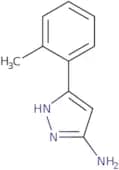
CAS:<p>3-(2-Methylphenyl)-1H-pyrazol-5-amine is a chemical compound that can be used as a reactant, reagent, or scaffold in the synthesis of other compounds. It is a useful building block and intermediate for the synthesis of complex compounds. 3-(2-Methylphenyl)-1H-pyrazol-5-amine has been shown to have high purity and quality and is available at a reasonable price. This chemical is also versatile, as it can be used in reactions with other chemicals to form diverse products. 3-(2-Methylphenyl)-1H-pyrazol-5-amine belongs to CAS No. 57860-42-1 and is a fine chemical that can be used for research purposes only.</p>Formula:C10H11N3Purity:Min. 95%Color and Shape:Off-White To Light Brown LiquidMolecular weight:173.21 g/molL-Selenocystine
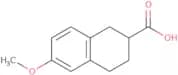
CAS:Formula:C6H12N2O4Se2Purity:>97.0%(T)Color and Shape:Light yellow to Brown powder to crystalMolecular weight:334.096-Methoxy-1,2,3,4-tetrahydronaphthalene-2-carboxylic acid
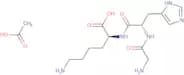
CAS:6-Methoxy-1,2,3,4-tetrahydronaphthalene-2-carboxylic acid (MTN) is a polyphenol that has been shown to be effective against Alzheimer's disease in vitro and in vivo. MTN is able to bind to the polymerase chain reaction (PCR) product of APP and inhibit it from binding to heme oxygenase. MTN also prevents the accumulation of amyloid plaques by inhibiting the formation of beta-amyloid protein. MTN binds to thioflavin T and can be used as a fluorescent probe for immunofluorescence staining. MTN also inhibits the expression levels of APP and PS1 proteins in APP/PS1 transgenic mice by modulating the activity of transcriptional factors such as CREB.Formula:C12H14O3Purity:Min. 95%Color and Shape:PowderMolecular weight:206.24 g/molGly-His-Lys acetate salt
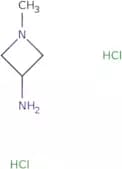
CAS:Controlled Product<p>Gly-His-Lys acetate salt is a module that is used in the desiccant industry and has diameters between 1mm and 5mm. The diameter of this product is statistically greater than other products in the same category. This product is made of aluminum, which provides high thermal conductivity, while also being an excellent desiccant due to its low cost. It can be used in both solar and ulta-fine applications. This product is most commonly used for colonoscopy procedures as it can be easily excised from polyester film.</p>Formula:C14H24N6O4·C2H4O2Purity:Min. 95%Color and Shape:SolidMolecular weight:400.43 g/mol1-Methylazetidin-3-amine dihydrochloride
CAS:<p>1-Methylazetidin-3-amine dihydrochloride is a synthetic chemical compound that is used as a reagent, high quality, complex intermediate, and fine chemical. It has been shown to be useful in the synthesis of various compounds and has been reported as a useful scaffold for organic synthesis. This compound also exhibits versatile building block properties due to its ability to react with various functional groups. 1-Methylazetidin-3-amine dihydrochloride has been found to be a useful reaction component in the production of pharmaceuticals, pesticides, and other products.</p>Formula:C4H12Cl2N2Purity:Min. 95%Color and Shape:White PowderMolecular weight:159.06 g/molFmoc-D-Aph(Hor)-OH
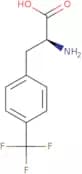
<p>Fmoc-D-Aph(Hor)-OH is a versatile building block that is used in the synthesis of complex compounds. It can be used as a reaction component to make fine chemicals. Fmoc-D-Aph(Hor)-OH has CAS Number 58955-02-1 and is classified as a speciality chemical. This product has high quality and is useful for research purposes.</p>Formula:C29H26N4O7Purity:Min. 95%Color and Shape:PowderMolecular weight:542.54 g/mol4-(Trifluoromethyl)-L-phenylalanine
CAS:<p>4-(Trifluoromethyl)-L-phenylalanine (4-TFMP) is an acyltransferase inhibitor that prevents the formation of fatty acids by inhibiting the enzyme ketoreductase. 4-TFMP has been shown to inhibit protein synthesis in myeloid leukemia cells and to have a cytotoxic effect on cancer cells. It also inhibits the growth of bacteria such as Salmonella enterica and Mycobacterium tuberculosis. In addition, 4-TFMP is used to treat infectious diseases such as tuberculosis, as well as metabolic disorders and some types of enzyme deficiencies. 4-TFMP is stereoselective and binds only to one type of acyltransferase, which is not present in humans.</p>Formula:C10H10F3NO2Purity:Min. 95%Color and Shape:PowderMolecular weight:233.19 g/mol