Amino Acids (AA)
Amino acids (AAs) are the fundamental building blocks of proteins, playing a crucial role in various biological processes. These organic compounds are essential for protein synthesis, metabolic pathways, and cell signaling. In this category, you will find a comprehensive range of amino acids, including essential, non-essential, and modified forms, which are vital for research in biochemistry, molecular biology, and nutritional sciences. At CymitQuimica, we provide high-quality amino acids to support your research and development needs, ensuring accuracy and reliability in your experimental outcomes.
Subcategories of "Amino Acids (AA)"
- Amino Acid Derivatives(3,971 products)
- Amino Acid and Amino Acid Related Compounds(3,477 products)
- Amino Acids with Oxygen or Sulphur(168 products)
- Boc- Amino Acids(351 products)
- Fmoc Amino Acids(1,710 products)
Found 38321 products of "Amino Acids (AA)"
Sort by
Purity (%)
0
100
|
0
|
50
|
90
|
95
|
100
Tiglic acid
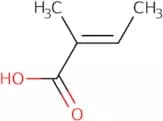
CAS:<p>Tiglic acid is a sodium salt that can be synthesized in an asymmetric synthesis. It is a white crystalline powder with a melting point of 190-191°C. Tiglic acid has been shown to increase the activity of cinchonidine, which is a compound often used to treat eye disorders and chronic arthritis. Tiglic acid also has the ability to bind to fatty acids, which may be due to hydrogen bonding interactions. In vitro assays have shown that tiglic acid's antimicrobial properties are related to its ability to cause cell lysis by interacting with fatty acids on the cell membrane.</p>Formula:C5H8O2Purity:Min. 95%Color and Shape:PowderMolecular weight:100.12 g/molZ-Phe-Tyr(tBu)-diazomethylketone
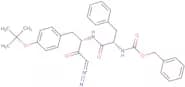
CAS:<p>Z-Phe-Tyr(tBu)-diazomethylketone is a compound that is used in the treatment of cancer and HIV. It was developed as an antiviral therapy for HIV, but it has been found to be ineffective against HIV. Z-Phe-Tyr(tBu)-diazomethylketone has been shown to produce attenuating effects on syncytial virus and may be a potential antiviral drug. This compound is not active against regulatory sequences or tissues, but it does inhibit endoproteolytic processing of n6-methyladenosine, which leads to modifications in rna binding.</p>Formula:C31H34N4O5Purity:Min. 95%Color and Shape:Off-White PowderMolecular weight:542.63 g/mol3-Fluoro-4-methylbenzoic acid methyl ester
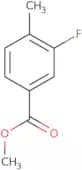
CAS:<p>3-Fluoro-4-methylbenzoic acid methyl ester is a benzoate that can be converted to 3-fluoro-4-methylbenzoic acid (3FMB) by decarboxylation. 3FMB can be used in the synthesis of phenylacetic acid and other aromatic compounds. It also has been shown to function as a radical scavenger, which may have applications in medical research and treatment of neurodegenerative diseases. 3FMB has been shown to inhibit the growth of bacteria when it is applied topically or orally, due to its ability to inhibit DNA synthesis.</p>Formula:C9H9FO2Purity:Min. 95%Molecular weight:168.16 g/molPyr-Val-OH
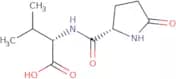
CAS:<p>Pyr-Val-OH is a molecule that is catalysed by the enzyme histone deacetylase. Pyr-Val-OH has been shown to inhibit cancer cell proliferation and growth. Pyr-Val-OH also has been shown to reduce bacterial vaginosis in mice with bacterial vaginosis, as well as nephrology dialysis patients. Pyr-Val-OH is a diagnostic marker for cancer, bacterial vaginosis and nephrology dialysis patients. It can be used to diagnose these conditions by profiling specific metabolic profiles. This molecule may also be used in the diagnosis of bladder cancer, as it reacts with amp-activated protein, which is elevated in bladder cancer patients.</p>Formula:C10H16N2O4Purity:Min. 95%Color and Shape:PowderMolecular weight:228.25 g/mol2-Hydroxy-4-methoxybenzophenone-5-sulfonic acid
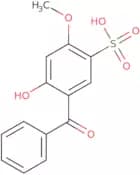
CAS:<p>2-Hydroxy-4-methoxybenzophenone-5-sulfonic acid is a diazonium salt that can be used as a reference standard to measure the microbial metabolism of aromatic compounds. It is stable in air and light, but can undergo photolysis in solution. The monosodium salt form of 2-hydroxy-4-methoxybenzophenone-5-sulfonic acid has been shown to have acute toxicities for fish, rats and rabbits. This compound also has photochemical properties that make it useful for surface methodology, such as determining the degree of hydrophobicity of various types of surfaces. Hydrochloric acid is needed for the preparation of this compound.</p>Formula:C14H12O6SPurity:Min. 95%Color and Shape:White To Yellow SolidMolecular weight:308.31 g/mol1-Methylbenzimidazole
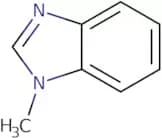
CAS:<p>1-Methylbenzimidazole is an organic molecule with a molecular weight of 97.06 g/mol. It is a chalcogen, and has one nitrogen atom, one carbon atom, and four hydrogen atoms. The molecule has a planar structure with three amine groups and one chloride ion in the form of a trigonal pyramid. 1-Methylbenzimidazole has significant antifungal activity against Trichomonas vaginalis at concentrations of 10 μg/mL or higher, which may be due to its ability to inhibit the growth factor epidermal growth factor (EGF). This drug also shows high cytotoxicity against human cancer cells when used in combination with epidermal growth factor (EGF).</p>Formula:C8H8N2Purity:Min. 95%Color and Shape:White To Beige To Pink To Brown SolidMolecular weight:132.16 g/molFmoc-Asp(OtBu)-D-Ser(Psi(Me,Me)pro)-OH
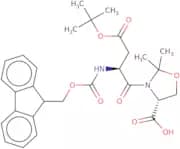
<p>Fmoc-Asp(OtBu)-D-Ser(Psi(Me,,Me)pro)-OH is a high quality, reagent, complex compound, useful intermediate, fine chemical, useful scaffold, and speciality chemical that is used in the synthesis of peptides and other organic compounds. It can be used as a reaction component for the synthesis of peptides and other organic compounds. This building block is versatile with many different functional groups and can be used in a wide variety of reactions. Fmoc-Asp(OtBu)-D-Ser(Psi(Me,,Me)pro)-OH is also a reaction component that can be used to make various drugs or pharmaceuticals.</p>Formula:C29H34N2O8Purity:Min. 95%Color and Shape:White PowderMolecular weight:538.59 g/mol6-Chloro-2-methyl-4-pyrimidinamine
CAS:<p>6-Chloro-2-methyl-4-pyrimidinamine is a molecule that has been studied for anticancer activity. It is an urea nitrogen, which is a hydrogen bond donor. The fructus of the 6-chloro-2-methyl-4-pyrimidinamine molecule has been shown to have anticancer activity in vitro. The anticancer activities of 6-chloro-2-methyl-4-pyrimidinamine are thermodynamic and vibrational, with etridiazole as the most potent inhibitor. The diamine tetraacetic acid (DTA) protonation state of the molecule was found to be 5.6, while the chloride protonation state was 3.6. In addition, it has been shown that 6CHMPA binds to Triticum aestivum cells through ethylene diamine and atomic orbital interactions.</p>Formula:C5H6ClN3Purity:Min. 95%Color and Shape:White To Off-White SolidMolecular weight:143.57 g/mol4-Methoxy-3,5-dimethyl-2-pyridinecarboxaldehyde
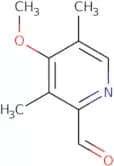
CAS:<p>4-Methoxy-3,5-dimethyl-2-pyridinecarboxaldehyde is a trifunctional molecule that has been shown to suppress the growth of cancer cells in mice. This compound is an inhibitor of acid synthesis and has also been shown to be an antirheumatic drug. 4-Methoxy-3,5-dimethyl-2-pyridinecarboxaldehyde inhibits the activity of three enzymes: synthetase, an enzyme that synthesizes fatty acids; 3-ketoacyl CoA synthase, which synthesizes ketones; and enoyl CoA reductase, which produces fatty acids. The long term efficacy of this molecule has not yet been studied in humans.</p>Formula:C9H11NO2Purity:Min. 95%Color and Shape:Colourless LiquidMolecular weight:165.19 g/mol5-Methoxydurmillone
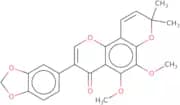
CAS:<p>5-Methoxydurmillone is a rotenoid that is found in many plants, including the seeds of the plant Ferruginea. 5-Methoxydurmillone has been shown to have anti-inflammatory properties and can be used to treat inflammatory diseases such as arthritis. It also inhibits the production of superoxide radicals and nitric oxide, which are important mediators of inflammation. 5-Methoxydurmillone has been shown to inhibit protein synthesis in bacteria, but not mammalian cells.</p>Formula:C23H20O7Purity:Min. 95%Molecular weight:408.4 g/molN-Boc-L-phenylalaninol
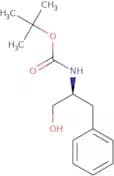
CAS:<p>N-Boc-L-phenylalaninol is a monomer that has been shown to inhibit the activity of proteinases. It binds to the active site of the enzymes and inhibits their catalytic activity, thereby preventing them from cleaving peptide bonds. N-Boc-L-phenylalaninol also has hydroxyl groups that can be used for further derivatization to produce derivatives with different functional groups, such as sulfonic acids or isosteres. The carbonyl group in this compound can be used for conjugation reactions with other molecules, such as proteins or nucleic acids.</p>Formula:C14H21NO3Purity:Min. 95%Color and Shape:White PowderMolecular weight:251.32 g/molFmoc-L-glutamic acid-O-tert-butyl ester hydrate
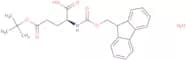
CAS:<p>Fmoc-L-glutamic acid-O-tert-butyl ester hydrate is a useful scaffold that is used in the synthesis of complex compounds. It can be used as a reaction component for the preparation of speciality chemicals and as an intermediate for the production of fine chemicals. Fmoc-L-glutamic acid-O-tert-butyl ester hydrate has a CAS number of 204251-24-1.</p>Formula:C24H27NO6•H2OPurity:Min. 95%Color and Shape:White PowderMolecular weight:443.49 g/mol1,4,7-tri-Boc-1,4,7,10-tetraaza-cyclododecane
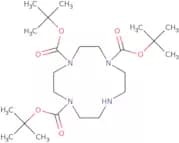
CAS:<p>Cyclen is a polycyclic macrocycle that is synthesized by the reaction of 1,4,7-tri-Boc-1,4,7,10-tetraaza-cyclododecane with copper(II) acetate. Cyclen has shown inhibitory activity against copper ion in the presence of hydrogen peroxide. Cyclen also inhibits the growth of cancer cells and hybridizes with messenger RNA in a zn2+ ion. The thermal denaturation of cyclen has been studied using UV spectroscopy and differential scanning calorimetry methods. Cyclen dissociates rapidly from metal ions in aqueous solution at room temperature when exposed to UV light.</p>Formula:C23H44N4O6Purity:Min. 95%Color and Shape:White PowderMolecular weight:472.62 g/molDL-alpha-Methylhistidine dihydrochloride
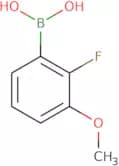
CAS:<p>DL-alpha-Methylhistidine dihydrochloride is a reagent that has been used as a complex building block. It is an intermediate in the preparation of other compounds and is also used as a speciality chemical. DL-alpha-Methylhistidine dihydrochloride can be used to synthesize a variety of useful compounds, including pharmaceuticals, agrochemicals, and research chemicals. DL-alpha-Methylhistidine dihydrochloride can also be used as a versatile building block for the synthesis of other fine chemicals.</p>Formula:C7H11N3O2·2HClPurity:Min. 95%Color and Shape:White PowderMolecular weight:242.1 g/mol(2-Fluoro-3-methoxyphenyl)boronic acid
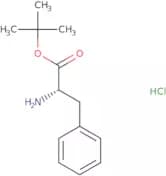
CAS:<p>2-Fluoro-3-methoxyphenylboronic acid is a boronic acid that has been shown to be orally activated. It is a potent inhibitor of the enzyme target, which is involved in the production of estradiol. 2-Fluoro-3-methoxyphenylboronic acid has been found to inhibit cellular growth and induce cancer cell death by targeting estrogen receptor β. This molecule also inhibits the growth factor, leading to inhibition of prostate cancer cells in vitro.</p>Formula:C7H8BFO3Purity:Min. 95%Color and Shape:White PowderMolecular weight:169.95 g/mol(S)-3-Phenylalanine t-butyl ester HCl
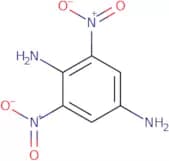
CAS:<p>(S)-3-Phenylalanine t-butyl ester HCl is a solute with the molecular formula of C9H11NO2. It is an ester that has been hydrochloride to produce a solute that is soluble in water and alcohols. (S)-3-Phenylalanine t-butyl ester HCl is also a provitamin, which means it can be converted into vitamin B6 in the body. This compound has been shown to reduce the viscosity of fluids at high temperatures and low pressure, making it useful in thermally labile solutes. The solubility of (S)-3-phenylalanine t-butyl ester HCl in various solvents depends on its concentration. The fluorescence properties of this compound depend on the concentration and temperature. These properties have been used for deconvolution purposes in amide studies.</p>Formula:C13H19NO2·HClPurity:Min. 95%Color and Shape:White PowderMolecular weight:257.76 g/mol2,6-Dinitro-1,4-phenylenediamine
CAS:<p>2,6-Dinitro-1,4-phenylenediamine is a versatile building block that can be used in the synthesis of complex compounds. It is a high quality chemical with excellent stability and purity. This chemical is also useful as an intermediate for the synthesis of other chemicals, and as a reagent for research purposes. 2,6-Dinitro-1,4-phenylenediamine is also useful in organic chemistry as a scaffold for synthesizing important organic molecules.</p>Formula:C6H6N4O4Purity:Min. 95%Molecular weight:198.14 g/molTris(2-methoxyphenyl)bismuth dichloride
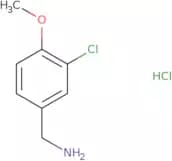
CAS:<p>Tris(2-methoxyphenyl)bismuth dichloride is a coordination compound with the chemical formula BiCl(OMeCH). It crystallizes in the triclinic crystal system and its molecular structure is trigonal. Tris(2-methoxyphenyl)bismuth dichloride has been characterized by X-ray and infrared spectroscopy, as well as by analysis of the axial, apical, and trigonal coordinates. The compound has been shown to form perchlorate and diperchlorate salts. The presence of bismuth atoms in this molecule produces a bright yellow color.</p>Formula:C21H21BiCl2O3Purity:Min. 95%Color and Shape:Off-White PowderMolecular weight:601.28 g/mol3-Chloro-4-methoxybenzylamine hydrochloride
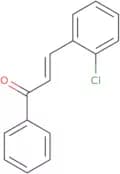
CAS:<p>3-Chloro-4-methoxybenzylamine hydrochloride is a quinoline derivative that inhibits the activity of phosphodiesterase 5, an enzyme that breaks down cGMP in the brain. This drug has been shown to increase levels of cGMP and decrease levels of low energy (i.e., low ATP) in synaptosomes. 3-Chloro-4-methoxybenzylamine hydrochloride may be useful for the treatment of Alzheimer's disease, as it has been shown to improve cognitive function and memory in animal models. The mechanism of action is not fully understood but may involve inhibition of cholinergic neurotransmission or activation of nitric oxide synthase.</p>Formula:C8H10ClNO•HClPurity:Min. 95%Color and Shape:PowderMolecular weight:208.08 g/mol3-(2-Chlorophenyl)-1-phenylpropene-1-one
CAS:<p>3-(2-Chlorophenyl)-1-phenylpropene-1-one is an amide that is synthesized by the acylation of 3-phenylpropene-1-one with 2,3,5,6-tetrafluorobenzoyl chloride in the presence of a base. The proton transport mechanism is initiated by the addition of a proton to the carbonyl group and then proceeds through an intermediate called a chalcone. This reaction can be accomplished using biomimetic methods or by using chalcones and halides as intermediates.</p>Formula:C15H11ClOPurity:Min. 95%Molecular weight:242.7 g/mol