Amino Acids (AA)
Amino acids (AAs) are the fundamental building blocks of proteins, playing a crucial role in various biological processes. These organic compounds are essential for protein synthesis, metabolic pathways, and cell signaling. In this category, you will find a comprehensive range of amino acids, including essential, non-essential, and modified forms, which are vital for research in biochemistry, molecular biology, and nutritional sciences. At CymitQuimica, we provide high-quality amino acids to support your research and development needs, ensuring accuracy and reliability in your experimental outcomes.
Subcategories of "Amino Acids (AA)"
- Amino Acid Derivatives(3,971 products)
- Amino Acid and Amino Acid Related Compounds(3,477 products)
- Amino Acids with Oxygen or Sulphur(168 products)
- Boc- Amino Acids(351 products)
- Fmoc Amino Acids(1,710 products)
Found 38321 products of "Amino Acids (AA)"
Sort by
Purity (%)
0
100
|
0
|
50
|
90
|
95
|
100
2',4'-Dihydroxy-3,4-methylenedioxychalcone
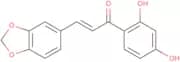
CAS:<p>2',4'-Dihydroxy-3,4-methylenedioxychalcone is a fine chemical that is used as a versatile building block in organic synthesis. It can be used to synthesize a variety of complex compounds and has been used as a reaction component in the preparation of other useful chemicals. This compound has been found to be useful as an intermediate in organic synthesis and research chemicals. 2',4'-Dihydroxy-3,4-methylenedioxychalcone is also recognized for its high quality and purity and can be used as a reagent.</p>Formula:C16H12O5Purity:Min. 95%Molecular weight:284.26 g/mol4-Chloro-3-methylbenzoic acid
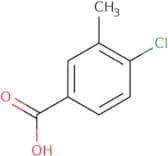
CAS:<p>4-Chloro-3-methylbenzoic acid is a white crystalline solid that is soluble in water and alcohol. It has a melting point of 247°C and a boiling point of 305°C. This compound is used as an intermediate for the production of dyes and pharmaceuticals, such as anti-inflammatory drugs. 4-Chloro-3-methylbenzoic acid has been shown to be an inhibitor of DNA synthesis, RNA synthesis, and protein synthesis in bacteria. In addition, this compound inhibits the growth of Mycobacterium tuberculosis by inhibiting the metabolic pathways necessary for cell proliferation. 4-Chloro-3-methylbenzoic acid also has been shown to inhibit the growth of other bacteria such as Staphylococcus aureus, Escherichia coli, Streptococcus pyogenes, and Pseudomonas aeruginosa.</p>Formula:C8H7ClO2Purity:Min. 95%Color and Shape:PowderMolecular weight:170.59 g/mol1-Methyl-nicotinamide iodide
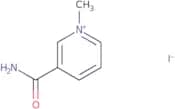
CAS:<p>1-Methyl-nicotinamide iodide is a drug that has been used in clinical trials for the treatment of type 2 diabetes mellitus. It is thought to work by increasing the sensitivity of cells to insulin, which may be related to its ability to bind to protein amide groups and form hydrogen bonds with the amino acid side chains. The compound also has been shown to increase the activity of the enzyme glycogen synthase in rats. 1-Methyl-nicotinamide iodide is soluble in water and human serum, and shows low solubility in ethanol. It has not been studied in humans, but animal studies have shown that it can be absorbed orally and metabolized into hippuric acid, which is excreted as a metabolic product through urine. Animal studies also showed that 1-methyl-nicotinamide iodide inhibits glucose production by pancreatic beta cells, which may lead to an increased insulin response after eating.</p>Formula:C7H9IN2OPurity:Min. 95%Color and Shape:Off-White PowderMolecular weight:264.06 g/mol5-Fluoro-D-Tryptophan
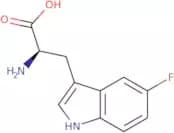
CAS:<p>5-Fluoro-D-Tryptophan is a fluorescent substrate for the enzyme indoleamine 2,3 dioxygenase (IDO) that is used in assays to determine the activity of this enzyme. IDO is an enzyme that is found in animals and catalyzes the first step in tryptophan metabolism by converting it to 5-fluoro-kynurenine. The amount of fluorescence generated can be detected with a fluorescence detector. 5-Fluoro-D-Tryptophan has been shown to have higher levels of uptake by tumor tissue than by normal tissue, which may be due to its ability to inhibit protein synthesis and cell division.</p>Formula:C11H11FN2O2Purity:Min. 95%Color and Shape:White/Off-White SolidMolecular weight:222.22 g/mol2-Methylthio-4,6-dihydroxypyrimidine
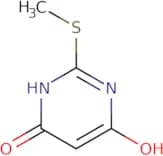
CAS:<p>2-Methylthio-4,6-dihydroxypyrimidine is an organic compound that has a hypsochromic and bathochromic effect. This ligand belongs to the group of neutral compounds and is found in its intramolecular hydrogen form. It also reacts with hydrochloric acid to form tautomers. 2-Methylthio-4,6-dihydroxypyrimidine can exist in two tautomeric forms: the chloride and oxalyl forms. The vibrational frequencies of these tautomers are different. 2-Methylthio-4,6-dihydroxypyrimidine is an intermediate in the synthesis of other chemical compounds such as chloropropionates, methanesulfonic acid, and piperazine.</p>Formula:C5H6N2O2SPurity:Min. 95%Color and Shape:PowderMolecular weight:158.18 g/mol6-Hydroxy-7-methoxy-3,4-dihydroquinazolin-4-one
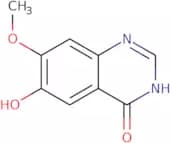
CAS:6-Hydroxy-7-methoxy-3,4-dihydroquinazolin-4-one is an amination of chloropropane and morpholinyl with 3-chloro-4-fluoroaniline. It cyclizes to form a quinazolinone. This compound was synthesized in order to produce a cytotoxic agent for cancer treatment.Formula:C9H8N2O3Purity:Min. 95%Color and Shape:PowderMolecular weight:192.17 g/mol4-Methyl-1,2-cyclohexanedicarboxylic anhydride, mixture of isomers
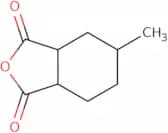
CAS:Controlled Product<p>4-Methyl-1,2-cyclohexanedicarboxylic anhydride is a hydroxy group with the chemical formula CH3CH(CO)OCH(CO)C(CH3)2. It is a white crystalline solid that is soluble in organic solvents and reacts with acids to form esters. 4-Methyl-1,2-cyclohexanedicarboxylic anhydride has been shown to be a competitive inhibitor of creatine kinase and calcium carbonate as well as an inhibitor of polyols. This compound also shows high thermal expansion and viscosity. 4-Methyl-1,2-cyclohexanedicarboxylic anhydride has been shown to have clinical relevance when used in conjunction with epoxy and boron nitride for the treatment of fatty acids and fatty acid derivatives. The optical properties of 4-methyl 1,2 cyclohexanedicarboxy</p>Formula:C9H12O3Purity:Min. 95%Color and Shape:Colorless Clear LiquidMolecular weight:168.19 g/molCyclo(L-Ala-L-Gly)
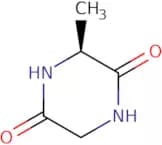
CAS:<p>Cyclo(L-Ala-L-Gly) is a synthetic peptide that has been shown to stabilize biomolecules. It was found to be a competitive inhibitor of the enzyme phospholipase A2 and has been used in protein engineering. Cyclo(L-Ala-L-Gly) has also been shown to inhibit the formation of n-oxides from H2O2 by binding with it.</p>Formula:C5H8N2O2Purity:Min. 95%Color and Shape:White PowderMolecular weight:128.13 g/molGly-His-Lys acetate salt
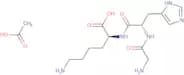
CAS:Controlled Product<p>Gly-His-Lys acetate salt is a module that is used in the desiccant industry and has diameters between 1mm and 5mm. The diameter of this product is statistically greater than other products in the same category. This product is made of aluminum, which provides high thermal conductivity, while also being an excellent desiccant due to its low cost. It can be used in both solar and ulta-fine applications. This product is most commonly used for colonoscopy procedures as it can be easily excised from polyester film.</p>Formula:C14H24N6O4·C2H4O2Purity:Min. 95%Color and Shape:SolidMolecular weight:400.43 g/mol4-Fluoro-3-methoxytoluene
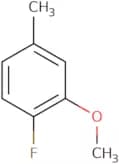
CAS:<p>4-Fluoro-3-methoxytoluene (4FMET) is a polymeric organic compound that has an index of refraction of 1.5. It is soluble in common solvents, such as chloroform, acetone and ethanol, but insoluble in water. 4FMET can be used as a copolymerization additive to improve the chemical stability of polymers and plastics. It also has antibacterial properties that are due to its ability to disrupt bacterial membranes and inhibit protein synthesis. 4FMET is FDA approved for use in ophthalmic solutions that transmit ultraviolet light, such as UV-A or UV-B radiation.</p>Formula:C8H9FOPurity:Min. 95%Color and Shape:Clear LiquidMolecular weight:140.15 g/mol6-Methyl phthalazine
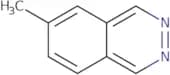
CAS:<p>6-Methyl phthalazine is an organic compound with a molecular formula of C8H6N2. It is the methylated derivative of phthalazine. 6-Methyl phthalazine can be synthesized from 2-bromobenzaldehyde and benzaldehyde in two steps, producing an efficient synthesis of this compound. The first step consists of formylation of the aromatic ring followed by lithiation and cyclization to produce the desired product. The second step involves a sequence that begins with deprotection, proceeds with hydrazine formation, and ends with acetal cleavage to release the product.</p>Formula:C9H8N2Purity:Min. 95%Color and Shape:White PowderMolecular weight:144.17 g/molN-Methyl-N-(1-naphthyl)-1-chlorobenzamide
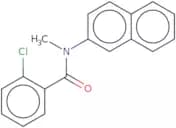
CAS:<p>N-Methyl-N-(1-naphthyl)-1-chlorobenzamide is a versatile and useful chemical that can be used in the preparation of many different compounds. It is a reaction component and reagent, as well as a useful scaffold for the synthesis of many different compounds. It has high quality and is used in research chemicals. N-Methyl-N-(1-naphthyl)-1-chlorobenzamide has CAS No. 74881-60-0 and is a speciality chemical. It can also be used as a versatile building block or intermediates for the synthesis of more complex compounds.</p>Formula:C18H14ClNOPurity:Min. 95%Molecular weight:295.76 g/mol2-Methylcyclopentane-1,3-dione
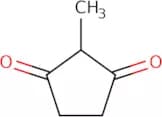
CAS:<p>2-Methylcyclopentane-1,3-dione is an organic compound that contains a benzofuran derivative. The skeleton of this molecule can be derived from the hydrogenation of cyclopentanol. 2-Methylcyclopentane-1,3-dione is a reaction intermediate in the synthesis of cardiotonic steroids. It reacts with metal chlorides to form methylene chloride and hydrogen chloride. 2-Methylcyclopentane-1,3-dione is also used as a reagent for borohydride reduction and as an enolate in the aldol cyclization reaction. This molecule also has acidic properties due to its carbonyl group and can form hydrogen bonds with other molecules, such as β-unsaturated ketones.</p>Formula:C6H8O2Purity:Min. 98%Color and Shape:PowderMolecular weight:112.13 g/mol4'-Butoxy-β-methyl-β-nitrostyrene
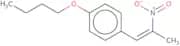
CAS:<p>4'-Butoxy-beta-methyl-beta-nitrostyrene is a fine chemical that has been used as a reagent and a building block. It is an intermediate of various complex compounds and has been used in the synthesis of other high quality products. 4'-Butoxy-beta-methyl-beta-nitrostyrene can be used as a building block to make speciality chemicals, research chemicals, or versatile building blocks which may be useful for reactions.</p>Formula:C13H17NO3Purity:Min. 95%Molecular weight:235.28 g/mol4-Hydroxy-3-methylbenzoic acid
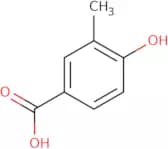
CAS:<p>4-Hydroxy-3-methylbenzoic acid is a metabolite of 4-hydroxybenzoic acid that is found in human blood and serum. It is also a methylated derivative of benzoic acid. This compound is an intermediate in the metabolism of benzoic acid, which can be found in many plants such as cranberries, apples, and oranges.</p>Formula:C8H8O3Color and Shape:PowderMolecular weight:152.15 g/mol(1-Methyl-1H-benzimidazol-2-yl)methylamine
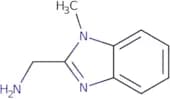
CAS:Controlled Product<p>(1-Methyl-1H-benzimidazol-2-yl)methylamine is a heterocyclic compound with the chemical formula C6H5NCH3. It is used in organic synthesis as a building block for other compounds. (1-Methyl-1H-benzimidazol-2-yl)methylamine can be synthesized by reacting methylamine and benzimidazole in solvothermal conditions, followed by purification with ionization mass spectrometry. The compound has a molecular weight of 136 g/mol and an ionization mass of 133. This compound is homolytic under standard conditions, meaning that it undergoes reaction processes that break covalent bonds using heat or light energy. This process creates ions from neutral molecules, which are then analyzed by ionization mass spectrometry to determine the composition of the molecule.</p>Formula:C9H11N3Purity:Min. 95%Color and Shape:Slightly Yellow PowderMolecular weight:161.2 g/mol4-Methylphenyl-2-methylphenylsulphoxide
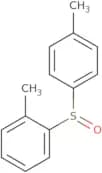
CAS:4-Methylphenyl-2-methylphenylsulphoxide is a versatile building block that can be used in the synthesis of complex compounds. It is an excellent reagent and speciality chemical that can be used in research, as well as a useful intermediate or reaction component. This compound has high quality and is a useful scaffold for the synthesis of other compounds.Formula:C14H14OSPurity:Min. 95%Molecular weight:230.33 g/mol3,5-Dimethyl-4-methoxybenzoic acid
CAS:<p>3,5-Dimethyl-4-methoxybenzoic acid is a disulphide monomer with the chemical formula C7H8O2S. It can be used as a building block for organic synthesis. This compound has been widely studied because it contains a benzyl group, which is the simplest aromatic system. The symmetric and asymmetric vibrational frequencies of 3,5-dimethyl-4-methoxybenzoic acid have been measured by nmr spectroscopy and theory. The thermodynamic properties of this compound have also been studied by molecular dynamics simulations and quantum chemical calculations.</p>Formula:C10H12O3Purity:Min. 95%Molecular weight:180.2 g/mol5-Methoxy-2-nitrophenylamine
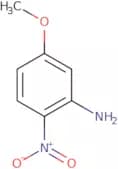
CAS:<p>5-Methoxy-2-nitrophenylamine (5MN) is a synthetic compound. It has been shown to produce an inhibitory effect on Alzheimer's disease and Leishmania infantum by inhibiting the formation of amyloid beta (Aβ) and leishmanicidal alpha-ketoglutarate, respectively. 5MN has also been observed to stabilize supramolecular structures in magnetic resonance spectroscopy experiments. This chemical is synthesized from 4-amino-3-nitrophenol and methylamine by reacting them in the presence of sodium hydroxide and sulfuric acid under refluxing conditions. The reaction products are analyzed using FTIR spectroscopy, as shown below:</p>Formula:C7H8N2O3Purity:Min. 95%Color and Shape:PowderMolecular weight:168.15 g/molBoc-N-Ethylglycine
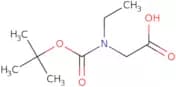
CAS:<p>Building block</p>Formula:C9H17NO4Purity:Min. 95%Color and Shape:White PowderMolecular weight:203.24 g/mol