Amino Acids (AA)
Amino acids (AAs) are the fundamental building blocks of proteins, playing a crucial role in various biological processes. These organic compounds are essential for protein synthesis, metabolic pathways, and cell signaling. In this category, you will find a comprehensive range of amino acids, including essential, non-essential, and modified forms, which are vital for research in biochemistry, molecular biology, and nutritional sciences. At CymitQuimica, we provide high-quality amino acids to support your research and development needs, ensuring accuracy and reliability in your experimental outcomes.
Subcategories of "Amino Acids (AA)"
- Amino Acid Derivatives(3,969 products)
- Amino Acid and Amino Acid Related Compounds(3,474 products)
- Amino Acids with Oxygen or Sulphur(168 products)
- Boc- Amino Acids(351 products)
- Fmoc Amino Acids(1,710 products)
Found 38282 products of "Amino Acids (AA)"
Sort by
Purity (%)
0
100
|
0
|
50
|
90
|
95
|
100
5-(2-Chloroethyl)-4-methyl-thiazole hydrochloride
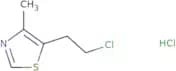
CAS:Controlled Product<p>5-(2-Chloroethyl)-4-methyl-thiazole hydrochloride is an inorganic acid that can be synthesized from 2-chloroethanol and thiourea. It has been used as a reagent to determine the activity of human liver enzymes, such as butyrolactone and thiocyanation. 5-(2-Chloroethyl)-4-methyl-thiazole hydrochloride has also been used in the study of drug absorption, with chloride as its conjugate base. 5-(2-Chloroethyl)-4-methyl-thiazole hydrochloride has been shown to have significant inhibitory effects on the growth of various infectious bacteria, including S. aureus. This compound is a specific agonist for ThP1 cells and is synthetically produced by reacting 2 chloroethanol with thiourea.</p>Formula:C6H8ClNS·HClPurity:Min. 95%Color and Shape:PowderMolecular weight:198.11 g/molNε-Methyl-L-lysine hydrochloride
CAS:<p>Ne-Methyl-L-lysine hydrochloride is an acetylated form of the amino acid L-lysine. It has shown to be effective in treating pernicious anemia, a condition in which the body lacks sufficient vitamin B12. Ne-Methyl-L-lysine hydrochloride inhibits the production of human vascular endothelial growth factor (VEGF) and can also be used as a diagnostic tool for pernicious anemia. This drug is expressed by genetically engineered cells and has been shown to inhibit acetylation reactions, leading to monoclonal antibodies with increased stability. Ne-Methyl-L-lysine hydrochloride also binds to vitamin B12 and prevents its catabolism, thereby increasing the levels of this essential nutrient.</p>Formula:C7H16N2O2•HClPurity:Min. 95%Color and Shape:White PowderMolecular weight:196.67 g/molDL-Alanine
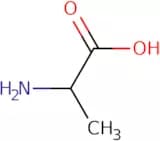
CAS:<p>DL-Alanine is a small molecule drug that has been used as a fluorescence probe for the detection of human hepatitis B virus (HBV) DNA. DL-Alanine has also been shown to be an inhibitor of the polymerase chain reaction, which is a technique used for amplifying DNA. The fluorescence of DL-alanine is quenched by HBV, and the intensity of this interaction can be measured using an ultraviolet spectrophotometer. DL-Alanine was found to inhibit HBV replication in a model system when it was added at concentrations between 1 and 10 mM. The inhibition was attributed to its ability to scavenge anion radicals generated during the course of HBV replication. DL-Alanine inhibits both wild type and mutant strains of HBV, with no significant difference in potency between them.</p>Formula:C3H7NO2Purity:(Titration) Min. 98.5%Color and Shape:PowderMolecular weight:89.09 g/molN-Boc-L-phenylalanine
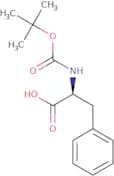
CAS:<p>N-Boc-L-phenylalanine is a metabolic intermediate that belongs to the class of chemical compounds. It is an amino acid that has been shown to be useful in the treatment of metabolic disorders such as phenylketonuria and hyperphenylalaninemia. N-Boc-L-Phenylalanine is used as a fluorescent derivative and can be synthesized by reacting with trifluoroacetic acid (TFA) and hydrogen bromide. This active methylene group can bind to pyrazine-2-carboxylic acid, which has been shown to inhibit the growth of lymphocytic leukemia cells in culture experiments. N-Boc-L-Phenylalanine also has a hydroxy group on its side chain, which makes it soluble in water and amenable for chromatographic purification methods.</p>Formula:C14H19NO4Purity:Min. 95%Color and Shape:White PowderMolecular weight:265.31 g/mol(2-Fluoro-3-methoxyphenyl)boronic acid
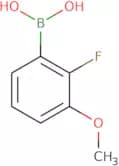
CAS:<p>2-Fluoro-3-methoxyphenylboronic acid is a boronic acid that has been shown to be orally activated. It is a potent inhibitor of the enzyme target, which is involved in the production of estradiol. 2-Fluoro-3-methoxyphenylboronic acid has been found to inhibit cellular growth and induce cancer cell death by targeting estrogen receptor β. This molecule also inhibits the growth factor, leading to inhibition of prostate cancer cells in vitro.</p>Formula:C7H8BFO3Purity:Min. 95%Color and Shape:White PowderMolecular weight:169.95 g/mol3-Methoxyphenylmethylcarbinol
CAS:<p>3-Methoxyphenylmethylcarbinol is a hydrogen tartrate that can be used as an intermediate in the Friedel-Crafts reaction. It is also an imine, which is formed when a nitrogen atom of an amine reacts with a carbon atom of formaldehyde. 3-Methoxyphenylmethylcarbinol has been shown to have stereoselective properties in the Friedel-Crafts reaction, which means that only one product is produced from two reactants. In this case, the hydrogen tartrate and phosphorus oxychloride are reacted to produce oxone and chloride compounds. The selectivity of 3-methoxyphenylmethylcarbinol can be increased by adding triphosgene or dimethylamine to the reaction mixture. This compound dissociates easily into its component parts and can be regenerated by adding ethyl formate or ferrocene.</p>Formula:C9H12O2Purity:Min. 95%Color and Shape:PowderMolecular weight:152.19 g/molDiphenylglycine
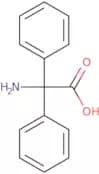
CAS:<p>Diphenylglycine is a chemical compound that has been shown to be an efficient method for the treatment of Alzheimer's disease. It can inhibit the formation of beta-amyloid peptides and aminoisobutyric acid, which are responsible for Alzheimer's disease. The compound has been shown to have high chemical stability and 2-aminoterephthalic acid, which is important in its biological properties. This compound also has two phenyl groups as substituents that are important in its intramolecular hydrogen bond interactions. Diphenylglycine also has anions that may be important in its biological properties.</p>Formula:C14H13NO2Purity:Min. 95%Color and Shape:White To Off-White SolidMolecular weight:227.26 g/molL-tert-Leucine
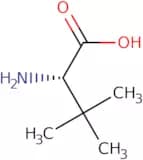
CAS:<p>L-tert-Leucine is a chiral compound that inhibits the activity of metalloproteases, enzymes that catalyze the breakdown of proteins. L-tert-Leucine has been shown to inhibit proteolytic activity in recombinant cells and bacterial strain such as Escherichia coli, Pseudomonas aeruginosa, and Bacillus subtilis. L-tert-Leucine binds to the active site of metalloproteases by competitive inhibition, inhibiting the breakdown of proteins. This compound also prevents degradation of dinucleotide phosphate and chiral synthesis. The enantiopure form of this compound is used as a substrate for kinetic studies with type strains of various metalloprotease enzymes.</p>Formula:C6H13NO2Purity:(%) Min. 95%Color and Shape:White PowderMolecular weight:131.17 g/molLysine(butyryl)-OH
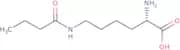
CAS:<p>Lysine(butyryl)-OH is a high-quality reagent that is useful in the synthesis of a variety of complex compounds, including fine chemicals and research chemicals. This compound can also be used as an intermediate for the production of other substances and is a versatile building block for reactions involving amino acids. It has CAS number 75396-30-4.</p>Formula:C10H20N2O3Purity:Min. 95%Color and Shape:White PowderMolecular weight:216.28 g/mol3-(2-Methylphenyl)-1H-pyrazol-5-amine
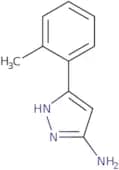
CAS:<p>3-(2-Methylphenyl)-1H-pyrazol-5-amine is a chemical compound that can be used as a reactant, reagent, or scaffold in the synthesis of other compounds. It is a useful building block and intermediate for the synthesis of complex compounds. 3-(2-Methylphenyl)-1H-pyrazol-5-amine has been shown to have high purity and quality and is available at a reasonable price. This chemical is also versatile, as it can be used in reactions with other chemicals to form diverse products. 3-(2-Methylphenyl)-1H-pyrazol-5-amine belongs to CAS No. 57860-42-1 and is a fine chemical that can be used for research purposes only.</p>Formula:C10H11N3Purity:Min. 95%Color and Shape:Off-White To Light Brown LiquidMolecular weight:173.21 g/molDL-Norvaline
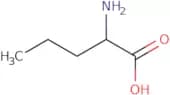
CAS:<p>DL-Norvaline is a non-proteinogenic amino acid that can be synthesized in the laboratory. It has been shown to inhibit bacterial growth by binding to the polymerase chain reaction and preventing the synthesis of RNA. DL-Norvaline binds to the ribosome and inhibits protein synthesis, which is necessary for bacterial cell division. DL-Norvaline also binds to glutamate and may inhibit energy metabolism. DL-Norvaline is used as an antimicrobial agent against a number of bacteria, such as Escherichia coli and Staphylococcus aureus. The antimicrobial activity of DL-norvaline may be due to its ability to bind to hydrophobic regions on bacterial cells.</p>Formula:C5H11NO2Purity:Min. 95%Color and Shape:White PowderMolecular weight:117.15 g/molFmoc-Asp(OtBu)-Ser(Psi(Me,Me)pro)-OMe
<p>Fmoc-Asp(OtBu)-Ser(Psi(Me,Me)pro)-OMe is a versatile building block that can be used in a variety of chemical reactions. Fmoc-Asp(OtBu)-Ser(Psi(Me,Me)pro)-OMe is a reagent and speciality chemical that is useful as an intermediate or reaction component for the synthesis of complex compounds. Fmoc-Asp(OtBu)-Ser(Psi(Me,Me)pro)-OMe has been used in the synthesis of many fine chemicals and research chemicals. This compound has also been shown to have high quality and is a useful scaffold for drug discovery.</p>Formula:C30H36N2O8Purity:Min. 95%Color and Shape:PowderMolecular weight:552.62 g/mol6-Methoxy-1,2,3,4-tetrahydronaphthalene-2-carboxylic acid
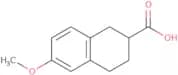
CAS:<p>6-Methoxy-1,2,3,4-tetrahydronaphthalene-2-carboxylic acid (MTN) is a polyphenol that has been shown to be effective against Alzheimer's disease in vitro and in vivo. MTN is able to bind to the polymerase chain reaction (PCR) product of APP and inhibit it from binding to heme oxygenase. MTN also prevents the accumulation of amyloid plaques by inhibiting the formation of beta-amyloid protein. MTN binds to thioflavin T and can be used as a fluorescent probe for immunofluorescence staining. MTN also inhibits the expression levels of APP and PS1 proteins in APP/PS1 transgenic mice by modulating the activity of transcriptional factors such as CREB.</p>Formula:C12H14O3Purity:Min. 95%Color and Shape:PowderMolecular weight:206.24 g/mol3-Methyl-2-nitrobenzoic acid - 95%
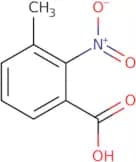
CAS:<p>3-Methyl-2-nitrobenzoic acid is a compound with the molecular formula of C6H5NO2. It is an organic compound that has been shown to be useful in wastewater treatment as an oxidation catalyst and in the photocatalytic oxidation of nitroaromatic compounds. 3-Methyl-2-nitrobenzoic acid can be synthesized by reaction of 2-methyl-6-nitrobenzoic acid with nitrous acid in water. The solubility data for 3-methyl-2-nitrobenzoic acid shows that it is soluble in water, acetone, and ethanol. The thermodynamic properties show that the solubility increases as temperature increases. Soluble compounds are typically more stable than insoluble compounds because they are able to react with other substances more easily. 3-Methyl-2-nitrobenzoic acid is also insoluble in hexane and dichloromethane.</p>Formula:C8H7NO4Purity:Min. 95%Color and Shape:PowderMolecular weight:181.15 g/molD-Phenylalanine
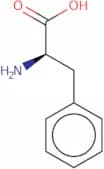
CAS:<p>D-Phenylalanine is an amino acid that is found in the human body and is used as a pharmacological agent. It has been shown to be an antimicrobial peptide with a broad spectrum of activity against bacteria, yeast, and fungi. D-Phenylalanine also has the ability to inhibit the production of peptide hormones, such as gastrin and vasopressin, and can be used as an inhibitor for enzymes such as acetylcholine esterase. Studies have shown that D-phenylalanine can increase mitochondrial membrane potential in cells by binding to ester hydrochloride. This leads to increased enzyme activities, which may result in a decrease in hydrogen bonding interactions.</p>Formula:C9H11NO2Purity:Min. 95%Color and Shape:White Off-White PowderMolecular weight:165.19 g/mol(R)-(-)-Glycidyl butyrate
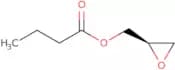
CAS:<p>(R)-(-)-Glycidyl butyrate is a chiral molecule with a single enantiomer. It is an inhibitor of bacterial growth, and has been shown to be selective for Gram-positive bacteria such as staphylococci and subtilis, while being less active against Gram-negative bacteria such as E. coli. The kinetic constants of the enzyme that catalyzes the hydrolysis of (R)-(-)-glycidyl butyrate have been determined by immobilization on ion exchange resins. The stereoselectivity of this reaction was also found to be in favor of (R)-(-)-glycidyl butyrate. This compound also has potent inhibitory activity against iodination reaction catalyzed by Escherichia coli D-amino acid oxidase, which is used in the diagnosis of phenylketonuria. Finally, (R)-(-)-glycidyl butyrate has been shown to inhibit de</p>Formula:C7H12O3Purity:Min. 95%Color and Shape:Clear, colourless to pale yellow liquid.Molecular weight:144.17 g/mol3-Methylcinnamic acid
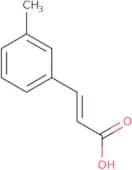
CAS:<p>3-Methylcinnamic acid is an organic acid that is a phenylpropanoid metabolite. It is synthesized from malonic acid by hydroxylation and sulfonation, and then converted to cinnamic acid derivatives. 3-Methylcinnamic acid has been shown to inhibit the activity of heterocyclic amine-producing enzymes and has a strong inhibitory effect on the formation of triticum aestivum. 3-Methylcinnamic acid has been found to have diverse chemical properties that are useful for industrial purposes.</p>Formula:C10H10O2Purity:Min. 95%Color and Shape:PowderMolecular weight:162.19 g/molMethyl 1-ethyl-3-methyl-1H-pyrazole-5-carboxylate
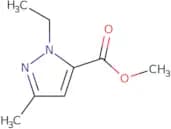
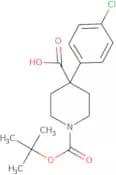
CAS:Methyl 1-ethyl-3-methyl-1H-pyrazole-5-carboxylate is a fine chemical that can be used as a building block in organic synthesis. It has been shown to provide a useful intermediate in the synthesis of other compounds, such as medicinal products and pesticides. Methyl 1-ethyl-3-methyl-1H-pyrazole-5-carboxylate is also a versatile building block for the manufacture of complex compounds. CAS No. 88398–73–6Formula:C8H12N2O2Purity:Min. 95%Color and Shape:Colorless PowderMolecular weight:168.19 g/molBoc-4-(4-chlorophenyl)-piperidine-4-carboxylic acid
CAS:<p>Boc-4-(4-chlorophenyl)-piperidine-4-carboxylic acid is a versatile building block that can be used to synthesize complex compounds. It is a high quality, research chemical that can be used as a reagent or speciality chemical. Boc-4-(4-chlorophenyl)-piperidine-4-carboxylic acid is an intermediate for the synthesis of pharmacologically active compounds and has been used as a reaction component in the synthesis of other useful scaffolds. CAS No. 644981-94-2</p>Formula:C17H22ClNO4Purity:Min. 95%Color and Shape:White PowderMolecular weight:339.81 g/molHO-PEG9-OH
CAS:<p>HO-PEG9-OH is a hydroxylated polyethylene glycol (PEG) with a molecular weight of 9,000. It has been shown to be effective in the treatment of inflammatory bowel disease as well as blood disorders and surfactant-induced lung injury. HO-PEG9-OH's redox potentials are much higher than those of other PEGs, which makes it more resistant to oxidation. This polymer is also able to expand upon heating and can be used for studies on biological samples such as blood cells or bacteria. HO-PEG9-OH is very soluble in water and can be dissolved in monosodium salt solutions. It can also form particles that have a diameter of about 10 nm.</p>Formula:C18H38O10Purity:Min. 95%Color and Shape:PowderMolecular weight:414.49 g/mol