Amino Acids (AA)
Amino acids (AAs) are the fundamental building blocks of proteins, playing a crucial role in various biological processes. These organic compounds are essential for protein synthesis, metabolic pathways, and cell signaling. In this category, you will find a comprehensive range of amino acids, including essential, non-essential, and modified forms, which are vital for research in biochemistry, molecular biology, and nutritional sciences. At CymitQuimica, we provide high-quality amino acids to support your research and development needs, ensuring accuracy and reliability in your experimental outcomes.
Subcategories of "Amino Acids (AA)"
- Amino Acid Derivatives(3,957 products)
- Amino Acid and Amino Acid Related Compounds(3,472 products)
- Amino Acids with Oxygen or Sulphur(168 products)
- Boc- Amino Acids(351 products)
- Fmoc Amino Acids(1,710 products)
Found 38265 products of "Amino Acids (AA)"
Sort by
Purity (%)
0
100
|
0
|
50
|
90
|
95
|
100
Z-Gly-Ala-Gln-AMC
CAS:<p>Z-Gly-Ala-Gln-AMC is a fluorescent substrate that can be used to detect vacuolar activity in cells. It is a peptide that has been shown to bind to the antigen of organisms, such as viruses and bacteria, which are then digested by endopeptidases. This product has various applications in cancer research, including elucidation of mechanisms of action and identification of targets for anti-cancer therapies. Z-Gly-Ala-Gln-AMC is also used as a molecular target for strategies against organisms such as Acinetobacter baumannii or Mycobacterium tuberculosis.</p>Formula:C28H31N5O8Purity:Min. 98 Area-%Color and Shape:PowderMolecular weight:565.57 g/molFmoc-L-Aph(D-Hor)-OH
<p>Fmoc-L-Aph(D-Hor)-OH is a high quality reagent that is useful as an intermediate for the synthesis of complex compounds. This chemical is a fine chemical that can be used for research purposes, such as making speciality chemicals. Fmoc-L-Aph(D-Hor)-OH is also a versatile building block that has been shown to react with other chemicals to create a number of different compounds. It is also one of the many reaction components in the synthesis of peptides, which are important in drug discovery and development.</p>Formula:C29H26N4O7Purity:Min. 95%Color and Shape:PowderMolecular weight:542.54 g/molL-Isoleucine
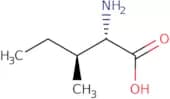
CAS:<p>Isoleucine is an essential amino acid. It is a branched-chain amino acid that is used in the synthesis of proteins, and it is also important for the metabolism of fats and cholesterol. Isoleucine can be converted to other amino acids such as leucine, valine, and threonine. It is catabolized through a series of reactions that are catalyzed by enzymes including ketoreductase, dehydrogenase, reductase, and oxidase. The rate constant for this conversion has been shown to be 0.02 min-1 at pH 7.5 and 37°C.</p>Formula:C6H13NO2Purity:98.5 - 101.5%Color and Shape:White PowderMolecular weight:131.17 g/molO-(N-Boc-2-aminoethyl)-O'-(N-diglycolyl-2-aminoethyl)hexaethyleneglycol
CAS:<p>O-(N-Boc-2-aminoethyl)-O'-(N-diglycolyl-2-aminoethyl)hexaethyleneglycol is a PEG compound with two different functional groups (also known as heterobifunctional). Unlike homobifunctional PEG compounds (same functional group on both ends), this type of compounds are more versatile as have two different anchor points. O-(N-Boc-2-aminoethyl)-O'-(N-diglycolyl-2-aminoethyl)hexaethyleneglycol is used as a linker and spacer to add a PEG moiety, via pegylation (a bioconjugation technique) to proteins, peptides, oligonucleotides, small molecules and nanoparticles.</p>Formula:C25H48N2O13Purity:Min. 95%Color and Shape:PowderMolecular weight:584.65 g/mol5-(2-Chloroethyl)-4-methyl-thiazole hydrochloride
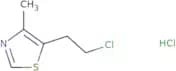
CAS:Controlled Product<p>5-(2-Chloroethyl)-4-methyl-thiazole hydrochloride is an inorganic acid that can be synthesized from 2-chloroethanol and thiourea. It has been used as a reagent to determine the activity of human liver enzymes, such as butyrolactone and thiocyanation. 5-(2-Chloroethyl)-4-methyl-thiazole hydrochloride has also been used in the study of drug absorption, with chloride as its conjugate base. 5-(2-Chloroethyl)-4-methyl-thiazole hydrochloride has been shown to have significant inhibitory effects on the growth of various infectious bacteria, including S. aureus. This compound is a specific agonist for ThP1 cells and is synthetically produced by reacting 2 chloroethanol with thiourea.</p>Formula:C6H8ClNS·HClPurity:Min. 95%Color and Shape:PowderMolecular weight:198.11 g/mol2-Bromo-5-methoxybenzyl bromide
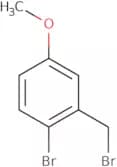
CAS:<p>2-Bromo-5-methoxybenzyl bromide is a ligand in organic chemistry. It is used as a reaction partner for the synthesis of heterocycles, such as 2-pyridone, which are biologically relevant. This ligand can be prepared by refluxing anhydrous potassium carbonate with chloroform and phenol. Macrocyclic compounds can be synthesized from this product through the Witting reaction. The efficiency of this method makes it suitable for use in biological studies.</p>Formula:C8H8Br2OPurity:Min. 95%Color and Shape:White PowderMolecular weight:279.96 g/molBoc-trans-4-fluoro-L-proline methyl ester
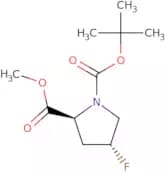
CAS:<p>Boc-trans-4-fluoro-L-proline methyl ester is a high quality, reagent, complex compound that can be used as a useful intermediate or fine chemical. It is also a useful scaffold for the synthesis of new compounds and a versatile building block for the synthesis of various types of compounds. Boc-trans-4-fluoro-L-proline methyl ester has been used in research to study the mechanism of protein phosphorylation.</p>Formula:C11H18FNO4Purity:Min. 95%Color and Shape:Colourless To Yellow Solid Or Liquid (May Vary)Molecular weight:247.26 g/molDiphenylglycine
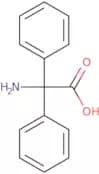
CAS:<p>Diphenylglycine is a chemical compound that has been shown to be an efficient method for the treatment of Alzheimer's disease. It can inhibit the formation of beta-amyloid peptides and aminoisobutyric acid, which are responsible for Alzheimer's disease. The compound has been shown to have high chemical stability and 2-aminoterephthalic acid, which is important in its biological properties. This compound also has two phenyl groups as substituents that are important in its intramolecular hydrogen bond interactions. Diphenylglycine also has anions that may be important in its biological properties.</p>Formula:C14H13NO2Purity:Min. 95%Color and Shape:White To Off-White SolidMolecular weight:227.26 g/molLysino norleucine TFA salt
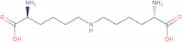
CAS:<p>Lysino norleucine TFA salt is a molecule that contains lysine residues. It has been shown to bind to collagen and sequences in the cell culture and crosslink with different molecules. Lysino norleucine TFA salt is also classified as a pharmacological agent and can be used for the treatment of diseases such as arthritis, cancer, or other inflammatory diseases.</p>Formula:C12H25N3O4Purity:Min. 95%Color and Shape:White PowderMolecular weight:275.34 g/molN-Stearoyl-L-cysteine
CAS:<p>N-Stearoyl-L-cysteine is a carboxylic acid that has been shown to have neuroprotective properties. It is an active compound in the production of a number of pharmaceuticals and industrial chemicals, including medications for the treatment of HIV, cancer, and stroke. N-Stearoyl-L-cysteine has also been demonstrated to have neuroprotective effects in animal models of brain injury by reducing oxidative stress and inhibiting lipid peroxidation. This compound has also been shown to have a protective effect on brain cells following cerebral ischemia (a shortage of blood).</p>Formula:C21H41NO3SPurity:Min. 95%Color and Shape:White To Off-White SolidMolecular weight:387.62 g/mol2-Bromo-3-methoxypyrazine
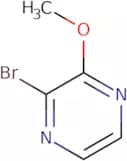
CAS:<p>2-Bromo-3-methoxypyrazine is a chemical compound that is used as a precursor in the biosynthesis of geosmin. Geosmin, also known as 2-methylisoborneol or 2-MIB, is a volatile organic compound which has a musty or earthy smell. It is produced by some species of bacteria, including Myxobacterium and Chondromyces crocatus. It can be found in soil and water samples from areas with high levels of organic matter. 2-Bromo-3-methoxypyrazine was first isolated from cultures of M. crocatus in 1950. It can be synthesized from 3,4,5-trimethoxybenzaldehyde via bromination followed by reduction with sodium hydrosulfide. This process creates an intermediate called 2-(2'-bromoethyl)pyrazine, which undergoes methylation to create 2</p>Formula:C5H5BrN2OPurity:Min. 95%Color and Shape:White Off-White PowderMolecular weight:189.01 g/mol1-Methylazetidin-3-amine dihydrochloride
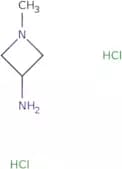
CAS:<p>1-Methylazetidin-3-amine dihydrochloride is a synthetic chemical compound that is used as a reagent, high quality, complex intermediate, and fine chemical. It has been shown to be useful in the synthesis of various compounds and has been reported as a useful scaffold for organic synthesis. This compound also exhibits versatile building block properties due to its ability to react with various functional groups. 1-Methylazetidin-3-amine dihydrochloride has been found to be a useful reaction component in the production of pharmaceuticals, pesticides, and other products.</p>Formula:C4H12Cl2N2Purity:Min. 95%Color and Shape:White PowderMolecular weight:159.06 g/molL-Lysine diisocyanate ethyl ester
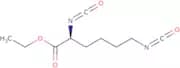
CAS:<p>L-Lysine diisocyanate ethyl ester (LDIEE) is a fluorescence probe that can be used to detect the presence of disulfide bonds. This compound reacts with thiols, such as cysteine, glutathione, and metallothioneins. LDIEE has been shown to bind to human serum proteins and has been used in biological studies for the detection of hydrogen bonding interactions. The biological properties of this compound have not been studied but it is hypothesized that LDIE may have anti-cancer activities due to its ability to react with coumarin derivatives.</p>Formula:C10H14N2O4Purity:Min. 95 Area-%Color and Shape:Clear LiquidMolecular weight:226.23 g/mol5-Methyl-2-nitropyridine
CAS:<p>Please enquire for more information about 5-Methyl-2-nitropyridine including the price, delivery time and more detailed product information at the technical inquiry form on this page</p>Formula:C6H6N2O2Purity:Min. 95%Color and Shape:PowderMolecular weight:138.12 g/mol5-Iodo-2-methylaniline
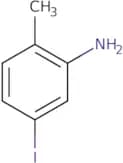
CAS:<p>5-Iodo-2-methylaniline is an organic compound that belongs to the class of safranines. It has an arrayed, spectra, and fluorescence spectrum. 5-Iodo-2-methylaniline is synthesized from 2-iodoaniline and formaldehyde in the presence of a reducing agent such as sodium borohydride or sodium triacetoxyborohydride. The electron transfer process can be monitored by changes in the absorbance of the solution, which are related to reduction potentials and electron transfer rates. Safranin is reduced by 5-iodo-2-methylaniline to produce a red color with a maximum absorption at about 600 nm. Safranin is oxidized back to its original state by adding hydrogen peroxide to produce a colorless product with a maximum absorption at about 620 nm.</p>Formula:C7H8INPurity:Min. 95%Color and Shape:PowderMolecular weight:233.05 g/mol4'-Bromo-3'-methylacetophenone, 75%
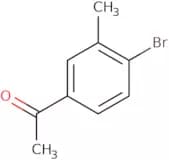
CAS:<p>4'-Bromo-3'-methylacetophenone, 75% is a high quality reagent that is a useful intermediate for the synthesis of complex compounds. It has CAS No. 37074-40-1 and can be used as a fine chemical or speciality chemical in research. This product is also a versatile building block that can be used as an intermediate in reactions and as a reaction component.</p>Formula:C9H9BrOPurity:Min. 95%Molecular weight:213.07 g/mol5-Acetoxy-6-methoxyindole
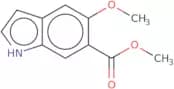
CAS:<p>5-Acetoxy-6-methoxyindole is a fine chemical, useful building block, and research chemical with CAS No. 112919-69-4. It is a versatile building block and reaction component that can be used as a reagent or speciality chemical in the synthesis of other complex compounds. 5-Acetoxy-6-methoxyindole is also used as an intermediate in the synthesis of drugs and pharmaceuticals. This compound has high purity, making it a high quality product with many uses.</p>Formula:C11H11NO3Purity:Min. 95%Molecular weight:205.21 g/molTributyl-(4-methoxy-phenyl)-stannane
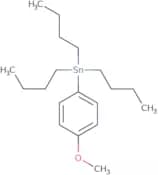
CAS:Controlled Product<p>Tributyl-(4-methoxy-phenyl)-stannane is a nucleophilic compound that can be used to synthesize 5-HT1A receptor agonists. It has been shown to have biochemical, positron and chloride properties. This chemical is synthesised by introducing a sulfur atom into the molecule. The sulfur atom reacts with the chlorine atom in chlorobenzene to form the sulfonation bond. This reaction is efficient and can be used as a method for cleaving bonds and cross-coupling carbon atoms.</p>Formula:C19H34OSnPurity:Min. 95%Color and Shape:PowderMolecular weight:397.18 g/molAcetyl-L-valine
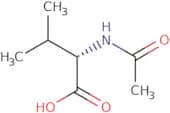
CAS:<p>Acetyl-L-valine is a synthetic amino acid that is used to treat metabolic disorders. It is also used as a model system for the study of enzyme activity and has been shown to have anticancer properties, although this has not been proven in clinical trials. Acetyl-L-valine inhibits copper complex formation, which may be due to its ability to form intramolecular hydrogen bonds with the copper, or by reacting with protonated fatty acids. This amino acid is also a specific treatment for some forms of radiation damage.</p>Formula:C7H13NO3Purity:Min. 95%Color and Shape:PowderMolecular weight:159.18 g/mol1-(3-Fluoro-4-methoxyphenyl)-2-nitropropene
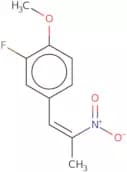
CAS:<p>1-(3-Fluoro-4-methoxyphenyl)-2-nitropropene is a chemical compound with the molecular formula CHNO. It is a high quality reagent that is useful for preparing complex compounds, scaffolds and building blocks for use in research and development. 1-(3-Fluoro-4-methoxyphenyl)-2-nitropropene is a fine chemical that can be used as a versatile building block in reactions.</p>Formula:C10H10FNO3Purity:Min. 95%Molecular weight:211.19 g/mol