Amino Acids (AA)
Amino acids (AAs) are the fundamental building blocks of proteins, playing a crucial role in various biological processes. These organic compounds are essential for protein synthesis, metabolic pathways, and cell signaling. In this category, you will find a comprehensive range of amino acids, including essential, non-essential, and modified forms, which are vital for research in biochemistry, molecular biology, and nutritional sciences. At CymitQuimica, we provide high-quality amino acids to support your research and development needs, ensuring accuracy and reliability in your experimental outcomes.
Subcategories of "Amino Acids (AA)"
- Amino Acid Derivatives(3,957 products)
- Amino Acid and Amino Acid Related Compounds(3,472 products)
- Amino Acids with Oxygen or Sulphur(168 products)
- Boc- Amino Acids(351 products)
- Fmoc Amino Acids(1,710 products)
Found 38265 products of "Amino Acids (AA)"
Sort by
Purity (%)
0
100
|
0
|
50
|
90
|
95
|
100
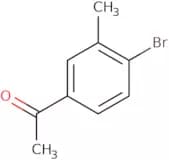
4'-Bromo-3'-methylacetophenone, 75%
CAS:<p>4'-Bromo-3'-methylacetophenone, 75% is a high quality reagent that is a useful intermediate for the synthesis of complex compounds. It has CAS No. 37074-40-1 and can be used as a fine chemical or speciality chemical in research. This product is also a versatile building block that can be used as an intermediate in reactions and as a reaction component.</p>Formula:C9H9BrOPurity:Min. 95%Molecular weight:213.07 g/mol1,2-Benzisoxazole-3-methanesulfonate sodium salt
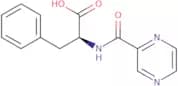
CAS:<p>1,2-Benzisoxazole-3-methanesulfonate sodium salt (BMS) is a reactive intermediate that is used in the synthesis of drugs. It is a dehydrating agent and can be used as an impurity in the synthesis of pharmaceuticals. BMS has a flow rate of 0.5 to 2.0 g/min and an end point at around 200°C. BMS can be synthesized by reacting benzisoxazole with methanesulfonyl chloride in acetonitrile or chloroform or by reacting cetylpyridinium chloride with hydrochloric acid in acetonitrile. This compound can be purified by chromatographic methods such as flash column chromatography or gas chromatography, which are both reproducible and validated methods for purification.</p>Formula:C8H6NNaO4SPurity:Min. 95%Color and Shape:White PowderMolecular weight:235.19 g/molN-Pyrazinylcarbonyl-L-phenylalanine
CAS:<p>N-Pyrazinylcarbonyl-L-phenylalanine is a high quality chemical that is an intermediate for the production of other compounds. It has been shown to be a useful scaffold for the synthesis of complex compounds and is also used as a building block in the synthesis of fine chemicals, research chemicals, and specialty chemicals. It can be used as a versatile building block in organic synthesis reactions. N-Pyrazinylcarbonyl-L-phenylalanine are available for purchase at www.chemistrystore.com/N-Pyrazinylcarbonyl-L-phenylalanine</p>Formula:C14H13N3O3Purity:Min. 95%Color and Shape:White PowderMolecular weight:271.27 g/molN-Boc-D-allylglycine
CAS:<p>N-Boc-D-allylglycine is a peptidomimetic drug that inhibits caspase-3, an enzyme involved in apoptosis. This drug has been shown to inhibit the proteolytic activity of caspase-3 and thereby inhibit the induction of cell death by various stimuli. N-Boc-D-allylglycine is orally bioavailable and is metabolized into two active analogs: N-(2-(N′-(allyloxycarbonyl)-L-alanyl))glycine (NAGL) and N′-(2-(N′-(allyloxycarbonyl)-L-alanyl))glycinamide (NAG). These active analogs are potent inhibitors of caspase-3, with more than 100 times the potency of the parent compound. This compound also has a prodrug form, which can be hydrolyzed by esterases or glucuronidases to release the active form</p>Formula:C10H17NO4Purity:Min. 95%Color and Shape:PowderMolecular weight:215.25 g/molFmoc-Lys(Fmoc)-OH
CAS:<p>Fmoc-Lys(Fmoc)-OH is an ester of lysine that is used in peptide synthesis. It has shown to have antimicrobial properties against bacteria and fungi. Fmoc-Lys(Fmoc)-OH has been found to be taken up by cancer cells, suggesting that it may have anticancer effects. It has also been found to inhibit the growth of bladder cancer cells as well as histidine aminopeptidase from the cell surface. Fmoc-Lys(Fmoc)-OH is stable in trifluoroacetic acid, making it a good candidate for solid-phase synthesis. This product can be synthesized by attaching the amino acid lysine to an ester linker with a fluorinated side chain. The product is then linked end-to-end via intramolecular hydrogen bonds and chemical stability is achieved through covalent amide bond formation between Lys and Fmoc groups</p>Formula:C36H34N2O6Purity:Min. 95%Color and Shape:SolidMolecular weight:590.67 g/mol4-Fluoro-3-methoxybenzonitrile
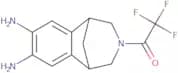
CAS:<p>4-Fluoro-3-methoxybenzonitrile (4FM) is an orally active dihydrobenzofuran derivative that has been optimized for oral bioavailability. The drug is a potent inhibitor of efflux and can be used to lower the oral bioavailability of drugs that are substrates for efflux. 4FM also inhibits heterocycle metabolism, which can be used as a strategy to evolve drugs with improved physicochemical properties. 4FM has shown preclinical efficacy in lowering heterocycle levels, including lowering of methadone levels in humans. The drug is a competitive inhibitor of the enzyme P450 2D6, which is responsible for the metabolism of many drugs. This inhibition may have adverse effects on these drugs and should be monitored closely during treatment with 4FM.</p>Formula:C8H6FNOPurity:Min. 95%Color and Shape:PowderMolecular weight:151.14 g/mol1-(7,8-Diamino-1,2,4,5-tetrahydro-1,5-methano-3H-3-benzazepin-3-yl)-2,2,2-trifluoroethanone
CAS:<p>Varenicline Diamine Impurity - Bio-X ™ is a diamine impurity of varenicline, a medication used for smoking cessation. Varenicline acts as a partial agonist at α4β2 nicotinic acetylcholine receptors, which are involved in the addictive effects of nicotine. Researchers utilize this compound to study its effects on nicotine addiction and develop potential treatments for smoking cessation. This impurity is used as a reference standard or analytical tool in the quality control and manufacturing process of varenicline and serves as an important marker for ensuring the purity and consistency of varenicline during its production, helping to maintain the medication's safety and efficacy for patients seeking to quit smoking.</p>Formula:C13H14F3N3OPurity:Min. 96 Area-%Color and Shape:PowderMolecular weight:285.27 g/mol2-Methyl-1,4-phenylene bis(4-((6-(acryloyloxy)hexyl)oxy)benzoate)
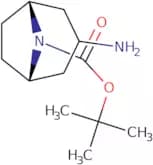
CAS:<p>2-Methyl-1,4-phenylene bis(4-((6-(acryloyloxy)hexyl)oxy)benzoate) is a monomer that can reversibly form polymers. It is used in the fabrication of actuators, which are components of machines that convert electrical energy into mechanical movement. 2-Methyl-1,4-phenylene bis(4-((6-(acryloyloxy)hexyl)oxy)benzoate) monomers are used to create polymers in a process called programmed actuation. This process involves using a light source to program the polymer's deformation and orientation. This polymer can be fabricated with a variety of patterns for different purposes.</p>Formula:C39H44O10Purity:Min. 95%Color and Shape:PowderMolecular weight:672.76 g/molN-Boc-endo-3-aminotropane
CAS:<p>N-Boc-endo-3-aminotropane is a useful building block for the synthesis of a variety of chemical compounds. It is a versatile intermediate for the synthesis of diverse chemical compounds and is also used in research as a reagent. N-Boc-endo-3-aminotropane has been shown to be highly reactive and to undergo many reactions, including nucleophilic substitution and addition reactions. The compound can be reacted with alkyl halides to form amines, or with nitroalkanes to form oximes. N-Boc-endo-3-aminotropane can also react with anhydrides or acid chlorides to form carboxylic acids, or with sulfonyl chlorides to form sulfonamides. This compound also reacts with thiols or alcohols to form thioethers and ethers respectively.</p>Formula:C12H22N2O2Purity:Min. 95%Color and Shape:White PowderMolecular weight:226.32 g/molL-Valine b-naphthylamide
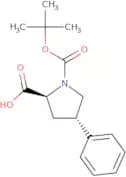
CAS:<p>H-Val-bNA</p>Formula:C15H18N2OPurity:Min. 99 Area-%Molecular weight:242.32 g/molBoc-(2S,4S)-4-phenylpyrrolidine-2-carboxylic acid
CAS:<p>Boc-(2S,4S)-4-phenylpyrrolidine-2-carboxylic acid is a versatile building block that can be used in the synthesis of complex compounds. It has been shown to be a useful intermediate in the synthesis of pharmaceuticals and other compounds. Boc-(2S,4S)-4-phenylpyrrolidine-2-carboxylic acid is also a reagent for the preparation of heterocyclic compounds and other research chemicals. This chemical is soluble in methanol and water, but insoluble in ether or chloroform. The CAS number for this product is 96314-29-3.</p>Formula:C16H21NO4Purity:Min. 95%Color and Shape:White PowderMolecular weight:291.34 g/molFmoc-Thr(tBu)-Ser(Psi(Me,Me)pro)-OBzl
<p>Fmoc-Thr(tBu)-Ser(Psi(Me,Me)pro)-OBzl is a high quality, research chemical that is used as an intermediate in the synthesis of complex compounds. It is a useful building block and can be used to make speciality chemicals. This reagent has many uses including being a useful scaffold for organic synthesis and a reaction component in the production of other fine chemicals. Fmoc-Thr(tBu)-Ser(Psi(Me,Me)pro)-OBzl has CAS No. 7791-02-8 and may be found in the following chemical structure:</p>Formula:C36H42N2O7Purity:Min. 95%Color and Shape:PowderMolecular weight:614.73 g/molN-α-[2,4-Dinitro-5-fluorophenyl]-D-alanine amide
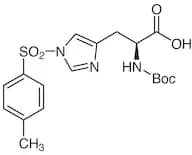
CAS:<p>N-alpha-[2,4-Dinitro-5-fluorophenyl]-D-alanine amide is a potential drug for the treatment of cancer. It has been shown to be effective in inhibiting the proliferation of human prostate carcinoma cells in culture. This compound is a potential anticancer drug that binds to DNA and inhibits topoisomerase II, which is an enzyme involved in DNA replication. The mechanism of action of this drug was studied using methods such as optimization, isomers, plates, trifluoroacetic acid, tautomers, amino acid analysis and nanomolar concentrations. N-alpha-[2,4-Dinitro-5-fluorophenyl]-D-alanine amide has also been shown to inhibit cyanobacteria growth.</p>Formula:C9H9N4O5FPurity:Min. 95%Color and Shape:Light (Or Pale) Yellow To Yellow SolidMolecular weight:272.0557Nα-(tert-Butoxycarbonyl)-τ-(p-toluenesulfonyl)-L-histidine
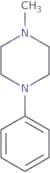
CAS:Formula:C18H23N3O6SPurity:>98.0%(T)Color and Shape:White to Almost white powder to crystalMolecular weight:409.461-Methyl-4-phenyl-piperazine
CAS:Controlled Product<p>1-Methyl-4-phenyl-piperazine (MPP) is a drug that inhibits the serine protease and blocks the activation of tyrosine kinases. It is used in diagnostic testing to identify mutations in genes encoding for serine proteases, such as trypsin, chymotrypsin, and elastase. MPP has been shown to reduce blood pressure in rats by blocking the 5-HT4 receptor. This compound also enhances mitochondrial membrane potential and emits light when it is excited by an electron beam.</p>Formula:C11H16N2Purity:Min. 95%Color and Shape:Colorless PowderMolecular weight:176.26 g/molFmoc-Aph(Hor)-OH
CAS:<p>Fmoc-Aph(Hor)-OH is a high quality, versatile building block that can be used as a reagent and speciality chemical. It is a complex compound that has been shown to be useful in the synthesis of peptides, pharmaceuticals, and other organic and inorganic compounds. Fmoc-Aph(Hor)-OH has been used as a reaction component for the synthesis of various drugs including anti-inflammatory agents, antibiotics, and analgesics. Fmoc-Aph(Hor)-OH is an intermediate for the production of Boc-Lys(Fmoc)-OH which is used in the manufacture of anti-fungal agents such as Terbinafine hydrochloride.</p>Formula:C29H26N4O7Purity:Min. 95%Color and Shape:White PowderMolecular weight:542.54 g/mol4-Amino-N-(tert-butoxycarbonyl)-D-phenylalanine
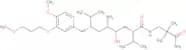
CAS:Formula:C14H20N2O4Purity:>97.0%(HPLC)Color and Shape:Light orange to Yellow to Green powder to crystalMolecular weight:280.325-Amino-N-(3-amino-2,2-dimethyl-3-oxopropyl)-4-hydroxy-2-isopropyl-7-[4-methoxy-3-(3-methoxypropoxy)benzyl]-8-methylnonanamide fumar ate
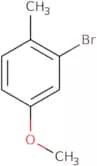
CAS:<p>5-Amino-N-(3-amino-2,2-dimethyl-3-oxopropyl)-4-hydroxy-2-isopropyl-7-[4-methoxy-3-(3-methoxypropoxy)benzyl]-8-methylnonanamide fumar ate is a drug that inhibits the activity of angiotensin II, which is a hormone produced by the body. It is used as monotherapy for treatment of hypertension. 5AMINO has been shown to be effective in lowering blood pressure when administered alone and has been shown to be well tolerated. For this drug, the most frequently reported adverse reactions are nausea and dizziness. This drug should not be taken with other antihypertensive drugs or nonsteroidal antiinflammatory drugs such as ibuprofen (Motrin®). In addition, patients with diabetes should monitor their blood sugar levels carefully while taking this medication.</p>Formula:C30H53N3O6Purity:Min. 95%Color and Shape:PowderMolecular weight:551.76 g/mol3-Bromo-4-methylanisole
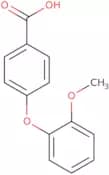
CAS:<p>3-Bromo-4-methylanisole is a natural product that has been shown to selectively activate the transcription factor, proliferator activated receptor γ (PPARγ), which plays a central role in cell differentiation and lipid metabolism. 3-Bromo-4-methylanisole is a competitive inhibitor of the catalytic site of PPARγ and also inhibits the activity of other transcriptional factors. This compound has been shown to stimulate the production of peroxisomes, which are organelles involved in lipid metabolism. 3-Bromo-4-methylanisole can be synthesized from toluene by a two step process involving electrolysis followed by chlorination. It can also be prepared from magnolol, a natural product isolated from Magnolia officinalis, by oxidation with potassium dichromate and sodium bisulfite.</p>Formula:C8H9BrOPurity:Min. 95%Color and Shape:PowderMolecular weight:201.06 g/mol4-(2-Methoxyphenoxy)benzoic acid
CAS:<p>4-(2-Methoxyphenoxy)benzoic acid is a white crystalline solid with a melting point of 50°C. It is soluble in water, ethanol, ether, and chloroform. 4-(2-Methoxyphenoxy)benzoic acid has been used as a starting material for the synthesis of pharmaceuticals such as carbamazepine (Tegretol). The compound has two methoxy groups on the phenyl ring that are susceptible to nucleophilic attack by strong bases. This reaction occurs at room temperature and can be reversed by heating the solution to 150°C. The compound also undergoes polycondensation reactions when heated in the presence of an oxidizing agent.</p>Formula:C14H12O4Purity:Min. 95%Color and Shape:White PowderMolecular weight:244.24 g/mol







![N-α-[2,4-Dinitro-5-fluorophenyl]-D-alanine amide](/_next/image/?url=https%3A%2Fstatic.cymitquimica.com%2Fproducts%2F3D%2Fthumb-webp%2FFD48427.webp&w=3840&q=75)