Amino Acids (AA)
Subcategories of "Amino Acids (AA)"
- Amino Acid Derivatives(4,012 products)
- Amino Acid and Amino Acid Related Compounds(3,490 products)
- Amino Acids with Oxygen or Sulphur(168 products)
- Boc- Amino Acids(351 products)
- Fmoc Amino Acids(1,710 products)
Found 38365 products of "Amino Acids (AA)"
H-Gly-Arg-Gly-Asp-Ser-Pro-OH
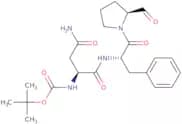
CAS:H-Gly-Arg-Gly-Asp-Ser-Pro-OH is a cyclic peptide that contains five amino acids. It was synthesized by the reaction of L-glycine and D-alanine with D,L-aspartic acid and L,D,L-serine. HAGGS has been shown to stimulate the proliferation of fibroblast cells in vitro. The presence of HAGGS on the surface of human breast cancer cells (MDA MB 231) promotes the proliferation of these cells and stimulates the production of growth factor β1. HAGGS also activates integrin receptors on these cells, which are proteins that bind to collagen or fibronectin. This may be due to its ability to form disulfide bonds with neighboring proteins, such as fibronectin and integrin.Formula:C22H37N9O10Purity:Min. 95%Molecular weight:587.58 g/molBoc-Asn-Phe-Pro-aldehyde
CAS:Boc-Asn-Phe-Pro-aldehyde is a cytosolic proteolytic target enzyme that hydrolyzes peptides with an aliphatic amino acid residue at the carboxy terminus. It is localized in the cytoplasm, where it is activated by serine proteases. Boc-Asn-Phe-Pro-aldehyde has been shown to be effective in cell culture and supernatant. This enzyme can also be used to demonstrate the presence of a particular peptide by releasing a reactive chloride, which can be detected using tetrazolium chloride. This protease has been shown to exacerbate inflammation when administered in vivo.Formula:C23H32N4O6Purity:Min. 95%Molecular weight:460.52 g/molH-Leu-Pro-Pro-OH
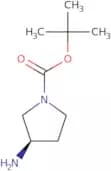
CAS:H-Leu-Pro-Pro-OH is a synthetic tripeptide that has been shown to increase endothelial function in humans. The peptide is thought to work by increasing nitric oxide production and by inhibiting angiotensin II production. H-Leu-Pro-Pro-OH also reportedly increases uptake of glucose in the intestine and decreases blood pressure. In placebo-controlled, crossover studies, H-Leu-Pro-Pro-OH increased plasma concentrations of angiotensin I and II, suggesting that it may be a potent inhibitor of angiotensin converting enzyme (ACE).Formula:C16H27N3O4Purity:Min. 95%Molecular weight:325.4 g/mol(R)-1-Boc-3-Aminopyrrolidine
CAS:(R)-1-Boc-3-Aminopyrrolidine is a small molecule that inhibits 3-kinase. It has been shown to bind to the ATP binding site of PI3Kδ and inhibit its activity. This results in the inhibition of phosphoinositide production, which leads to decreased cell proliferation and survival. (R)-1-Boc-3-Aminopyrrolidine has also been shown to have selectivity for isoform α over β, γ, and δ. The drug binds specifically to the ATP binding site on PI3Kδ, but does not disrupt other interactions such as hydrogen bonding or pi stacking interactions with residues in the vicinity of the ATP binding site. The IC50 values for (R)-1-Boc-3-Aminopyrrolidine were determined using siRNA knockdown experiments against human isoform α PI3Kδ.Formula:C9H18N2O2Purity:Min. 95%Molecular weight:186.25 g/molH-Gly-DL-Thr-OH
CAS:H-Gly-DL-Thr-OH is an organic compound that is a component of natural phenolic compounds. This compound is generated by the pyrolysis of biomass, and it has been shown to have selective properties for GC-MS analysis. H-Gly-DL-Thr-OH can be used as a sustainable chemical component in the production of biofuels and other chemicals. The optimal conditions for this synthesis are potassium hydroxide, temperature, pressure, and irradiation time. The separation parameters for H-Gly-DL-Thr-OH are based on its GC retention time and mass spectra.
Formula:C6H12N2O4Purity:Min. 95%Molecular weight:176.17 g/molTRH (free acid) Pyr-His-Pro-OH
CAS:TRH is a hormone that regulates the metabolic rate and stimulates the pancreas to release insulin. It also has been shown to be involved in regulating locomotor activity and is used in clinical trials for its potential therapeutic effects on Alzheimer’s disease. TRH binds to receptors on gland cells where it activates adenylate cyclase and increases intracellular levels of cAMP, which leads to an increase in cytosolic calcium concentration. TRH also binds to receptors on nerve cells and causes these cells to release neurotransmitters such as dopamine and serotonin. TRH is synthesized by the thyroid gland, pituitary gland, hypothalamus, or other tissues in response to stress or illness. TRH can be administered orally or injected intravenously; it is not active when taken orally because it is broken down by digestive enzymes before reaching the systemic circulation.Formula:C16H21N5O5Purity:Min. 95%Molecular weight:363.37 g/molMeOSuc-Gly-Leu-Phe-AMC
CAS:MeOSuc-Gly-Leu-Phe-AMC is a fluorescent substrate that is used in the study of proteasomes. It binds to reticulums, cytoplasmic proteins, and antigen receptors on the surface of lymphocytes. The MeOSuc-Gly-Leu-Phe-AMC substrate is cleaved by the proteasome into AMC and Gly-Leu fragments. These fragments can be detected using fluorescence spectroscopy or a fluorimeter. This product has been shown to be active against Lymphocytic Choriomeningitis Virus (LCMV).
Formula:C32H38N4O8Purity:Min. 95%Molecular weight:606.67 g/molIloprost
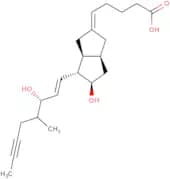
CAS:Iloprost is a cyclase inhibitor that is used to treat pulmonary hypertension. It relaxes the smooth muscle cells in the lungs, which causes an increase in blood flow and oxygen levels to the heart and other organs. Iloprost also decreases the production of PGE2 and lowers blood pressure. Iloprost has been shown to be effective in treating chronic viral hepatitis and pulmonary diseases such as primary pulmonary hypertension. This drug can cause hypotension, so it should not be taken by patients with low blood pressure or those who are taking other drugs that can cause hypotension.Formula:C22H32O4Purity:Min. 95%Color and Shape:Solidified MassMolecular weight:360.49 g/mol4-[4-(4-Methyloxy-phenyl)-piperazin-1-yl]-phenylamine
CAS:4-Methyloxy-phenyl)-piperazin-1-yl]-phenylamine is an organic compound that has a reactive silicon group. It contains two phenyl groups, one of which is attached to the silicon. This compound exhibits phase equilibrium in water and can be used as a monomer for fabricating inorganic materials with orderly patterns, such as glass and metal oxides. This product also has impurities and can be grown at different rates depending on the conditions, such as temperature. The optical properties of 4-methyloxy-phenyl)-piperazin-1-yl]-phenylamine are dependent on its environment and it has been shown to have exothermic properties when reacting with iron powder.Formula:C17H21N3OPurity:Min. 95%Molecular weight:283.37 g/molMacrophage Inhibitory Peptide
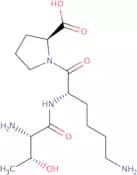
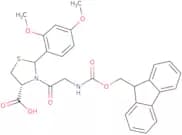
CAS:Macrophage inhibitory peptide H-Thr-Lys-Pro-OH is a human immunoglobulin that has been shown to have antimicrobial activity against a wide range of microbes. It is asymmetric and the side chain at position Thr is protonated, while the corresponding Lys side chain is not. Macrophage inhibitory peptide H-Thr-Lys-Pro-OH binds to the acidic corneal endothelial cells, which are important for maintaining a healthy eye surface. This peptide also activates human macrophages and basic fibroblast cells and inhibits HIV infection in monoclonal antibody mice.Formula:C15H28N4O5Purity:Min. 95%Molecular weight:344.41 g/molFmoc-Gly-Cys(Psi(Dmp,H)pro)-OH
CAS:Please enquire for more information about Fmoc-Gly-Cys(Psi(Dmp,H)pro)-OH including the price, delivery time and more detailed product information at the technical inquiry form on this page
Formula:C29H28N2O7SPurity:Min. 95%Molecular weight:548.61 g/molN-Heptyl-Hyp-OH
CAS:The synthesis of N-heptyl-hyp-OH is a chiral resolution process for the preparation of the enantiomers of heptanol. The enantioselective synthesis of this compound is achieved by converting the racemic mixture to an optically active form by means of a chiral auxiliary, followed by protection and hydrolysis. This method produces an optically pure product in high yield.Formula:C12H23NO3Purity:Min. 95%Molecular weight:229.32 g/molACTH (1-39) (guinea pig)
CAS:Please enquire for more information about ACTH (1-39) (guinea pig) including the price, delivery time and more detailed product information at the technical inquiry form on this pageFormula:C206H308N56O58SPurity:Min. 95%Molecular weight:4,529.06 g/molDiphenyl(4-phenylthio)phenylsufonium hexafluorophosphate
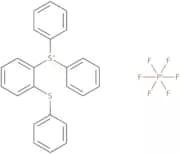
CAS:Diphenyl(4-phenylthio)phenylsufonium hexafluorophosphate is a photoinitiator that is used in photopolymerization. It absorbs light at around 800 nm and emits light at around 810 nm. The initiator has a low molecular weight and is soluble in organic solvents, which makes it suitable for polymerization of acrylate monomers. Diphenyl(4-phenylthio)phenylsufonium hexafluorophosphate can be synthesized by the reaction of diphenyliodonium hexafluorophosphate with phenyldithiocarbonyl chloride.Formula:C24H19S2•PF6Purity:Min. 95%Color and Shape:PowderMolecular weight:516.5 g/molCecropin A
CAS:Cecropin A is an antimicrobial peptide, which is derived from the immune systems of insects, specifically moths. It displays potent antimicrobial properties through its ability to disrupt bacterial cell membranes, leading to cell lysis and death. This peptide primarily targets Gram-negative bacteria but is also effective against some Gram-positive strains. Cecropin A has garnered significant scientific interest due to its potential applications in developing new antimicrobial agents, particularly in the face of increasing antibiotic resistance. By integrating Cecropin A into therapeutic strategies, researchers aim to broaden the spectrum of antimicrobial options available for use in both clinical and agricultural settings, offering a promising avenue for future drug development.Formula:C184H313N53O46Purity:Min. 95%Molecular weight:4,003.78 g/molFmoc-a-Me-D-Asp(OtBu)-OH
CAS:Please enquire for more information about Fmoc-a-Me-D-Asp(OtBu)-OH including the price, delivery time and more detailed product information at the technical inquiry form on this page
Formula:C24H27NO6Purity:Min. 95%Molecular weight:425.47 g/molZ-Asp(OtBu)-bromomethylketone
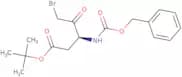
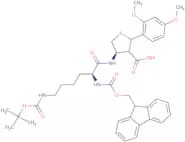
CAS:Please enquire for more information about Z-Asp(OtBu)-bromomethylketone including the price, delivery time and more detailed product information at the technical inquiry form on this pageFormula:C17H22BrNO5Purity:Min. 95%Molecular weight:400.26 g/molFmoc-Lys(Boc)-Cys(Psi(Dmp,H)pro)-OH
CAS:Please enquire for more information about Fmoc-Lys(Boc)-Cys(Psi(Dmp,H)pro)-OH including the price, delivery time and more detailed product information at the technical inquiry form on this pageFormula:C38H45N3O9SPurity:Min. 95%Molecular weight:719.84 g/mol12-(Boc-aminooxy)-dodecanoic acid
CAS:Please enquire for more information about 12-(Boc-aminooxy)-dodecanoic acid including the price, delivery time and more detailed product information at the technical inquiry form on this pageFormula:C17H33NO5Purity:Min. 95%Molecular weight:331.45 g/molSuc-Ala-Pro-pNA
CAS:Suc-Ala-Pro-pNA is a glycoprotein that has been shown to have a number of different functions. It is an inhibitor of tissue culture, and it has been shown to inhibit the growth of cervical cancer cells by binding to epidermal growth factor (EGF). It also inhibits peptide hormones such as prolactin and insulin, which can lead to breast cancer. Suc-Ala-Pro-pNA may be clinically relevant for treatment of carcinoma cell lines due to its ability to bind platinum-based chemotherapy drugs. This protein has been shown to be expressed on the surface of mammary carcinoma cells, where it acts as a receptor for the monoclonal antibody mcf7. The protein's function as a surface glycoprotein means that it can act as a marker for cancerous tumors in the body.
Formula:C18H22N4O7Purity:Min. 95%Molecular weight:406.39 g/mol




![4-[4-(4-Methyloxy-phenyl)-piperazin-1-yl]-phenylamine](/_next/image/?url=https%3A%2Fstatic.cymitquimica.com%2Fproducts%2F3D%2Fthumb-webp%2FFM25923.webp&w=3840&q=75)