Amino Acids (AA)
Subcategories of "Amino Acids (AA)"
- Amino Acid Derivatives(4,012 products)
- Amino Acid and Amino Acid Related Compounds(3,490 products)
- Amino Acids with Oxygen or Sulphur(168 products)
- Boc- Amino Acids(351 products)
- Fmoc Amino Acids(1,710 products)
Found 38365 products of "Amino Acids (AA)"
Z-D-Ala-D-Ala-OMe
CAS:Please enquire for more information about Z-D-Ala-D-Ala-OMe including the price, delivery time and more detailed product information at the technical inquiry form on this pageFormula:C15H20N2O5Purity:Min. 95%Molecular weight:308.33 g/mol6-Bromo-1-methylindazole
CAS:6-Bromo-1-methylindazole is an industrial chemical that can be synthesized by the reaction of formate, methanol, and indazole. The synthesis method involves the esterification of methyl formate with indazole to produce 6-bromo-1-methylindazole. It can also be synthesized by the annulation of methyl formate and cyclopentadiene followed by hydrolysis. This chemical has several isomers that are distinguished from each other based on their synthesis methods. 6-Bromo-1-methylindazole has been shown to have a hydrolysis reaction when it reacts with water, producing methyl bromide and hydrogen bromide.Formula:C8H7BrN2Purity:Min. 95%Molecular weight:211.06 g/molH-Leu-bNA
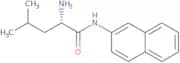
CAS:H-Leu-bNA is a gene product that has been activated and is involved in the production of chronic arthritis. H-Leu-bNA is a basic protein that catalyzes the conversion of chloromethyl ketone to iodoacetic acid, which then converts neutral ph substances to acidic ph substances. This enzyme also catalyzes the conversion of amino acids to their corresponding amines and ammonia. H-Leu-bNA may be involved in autoimmune diseases with acidic phs, such as rheumatoid arthritis. It has an optimum pH of 7.4 and will not work at higher or lower pHs. The sequences for this enzyme are found in plants, but it is not found in humans or animals.br>
H-Leu-bNA can be used as a kinetic tool to measure enzyme activity. Kinetic data for this enzyme show that it has a high affinity for chloromethyl ketone and can be inhibited by certain chemicals,Formula:C16H20N2OPurity:Min. 95%Molecular weight:256.34 g/molH-Pro-met-oh
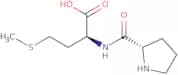
CAS:H-Pro-met-oh is an endoplasmic protein that is activated by the acidic α subunit. It belongs to a class of molecules called incompletely activated proteins, which are synthesized in the endoplasmic reticulum. H-Pro-met-oh has been shown to be a potential cancer therapeutic agent. The biochemical and cellular effects of this drug have been studied in vitro on C2C12 cells, which are mouse muscle cells. H-Pro-met-oh has been shown to stimulate fetal bovine growth factor (FGF), which may have therapeutic applications for treating cancer or other diseases where FGF levels are reduced.Formula:C10H18N2O3SPurity:Min. 95%Molecular weight:246.33 g/molBz-Ala-Arg-OH
CAS:Bz-Ala-Arg-OH (BAR) is a peptidase that hydrolyzes peptide bonds in proteins. BAR has been shown to have an intravascular function, which means it is found in the blood and vascular endothelium. BAR has also been shown to be an effective agent for inhibiting the release of hydrogen peroxide (H2O2) induced by dimethylthiourea in isolated rat lungs. BAR was isolated from the rat hypothalamus and shows a high degree of similarity to other peptidases such as aminopeptidase N, carboxypeptidase A, and carboxypeptidase B. These enzymes are involved in the catabolism of hormones such as angiotensin II, adrenocorticotropic hormone, and vasopressin.
Formula:C16H23N5O4Purity:Min. 95%Molecular weight:349.39 g/molZ-Ala-His-OH
CAS:Z-Ala-His-OH is a peptide consisting of three amino acids. It has been shown to have an optimal activity at pH 4.5, and can be recycled. Z-Ala-His-OH is synthesized by introducing the amino acid building blocks into a reaction system, where they are systematically introduced at different positions in order to produce the desired peptide sequence. Z-Ala-His-OH is an ionizable molecule that shows high affinity for the active site of its target enzyme. This property makes it useful in solvents with low dielectric constants, such as water or organic solvents with acidic properties. The kinetic behavior of this molecule has been studied systematically by measuring its rate of reaction in different solvents with different pH values and concentrations of reactants.END>Formula:C17H20N4O5Purity:Min. 95%Molecular weight:360.36 g/molEpsilon-Maleimidocaproic acid-(2-nitro-4-sulfo)-phenyl ester·sodium salt
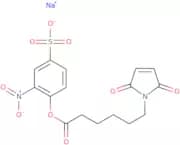
CAS:Epsilon-Maleimidocaproic acid-(2-nitro-4-sulfo)-phenyl ester·sodium salt (EMAP) is a crosslinker that belongs to the group of heterobifunctional reagents. It has been used to conjugate monoclonal antibodies with other molecules, such as toxins. EMAP is activated by the dianion generated by protonation of the nitro groups on the phenyl ring and reacts with free amines or thiols in proteins. EMAP can be used for labeling immunotoxins for diagnostic use, maximizing detection sensitivity, and crosslinking DNA molecules for use in molecular cloning experiments.Formula:C16H15N2NaO9SPurity:Min. 95%Molecular weight:434.35 g/molH-Met-Leu-OH
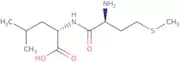
CAS:H-Met-Leu-OH is a peptide that is a protonated form of the amino acid, methionine. It has been shown to have transient activity in the pancreas and testes. H-Met-Leu-OH is also a substrate for a number of enzymes including peptidases, which cleave it into smaller molecules. The presence of H-Met-Leu-OH in polyacrylamide gels can be detected by photooxidation or by using an electrophoresis method. H-Met-Leu-OH is used as a marker to show the purity of proteins and peptides during solubilization and electrophoresis.Formula:C11H22N2O3SPurity:Min. 95%Molecular weight:262.37 g/molCRAMP (mouse) trifluoroacetate salt
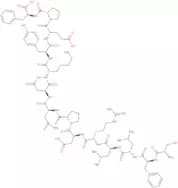
CAS:Please enquire for more information about CRAMP (mouse) trifluoroacetate salt including the price, delivery time and more detailed product information at the technical inquiry form on this pageFormula:C178H302N50O46Purity:Min. 95%Molecular weight:3,878.61 g/molSuc-Ala-Ala-Pro-Lys-pNA
CAS:Suc-Ala-Ala-Pro-Lys-pNA is a hybrid peptide that was expressed and purified from the gene product of the human serine protease, pancreatic elastase. It has been shown to have high salt and pH stability and predominately exists as a single polypeptide chain. Suc-Ala-Ala-Pro-Lys-pNA has been shown to enhance the immunofluorescence of inflammatory cells in vitro, suggesting it may be used as a therapeutic agent for inflammatory diseases. In addition, this hybrid peptide has also demonstrated protease activity.
Formula:C27H39N7O9Purity:Min. 95%Molecular weight:605.64 g/molH-D-Ala-Gln-octadecyl ester·HCl
CAS:Please enquire for more information about H-D-Ala-Gln-octadecyl ester·HCl including the price, delivery time and more detailed product information at the technical inquiry form on this page
Formula:C26H51N3O4·HClPurity:Min. 95%Molecular weight:506.16 g/molFmoc-D-Trp(Me)-OH
CAS:Controlled ProductPlease enquire for more information about Fmoc-D-Trp(Me)-OH including the price, delivery time and more detailed product information at the technical inquiry form on this page
Formula:C27H24N2O4Purity:Min. 95%Molecular weight:440.49 g/molTRAP-14 trifluoroacetate salt
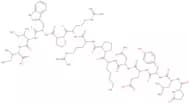
CAS:TRAP-14 is a conformationally restricted peptide that binds to the thrombin receptor. TRAP-14 also has a biocompatible polymer backbone that can be used in vivo as an implant. The TRAP-14 peptide has been shown to inhibit thrombin activity and inhibit the expression of basic fibroblast growth factor. In addition, this drug showed an ability to suppress autoimmune diseases in vivo by blocking Ca2+ release from the cytosol. This drug also showed inhibition of polymerase chain reaction (PCR) amplification and increased the specificity of PCR for DNA sequences containing polyvinyl disulfide bonds.Formula:C81H118N20O23Purity:Min. 95%Molecular weight:1,739.92 g/mol(D-Trp11)-Neurotensin acetate salt
CAS:Acetate saltFormula:C80H122N22O19Purity:Min. 95%Molecular weight:1,695.96 g/molH-Trp(Boc)-2-chlorotrityl resin (200-400 mesh) (Low Substitution)
Please enquire for more information about H-Trp(Boc)-2-chlorotrityl resin (200-400 mesh) (Low Substitution) including the price, delivery time and more detailed product information at the technical inquiry form on this page
Purity:Min. 95%Fmoc-Glu(OtBu)-Ser(Psi(Me,Me)pro)-OH
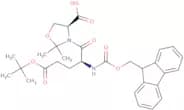
CAS:Please enquire for more information about Fmoc-Glu(OtBu)-Ser(Psi(Me,Me)pro)-OH including the price, delivery time and more detailed product information at the technical inquiry form on this pageFormula:C30H36N2O8Purity:Min. 95%Color and Shape:PowderMolecular weight:552.62 g/molH-Tyr-Lys-OH
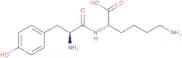
CAS:H-Tyr-Lys-OH is a small drug molecule that has been shown to inhibit protein synthesis. It binds to the active site of the transcription-polymerase chain and competitively inhibits the binding of RNA polymerase. H-Tyr-Lys-OH has also been shown to have anti-inflammatory properties, which may be due to its ability to inhibit prostaglandin synthesis. H-Tyr-Lys-OH's conformational properties are similar to those found in proteins such as glutamic acid and lysine.Formula:C15H23N3O4Purity:Min. 95%Molecular weight:309.36 g/molZ-Ala-Arg-OH
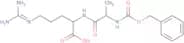
CAS:Z-Ala-Arg-OH is a low molecular weight carboxylate that has an acidic, hydrophobic side chain. The chemical formula for Z-Ala-Arg-OH is C11H18N4O6. The chemical structure of Z-Ala-Arg-OH can be found in the figure below:
Z-Ala-Arg-OH is an ionizable, acidic compound with a pKa of 3.5. The functional groups on Z-Ala-Arg-OH are shown in the figure below:
The carboxylate group and the amine group are present in this molecule.
Z-Ala-Arg-OH is a transpeptidase, which catalyses the posttranslational modification of proteins by transferring amino acids from one protein to another during translation or after translation. Transpeptidases are important enzymes in bacterial cell wall synthesis because they catalyze peptide bond formation between two amino acidFormula:C17H25N5O5Purity:Min. 95%Molecular weight:379.41 g/molNps-Lys(Boc)-OH·DCHA
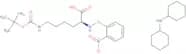
CAS:Controlled ProductPlease enquire for more information about Nps-Lys(Boc)-OH·DCHA including the price, delivery time and more detailed product information at the technical inquiry form on this page
Formula:C17H25N3O6S·C12H23NPurity:Min. 95%Molecular weight:580.78 g/molPeptide 810
CAS:Peptide 810 is a growth factor that binds to the insulin receptor on the surface of cells. It has been shown to inhibit apoptosis in beta cells by binding to the insulin receptor and inhibiting phosphorylation of the insulin receptor at tyrosine residue 1135, thereby preventing apoptosis. This peptide also binds to other receptors, such as kinase and factor receptors, which are involved in regulating cell proliferation. Peptide 810 is secreted by recombinant proteins, and genetic analyses have shown that it is active against P. aeruginosa. It has also been used as a diagnostic tool for infectious diseases and has been used in assays for kinase receptors and factor receptors. The gene product of this peptide has been expressed in staphylococcus aureus cells, which have been tested as a vaccine against cancer.Formula:C59H91N13O17SPurity:Min. 95%Molecular weight:1,286.5 g/mol