


Amino Acids (AA)
Subcategories of "Amino Acids (AA)"
- Amino Acid Derivatives(4,017 products)
- Amino Acid and Amino Acid Related Compounds(3,491 products)
- Amino Acids with Oxygen or Sulphur(168 products)
- Boc- Amino Acids(351 products)
- Fmoc Amino Acids(1,710 products)
Found 38385 products of "Amino Acids (AA)"
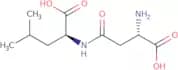
H-Asp(Leu-OH)-OH
CAS:H-Asp(Leu-OH)-OH is a bioactive molecule that can induce apoptosis in cancer cells. Mechanistically, this compound induces apoptosis by increasing the amount of reactive oxygen species (ROS) and reducing mitochondrial membrane potential in cancer cells. The anti-cancer activity of H-Asp(Leu-OH)-OH has been shown to be dose dependent and it has been observed to cause vacuolization in kidney cells. Chemical compositions show that H-Asp(Leu-OH)-OH is composed of Aspartic acid, Leucine, and Hydroxyl groups.
Formula:C10H18N2O5Purity:Min. 95%Molecular weight:246.26 g/molRef: 3D-FA108002
Discontinued productAQEE-30 (mouse, rat) trifluoroacetate salt
CAS:Please enquire for more information about AQEE-30 (mouse, rat) trifluoroacetate salt including the price, delivery time and more detailed product information at the technical inquiry form on this page
Formula:C156H245N47O56Purity:Min. 95%Molecular weight:3,674.9 g/molRef: 3D-FA110034
Discontinued productGAP 26 trifluoroacetate salt
CAS:13-mer connexin mimetic peptide, composed of residue numbers 63-75 of the first extracellular loop of connexin 43 (gap junction blocker), containing the SHVR amino acid motif.Formula:C70H107N19O19SPurity:Min. 95%Molecular weight:1,550.78 g/molRef: 3D-FG110169
Discontinued productBiotinyl-(Gln1)-Gastrin I (human) Biotinyl-Gln-Gly-Pro-Trp-Leu-Glu-Glu-Glu-Glu-Glu-Ala-Tyr-Gly-Trp-Met-Asp-Phe-NH2
CAS:Please enquire for more information about Biotinyl-(Gln1)-Gastrin I (human) Biotinyl-Gln-Gly-Pro-Trp-Leu-Glu-Glu-Glu-Glu-Glu-Ala-Tyr-Gly-Trp-Met-Asp-Phe-NH2 including the price, delivery time and more detailed product information at the technical inquiry form on this page
Formula:C107H141N23O33S2Purity:Min. 95%Molecular weight:2,341.53 g/molRef: 3D-FB109589
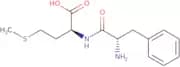
Discontinued productH-Phe-Met-OH
CAS:H-Phe-Met-OH is a postulated, synthetic, odorant binding molecule that has been reported to have high specificity for leukemia cells. H-Phe-Met-OH binds specifically to the surface of leukemia cells and stabilizes them. It also potentiates the effect of other drugs used in leukemia therapy. These properties make it an ideal candidate for developing new treatments for leukemias.
Formula:C14H20N2O3SPurity:Min. 95%Molecular weight:296.39 g/molRef: 3D-FP108145
Discontinued productAloc-DL-Orn (Boc)-OH·DCHA
CAS:Controlled ProductPlease enquire for more information about Aloc-DL-Orn (Boc)-OH·DCHA including the price, delivery time and more detailed product information at the technical inquiry form on this page
Formula:C14H24N2O6·C12H23NPurity:Min. 95%Molecular weight:497.67 g/molRef: 3D-FA107927
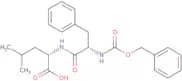
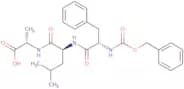
Discontinued productZ-Phe-Leu-OH
CAS:Z-Phe-Leu-OH is a protease inhibitor that belongs to the group of peptidyl-protease inhibitors. It inhibits the activity of a wide range of proteases and is specifically active against carboxypeptidases A and B. Z-Phe-Leu-OH has been shown to be specific for these enzymes, with no inhibitory activity against other proteases such as aminopeptidases, serine proteases, or metalloproteases. The amino acid composition of this protease inhibitor is different from other inhibitors that have been studied in detail. This agent was found to be more effective than phenylmethylsulfonyl fluoride (PMSF) at inhibiting carboxypeptidase A and B.
Z-Phe-Leu-OH has been shown to be an acidic compound with a pKa of 5.5; however, it does not react with chloromethyl ketoneFormula:C23H28N2O5Purity:Min. 95%Molecular weight:412.48 g/molRef: 3D-FP110846
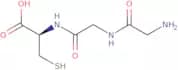
Discontinued productH-Gly-Gly-Cys-OH
CAS:Glycyl-glycine is an inhibitory compound that is a synthetic analog of an endogenous amino acid. The functional theory of glycyl-glycine is based on the carbonyl group, which is in an amide form with a hydroxyl group, and the inhibitory activities are due to its ion-exchange properties. Glycyl-glycine has been shown to have inhibitory effects on the growth of bacteria by binding to DNA in vitro. This binding interferes with transcription and replication. It also binds to specific DNA sequences, which may be due to its helical structure and disulfide bond. In addition, it has been shown that this compound can be metabolized into various metabolic products such as urea and glycine. Glycyl-glycine also inhibits protein synthesis by interfering with ribosomes in bacterial cells.br>br>
Glycyl-glycine binds to proteins in bacteria cells that are involved in transcription and translationFormula:C7H13N3O4SPurity:Min. 95%Molecular weight:235.26 g/molRef: 3D-FG108974
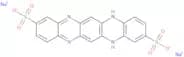
Discontinued productPhacolysine sodium salt
CAS:Phacolysine sodium salt is a drug that activates the choroidal neovascularization receptor. It has been shown to inhibit the growth of tumors by synchronous fluorescence and disulfide bond binding. Phacolysine sodium salt has shown clinical efficacy in the treatment of choroidal neovascularization, with an average success rate of 75%. It has also been shown to be effective in treating other types of cancer, such as prostate cancer. In addition, it has antioxidative properties and can inhibit prostaglandin synthesis. This medicine is sometimes used in combination with ondansetron hydrochloride and benzalkonium chloride for pharmacological treatment.
Formula:C18H10N4Na2O6S2Purity:Min. 95%Color and Shape:Red PowderMolecular weight:488.41 g/molRef: 3D-FP26858
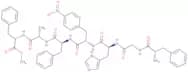
Discontinued productH-Phe-Gly-His-p-nitro-Phe-Phe-Ala-Phe-OMe
CAS:H-Phe-Gly-His-p-nitro-Phe-Phe-Ala-Phe-OMe is a protonated amino acid. It has been shown to have a high affinity for the histidine subsite of human thrombin. This compound has been found to have a kinetic rate of hydrolysis that is competitive with that of aspartic acid, but slower than that of valine. H-Phe-Gly-His-p-nitro-Phe--Phe--Ala--Phe--OMe also functions as an anticoagulant and inhibits clotting by inhibiting the conversion of fibrinogen to fibrin.
Formula:C48H54N10O10Purity:Min. 95%Molecular weight:931 g/molRef: 3D-FP109290
Discontinued productPhenylacetyl-(D-Arg2·28,p-chloro-Phe6, Homoarg 9·29,Tyr(Me)10, Abu 15, Nle 27)-GRF (1-29) amide (human)
CAS:Please enquire for more information about Phenylacetyl-(D-Arg2·28,p-chloro-Phe6, Homoarg 9·29,Tyr(Me)10, Abu 15, Nle 27)-GRF (1-29) amide (human) including the price, delivery time and more detailed product information at the technical inquiry form on this pageFormula:C172H284ClN53O41Purity:Min. 95%Molecular weight:3,785.88 g/molRef: 3D-FP109391
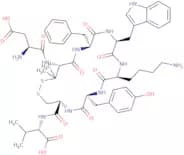
Discontinued product(Pen 5)-Urotensin II (4-11) (human) trifluoroacetate salt
CAS:Please enquire for more information about (Pen 5)-Urotensin II (4-11) (human) trifluoroacetate salt including the price, delivery time and more detailed product information at the technical inquiry form on this page
Formula:C52H68N10O12S2Purity:Min. 95%Molecular weight:1,089.29 g/molRef: 3D-FP109652
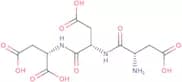
Discontinued productH-Asp-Asp-Asp-OH
CAS:H-Asp-Asp-Asp-OH is a peptide that has been shown to disrupt the cytosol and cause apoptosis. It can also induce proteolytic maturation and modulate autocatalytic functions. H-Asp-Asp-Asp-OH induces apoptosis by activating caspase 9 and caspase 3, which cleaves poly (ADP ribose) polymerase (PARP). This leads to DNA fragmentation, chromatin condensation, nuclear fragmentation, cell shrinkage, membrane blebbing, and nuclear pyknosis. H-Asp-Asp-Asp-OH binds to the regulatory domain of caspase 9 and prevents it from being activated. The peptide also activates caspase 8 by binding to its regulatory domain, which then activates caspases 3 and 7. H-Asp-Asp-Asp-OH also stimulates the release of granzyme B from cytot
Formula:C12H17N3O10Purity:Min. 95%Molecular weight:363.28 g/molRef: 3D-FA110342
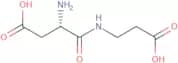
Discontinued productH-Asp-beta-Ala-OH
CAS:Please enquire for more information about H-Asp-beta-Ala-OH including the price, delivery time and more detailed product information at the technical inquiry form on this page
Formula:C7H12N2O5Purity:Min. 90 Area-%Color and Shape:PowderMolecular weight:204.18 g/molRef: 3D-FA107994
Discontinued productCalcium-Like Peptide
CAS:Please enquire for more information about Calcium-Like Peptide including the price, delivery time and more detailed product information at the technical inquiry form on this page
Formula:C40H75N9O10Purity:Min. 95%Molecular weight:842.08 g/molRef: 3D-FC110290
Discontinued productAcetyl-Amylin (8-37) (human)
CAS:Please enquire for more information about Acetyl-Amylin (8-37) (human) including the price, delivery time and more detailed product information at the technical inquiry form on this pageFormula:C140H218N42O46Purity:Min. 95%Molecular weight:3,225.48 g/molRef: 3D-FA108763
Discontinued productZ-Phe-Leu-Ala-OH
CAS:Z-Phe-Leu-Ala-OH is a homologous protein that has been shown to have proteolytic activity. It has a neutral pH and is stable in the presence of metal ions. This enzyme is structurally similar to subtilisin, with a sequence of residues containing two histidine residues, which are important for stability. The kinetic parameters of this enzyme were determined by analyzing its activity under different conditions and at different temperatures. The mutant Z-Phe-Leu-Ala-OH was found to be more active than the wild type at high temperature, but less active at low temperature, suggesting that the protein could be used as an industrial catalyst in food processing or chemical production.
Formula:C26H33N3O6Purity:Min. 95%Molecular weight:483.56 g/molRef: 3D-FP111552
Discontinued product(3-(4-Azidophenyl)propionyl1,D-Tyr(Me)2,Arg6,Arg8,Tyr-NH29)-Vasopressin trifluoroacetate salt
CAS:Please enquire for more information about (3-(4-Azidophenyl)propionyl1,D-Tyr(Me)2,Arg6,Arg8,Tyr-NH29)-Vasopressin trifluoroacetate salt including the price, delivery time and more detailed product information at the technical inquiry form on this pageFormula:C63H84N20O13Purity:Min. 95%Molecular weight:1,329.47 g/molRef: 3D-FA109005
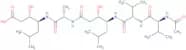
Discontinued productAcetyl-Pepstatin Ac-Val-Val-Sta-Ala-Sta-OH
CAS:Acetyl-Pepstatin is a protein data inhibitor that binds to the active site of enzymes, inhibiting their function. Acetyl-pepstatin has been shown to inhibit cathepsin D, chymotrypsin, and trypsin. It also inhibits the activity of proteases in the stomach and intestinal tract. Acetyl-Pepstatin is used as an anti-inflammatory drug for the treatment of chronic obstructive pulmonary disease (COPD) and congestive heart failure (CHF). The inhibition of these enzymes reduces inflammation by preventing the activation of inflammatory cytokines. It also prevents collagen from being degraded by proteases, which leads to decreased degradation of cartilage by chondrocytes. This drug's mechanism is similar to that of acetylsalicylic acid (aspirin), in that it inhibits prostaglandin synthesis.br>
Formula:C31H57N5O9Purity:Min. 95%Molecular weight:643.81 g/molRef: 3D-FA111026
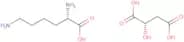
Discontinued productL-Lysine L-malate
CAS:L-Lysine L-malate is a chemical compound that is used in wastewater treatment. It inhibits the activity of enzymes such as carbon disulphide oxidase, copper complexes, and cationic surfactants. L-Lysine L-malate can be synthesized from sodium citrate and malonic acid by reacting with hydrogen peroxide to form a bicyclic heterocycle. This compound has been shown to have biological effects on metabolic disorders in animal studies, which may be due to its ability to inhibit the synthesis of fatty acids and proteins. The adsorption mechanism for this product is unknown.
Formula:C6H14N2O2·C4H6O5Purity:Min. 95%Color and Shape:White PowderMolecular weight:280.28 g/molRef: 3D-FL24966
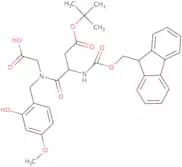
Discontinued productFmoc-D-Asp(OtBu)-(Hmb)Gly-OH
CAS:Please enquire for more information about Fmoc-D-Asp(OtBu)-(Hmb)Gly-OH including the price, delivery time and more detailed product information at the technical inquiry form on this page
Formula:C33H36N2O9Purity:Min. 95%Molecular weight:604.65 g/molpTH (1-31) amide (human)
CAS:pTH (1-31) amide is a polymer conjugate that is used to treat osteoporosis. It has been shown to be effective in reducing the risk of fracture and increasing bone mineral density in animals. The compound binds to the extracellular domain of the estrogen receptor, altering its conformation and preventing it from interacting with other proteins in the nucleus. pTH (1-31) amide has also been shown to reduce blood pressure in animals by inhibiting angiotensin-converting enzyme. Clinical data on this drug are limited, but it has been well tolerated so far.Formula:C162H270N50O46S2Purity:Min. 95%Molecular weight:3,718.32 g/molRef: 3D-FP108995
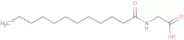
Discontinued productLauroyl-glycine
CAS:Lauroyl-glycine is a fatty acid with a long acyl chain. It is an intermediate in the synthesis of lauric acid, which is used in the production of detergents and soaps. Lauroyl-glycine has been shown to be useful as a model system for skin condition studies due to its detergent properties.
Formula:C14H27NO3Purity:Min. 95%Molecular weight:257.37 g/molRef: 3D-FL49072
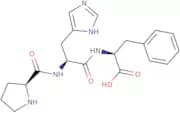
Discontinued productH-Pro-His-Phe-OH
CAS:H-Pro-His-Phe-OH is a proteolytic enzyme that belongs to the group of serine proteases. It is a member of the subtilisin family and has been used in research for its ability to cleave proteins at random. H-Pro-His-Phe-OH has been shown to hydrolyze lactococcal proteinase and other serine proteases, such as trypsin, chymotrypsin, and elastase.
Formula:C20H25N5O4Purity:Min. 95%Molecular weight:399.44 g/molRef: 3D-FP109350
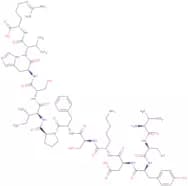
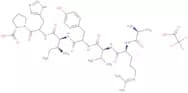
Discontinued productAngiotensin A (1-7) trifluoroacetate
CAS:Endogenous heptapetide which causes vasodilation and has anti-hypertensive properties.
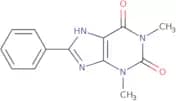
Formula:C40H62N12O9•(C2HF3O2)xPurity:Min. 95%Color and Shape:PowderMolecular weight:855 g/mol8-Phenyltheophylline
CAS:Controlled Product8-Phenyltheophylline (8PT) is an adenosine receptor agonist that is used as a bronchodilator for the treatment of asthma. It has been shown to increase the intracellular calcium concentration in hl-60 cells and in rat papillary muscles. 8PT also has locomotor activating effects, which are thought to be due to its ability to block potassium channels in the hippocampal formation. These effects may be related to ATP-sensitive potassium channels, which have been shown to be sensitive to ATP in untreated mice. 8PT also has anti-arrhythmic properties, which may be due to its ability to inhibit sodium channels and its effect on heart rate and contractility.
Formula:C13H12N4O2Purity:Min. 95%Color and Shape:PowderMolecular weight:256.26 g/molRef: 3D-FP165348
Discontinued productH-Asp-Phe-NH2 trifluoroacetate
CAS:Please enquire for more information about H-Asp-Phe-NH2 trifluoroacetate including the price, delivery time and more detailed product information at the technical inquiry form on this page
Formula:C13H17N3O4•(C2HF3O2)xPurity:Min. 95%Ref: 3D-FH184031
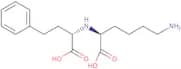
Discontinued productN2-(S)-1-Carboxy-3-phenylpropyl-L-lysine
CAS:Please enquire for more information about N2-(S)-1-Carboxy-3-phenylpropyl-L-lysine including the price, delivery time and more detailed product information at the technical inquiry form on this page
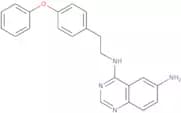
Formula:C16H24N2O4Purity:Min. 95%Molecular weight:308.37 g/molEVP4593
CAS:6-Amino-4-(4-phenoxyphenylethylamino)quinazoline is a potential anticancer drug that has been shown to inhibit the polymerase chain reaction in human osteosarcoma cells. It also inhibits the signaling pathway of nuclear factor-κB (NF-κB), which is involved in cell death and tumorigenesis. 6-Amino-4-(4-phenoxyphenylethylamino)quinazoline has shown significant cytotoxicity against murine hepatoma cells and bowel disease cells, but not against normal tissue. This drug is also an inhibitor of the drug transporter Pgp. 6-Amino-4-(4-phenoxyphenylethylamino)quinazoline has been shown to be effective in experimental models for cancer, AIDS, and other infectious diseases.Formula:C22H20N4OPurity:Min. 95%Color and Shape:PowderMolecular weight:356.42 g/molRef: 3D-FA17546
Discontinued productThymopentin acetate salt
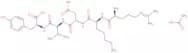
CAS:Controlled ProductThymopentin acetate salt H-Arg-Lys-Asp-Val-Tyr-OH acetate salt is an experimental model system that has been shown to replicate the physiological effects of thymopoietin in vitro. It has also been shown to inhibit the growth of Candida glabrata, a fungus that causes infection in patients with HIV or AIDS. Thymopentin acetate salt H-Arg-Lys-Asp-Val-Tyr-OH acetate salt has been shown to activate both toll like receptor and IL2 receptor, which may be due to its ability to stimulate polyamine synthesis.Formula:C30H49N9O9Purity:Min. 95%Molecular weight:679.77 g/mol4-[2-[[(1S)-1-(2-Aminophenyl)-3-methylbutyl]amino]-2-oxoethyl]-2-ethoxybenzoic acid
CAS:Bosentan is a potent inhibitor of the uptake of organic anions. It is used in the treatment of pulmonary arterial hypertension and has been shown to be effective against pravastatin-resistant HIV protease inhibitors, such as saquinavir, quinidine, and rosuvastatin. Bosentan inhibits uptake by binding to the transporter protein at a site that does not overlap with the binding site for organic anion substrates. This leads to a change in kinetic parameters for substrates, such as pravastatin and saquinavir. The binding site on bosentan may also be elucidated through monolayer experiments with efflux transporters.
Formula:C22H28N2O4Purity:Min. 95%Molecular weight:384.47 g/molRef: 3D-FD21379
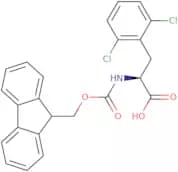
Discontinued productFmoc-2,6-dichloro-L-phenylalanine
CAS:Please enquire for more information about Fmoc-2,6-dichloro-L-phenylalanine including the price, delivery time and more detailed product information at the technical inquiry form on this page
Formula:C24H19Cl2NO4Purity:Min. 95%Molecular weight:456.32 g/molRef: 3D-FF48009
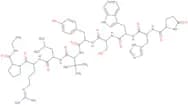
Discontinued product(Des-Gly10, tBu-D-Gly6,Pro-NHEt 9)-LHRH acetate salt
CAS:(Des-Gly10, tBu-D-Gly6,Pro-NHEt 9)-LHRH acetate salt Pyr-His-Trp-Ser-Tyr-tBu-D-Gly-Leu-Arg-Pro-NHEt acetate salt is a synthetic hormone that belongs to the group of gonadotropin releasing hormones (GnRH). It is used in veterinary medicine to stimulate ovulation and follicular growth in animals. (Des-Gly10, tBu-D-Gly6, Pro -NHEt9)-LHRH acetate salt Pyr -His -Trp -Ser -Tyr -tBu -D -Gly -Leu -Arg -Pro NHEt acetate salt is a prodrug that is hydrolyzed in vivo to buserelin, its active form. This drug has been shown to be effective against estradiol benzoate and sodium salts
Formula:C59H84N16O12·xC2H4O2Purity:Min. 95%Molecular weight:1,209.4 g/molRef: 3D-FD109861
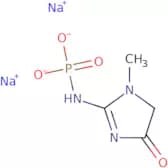
Discontinued productDisodium (1-methyl-4-oxoimidazolidin-2-ylidene)phosphoramidate
CAS:Please enquire for more information about Disodium (1-methyl-4-oxoimidazolidin-2-ylidene)phosphoramidate including the price, delivery time and more detailed product information at the technical inquiry form on this page
Formula:C4H6N3O4PNa2Purity:Min. 80 Area-%Color and Shape:PowderMolecular weight:237.06 g/mol5-[(1-Methylindole-3-yl)carbonyl]-4,5,6,7-tetrahydro-1H-bezimidazole
CAS:Controlled Product5-[(1-Methylindole-3-yl)carbonyl]-4,5,6,7-tetrahydro-1H-bezimidazole is a reactive heterocyclic compound. It is a carboxylic acid and an amide with a peptic and cephalalgic effect. The symptoms of 5-[(1-methylindole-3-yl)carbonyl]-4,5,6,7-tetrahydro-1H-bezimidazole are hemicrania and amnesia. It has been expressed in the calf thymus DNA.
Formula:C17H17N3OPurity:Min. 95%Molecular weight:279.34 g/mol






![4-[2-[[(1S)-1-(2-Aminophenyl)-3-methylbutyl]amino]-2-oxoethyl]-2-ethoxybenzoic acid](/_next/image/?url=https%3A%2Fstatic.cymitquimica.com%2Fproducts%2F3D%2Fthumb-webp%2FFD21379.webp&w=3840&q=75)
![5-[(1-Methylindole-3-yl)carbonyl]-4,5,6,7-tetrahydro-1H-bezimidazole](/_next/image/?url=https%3A%2Fstatic.cymitquimica.com%2Fproducts%2F3D%2Fthumb-webp%2FFM148522.webp&w=3840&q=75)