


Amino Acids (AA)
Subcategories of "Amino Acids (AA)"
- Amino Acid Derivatives(4,014 products)
- Amino Acid and Amino Acid Related Compounds(3,490 products)
- Amino Acids with Oxygen or Sulphur(168 products)
- Boc- Amino Acids(351 products)
- Fmoc Amino Acids(1,710 products)
Found 38368 products of "Amino Acids (AA)"
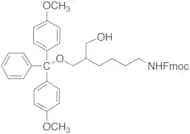
1-O-Dimethoxytrityl-2-(N-Fmoc)-4-Aminobutyl)-1,3-propanediol, >95%
CAS:Stability Very Hygroscopic
Applications 1-O-Dimethoxytrityl-2-(N-Fmoc)-4-Aminobutyl)-1,3-propanediol is a useful reagent for the synthesis of acridine and/or lipid containing oligodeoxyribonucleotides.
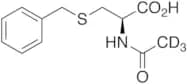
References Marasco, C. J., et al.: Tetra. Lett., 35, 3029 (1994)Formula:C43H45NO6Purity:90%Color and Shape:Off White SolidMolecular weight:671.82N-(Acetyl-d3)-S-benzyl-L-cysteine
CAS:Controlled ProductApplications A labelled metabolite of Toluene.
References Gargas, M., et al.: Toxicol. Appl. Pharmacol., 98, 87 (1989), Commandeur, J., et al.: Pharmacol. Rev., 47(2), 271 (1995), Campo, P., et al.: Neurotoxicol. Teratol., 21, 427 (1999), Lohse, C., et al.: J. Agr. Food Chem., 48, 5913 (2000),Formula:C122H3H12NO3SColor and Shape:White To Off-WhiteMolecular weight:256.34(S)-(+)-2-Methylbutyric Acid
CAS:Controlled ProductStability Hygroscopic
Applications (S)-(+)-2-Methylbutyric Acid is a chiral starting reagent used in various synthetic preparations.
Not a dangerous good if item is equal to or less than 1g/ml and there is less than 100g/ml in the package
References Neves, F., et al.: Beilstein. J. Org. Chem., 7, 1504 (2011); King, A.M., et al.: J. Medn. Chem., 54, 6432 (2011); Ferrarni, A., et al.: Chirality., 26, 9 (2011);Formula:C5H10O2Color and Shape:NeatMolecular weight:102.1324-(furan-2-carbonyl)-8-propyl-1-oxa-4,8-diazaspiro[4.5]decane-3-carboxylic acid
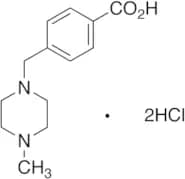
CAS:Purity:95.0%Molecular weight:322.36099243164064-(4-Methylpiperazinomethyl)benzoic Acid, Dihydrochloride
CAS:Controlled ProductStability Hygroscopic
Applications 4-(4-Methylpiperazinomethyl)benzoic Acid, Dihydrochloride (cas# 106261-49-8) is a compound useful in organic synthesis.Formula:C13H18N2O2·2ClHColor and Shape:NeatMolecular weight:307.22Thiodiglycolic Acid-d4
CAS:Controlled ProductApplications Thiodiglycolic Acid-d4 acts as a reagent for the synthesis of metabolites of S-carboxymethyl-L-cysteine and S-methyl-L-Cysteine and of some isotoically labelled (2H, 13C) analogs.
References Meese, C. O., et al.: Archiv der Pharmazie, 323, 957 (1990)Formula:C4D4H2O4SColor and Shape:NeatMolecular weight:154.17N-Epsilon-acetyl-l-lysine
CAS:Controlled ProductApplications N-Epsilon-acetyl-l-lysine is used in the metabolomics study on the combined effect of cocaine and ethanol via liquid chromatography-mass spectrometry metabolomics approach.
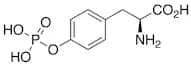
References Sanchez-Lopez, E., et al.: J. Pharm. Biomed. Anal., 140, 313 (2017)Formula:C8H16N2O3Color and Shape:NeatMolecular weight:188.22O-Phospho-L-tyrosine
CAS:Applications Useful in the study of tyrosine-phosphorylation, which has been linked with the malignant transformation of cells by some RNA tumour viruses.
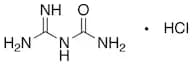
References Sefton, B.M., et al.: Cell, 20, 807 (1980), Erikson, R., et al.: Perspect. Virol., 11, 93 (1981), Lee, E-S, et al.: J. Org. Chem., 59, 2086 (1994)Formula:C9H12NO6PColor and Shape:NeatMolecular weight:261.17Carbamoyl-guanidine Amidino Urea
CAS:Controlled ProductApplications Carbamoyl-guanidine Amidino Urea Salt, Hydrochloride salt (cas# 926-72-7) is a compound useful in organic synthesis.
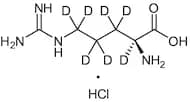
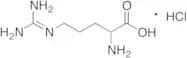
Formula:C2H6N4O·ClHColor and Shape:NeatMolecular weight:138.56L-Arginine-2,3,3,4,4,5,5-d7 HCl
CAS:Controlled ProductApplications L-Arginine-2,3,3,4,4,5,5-d7 HCl (CAS# 204244-77-9) is a useful isotopically labeled research compound. It can be used with Raman scattering for imaging living cells and organisms.
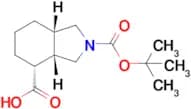
References Min, W., et al., PCT Int. Appl. (2014), WO 2014205074 A2Formula:C6D7H7N4O2·HClColor and Shape:NeatMolecular weight:217.7(3aS,4R,7aS)-2-(tert-Butoxycarbonyl)octahydro-1H-isoindole-4-carboxylic acid
CAS:Purity:98+%Molecular weight:269.34100341796875(2R)-3-Hydroxyisovaleroyl Carnitine
CAS:Controlled ProductStability Very Hygroscopic
Applications Hydroxyisovaleroyl Carnitine is used as a diagnostic tool to identify the presence of orofacial clefts. Also used in the screening and diagnostics of inborn errors of metabolism.
References Denes, J. et al.: Anal. Chem., 84, 10113 (2012); Budner, M. et al.: Arch. Oral. Biol., 58, 459 (2013);Formula:C12H23NO5Color and Shape:NeatMolecular weight:261.31L-2-Aminobutyric Acid-d6
CAS:Controlled ProductApplications L-2-Aminobutyric Acid-d6 is the isotope labelled analog of L-2-Aminobutyric Acid (A602930); a receptor antagonist.
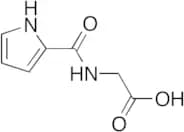
References Porter, D.J.T., et al.: Biochem. Pharmacol., 50, 1475 (1995)Formula:C4D6H3NO2Color and Shape:Off-WhiteMolecular weight:109.16N-(1H-pyrrol-2-ylcarbonyl)-Glycine
CAS:Controlled ProductApplications N-(1H-pyrrol-2-ylcarbonyl)-Glycine has been used as a diagnostic marker of hyperprolinemia type II.
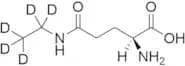
References Walker, V., et al.: Clinica Chimica Acta, 405, 153 (2009).Formula:C7H8N2O3Color and Shape:Off-WhiteMolecular weight:168.15L-Theanine-d5 (N-ethyl-d5)
CAS:Controlled ProductApplications L-Theanine-d5 (N-ethyl-d5) (CAS# 1217451-85-8) is the labelled version of L-Theanine (T340500(P)), which is a non-protein amino acid mainly found naturally in the green tea plant. It may have activity in modulating the metabolism of cancer chemotherapeutics agents.
References Yokohoshi, H., et al.: Neurochem Res., 23, 667 (1998), Sugiyama, T., et al.: Clin Cancer Res., 5, 413 (1999)Formula:C7D5H9N2O3Color and Shape:Off-WhiteMolecular weight:179.23Caerulein (>85%)
CAS:Controlled ProductApplications Caerulein is a ten amino acid oligopeptide that stimulates smooth muscle and increases digestive secretions. It is similar in action and composition to cholecystokinin. It stimulates gastric, biliary, and pancreatic secretion; and certain smooth muscle. It is used in paralytic ileus and as diagnostic aid in pancreatic malfunction. It is used to induce pancreatitis in experimental animal models.
References Anastasi,E., et al.: Ep., 23, 699 (1997); De Caro, G., et al.: Br. J. Pharmac Chemother., 33, 48 (1968)Formula:C58H73N13O21S2Purity:>85%Color and Shape:Off-WhiteMolecular weight:1352.4Lauryl Betaine
CAS:Controlled ProductStability Hygroscopic
Applications Lauryl Betaine is an amphoteric surfactant derived from N-dodecyl-N,N-dialkanol amine with protein denaturing potency. Lauryl Betaine is mainly used in shampoo, personal hygiene products and oil field chemicals.
Not a dangerous good if item is equal to or less than 1g/ml and there is less than 100g/ml in the package
References Kimura, Y. et al.: J. SCCJ, 29, 106 (1995); Qin, C. et al.: GUang. Huag., 34, 30 (2006); Peng, Z. et al.: Riy. HUax. Gong., 37, 135 (2007);Formula:C16H33NO2Color and Shape:White To Off-WhiteMolecular weight:271.444-(4-chloro-2-fluorobenzoyl)-8-propyl-1-oxa-4,8-diazaspiro[4.5]decane-3-carboxylic acid
CAS:Purity:95.0%Molecular weight:384.8299865722656Dl-Arginine Hydrochloride
CAS:Controlled ProductFormula:C6H14N4O2·ClHColor and Shape:NeatMolecular weight:210.66(±)-3-Amino-iso-butyric-2,3,3-d3 Acid
CAS:Controlled ProductApplications (±)-3-Amino-iso-butyric-2,3,3-d3 Acid is the labeled version of DL-3-Aminoisobutyric Acid (A603043(P)), which is a useful compound for suppressing atherosclerosis in apolipoprotein E-knockout mouse.
References Shimba, Y., et al.: Bio. Pharma. Bull., 43, 1016 (2020)Formula:C4D3H6NO2Color and Shape:White To Off-WhiteMolecular weight:106.14(2R)-3-Amino-2-fluoropropanoic Acid-13C3
CAS:Controlled ProductFormula:C3H6FNO2Color and Shape:NeatMolecular weight:110.06DL-Serine-2,3,3-d3
CAS:Controlled ProductApplications Labelled DL-Serine is used in the synthesis of novel tryptoline derivatives as IDO (indoleamine 2,3-Deoxygenase) inhibitors, for potential use in Alzheimer’s treatment.
References Tanaka, M. et al.: Bioorg. Med. Chem., 21, 1159 (2013);Formula:C32H3H4NO3Color and Shape:NeatMolecular weight:108.11D,L-Cystathionine-d4
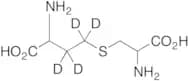
CAS:Controlled ProductApplications Isotope labelled Intermediate for transsulfuration whereby a mammal transfers the sulfur of methionine via homocysteine to cysteine.
References Thompson, J.W., et al.: J. Biol. Chem., 266, 17011 (1991), Yoshida, Y., et al.: Microbiol., 148, 3961 (2002), Jiracek, J., et al.: J. Med. Chem., 49, 3982 (2006),Formula:C72H4H10N2O4SColor and Shape:White To Light BrownMolecular weight:226.29L-3-Benzothienylalanine
CAS:Controlled ProductApplications L-3-Benzothienylalanine
Formula:C11H11NO2SColor and Shape:NeatMolecular weight:221.284-(3-nitrobenzoyl)-8-propyl-1-oxa-4,8-diazaspiro[4.5]decane-3-carboxylic acid
CAS:Purity:95.0%Molecular weight:377.3970031738281L-Aspartic Acid
CAS:Applications L-Aspartic Acid is a non-essential amino acid found in food sources. L-Aspartic Acid is one of the 20 proteinogenic amino acids; the building blocks of proteins. Its conjugate base L-aspartate is an excitatory neurotransmitter in the central nervous system.
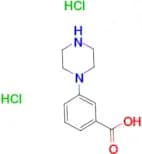
References Ager, D.J. et al.: J. Mol. Catal. Enzym., 11, 199 (2001); Velisek, J. et al.: Cze. J. Food. Sci., 24, 1 (2006); Nagahama, M. et al.: Cell Tiss. Res., 318, 483 (2004);Formula:C4H7NO4Color and Shape:WhiteMolecular weight:133.13-Piperazin-1-yl-benzoic acid dihydrochloride
CAS:Formula:C11H16Cl2N2O2Purity:96.0%Color and Shape:SolidMolecular weight:279.163-Ethyl-3-methylheptane
CAS:Controlled ProductStability Volatile
Applications 3-ETHYL-3-METHYLHEPTANE (cas# 17302-01-1) is a useful research chemical.
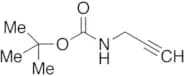
Not a dangerous good if item is equal to or less than 1g/ml and there is less than 100g/ml in the packageFormula:C10H22Color and Shape:NeatMolecular weight:142.28N-Boc-propargylamine
CAS:Controlled ProductApplications N-Boc-propargylamine is used in the preparation of triazolobenzylidene-thiazolopyrimidines which act as CDC25 phosphatase inhibitors. Also used in the synthesis of β-glucan polysaccharide analogs.
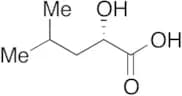
References Duval, R. et al.: J. Comb. Chem., 11, 947 (2009); Tanaka, H. et al.: Tetrahedron Lett., 53, 4104 (2012);Formula:C8H13NO2Color and Shape:NeatMolecular weight:155.2L-Leucic Acid
CAS:Controlled ProductApplications L-Leucic Acid is a reagent in the synthesis of cryptophycins based macrocyclic depsipeptides which are used as tubulin inhibitors.
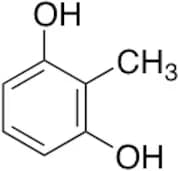
References Kumar, A., et al.: Eur. J. Med. Chem., 93, 55 (2015)Formula:C6H12O3Color and Shape:NeatMolecular weight:132.162-Methylresorcinol
CAS:Controlled ProductApplications 2-Methylresorcinol (cas# 608-25-3) is a useful research chemical.
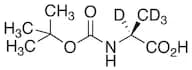
Not a dangerous good if item is equal to or less than 1g/ml and there is less than 100g/ml in the packageFormula:C7H8O2Color and Shape:Light YellowMolecular weight:124.14N-tert-Boc-L-alanine-D4
CAS:Controlled ProductApplications Used in peptide synthesis.
References Flohr, S., et al.: Chem. Eur. J., 5, 669 (1999), Kadereit, D., et al.: ChemBioChem., 1, 144 (2000), Volkert, M., et al.: Biol. Chem., 382, 1133 (2001),Formula:C82H4H11NO4Color and Shape:NeatMolecular weight:193.23Phenylacetyl-d5 L-Glutamine
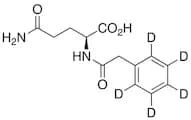
CAS:Controlled ProductApplications It is used as labelled biomarker for metabolic age.
References Selmer, T., et al.: Eur. J. Biochem., 268, 1363 (2001), Connelly, J., et al.: Drug Metab. Dispos., 30, 1357 (2002), Lindon, J., et al.: Pharm. Res., 23, 1075 (2006), Monteagudo, E., et al.: Xenobiotica, 37, 1000 (2007),Formula:C13D5H11N2O4Color and Shape:Off-White To Light YellowMolecular weight:269.31N-Methyl-1-propanamine
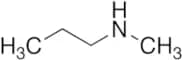
CAS:Applications A naturally occurring nitrostable secondary amine found in tabacco smoke condensate.
References Singer, G.M. et al.: J. Agric. Food Chem. 24, 553(1976); Bush, L. P. et al.: Can. J. Plant Sci. 50, 289(1970).Formula:C4H11NColor and Shape:ColourlessMolecular weight:73.14o-Cresolglycolic Acid
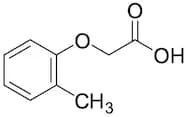
CAS:Controlled ProductApplications (2-methylphenoxy)acetic acid (cas# 1878-49-5) is a useful research chemical.
Formula:C9H10O3Color and Shape:NeatMolecular weight:166.178-benzyl-4-pentanoyl-1-oxa-4,8-diazaspiro[4.5]decane-3-carboxylic acid
CAS:Purity:95.0%Molecular weight:360.4540100097656Nalpha-Acetyl-L-ornithine
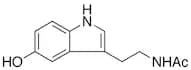
CAS:Controlled ProductFormula:C7H14N2O3Color and Shape:Off-WhiteMolecular weight:174.2N-Acetyl-5-hydroxytryptamine
CAS:Stability Hygroscopic
Applications A metabolite of Melatonin (M215000).
References Reiter, R.J., et al.: J. Biomed. Sci., 7, 444 (2000), Chen, Z., et al.: Am. J. Physiol, 284, 1618 (2003), Barrenetxe, J., et al.: J. Physiol. Biochem., 60, 61 (2004),Formula:C12H14N2O2Color and Shape:White To GreyMolecular weight:218.25185'-O-Methylthymidine
CAS:Controlled ProductApplications 5'-O-Methylthymidine (cas# 14504-60-0) is a useful research chemical.
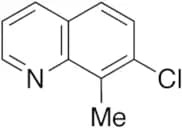
Formula:C11H16N2O5Color and Shape:White To Off-WhiteMolecular weight:256.267-Chloro-8-methylquinoline
CAS:Controlled ProductApplications 7-Chloro-8-methylquinoline (cas# 78941-93-2) is a compound useful in organic synthesis.
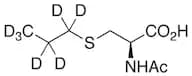
Formula:C10H8ClNColor and Shape:NeatMolecular weight:177.63N-Acetyl-S-(propyl-d7)-L-cysteine
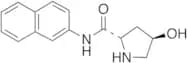
CAS:Controlled ProductFormula:C8D7H8NO3SColor and Shape:Off-WhiteMolecular weight:212.32trans 4-Hydroxy-L-proline β-Naphthylamide
CAS:Controlled ProductApplications Used for colorimetric determination of peptidase activity in bacteria.
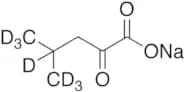
Formula:C15H16N2O2Color and Shape:NeatMolecular weight:256.34-Methyl-2-oxovaleric Acid-d7 Sodium Salt
CAS:Controlled ProductApplications Labelled 4-Methyl-2-oxovaleric Acid, an α-ketomonocarboxylic acid that triggers insulin release by acting upon receptor sites which differ from those occupied by amino acids. 4-Methyl-2-oxovaleric Acid is an intermediate in the metabolism of Leucine.
References Panten, U. et al.: Naun.-Schmied. Arch. Pharmacol., 291, 405 (1975); Vague, P. et al.: Diab. Metab., 1, 185 (1975); Francois, G. et al.: Lancet, 1, 858 (1984);Formula:C62H7H2O3·NaColor and Shape:NeatMolecular weight:159.174-benzoyl-8-methyl-1-oxa-4,8-diazaspiro[4.5]decane-3-carboxylic acid
CAS:Purity:95.0%Molecular weight:304.34600830078125L,L-Dityrosine Dihydrochloride
CAS:Controlled ProductStability Hygroscopic
Applications Dityrosine (DY), a tyrosine dimer formed by 3,3’-biaryl bond formation can be used as a biomarker to detect oxidative protein damage and selective proteolysis. Fluorescence intensity decays of Dityrosine are generally characterized by two decay components, one with a lifetime in the range of 150 to 800 ps and another between 2.5 and 4.5 ns.
References Libertini, L., et al.: Biophys. J., 47, 765 (1985), Huggins, T., et al.: J. Biol. Chem., 268, 12341 (1993), Malencik, D., et al.: Biochemistry, 35, 4375 (1996),Formula:C18H20N2O6·2ClHColor and Shape:NeatMolecular weight:433.28L-Abrine
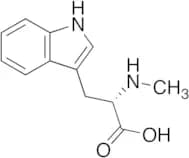
CAS:Controlled ProductApplications L-Abrine is an indoleamino acid that displays radical scavenging and antioxidant properties.
References Yang, M., et al.: Food. Funct., 5, 2268 (2014);Formula:C12H14N2O2Color and Shape:Off-WhiteMolecular weight:218.2518D-Arginine
CAS:Controlled ProductApplications D-Arginine is an unnatural isomer of L-Arginine (A769505), and is used to inhibit glutamate-induced nitric oxide production in rats. Derivatives of D-Arginine are used for pharmaceutical purposes, one example is 1-Deamino-8-D-arginine vasopressin, which is used to treat various bleeding disorders.
References Castellano, M., et al.: Neurosci. Lett., 314, 127 (2001); Kobrinsky, N., et al.: Lancet, 323, 1145 (1984); Weyrich, A., et al.: Circulation, 86, 279 (1992)Formula:C6H14N4O2Color and Shape:NeatMolecular weight:174.21-Boc-4-(carboxy-naphthalen-2-yl-methyl)-[1,4]diazepane
CAS:Purity:96%Molecular weight:384.47601318359375


![4-(furan-2-carbonyl)-8-propyl-1-oxa-4,8-diazaspiro[4.5]decane-3-carboxylic acid](/_next/image/?url=https%3A%2Fstatic.cymitquimica.com%2Fproducts%2F10%2Fthumb-webp%2FF525724.webp&w=3840&q=75)








![4-(4-chloro-2-fluorobenzoyl)-8-propyl-1-oxa-4,8-diazaspiro[4.5]decane-3-carboxylic acid](/_next/image/?url=https%3A%2Fstatic.cymitquimica.com%2Fproducts%2F10%2Fthumb-webp%2FF525750.webp&w=3840&q=75)



![4-(3-nitrobenzoyl)-8-propyl-1-oxa-4,8-diazaspiro[4.5]decane-3-carboxylic acid](/_next/image/?url=https%3A%2Fstatic.cymitquimica.com%2Fproducts%2F10%2Fthumb-webp%2FF525721.webp&w=3840&q=75)


![8-benzyl-4-pentanoyl-1-oxa-4,8-diazaspiro[4.5]decane-3-carboxylic acid](/_next/image/?url=https%3A%2Fstatic.cymitquimica.com%2Fproducts%2F10%2Fthumb-webp%2FF525789.webp&w=3840&q=75)


![4-benzoyl-8-methyl-1-oxa-4,8-diazaspiro[4.5]decane-3-carboxylic acid](/_next/image/?url=https%3A%2Fstatic.cymitquimica.com%2Fproducts%2F10%2Fthumb-webp%2FF525614.webp&w=3840&q=75)


![1-Boc-4-(carboxy-naphthalen-2-yl-methyl)-[1,4]diazepane](/_next/image/?url=https%3A%2Fstatic.cymitquimica.com%2Fproducts%2F10%2Fthumb-webp%2FF736020.webp&w=3840&q=75)