Amino Acids (AA)
Subcategories of "Amino Acids (AA)"
- Amino Acid Derivatives(4,028 products)
- Amino Acid and Amino Acid Related Compounds(3,492 products)
- Amino Acids with Oxygen or Sulphur(168 products)
- Boc- Amino Acids(351 products)
- Fmoc Amino Acids(1,710 products)
Found 39270 products of "Amino Acids (AA)"
([13C6]Leu10)-CRF (human, rat) trifluoroacetate salt
Please enquire for more information about ([13C6]Leu10)-CRF (human, rat) trifluoroacetate salt including the price, delivery time and more detailed product information at the technical inquiry form on this pagePurity:Min. 95%H-Cys(Trt)-2-chlorotrityl resin (100-200 mesh)
Please enquire for more information about H-Cys(Trt)-2-chlorotrityl resin (100-200 mesh) including the price, delivery time and more detailed product information at the technical inquiry form on this pagePurity:Min. 95%Boc-Val-Pro-Arg-AMC
CAS:Please enquire for more information about Boc-Val-Pro-Arg-AMC including the price, delivery time and more detailed product information at the technical inquiry form on this page
Formula:C31H45N7O7Purity:Min. 95%Molecular weight:627.73 g/molH-Ala-bNA·HBr
CAS:H-Ala-bNA·HBr is a fluorogenic probe for pancreatic amide hydrolase that hydrolyzes the substrate H-Ala-bNA to release fluorescein. The probe has been used in enzymatic methods to identify and characterize the enzyme. The affinity of H-Ala-bNA·HBr for amide hydrolase is high and it can be used as a ligand to study the specificity of this enzyme. H-Ala-bNA·HBr can also be used as a fluorescent probe, with emission at 515 nm, and as a transfer reagent with an acceptor at 540 nm.
Formula:C13H14N2O·HBrPurity:Min. 95%Molecular weight:295.18 g/mol(Nle 13,Glu14)-Motilin (human, porcine) trifluoroacetate salt
CAS:Please enquire for more information about (Nle 13,Glu14)-Motilin (human, porcine) trifluoroacetate salt including the price, delivery time and more detailed product information at the technical inquiry form on this pageFormula:C121H189N33O36Purity:Min. 95%Molecular weight:2,682 g/mol(Ala1)-PAR-4 (1-6) (mouse) trifluoroacetate salt
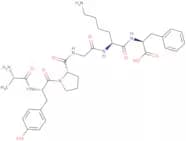
CAS:(Ala1)-PAR-4 (1-6) (mouse) trifluoroacetate salt H-Ala-Tyr-Pro-Gly-Lys-Phe-OH trifluoroacetate salt is a potent inhibitor of protein kinase C, and has been shown to inhibit the growth of prostate cancer cells. It also inhibits phosphorylation of epidermal growth factor receptors, which leads to lower levels of epidermal growth factor in the cell. This drug also has antiplatelet effects and may be used as an antiplatelet agent for patients with vascular disease or diabetes.Formula:C34H47N7O8Purity:Min. 95%Molecular weight:681.78 g/molZ-Phe-Arg-OMe·HCl
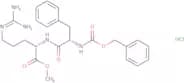
CAS:Please enquire for more information about Z-Phe-Arg-OMe·HCl including the price, delivery time and more detailed product information at the technical inquiry form on this pageFormula:C24H31N5O5·HClPurity:Min. 95%Molecular weight:505.99 g/molH-DL-Leu-DL-Ala-OH
CAS:Please enquire for more information about H-DL-Leu-DL-Ala-OH including the price, delivery time and more detailed product information at the technical inquiry form on this pageFormula:C9H18N2O3Purity:Min. 95%Molecular weight:202.25 g/molIndole-3-acetic-L-alanine
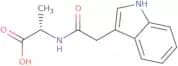
CAS:Indole-3-acetic-L-alanine is a plant hormone that regulates root formation and transport. It is found in all plants, but the concentration varies depending on the plant, tissue type, and growth conditions. It has been shown to regulate root formation in triticum aestivum by inhibiting auxin transport to the roots. Indole-3-acetic acid also inhibits auxin transport to the shoot apex, leading to increased branching in triticum aestivum. This compound is hydrolyzed by root cell enzymes into indole-3-acetate and L-alanine. Genetic mechanisms underlying this phenomenon are not well understood at this time.Formula:C13H14N2O3Purity:Min. 95%Color and Shape:PowderMolecular weight:246.26 g/molSPARC (119-122) (mouse) acetate salt
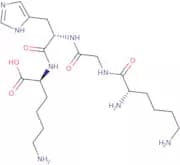
CAS:SPARC (119-122) (mouse) is an acetate salt of H-Lys-Gly-His-Lys-OH. SPARC (119-122) has been shown to be a mimetic of the c-terminal region of the protein SPARC and can bind to many metal ions including Zn2+, Mn2+, Cu2+, Co2+, Ni2+ and Mg2+. The binding affinity for these metals is dose dependent, with saturation occurring at high concentrations. This property may make this compound a therapeutic target for drug discovery strategies.Formula:C20H36N8O5Purity:Min. 95%Molecular weight:468.55 g/molEndotoxin Inhibitor
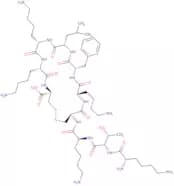
CAS:Endotoxin inhibitor H-Lys-Thr-Lys-Cys-Lys-Phe-Leu-Lys-Lys-Cys-OH is a natural disulfide bond that inhibits cytosolic Ca2+ release and bacterial translocation. It has been shown to decrease the production of tumor necrosis factor alpha (TNFα) in vitro, which may be due to its effects on protein synthesis. It also has antimicrobial activity against bacteria such as Clostridium perfringens, Mycobacterium tuberculosis, and Mycobacterium avium complex. Endotoxin inhibitor H-Lys-Thr-Lys-Cys-Lys-Phe-Leu-Lys-- Lys -Cys -OH binds to the ribosomal RNA of bacteria, inhibiting protein synthesis by binding to the peptidyl transferase center
Formula:C55H97N15O12S2Purity:Min. 95%Molecular weight:1,224.58 g/molH-Gly-Gly-NH2·HCl
CAS:Gly-Gly-NH2·HCl is a nanosized antibiotic that has been shown to have antibacterial properties. It is activated by long-chain inorganic acids, such as hydrochloric acid, and organic solvents, such as acetone. This compound has an amide group that makes it acidic. The hydrocarbon chain of this molecule may be either short or long.Formula:C4H9N3O2·HClPurity:Min. 95%Molecular weight:167.59 g/mol3-Methylpyrazole
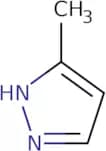
CAS:3-Methylpyrazole is a heterocyclic compound that is an analogue of pyrazole. It has been shown to inhibit the growth of prostate cancer cells and may be used as an experimental model for human serum. 3-Methylpyrazole was able to decrease the expression of phosphorylated p38 mitogen-activated protein kinase (MAPK) in LNCaP cells. It also showed selectivity for group P2 protein kinases over group A, B, and C protein kinases. 3-Methylpyrazole is not active against methicillin resistant Staphylococcus aureus.Formula:C4H6N2Purity:Min. 95%Color and Shape:Clear LiquidMolecular weight:82.1 g/mol(2-Methoxypropyl)amine hydrochloride
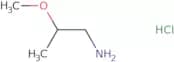
CAS:2-Methoxypropyl)amine hydrochloride (2MPPA) is a versatile building block that can be used in the synthesis of complex compounds. It is a research chemical that is used as a reagent and as a speciality chemical for the production of pharmaceuticals, agrochemicals, and other organic chemicals. 2MPPA can be used as an intermediate in the manufacture of useful scaffolds or useful reaction components. This product has CAS number 70807-90-8 and is of high quality.Formula:C4H11NO·HClPurity:Min. 95%Color and Shape:SolidMolecular weight:125.6 g/molBeta-Ala-Lys(AMCA)
supplied as the trifluoroacetate salt.
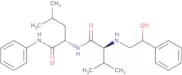
Formula:C21H28N4O6Purity:Min. 95%Color and Shape:Yellow PowderMolecular weight:432.47 g/molN-((RS)-2-Hydroxy-2-phenyl-ethyl)-Val-Leu-anilide
CAS:Please enquire for more information about N-((RS)-2-Hydroxy-2-phenyl-ethyl)-Val-Leu-anilide including the price, delivery time and more detailed product information at the technical inquiry form on this pageFormula:C25H35N3O3Purity:Min. 95%Molecular weight:425.56 g/molPyr-Arg-Thr-Lys-Arg-AMC trifluoroacetate salt
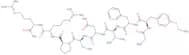
CAS:Please enquire for more information about Pyr-Arg-Thr-Lys-Arg-AMC trifluoroacetate salt including the price, delivery time and more detailed product information at the technical inquiry form on this pageFormula:C37H57N13O9Purity:Min. 95%Molecular weight:827.93 g/mol(Propionyl1,D-Tyr(Et)2,Val4, Abu 6,Arg8·9)-Vasopressin
CAS:Please enquire for more information about (Propionyl1,D-Tyr(Et)2,Val4, Abu 6,Arg8·9)-Vasopressin including the price, delivery time and more detailed product information at the technical inquiry form on this pageFormula:C53H82N16O11Purity:Min. 95%Molecular weight:1,119.32 g/molGalanin (1-19) (human)
CAS:Please enquire for more information about Galanin (1-19) (human) including the price, delivery time and more detailed product information at the technical inquiry form on this pageFormula:C89H130N26O25Purity:Min. 95%Molecular weight:1,964.14 g/molPalmitoyl-Cys((RS)-2,3-di(palmitoyloxy)-propyl)-Ala-Gly-OH
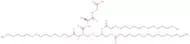
CAS:Palmitoyl-Cys((RS)-2,3-di(palmitoyloxy)-propyl)-Ala-Gly-OH is a molecule that can be used to generate an antigen against tumor necrosis factor alpha (TNFα). It has been shown to be able to bind TNFα and prevent it from binding to its receptors. This leads to a decrease in the production of cytokines, as well as a decrease in the activation of cytosolic guanylate cyclase. Palmitoyl-Cys((RS)-2,3-di(palmitoyloxy)-propyl)-Ala-Gly-OH has also been shown to inhibit the proliferation of cancer cells by inhibiting extracellular Ca2+ influx and cytosolic Ca2+ ion concentrations.Formula:C59H111N3O9SPurity:Min. 95%Molecular weight:1,038.59 g/mol
![([13C6]Leu10)-CRF (human, rat) trifluoroacetate salt](/_next/image/?url=https%3A%2Fstatic.cymitquimica.com%2Fproducts%2F3D%2Fthumb-webp%2FFL110016.webp&w=3840&q=75)