Amino Acids (AA)
Subcategories of "Amino Acids (AA)"
- Amino Acid Derivatives(4,028 products)
- Amino Acid and Amino Acid Related Compounds(3,492 products)
- Amino Acids with Oxygen or Sulphur(168 products)
- Boc- Amino Acids(351 products)
- Fmoc Amino Acids(1,710 products)
Found 39273 products of "Amino Acids (AA)"
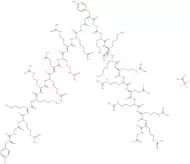
TAT 2-4 trifluoroacetate salt
CAS:Trifluoroacetate saltFormula:C132H240N66O29Purity:Min. 95%Molecular weight:3,215.75 g/molCyclo(-D-Trp-Tyr)
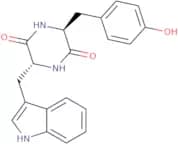
CAS:Cyclo(-D-Trp-Tyr) is a cyclic peptide that is produced by the fungus Microbispora sp. It has been shown to inhibit the growth of Staphylococcus aureus, as well as other bacteria, fungi and cancer cells. Cyclo(-D-Trp-Tyr) binds to the ribosomal RNA in these cells and inhibits protein synthesis. The peptide does not bind to subtilisin or bgc-823, but does bind to lung fibroblasts and leukemia cells.Formula:C20H19N3O3Purity:Min. 95%Molecular weight:349.38 g/molFibronectin CS-1 Fragment (1978-1982)
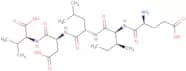
CAS:Fibronectin CS-1 Fragment (1978-1982) H-Glu-Ile-Leu-Asp-Val-OH is a heterocyclic peptide that has inhibitory effects on the muscle cells. It inhibits the enzyme guanosine triphosphatase, which is responsible for releasing calcium ions from its intracellular storage site. Fibronectin CS-1 Fragment (1978-1982) H-Glu-Ile-Leu-Asp-Val-OH is an analog of the human protein fibronectin, and it can be used as a synthetic molecule to study how integrin receptors interact with different sequences of amino acids.Formula:C26H45N5O10Purity:Min. 95%Molecular weight:587.66 g/mol4-Formyl-phenyloxymethyl polystyrene resin (200-400 mesh)
4-Formylphenyloxymethyl polystyrene resin (200-400 mesh) is a polymer that can be used in the synthesis of amide, aminoacylation, halides, piperidine, yields, imine, reductive amination and heterocycles. It has been shown to be especially useful for the synthesis of diazepinones. The resin is soluble in solvents such as dichloromethane and ethanol. 4-Formylphenyloxymethyl polystyrene resin can be prepared by reacting styrene with formaldehyde and phenol in a solvent such as tetrahydrofuran or pyridine at a temperature between 0°C and 50°C. This process is usually conducted under an inert atmosphere such as nitrogen or argon gas. The resin is then washed with diethylether followed by benzene to remove residual formaldehyde.Purity:Min. 95%RFRP-3 (rat)
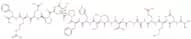
CAS:Please enquire for more information about RFRP-3 (rat) including the price, delivery time and more detailed product information at the technical inquiry form on this pageFormula:C88H134N26O25S2Purity:Min. 95%Molecular weight:2,020.3 g/molThrombospondin-1 (1016-1023) (human, bovine, mouse)
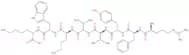
CAS:Please enquire for more information about Thrombospondin-1 (1016-1023) (human, bovine, mouse) including the price, delivery time and more detailed product information at the technical inquiry form on this pageFormula:C56H81N13O10SPurity:Min. 95%Molecular weight:1,128.39 g/mol(Boc-Tyr1,D-Ala2)-Leu-Enkephalin-Lys Boc-Tyr-D-Ala-Gly-Phe-Leu-Lys-OH
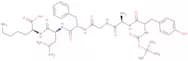
CAS:Please enquire for more information about (Boc-Tyr1,D-Ala2)-Leu-Enkephalin-Lys Boc-Tyr-D-Ala-Gly-Phe-Leu-Lys-OH including the price, delivery time and more detailed product information at the technical inquiry form on this pageFormula:C40H59N7O10Purity:Min. 95%Molecular weight:797.94 g/molH-Thr-Phe-OH
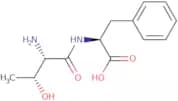
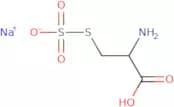
CAS:H-Thr-Phe-OH is a fatty acid which is the substrate for tumor cells. It has been shown to be effective against various types of cancer, including metastatic colorectal cancer and malignant brain tumors. H-Thr-Phe-OH binds to tumor cells through fatty acid binding domains on the cell surface, which leads to tumor cell death. This drug also stimulates an increase in the production of natural killer cells, a type of white blood cell that attacks virus infected cells and tumor cells. The activity index for this drug was measured at 3.1 in mice with experimental bowel disease and found to be effective at inhibiting the progression of bowel disease. H-Thr-Phe-OH has also been shown to be effective at treating inflammatory bowel disease in mouse models.Formula:C13H18N2O4Purity:Min. 95%Color and Shape:PowderMolecular weight:266.29 g/molH-Cys(SO3H)-OH sodium salt
CAS:Please enquire for more information about H-Cys(SO3H)-OH sodium salt including the price, delivery time and more detailed product information at the technical inquiry form on this page
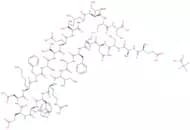
Formula:C3H7NO5S2·xNaPurity:Min. 98 Area-%Color and Shape:White PowderMolecular weight:201.22 g/molAmyloid Bri Protein (1-23) trifluoroacetate salt
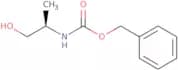
CAS:Please enquire for more information about Amyloid Bri Protein (1-23) trifluoroacetate salt including the price, delivery time and more detailed product information at the technical inquiry form on this pageFormula:C116H175N31O35S2Purity:Min. 95%Molecular weight:2,627.95 g/molZ-D-Alaninol
CAS:Please enquire for more information about Z-D-Alaninol including the price, delivery time and more detailed product information at the technical inquiry form on this page
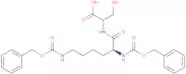
Formula:C11H15NO3Purity:Min. 95%Molecular weight:209.24 g/molZ-Lys(Z)-Ser-OH
CAS:Please enquire for more information about Z-Lys(Z)-Ser-OH including the price, delivery time and more detailed product information at the technical inquiry form on this page
Formula:C25H31N3O8Purity:Min. 95%Molecular weight:501.53 g/molH-Leu-Ser-Lys-Leu-OH trifluoroacetate salt
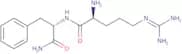
CAS:Please enquire for more information about H-Leu-Ser-Lys-Leu-OH trifluoroacetate salt including the price, delivery time and more detailed product information at the technical inquiry form on this pageFormula:C21H41N5O6Purity:Min. 95%Molecular weight:459.58 g/molH-Arg-Phe-NH2 hydrochloride salt
CAS:H-Arg-Phe-NH2 hydrochloride salt (H-RF) is a physiological agent that has been shown to have effects on the response element binding protein. H-RF is a small, water soluble molecule that has been shown to act as an agonist for peptides and cation channels in vitro. The peptides are involved in the regulation of cardiac function and locomotor activity, while the cation channel regulates the opening and closing of potassium channels. The binding of H-RF to these receptors leads to positive changes in energy metabolism, which may be due to its ability to activate ATPase. H-RF also binds strongly to disulfide bonds found in proteins such as peptide hormones and enzymes. These disulfide bonds are important for maintaining protein structure and function.
Formula:C15H24N6O2Purity:Min. 95%Molecular weight:320.39 g/molH-Lys-Gly-Gly-OH hydrochloride salt
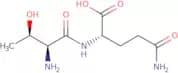
CAS:Histidine is a non-essential amino acid that has been shown to be involved in the regulation of cell growth and differentiation. It is also involved in the biosynthesis of nucleotides, collagen, and carnitine. Kinetic studies on histidine have been done by acetylation of histidine with acetic anhydride and pyridine. The kinetic method used was based on the reaction between histidine and p-nitrophenyl phosphate. The transfer reactions were performed with a strain containing lysine residues which were then adsorbed onto a surface-enhanced Raman spectroscopy (SERS) substrate. These experiments were performed using techniques such as resonance mass spectrometry (RMS), surface-enhanced Raman spectroscopy (SERS), and protonation selective mass spectrometry (PSMS).Formula:C10H20N4O4Purity:Min. 95%Molecular weight:260.29 g/molH-Thr-Gln-OH
CAS:Clostridium is a genus of Gram-positive bacteria that includes many important human pathogens. Clostridium perfringens is the most common cause of food poisoning, and can be fatal if not treated. It causes necrotizing enteritis in infants, who have less resistance to the toxins produced by this bacterium. The pathogenesis of C. perfringens has been shown to involve proteolytic activity, which breaks down proteins into smaller parts, and autocatalytic activity, which releases enzymes from within the cell to digest its own peptidoglycan layer. Proteolytic activity has also been shown to be involved in the development of cancer and other diseases such as atherosclerosis and Alzheimer's disease. There are numerous interventions available for preventing or treating clostridium infections: chlorate, streptomycin, penicillin, erythromycin, tetracycline, metronidazole, fluoroquinolones such asFormula:C9H17N3O5Purity:Min. 95%Molecular weight:247.25 g/molRVG-9R trifluoroacetate salt
CAS:Please enquire for more information about RVG-9R trifluoroacetate salt including the price, delivery time and more detailed product information at the technical inquiry form on this pageFormula:C201H334N82O55S2Purity:Min. 95%Molecular weight:4,843.45 g/molHIV (gp120) Fragment (421-438) trifluoroacetate salt
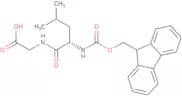
CAS:Please enquire for more information about HIV (gp120) Fragment (421-438) trifluoroacetate salt including the price, delivery time and more detailed product information at the technical inquiry form on this pageFormula:C99H148N24O25S2Purity:Min. 95%Molecular weight:2,138.51 g/molFmoc-Leu-Gly-OH
CAS:Fmoc-Leu-Gly-OH is a dipeptide that is reversibly soluble in water and organic solvents. It has been found to be stable at millimeter and nanometer scales, which makes it suitable for use as a hydrogel or fiber. Fmoc-Leu-Gly-OH has also been shown to form membranes of variable thickness (from micrometers to nanometers) that are sensitive to pH changes. This means that the membrane can be used for sensing pH levels in a variety of environments. Dipeptides are amphiphiles, meaning they have both hydrophilic and lipophilic properties. This makes them useful for forming self-assembled structures, such as hydrogels and membranes, that are capable of transporting water molecules through the structure.Formula:C23H26N2O5Purity:Min. 95%Color and Shape:PowderMolecular weight:410.46 g/mol6-Diazo-5-oxo-L-norleucine
CAS:Inhibitor of hexosamine biosynthetic pathway
Formula:C6H9N3O3Purity:Min. 95%Color and Shape:Slightly Yellow PowderMolecular weight:171.15 g/mol