Enzyme Substrates
Enzyme substrates are molecules upon which enzymes act to catalyze chemical reactions. The substrate binds to the active site of the enzyme, where it undergoes a specific transformation to form the product of the reaction. Enzyme substrates are essential tools in research for studying enzyme kinetics, specificity, and mechanism of action. They are also used in diagnostic assays and biochemical studies. At CymitQuimica, we provide a diverse selection of high-quality enzyme substrates to support your research in enzymology and biochemistry.
Subcategories of "Enzyme Substrates"
Found 1527 products of "Enzyme Substrates"
Sort by
Purity (%)
0
100
|
0
|
50
|
90
|
95
|
100
4-Methylumbelliferyl phosphate, disodium salt trihydrate
CAS:<p>Sensitive fluorogenic substrate for fluorometric and UV-spectrophotometric assays of phosphatases.</p>Formula:C10H13Na2O9PMolecular weight:354.16 g/mol2,5-dioxabicyclo[2.2.1]heptan-7-one
<p>Please enquire for more information about 2,5-dioxabicyclo[2.2.1]heptan-7-one including the price, delivery time and more detailed product information at the technical inquiry form on this page</p>Formula:C5H6O3Purity:Min. 95%Molecular weight:114.10 g/molAldol® 484 α-D-glucopyranoside, Biosynth Patent: EP 2427431 and US 8940909
CAS:<p>Aldol® 484 alpha-D-glucopyranoside is a chromogenic and fluorogenic enzyme substrate for alpha-glucosidase activity (EC 3.2.1.20, alpha-1,4-glucosidase, also known as maltase). The colorless enzyme substrate is cleaved by bacteria producing this enzyme in liquid or solid media, yielding orange color. Green fluorescence is also generated if a suitable matrix is present such as: cellulose acetate filters, polypropylene tubes or microplates and polyethylene vials. Aldol® 484 alpha-D-glucopyranoside can be used under aerobic and anaerobic conditions.</p>Formula:C26H24ClFN2O7Purity:Min. 95%Color and Shape:PowderMolecular weight:530.93 g/mol4-Methylumbelliferyl-β-D-glucuronic acid dihydrate
CAS:<p>4-Methylumbelliferyl beta-D-glucuronide (MUG) is commonly used as a substrate for detecting beta-glucuronidase. MUG is used for identifying E. coli contamination in food, drinking water, clinical samples and for rapid bacterial identification in blood cultures. It is recommended in international normatives (ISO, DIN) as a fluorogenic substrate for detection of E. coli. MUG is also a tool assaying the glucuronidase gene in plants.</p>Formula:C16H20O11Purity:Min. 99 Area-%Molecular weight:388.33 g/molLuc-phosphate Na enhanced
<p>Luc-phosphate Na enhanced is a bioluminescent substrate used to detect phosphatase activity in bacterial assays.</p>Formula:C18H12N2Na3O7PS2Purity:Min. 97 Area-%Molecular weight:531.95 g/mol5-Bromo-4-chloro-3-indolyl a-D-maltopyranoside
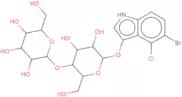
CAS:<p>5-Bromo-4-chloro-3-indolyl a-D-maltopyranoside is a chromogenic substrate used to detect the specific enzymatic activity of alpha-glucosidase. After cleavage, 5-bromo-4-chloro-indoxyl is released, resulting in a blue to blue-green color change in bacterial colonies or media. 5-Bromo-4-chloro-3-indolyl a-D-maltopyranoside is used in Pompe disease screening and glycogen storage disorder diagnosis.</p>Formula:C20H25BrClNO11Purity:Min. 95%Color and Shape:PowderMolecular weight:570.77 g/molD-Luciferin Firefly, sodium salt monohydrate
CAS:<p>Water soluble substrate for firefly luciferase.</p>Formula:C11H9N2NaO4S2Purity:Min. 99.0 Area-%Molecular weight:320.32 g/molD-Luciferin sodium salt
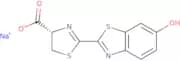
CAS:<p>Bioluminescent substrate for luciferase</p>Formula:C11H7N2NaO3S2Purity:Min. 99 Area-%Color and Shape:PowderMolecular weight:302.3 g/molNaphthol AS-D chloroacetate
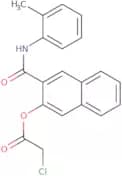
CAS:<p>Histochemical substrate for esterase</p>Formula:C20H16ClNO3Purity:Min. 98 Area-%Color and Shape:PowderMolecular weight:353.8 g/molAminoseleno-D-luciferin
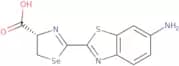
CAS:<p>Selenium analogue of firefly luciferin with red-shifted bioluminescence</p>Formula:C11H9N3O2SSePurity:Min. 95%Molecular weight:326.23 g/molLuc-Enterobacteria Na
<p>Luc-Enterobacteria Na is a fluorogenic substrate that can be used for the detection of Enterobacteriaceae. This product has been shown to have high purity and a CAS number. Luc-Enterobacteria Na is also conjugated with an enzyme substrate, making it suitable for detecting the presence of bacterial colonies in culture media.</p>Purity:Min. 95%N,N,N',N'-Tetramethyl-p-phenylenediamine dihydrochloride
CAS:<p>Reducing co-substrate for heme peroxidases; test reagent in microbiology</p>Formula:C10H16N2·2HClPurity:Min. 95%Color and Shape:White PowderMolecular weight:237.17 g/molEsculetin-7-β-D-galactopyranoside
<p>Esculetin-7-beta-D-galactopyranoside, also known as 6,7-Dihydroxycoumaryl-7-beta-D-galactopyranoside, is a fluorogenic substrate used in the detection of beta-galactosidase activity. This coumarin derivative, when hydrolyzed, yields esculetin (6,7-dihydroxycoumarin) which, in the presence of iron salts, forms a brown-black complex.</p>Formula:C15H16O9Purity:Min. 95%Molecular weight:340.28 g/mol6-Bromo-2-naphthyl α-D-mannopyranoside
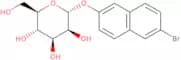
CAS:<p>Chromogenic substrate to visualize the activity of alpha-D-mannopyranoside; red color produced</p>Formula:C16H17BrO6Purity:Min. 95%Color and Shape:PowderMolecular weight:385.21 g/mol5-Bromo-4-chloro-3-indoxyl-N-acetyl-β-D-galactosaminide
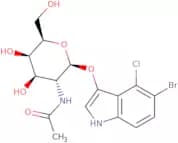
CAS:<p>5-Bromo-4-Chloro-3-Indoxyl-N-Acetyl-Beta-D-Galactosaminide is a chromogenic substrate for detecting beta-galactosidase and GalNAc-transferase enzymes. Upon hydrolysis by the enzyme, it produces a blue-green colored compound that can be detected visually or measured spectrophotometrically. This substrate is useful in characterizing the activity of Beta-Galactosidase and GalNAc-transferase enzymes involved in glycobiology research and diagnostic applications.</p>Formula:C16H18BrClN2O6Purity:Min. 98 Area-%Color and Shape:Crystalline PowderMolecular weight:449.68 g/mol4-Methylumbelliferyl 3-deoxy-D-glycero-a-D-galacto-2-nonulosonic acid sodium salt
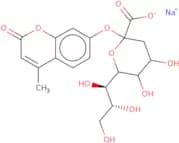
CAS:<p>4-Methylumbelliferyl 3-deoxy-D-glycero-a-D-galacto-2-nonulosonic acid sodium salt is a fluorogenic substrate that can be used to detect enzyme activity. It reacts with the enzyme β-galactosidase, which hydrolyzes lactose in the presence of oxygen and hydrogen peroxide. The product is 4methylumbelliferone, which emits light in the presence of luciferin and an oxidizing agent. This product is used for diagnostics, food testing, and environmental testing. CAS No. 123269-95-4</p>Purity:Min. 95%Molecular weight:489.41 g/mol4-Nitrocatechol sulfate dipotassium salt
CAS:<p>Chromogenic sulfatase substrate</p>Formula:C6H3NO7SK2Purity:Min. 98 Area-%Color and Shape:PowderMolecular weight:311.35 g/mol3-(7-Hydroxycoumarin-3-carboxamido)propyl 4-O-(b-D-galactopyranosyl)-b-D-glucopyranoside
<p>3-(7-Hydroxycoumarin-3-carboxamido)propyl 4-O-(b-D-galactopyranosyl)-b-D-glucopyranoside is a fluorogenic substrate that is used for the detection of beta-galactosidase. It has been shown to be an efficient substrate for the enzyme beta galactosidase and can be used to detect this enzyme in cell culture media and other diagnostic applications. 3-(7-Hydroxycoumarin-3-carboxamido)propyl 4-O-(b-D-galactopyranosyl)-b-D-glucopyranoside can also be used as a chromogenic substrate, which is added to a reaction mixture containing beta galactosidase, where it is hydrolyzed by the enzyme to produce a blue color. This product also has food testing and environmental testing applications.</p>Purity:Min. 95%4-Nitrophenyl b-L-arabinopyranoside
CAS:<p>4-Nitrophenyl beta-L-arabinopyranoside is a chromogenic substrate for beta-L-arabinosidase. Upon hydrolysis, para-nitrophenol is released yielding a yellowish colour. 4-Nitrophenyl beta-L-arabinopyranoside is used in different applications such as the Bacterial arabinan degradation assays, gut microbiome analysis</p>Formula:C11H13NO7Purity:Min. 98 Area-%Color and Shape:White PowderMolecular weight:271.22 g/mol1-Naphthyl b-D-glucuronide sodium salt
CAS:<p>1-Naphthyl b-D-glucuronide sodium salt is a chromogenic substrate commonly used to assay the activity of beta-glucuronidase enzymes. It is hydrolyzed by beta-glucuronidase to yield a yellow-colored product, 1-naphthol, which can be quantified spectrophotometrically. This substrate is widely used in diagnostic tests for detection of beta-glucuronidase activity, particularly in clinical microbiology for the identification of E. coli and other enteric bacteria. With its sodium salt form, it boasts increased solubility in aqueous solutions, ensuring seamless integration into various experimental settings.</p>Formula:C16H15NaO7Purity:Min. 95%Color and Shape:PowderMolecular weight:342.28 g/mol


![2,5-dioxabicyclo[2.2.1]heptan-7-one](/_next/image/?url=https%3A%2Fstatic.cymitquimica.com%2Fproducts%2F3D%2Fthumb-webp%2FKAA21803.webp&w=3840&q=75)