Enzyme Substrates
Enzyme substrates are molecules upon which enzymes act to catalyze chemical reactions. The substrate binds to the active site of the enzyme, where it undergoes a specific transformation to form the product of the reaction. Enzyme substrates are essential tools in research for studying enzyme kinetics, specificity, and mechanism of action. They are also used in diagnostic assays and biochemical studies. At CymitQuimica, we provide a diverse selection of high-quality enzyme substrates to support your research in enzymology and biochemistry.
Subcategories of "Enzyme Substrates"
Found 1527 products of "Enzyme Substrates"
Sort by
Purity (%)
0
100
|
0
|
50
|
90
|
95
|
100
1-Naphthyl β-D-galactopyranoside
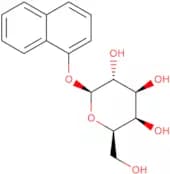
CAS:1-Naphthyl b-D-galactopyranoside is a chromogenic substrate used to detect the presence of beta-galactosidase enzymes. The enzyme cleaves the substrate to produce a colored product that can be quantified and visualized. This substrate is commonly used in applications such as the detection of lacZ gene expression in bacterial colonies or in histochemical staining of tissues to identify beta-galactosidase activity.Formula:C16H18O6Purity:Min. 95%Color and Shape:PowderMolecular weight:306.32 g/mol6-Bromo-2-naphthyl b-D-glucuronide
CAS:6-Bromo-2-naphthyl beta-D-glucuronide is a substrate for beta-glucuronidase, an enzyme involved in detoxification and bacterial metabolism. Upon enzymatic hydrolysis, it releases 6-bromo-2-naphthol, which forms a detectable dye when reacted with diazonium salts. This compound is widely used in microbiology to detecting E. coli in water testing and histochemical staining. 6-Bromo-2-naphthyl beta-D-glucuronide is also been used in cancer research studies. It has been found that some tumors are related to a high activity of beta-glucuronidase, responsible to reactivate the carcinogens and promote tumor progression, developing a drug resistance to chemotherapy.Formula:C16H15BrO7Purity:Min 97%Color and Shape:White Off-White PowderMolecular weight:399.2 g/mol5-Bromo-4-chloro-3-indolyl 5-O-feruloyl a-L-arabinofuranoside
<p>5-Bromo-4-chloro-3-indolyl 5-O-feruloyl a-L-arabinofuranoside is a chemiluminescent ligand that is used in the detection of DNA, RNA, and proteins. It has been shown to be an efficient fluorescence substrate for DNA and RNA polymerases. 5-Bromo-4-chloro-3-indolyl 5-O-feruloyl a-L-arabinofuranoside is suitable for use in diagnostic tests for bacteria, fungi, viruses, parasites, and toxins. This compound has been extensively tested for toxicity and carcinogenicity.</p>Purity:Min. 95%4-(Bromomethyl)phenyl-β-D-triacetylglucuronic acid methyl ester
<p>4-(Bromomethyl)phenyl-beta-D-triacetylglucuronic acid methyl ester, also known as 4-bromo-4'-(N,N-dimethylamino)biphenyl, is a bioluminescent substrate. It is used for the detection of beta-glucuronidase activity in biological samples and for the detection of bacterial β-glucuronidase activity in culture media. Beta-glucuronidase catalyzes the hydrolysis of glucuronic acid by breaking down a conjugate molecule into two smaller molecules, which can be detected using bioluminescence. 4-(Bromomethyl)phenyl-beta-D-triacetylglucuronic acid methyl ester is a chromogenic substrate that has been shown to be an excellent ligand in biomolecular research because it reacts with many different enzymes. This product is highly pure and</p>Formula:C20H23BrO10Purity:Min. 95 Area-%Molecular weight:503.29 g/mol5-Bromo-4-chloro-3-indoxyl-N-acetyl-beta-D-galactosaminide
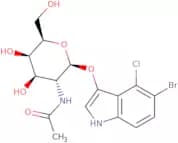
CAS:<p>5-Bromo-4-Chloro-3-Indoxyl-N-Acetyl-Beta-D-Galactosaminide is a chromogenic substrate for detecting beta-galactosidase and GalNAc-transferase enzymes. Upon hydrolysis by the enzyme, it produces a blue-green colored compound that can be detected visually or measured spectrophotometrically. This substrate is useful in characterizing the activity of Beta-Galactosidase and GalNAc-transferase enzymes involved in glycobiology research and diagnostic applications.</p>Formula:C16H18BrClN2O6Purity:Min. 98 Area-%Color and Shape:Crystalline PowderMolecular weight:449.68 g/molNaphthol AS-MX acetate
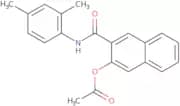
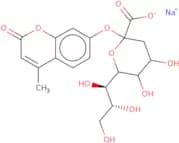
CAS:<p>Modified naphtol AS substrate used in histochemical and cytochemical staining</p>Formula:C21H19NO3Purity:Min. 80%Color and Shape:White Off-White PowderMolecular weight:333.38 g/mol4-Methylumbelliferyl 3-deoxy-D-glycero-a-D-galacto-2-nonulosonic acid sodium salt
CAS:<p>4-Methylumbelliferyl 3-deoxy-D-glycero-a-D-galacto-2-nonulosonic acid sodium salt is a fluorogenic substrate that can be used to detect enzyme activity. It reacts with the enzyme β-galactosidase, which hydrolyzes lactose in the presence of oxygen and hydrogen peroxide. The product is 4methylumbelliferone, which emits light in the presence of luciferin and an oxidizing agent. This product is used for diagnostics, food testing, and environmental testing. CAS No. 123269-95-4</p>Purity:Min. 95%Molecular weight:489.41 g/mol5-Nitro-3-indolyl-b-D-galactopyranoside
<p>5-Nitro-3-indolyl-b-D-galactopyranoside is a substrate for a number of enzymes, including beta-galactosidase, beta-glucuronidase, and beta-mannosidase. It is used as an enzyme substrate in diagnostics to measure the activity of these enzymes. 5N3IG was also used to study the effects of conjugation on enzyme activity. 5N3IG is available in high purity and high quality at CAS No.</p>Purity:Min. 95%4-Methylumbelliferyl-beta-D-glucopyranoside
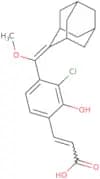
CAS:<p>Fluorogenic substrate for beta-glucosidase yielding a blue fluorescent solution. Used for the detection of beta-glucosidase as an indicator of Enterococci.</p>Formula:C16H18O8Purity:Min. 99 Area-%Molecular weight:338.32 g/molAquaSpark® 515 Singlet Oxygen Probe, Ramot at Tel-Aviv University Ltd. Patent family WO 2017/130191
CAS:Singlet Oxygen Chemiluminescence Probe, SOCLFormula:C21H23ClO4Purity:Min. 95 Area-%Color and Shape:PowderMolecular weight:374.13 g/mol4-Methylumbelliferyl-β-L-fucopyranoside
CAS:<p>4-Methylumbelliferyl-beta-L-fucopyranoside is a fluorogenic substrate that is used in food testing. It also has uses as a chromogenic substrate and a ligand for biological studies. 4-Methylumbelliferyl-beta-L-fucopyranoside is a conjugate of 4-methylumbelliferone and beta-D-fucopyranosyl ester, which is an enzyme substrate for the detection of phosphatases. This product can be used to detect the activity of phosphatase enzymes in various media, including culture media, environmental testing, and staining. 4MUFBPY also has chemiluminescent properties that can be used for bioluminescence assays.</p>Formula:C16H18O7Molecular weight:322.31 g/molRef: 3D-M-5541
1gTo inquire5gTo inquire250mgTo inquire500mgTo inquire2500mgTo inquire-Unit-ggTo inquire3,4-Cyclohexenoesculetin β-D-galactopyranoside
CAS:<p>Chromogenic substrate for beta-galactosidase</p>Formula:C19H22O9Purity:Min. 95 Area-%Molecular weight:394.37 g/mol4-Methylumbelliferyl-α-D-glucopyranoside
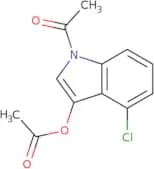
CAS:Fluorogenic substrate for α-D-glucosidase. It has been used in studies of Pompe's disease (Glycogen Storage Disease). Used for differentiation and enumeration of Enterobactersakazakii based on α-glucosidase activity.Formula:C16H18O8Purity:Min. 99 Area-%Molecular weight:338.32 g/mol4-Chloro-3-Indoxyl-1,3-diacetate
CAS:<p>4-Chloro-3-indoxyl-1,3-diacetate is a fluorogenic or chromogenic substrate used in food testing. It is also an enzyme substrate that can be used to detect the presence of bioluminescence. 4-Chloro-3-indoxyl-1,3-diacetate has been shown to have high purity and high quality for use in diagnostic kits. 4-Chloro-3-indoxyl-1,3-diacetate is a ligand that is conjugated with other molecules to form complexes for use in fluorescence and chemiluminescence experiments.</p>Purity:Min. 95%Molecular weight:251.67 g/molLuc-Enterococcus K
<p>Luc-Enterococcus K (LK) is a Chromogenic substrate that can be used for the detection of Enterococcus. LK is a conjugate of beta-lactamase and luciferase, which are both enzymes. LK is used in diagnostics to detect the presence of Enterococcus in food and environmental samples. LK can also be used as a chemiluminescent substrate for the detection of Enterococcus in clinical specimens or as an enzyme substrate for the detection of Enterococcus in clinical specimens. CAS No.: 64739-74-8</p>Formula:C17H17KN2O8S2Purity:Min. 94 Area-%Molecular weight:480.55 g/molCoelenterazine - lyopholised
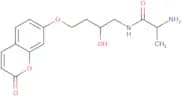
CAS:<p>Coelenterazine is a bio-luminescent substrate of luciferases such as Renilla luciferase (Rluc) and Gaussia luciferase (Gluc). The main applications of Coelenterazine are monitoring of reporter genes and chemiluminescence-based methods for Calcium detection. The substrate is also used in bioluminescence resonance energy transfer (BRET), ELISA, HTS and chemiluminescent detection of superoxide anion and peroxynitritein cells or tissues. About this grade Coelenterazine, native, dried (C-7002): in order to provide milligram and sub-milligram quantities of native Coelenterazine we pre-dissolve the substance; defined amounts of Coelenterazine are subsequently dried under nitrogen in individual vials. Coelenterazine, native, dried is identical in quality and chemistry to our product Coelenterazine, native which is provided as a powder.<br>Information to the user: since Coelenterazine is sensitive to oxygen, degas your solvents for stock solutions, if possible. To dissolve Coelenterazine, native, dried please proceed as follows. 1) Add the appropriate amount of solvent. If possible through the septum using a needle. Otherwise open the cap with pliers. 2) Vortex the closed vial briefly to completely dissolve the content of the vial. 3) Take out the solution, if possible with a needle through the septum.</p>Formula:C26H21N3O3Purity:Min. 95 Area-%Molecular weight:423.48 g/mol7-((4'-L-Alaninamido)-rac-3'-hydroxybutyloxy) coumarin
<p>This Clips-O substrate 7-((4'-L-Alaninamido)-rac-3'-hydroxybutyloxy) coumarin allows the detection of single and dual enzymatic activity (L-alanine aminopetidase and oxidation of 4-amino-3-hydroxybutyloxy spacer either enzymatically or by exposure to sodium periodate) with a single substrate resulting in a fluorescent signal. The main virtues of Clips-O substrates are an increased stability towards non-enzymatic hydrolysis that results in a reduced background and high sensitivity.</p>Formula:C16H20N2O5Purity:Min. 95%Color and Shape:PowderMolecular weight:320.35 g/mol5-Bromo-4-chloro-3-indolyl palmitate
CAS:<p>5-Bromo-4-chloro-3-indolyl palmitate is a chromogenic substrate used to detect the specific enzymatic activity of lipase. After cleavage, 5-bromo-4-chloro-indoxyl is released, resulting in a blue to blue-green color change in bacterial colonies or media. 5-Bromo-4-chloro-3-indolyl palmitate is used in lipase activity assays or cystic fibrosis diagnostics.</p>Purity:Min. 95%Color and Shape:PowderMolecular weight:484.9 g/molAldol® 518 alpha-D-glucopyranoside, Biosynth Patent: EP 2427431 and US 8940909
CAS:<p>Aldol® 518 alpha-D-glucopyranoside is a fluorogenic enzyme substrate used for detection of alpha-D-glucosidase activity. The colorless enzyme substrate is cleaved by alpha-D-glucosidase, generating red fluorescent signal and in some conditions, an orange colour in the visible spectrum can get formed, staining bacterial colonies in faint orange coloration. Aldol® 518 alpha-D-glucopyranoside can be used under aerobic and anaerobic conditions.</p>Formula:C29H29ClN2O7Purity:Min. 95.0 Area-%Molecular weight:553 g/mol4-Methylumbelliferyl phosphate, free acid
CAS:A sensitive fluorogenic substrate for fluorometric and UV-spectrophotometric assays of phosphatases. It is used for the detection of C. perfringens because acid phosphatase is a highly specific indicator for C. perfringens.Formula:C10H9O6PMolecular weight:256.15 g/mol