Enzyme Substrates
Subcategories of "Enzyme Substrates"
Found 1526 products of "Enzyme Substrates"
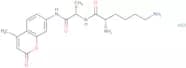
L-Lysyl-L-alanine 7-amido-4-methylcoumarin dihydrochloride
CAS:L-Lysyl-L-alanine 7-amido-4-methylcoumarin dihydrochloride is a fluorogenic peptide substrate for aminopeptidase. This AMC peptide substrate is normally used to rapidly profile the N-terminal specificity of proteases.Purity:Min. 98.0 Area-%Color and Shape:PowderLuc-Enterobacteria Na
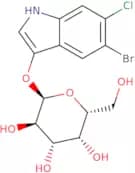
Luc-Enterobacteria Na is a bioluminescent substrate for bacterial luciferase used to detect Enterobacteriaceae. The enzyme luciferase oxidizes luciferin with FMNH₂ and O₂ via luxAB genes, emitting blue light.Formula:C17H17NaN2O8S2Purity:Min. 94 Area-%Molecular weight:464.44 g/mol5-Bromo-6-chloro-3-indolyl a-D-galactopyranoside
CAS:5-Bromo-6-chloro-3-indolyl a-D-galactopyranoside is a chromogenic substrate that yields a magenta-colored product after cleavage. The chromophore 5-bromo-6-chloro-indoxyl is released, generating the observable color. It is used in glycolipid metabolism studies.Formula:C14H15BrClNO6Color and Shape:White to off-white solid.Molecular weight:408.63 g/mol7-((4'-L-Alaninamido)-rac-3'-hydroxybutyloxy) coumarin hydrochloride
This Clips-O substrate 7-((4'-L-Alaninamido)-rac-3'-hydroxybutyloxy) coumarin allows the detection of single and dual enzymatic activity (L-alanine aminopetidase and oxidation of 4-amino-3-hydroxybutyloxy spacer either enzymatically or by exposure to sodium periodate) with a single substrate resulting in a fluorescent signal. The main virtues of Clips-O substrates are an increased stability towards non-enzymatic hydrolysis that results in a reduced background and high sensitivity.Formula:C16H21ClN2O5Purity:Min. 95%Color and Shape:PowderMolecular weight:356.8 g/mol6-Chloro-3-indoxyl-beta-D-galactopyranoside
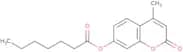
CAS:6-Chloro-3-indoxyl-beta-D-galactopyranoside is a chromogenic substrate for beta-galactosidase that yields a salmon or rose-coloured precipitate and hence is also known as Salmon-Gal. It can be used in conjunction with isopropyl-beta-D-thiogalactopyranoside (IPTG) as an alternative to the chromogenic substrate 5-bromo-4-chloro-3-indolyl beta-D-galactopyranoside (X-Gal) for detection of beta-galactosidase activity in bacterial colonies in colorimetric assays. Where beta-galactosidase expressed from a reporter gene in molecular biology experiments, recombinant colonies on growth plates are salmon-coloured while non-recombinants appear as white. Use of nitroblue tetrazolium salt (NBT) with Salmon-Gal may provide faster results, yielding a clear, purple precipitate, than for Salmon-Gal alone. In conjunction with 5-bromo-4-chloro-3-indolyl-beta-D-glucoside (X-Glc), Salmon-Gal is useful for simultaneous detection of GUS and Lac activities in the same medium.Formula:C14H16ClNO6Purity:Min. 98.0 Area-%Molecular weight:329.74 g/mol4-Methylumbelliferyl heptanoate
CAS:Lipase targeting MOSCERDAM® substrateFormula:C17H20O4Purity:Min. 95%Color and Shape:White PowderMolecular weight:288.34 g/mol5-Nitro-3-indoxyl-β-D-galactopyranoside
For the detection of beta-galactosidase activityFormula:C14H16N2O8Molecular weight:340.29 g/mol6-Nitro-3-indoxyl-β-D-galactopyranoside
For the detection of beta-galactosidase activityFormula:C14H16N2O8Molecular weight:340.29 g/molAquaSpark® 510 Calibration Probe, Ramot at Tel-Aviv University Ltd. Patent family WO 2017/130191
CAS:AquaSpark® Calibration Probe is a water-soluble dioxetane-based chemiluminescent probe. Deprotonation of the free phenol group of the calibration probe under mild basic conditions results in an emissive decomposition process. No addition of enhancer or sensitizing agent is required to produce the bright green light emission in aqueous solutions.
AquaSpark® Calibration Probe is used for:
Demonstration experiment susing only the probe and an aqueous solution or water;
Evaluation of the AquaSpark® maximum light emission;
Functional tests of luminometers, plate readers and cameras;
Comparison with other probes bearing an enzyme labile group in order to build concentration/response curves;
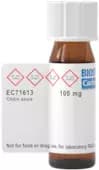
Validation and comparison between different AquaSpark® probes.Formula:C21H23ClO6Purity:Min. 95%Color and Shape:PowderMolecular weight:406.12 g/molChitin azure
CAS:Chitin azure is a chromogenic substrate for chitinases. It is one of the few specific substrates for this enzyme that produces chito-oligosaccharides from chitin.
Color and Shape:PowderResorufin b-D-xylobioside
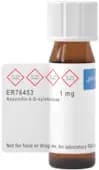
Resorufin b-D-xylobioside is a fluorogenic substrate for xylanases useful for xylanase activity assays.Purity:Min. 95%Color and Shape:PowderMolecular weight:477.42 g/molGlycyl-glycine 7-amido-4-methylcoumarin hydrochloride
CAS:Glycyl-glycine 7-amido-4-methylcoumarin hydrochloride (Gly-Gly-AMC) is a fluorescent compound that can be used as a probe for the transfer of glycine in the brain. Gly-Gly-AMC binds to Langerhans cells and is transferred by an anterograde axonal transport mechanism from the peripheral nervous system to the central nervous system. The binding of Gly-Gly-AMC to Langerhans cells has been shown to activate them, which induces the release of inflammatory mediators into the surrounding tissue. This activity may be due to increased levels of calcium ions, which are known to induce exocytosis in these cells. Glycine is also involved in depression and other mental disorders, as well as muscle and brain activity.Formula:C14H16ClN3O4Molecular weight:325.75 g/molRef: 3D-G-6100
1gTo inquire5gTo inquire10gTo inquire500mgTo inquire2500mgTo inquire-Unit-ggTo inquireLuc-Salmonella
Luc-Salmonella is a bioluminescent substrate for bacterial luciferase use to detect Salmonella.
Purity:Min. 95%Color and Shape:PowderAc-Abu-Tle-Leu-Gln-AMC TFA salt
A fluorogenic substrate for detection of enzymatic activity of the SARS-CoV-2 Mpro protease. The fluorophore 7-Amino-4-methylcoumarin (AMC) is linked to the tetrapeptide via a peptide bond at the C-terminal of the glutamine residue. Following the hydrolytic activity of the Mpro protease, the fluorogenic AMC group get released from the substrate, generating a fluorescent signal (Ex 380 nm / Em 455 nm).Formula:C33H48N6O8(freebase)Purity:Min. 95.0 Area-%Molecular weight:656.77 g/mol4-Methylumbelliferyl-N,N-diacetyl-beta-D-chitobioside
CAS:4-Methylumbelliferyl-N,N-diacetyl-beta-D-chitobioside is a molecule that has been expressed in the yeast Pichia pastoris. It can be used as a fluorescent probe for chitinase activity and has been shown to be sensitive to tryptophan residues and aromatic residues in proteins. 4-Methylumbelliferyl-N,N-diacetyl-beta-D-chitobioside has also been used as a fluorescent probe for isozymes of glucose phosphate isomerase. The nature of the trisaccharide is unknown, but it appears to be hydrophobic.Formula:C26H34N2O13Purity:Min. 99.0 Area-%Molecular weight:582.57 g/mol4-(Bromomethyl)phenyl-β-D-triacetylglucuronic acid methyl ester
4-(Bromomethyl)phenyl-beta-D-triacetylglucuronic acid methyl ester, also known as 4-bromo-4'-(N,N-dimethylamino)biphenyl, is a bioluminescent substrate. It is used for the detection of beta-glucuronidase activity in biological samples and for the detection of bacterial β-glucuronidase activity in culture media. Beta-glucuronidase catalyzes the hydrolysis of glucuronic acid by breaking down a conjugate molecule into two smaller molecules, which can be detected using bioluminescence. 4-(Bromomethyl)phenyl-beta-D-triacetylglucuronic acid methyl ester is a chromogenic substrate that has been shown to be an excellent ligand in biomolecular research because it reacts with many different enzymes. This product is highly pure and
Formula:C20H23BrO10Purity:Min. 95 Area-%Molecular weight:503.29 g/molLuc-coliforms Na
CAS:Luc-coliforms Na is a high quality, chromogenic substrate for the detection of coliforms. It is used widely in the food industry to detect whether coliforms are present in milk, cheese, and other dairy products. Luc-coliforms Na provides a color change from yellow to blue when it reacts with coliforms and has a high pH range of 4.0-8.0. Luc-coliforms Na has a CAS number of 93824-43-4.Purity:Min. 95%4-Methylumbelliferyl phosphate, free acid
CAS:A sensitive fluorogenic substrate for fluorometric and UV-spectrophotometric assays of phosphatases. It is used for the detection of C. perfringens because acid phosphatase is a highly specific indicator for C. perfringens.
Formula:C10H9O6PMolecular weight:256.15 g/mol1-Naphthyl β-D-mannopyranoside
CAS:1-Naphthyl β-D-mannopyranoside is a chromogenic (also fluorogenic) substrate. After cleavage, 1-naphthol is released and is used to quantify beta-mannosidase activity.Formula:C16H18O6Purity:Min. 95%Color and Shape:PowderMolecular weight:306.31 g/molAquaSpark® caprylate, 10 mM in DMSO, Ramot at Tel-Aviv University Ltd. Patent family WO 2017/130191
CAS:Chemiluminescent substrate for C8-esterase and lipase
Formula:C36H43ClO8Purity:Min. 95%Color and Shape:Clear LiquidMolecular weight:639.18 g/mol