


Enzyme Substrates
Subcategories of "Enzyme Substrates"
Found 1528 products of "Enzyme Substrates"
o-Nitrophenyl-ß-D-Galacto Pyranoside (ONPG) extrapure, 99%
CAS:Formula:C12H15NO8Purity:min. 99%Color and Shape:White to pale yellow, Crystalline powder, Clear, Colourless to pale yellowMolecular weight:301.254-Nitrophenyl caprylate
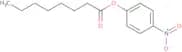
CAS:Chromogenic substrate targeting lipase, C8 esteraseFormula:C14H19NO4Purity:Min. 95 Area-%Color and Shape:Slightly Brown Yellow Clear LiquidMolecular weight:265.31 g/molCrimson-Gal
Crimson-Gal (Crimson-beta-D-galactopyranoside) is a chromogenic indicator for beta-galactosidase activity. The colorless product is cleaved by lactose-utilizing bacteria in liquid media or on agar plates and yields a crimson colored precipitate. Crimson-Gal can also be used as detecting agent for beta-galactosidase activity in reporter gene assays or for identification of positive transformants on agar plates when using the α-complementation approach. Read more in the Application Notes.Molecular weight:360.96 g/mol4-Nitrophenyl 5-O-trans-feruloyl-a-L-arabinofuranoside
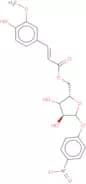
CAS:4-Nitrophenyl 5-O-trans-feruloyl-alpha-L-arabinofuranoside is a chromogenic substrate for alpha-L-arabinofuranosidase. Upon hydrolysis, para-nitrophenol is released yielding a yellowish colour. 4-Nitrophenyl 5-O-trans-feruloyl-alpha-L-arabinofuranoside is used in different applications such as the Plant cell wall degradation assays, bacterial enzyme profiling
Formula:C21H21NO10Purity:Min. 95%Color and Shape:PowderMolecular weight:447.4 g/molCholine p-Toluenesulfonate Salt
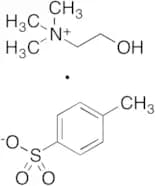
CAS:Applications Choline p-Toluenesulfonate Salt is a useful intermediate as well as a choline acetyltransferase (CHAT) substrate.
References Brockerhoff, H., et al.: N.K.N., Lipids, 14, 88 (1979);Formula:C7H7O3S·C5H14NOColor and Shape:NeatMolecular weight:275.36Pseudopelletierine
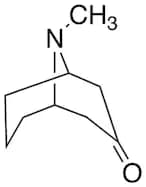
CAS:Controlled ProductApplications It was found in the root bark of Punica granatum L., Punicaceae. Used as a enzyme substrate.
References Hunt, R., et al.: J. Pharm. Pharmacol., 22, 29S (1970), Hashimoto, T., et al.: Plant Physiol., 100, 836 (1992), Boswell, H., et al.: Phytochemistry, 52, 855 (1999),Formula:C9H15NOColor and Shape:NeatMolecular weight:153.22Benzyl β-D-Glucopyranosiduronic Acid
CAS:Controlled ProductStability Hygroscopic
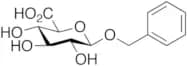
Applications Protected Glucopyranosiduronic Acid.Formula:C13H16O7Color and Shape:NeatMolecular weight:284.265-Bromo-4-chloro-3-indolyl 2-Acetamido-2-deoxy-α-D-galactopyranoside
CAS:Controlled ProductApplications A histochemical substrate for a-N-acetyl-galactosaminidase.
References Zhu, et al.: Gene, 137, 309 (1994)Formula:C16H18BrClN2O6Color and Shape:NeatMolecular weight:449.684-Nitrophenyl 2,3,4-tri-O-levulinoyl-a-D-mannopyranoside
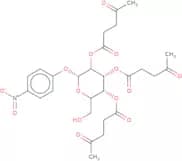
4-Nitrophenyl 2,3,4-tri-O-levulinoyl-a-D-mannopyranoside is a fluorogenic substrate that contains a reactive group of 2,3,4-tri-O-levulinoyl. This compound can be used to measure the activity of enzymes such as beta-glucosidase and alpha-galactosidase. 4NP2OMP is an excellent ligand for metal ions and has been shown to bind to copper in the presence of ATP. 4NP2OMP can also be used as a diagnostic agent for measuring the activity of bacterial beta-glucosidase and alpha galactosidase.Purity:Min. 95%Molecular weight:595.55 g/mol4-Nitrophenyl 2-acetamido-3-O-(2-acetamido-3,4,6-tri-O-acetyl-b-D-glucopyranosyl)-4,6-di-O-acetyl-2-deoxy-a-D-galactopyranoside
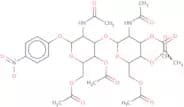
4-Nitrophenyl 2-acetamido-3-O-(2-acetamido-3,4,6-tri-O-acetyl-b-D-glucopyranosyl)-4,6-di-O-acetyl-2deoxy--aDgalactopyranoside is a substrate for enzymes such as beta galactosidase and alpha amylase. It can be used for the detection of these enzymes in biological samples, including culture media and body fluids. 4NPAG has also been used as a chromogenic substrate to measure the activity of NADH oxidase in neutrophils. 4NPAG is fluorescent in aqueous solution and can be used to detect bioluminescence reactions.Purity:Min. 95%Molecular weight:755.68 g/mol4-Nitrophenyl 2-acetamido-3-O-[2-O-(2,3,4-tri-O-benzoyl-a-L-fucopyranosyl)-3,4,6-tri-O-acetyl-2-deoxy-D-galactopyranosyl]-b-D-glucop yranoside
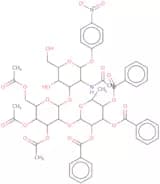
4-Nitrophenyl 2-acetamido-3-O-[2-O-(2,3,4-tri-O-benzoyl-a-L-fucopyranosyl)-3,4,6-tri-O-acetyl-2 deoxy -D-galactopyranosyl]-b D glucopyranoside is a fluorescent substrate for the enzyme β galactosidase. It can be used to test for β galactosidase activity in food products, environmental samples and diagnostics. 4NPFAPG is a conjugate of 4 nitrophenol and 2 acetamido 3 O-[2 O-(2,3,4 tri O benzoyl a L fucopyranosyl) 3,4 6 tri O acetyl 2 deoxy D galactopyranosyl] b D glucopyranose. 4NPFAPG is water soluble and hasPurity:Min. 95%Molecular weight:1,089.01 g/mol4-Methylumbelliferyl 2-azido-2-deoxy-4,6-O-phenylmethylene-a-D-galactopyranoside
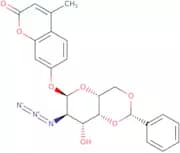
CAS:4-Methylumbelliferyl 2-azido-2-deoxy-4,6-O-phenylmethylene-a-D-galactopyranoside is a fluorogenic substrate that reacts with beta D galactosidase to produce light. This product is useful for diagnostics, conjugate production, and other applications. 4MUF 2 -Gal provides a convenient means of detecting beta D galactosidase activity in cell culture media and can be used as a chromogenic substrate for the detection of enzymes involved in glycosylation reactions. It is also used to detect staining by bioluminescence. The compound can be used in food testing and environmental testing to measure the presence of beta D galactosidase.Formula:C23H21N3O7Purity:Min. 95%Molecular weight:451.43 g/mol4-Nitrophenyl 2-acetamido-2-deoxy-4-O-(a-L-fucopyranosyl)-b-D-glucopyranoside
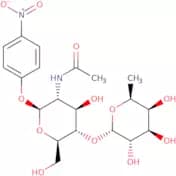
CAS:4-Nitrophenyl 2-acetamido-2-deoxy-4-O-(a-L-fucopyranosyl)-b-D-glucopyranoside is a fluorescent substrate for beta-galactosidase that is used in diagnostics and research. The product has been shown to be an excellent substrate for beta-galactosidase and beta-glucuronidase, as well as other glycosidases. It can be used to detect the presence of these enzymes in any sample containing glycosides. This product is also used in food testing, environmental testing, and bioluminescence experiments. 4NPAFG is available in high purity with a conjugate group at the C4 position.Purity:Min. 95%Molecular weight:488.44 g/mol4-Nitrophenyl 2,3,4-tri-O-acetyl-a-D-glucopyranoside
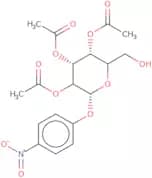
4-Nitrophenyl 2,3,4-tri-O-acetyl-a-D-glucopyranoside is a high quality chemical used in the development of various diagnostic and research applications. It is also used in the production of enzymatic substrates for enzyme activity assays. 4NPTAG is a chromogenic substrate that produces chemiluminescence when it reacts with an oxidizing agent and has been shown to be very effective as a fluorogenic substrate for protein kinases. This compound has been shown to bind to ligands and can be used as a bioluminescent reporter for molecular biology applications. The CAS number for this product is 54973-14-0.Purity:Min. 95%Molecular weight:427.36 g/molBCIP disodium salt sesquihydrate
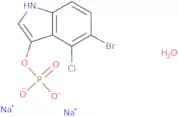
CAS:BCIP is a dye that can be used as a substrate in a fluorometric assay to detect the presence of effector proteins. It is also used in analytical chemistry to detect phosphate, and as a reagent in diagnostic tests for mucin gene expression. BCIP has been shown to have transcriptional regulatory effects on genes encoding for proteins involved in antibody production. BCIP has been shown to act as an effector protein, which influences the amount of mRNA produced by the gene encoding for tissue culture cells. BCIP can also be used as a model system to study the regulation of transcription in vitro.
A hybridization technique using BCIP with DNA-dependent RNA polymerase II has been demonstrated and applied to analyze the mechanism of transcriptional control at the level of individual genes. The use of this technique allows for analysis at a single gene level and may allow for better understanding of transcriptional regulation.Purity:Min. 95%Molecular weight:388.45 g/mol4-Methylumbelliferyl 3-deoxy-D-glycero-a-D-galacto-2-nonulosonic acid sodium salt
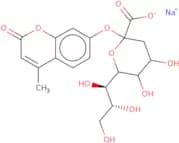
CAS:4-Methylumbelliferyl 3-deoxy-D-glycero-a-D-galacto-2-nonulosonic acid sodium salt is a fluorogenic substrate that can be used to detect enzyme activity. It reacts with the enzyme β-galactosidase, which hydrolyzes lactose in the presence of oxygen and hydrogen peroxide. The product is 4methylumbelliferone, which emits light in the presence of luciferin and an oxidizing agent. This product is used for diagnostics, food testing, and environmental testing. CAS No. 123269-95-4Purity:Min. 95%Molecular weight:489.41 g/mol4-Nitrophenyl 2-acetamido-6-O-(2-acetamido-3,4,6-tri-O-acetyl-2-deoxy-b-D-glucopyranosyl)-3-O-(2,3,4,6-tetra-O-acetyl-b-D-galactopyr anosyl)-2-deoxy-a-D-galactopyranoside
4-Nitrophenyl 2-acetamido-6-O-(2-acetamido-3,4,6-tri-O-acetyl-2-deoxy-b-D-glucopyranosyl)-3-O-(2,3,4,6-tetra -O acetyl -b D galactopyranosyl)-2 deoxy a D galactopyranoside is a high purity fluorogenic substrate for the enzyme β galactosidase. It can be used for the detection of β galactosidase in biological samples. 4NPAG can also be used as a ligand for various types of chromogenic substrates. This product is also commonly used in diagnostics and conjugates to detect β galactosidase activity or as a culture media supplement.Purity:Min. 95%Molecular weight:1,001.89 g/mol2-Nitrophenyl hexyl ether
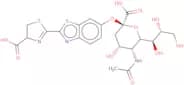
CAS:2-Nitrophenyl hexyl ether is a chromogenic substrate commonly used to assay the activity of esterases. Upon cleavage of the ester bond by esterases, the released 2-nitrophenyl group yields a yellow color detectable by spectrophotometry. This substrate has been used in a variety of applications, including environmental monitoring and studies of insecticide resistance. It is particularly useful for screening large numbers of samples because of its rapid reaction rate and high sensitivity. However, it should be noted that some non-specific hydrolysis may occur with this substrate, particularly at high concentrations or in the presence of strong nucleophiles.Purity:Min. 95%Molecular weight:223.27 g/molD-Luciferin-6-O N-acetylneuraminic acid
Chemiluminescent substrate for neuraminidasePurity:Min. 95%Molecular weight:571.58 g/molBenzyl [13C6] 2-acetamido-3,4,6-tri-O-acetyl-2-deoxy-a-D-galactopyranoside
Benzyl [13C6] 2-acetamido-3,4,6-tri-O-acetyl-2-deoxy-a-D-galactopyranoside is a synthetic monosaccharide with a galactose backbone. The glycosylation of this molecule is the result of enzymatic modification by a glycosylase enzyme that specifically recognizes and removes the terminal glucose residue. This glycosylation process is called click chemistry because it occurs in one step, forming a covalent bond between the sugar and an acetamido group on the benzyl moiety.Purity:Min. 95%Color and Shape:White To Off-White SolidMolecular weight:443.4 g/mol








![Benzyl [13C6] 2-acetamido-3,4,6-tri-O-acetyl-2-deoxy-a-D-galactopyranoside](/_next/image/?url=https%3A%2Fstatic.cymitquimica.com%2Fproducts%2F3D%2Fthumb-webp%2FEB64839.webp&w=3840&q=75)