Enzyme Substrates
Subcategories of "Enzyme Substrates"
Found 1527 products of "Enzyme Substrates"
2-Nitrobenzyl 2-deoxy-2-fluoro-L-fucopyranoside
The photorelease of 2-deoxy-2-fluoro-L-fucose from 2-nitrobenzyl-2-deoxy-2-fluoro-L-fucopyranoside was performed under a 365 nm LED illumination. It has been shown in plant cells this liberated 2-deoxy-2-fluoro-L-fucose can be converted by the endogenous metabolic machinery into the corresponding nucleotide-sugar, which then efficiently inhibits Golgi-localized fucosyltransferases.Formula:C13H16FNO6Purity:Min. 95%Color and Shape:PowderMolecular weight:301.27 g/molH-Ala-Phe-Pro-pNA trifluoroacetate
CAS:Please enquire for more information about H-Ala-Phe-Pro-pNA trifluoroacetate including the price, delivery time and more detailed product information at the technical inquiry form on this pageFormula:C23H27N5O5•C2HF3O2Purity:Min. 95%Molecular weight:567.51 g/molLuc-E.coli K
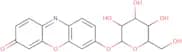
Bioluminescent substrate for detection of E. coli.Formula:C17H14K2N2O9S2Purity:Min. 94 Area-%Molecular weight:532.63 g/molResorufin a-D-mannopyranoside
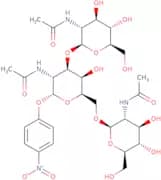
CAS:Resorufin alpha-D-glucopyranoside is a sensitive fluorogenic substrate that generates a red fluorescent product (resorufin) upon interaction with alpha-glucosidase.Purity:Min. 95%Color and Shape:Brown PowderMolecular weight:375.33 g/mol4-Nitrophenyl 2-acetamido-3,6-di-O-(2-acetamido-2-deoxy-b-D-glucopyranosyl)-2-deoxy-a-D-galactopyranoside
CAS:4-Nitrophenyl 2-acetamido-3,6-di-O-(2-acetamido-2-deoxy-b-D-glucopyranosyl)-2-deoxy-a-D-galactopyranoside is a fluorogenic substrate that is used in enzyme assays to detect the presence of an enzyme. The substrate reacts with the enzyme to produce a fluorescent product. 4NPAAG can be used for diagnostics, culture media, food testing and environmental testing.Formula:C30H44N4O18Purity:Min. 95%Molecular weight:748.69 g/mol4-Nitrophenyl a-L-galactopyranoside
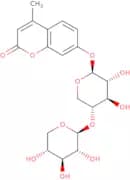
Chromogenic substrate targeting alpha-D-galactosidasePurity:Min. 95%Molecular weight:301.25 g/mol4-Methylumbelliferyl b-D-xylobioside
CAS:4-Methylumbelliferyl beta-D-xylobioside is a fluorogenic substrate for xylanase. After enzymatic cleaveage, free 4-methylumbelliferone (also known as hymecromone) is released, exhibiting blue fluorescence upon excitation with UV light. The strongest fluorescence of 4-methylumbelliferone requires deprotonation of the hydroxyl group (thus requires alkaline pH), with a maximal fluorescence intensity obtained with excitation at 350 to 370 nm and emission at 440 to 470 nm. The use of 4-methylumbelliferyl beta-D-xylobiosideas a substrate for measuring the xylanase activity is used for detecting bacterial infection and gut microbiome analysis.Formula:C20H24O11Purity:Min. 95 Area-%Color and Shape:White PowderMolecular weight:440.4 g/mol1,8,15,22,29,36-Hexaazacyclodotetracontane-2,7,16,21,30,35-hexone
CAS:Please enquire for more information about 1,8,15,22,29,36-Hexaazacyclodotetracontane-2,7,16,21,30,35-hexone including the price, delivery time and more detailed product information at the technical inquiry form on this pageFormula:C36H66N6O6Purity:Min. 95%Color and Shape:PowderMolecular weight:678.9 g/molcis-6,7-Dimethyl-5,6,7,8-tetrahydropterin hydrochloride
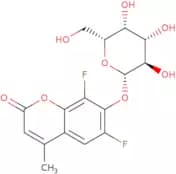
CAS:Please enquire for more information about cis-6,7-Dimethyl-5,6,7,8-tetrahydropterin hydrochloride including the price, delivery time and more detailed product information at the technical inquiry form on this pageFormula:C8H13N5O•HClPurity:Min. 95%Molecular weight:231.68 g/mol6,8-Difluoro-4-methylumbelliferyl β-D-galactopyranoside
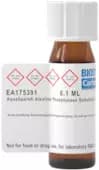
CAS:6,8-Difluoro-4-methylumbelliferyl b-D-galactopyranoside, commonly known as DiFMUG, is a fluorogenic substrate to detect beta-galactosidase. It has higher sensitivity than the common MUG (4-methylumbelliferyl beta-D-galactopyranoside) subtrate.Formula:C16H16F2O8Purity:Min. 95%Color and Shape:PowderMolecular weight:374.29 g/molAquaSpark® Alkaline Phosphatase Substrate, 2 mM in DMSO, Ramot at Tel-Aviv University Ltd. Patent family WO 2017/130191
CAS:Chemiluminescence substrate for AP detection
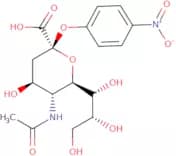
Formula:C21H24NaO9PColor and Shape:Clear LiquidMolecular weight:474.37 g/mol2-O-(4-Nitrophenyl)-a-D-N-acetylneuraminic acid
CAS:2-O-(4-Nitrophenyl)-a-D-N-acetylneuraminic acid, also known as p-nitrophenyl N-acetylneuraminic acid, is a chromogenic substrate specifically designed for the detection and quantification of neuraminidase (sialidase) activity. Upon cleavage by neuraminidase, it releases a yellow-colored product, 4-nitrophenol, which can be easily monitored spectrophotometrically at 405 nm. This substrate is widely used in various applications, including enzyme kinetics studies, inhibitor screening, and the determination of neuraminidase activity in biological samples such as viruses, bacteria, and cell lysates. It is particularly useful for studying the enzymatic properties of neuraminidases from different sources and for the development of novel antiviral and antibacterial agents targeting neuraminidase activity.
Formula:C17H22N2O11Purity:Min. 90 Area-%Color and Shape:White PowderMolecular weight:430.36 g/molLuc-S.aureus K
Luc-S.aureus K is an enzyme conjugate containing luciferase and a specific antibody against Staphylococcus aureus. It is used for detection of S.aureus in laboratory cultures, food, and environmental samples. The light produced by this product is proportional to the amount of bacteria present in the sample. This product can be used as a chemiluminescent substrate for detecting alkaline phosphatase activity or as a fluoro-luminescent substrate for detecting beta-galactosidase activity. Luc-S.aureus K has high purity and high quality, with 100% specific binding affinity for S.aureus and no cross reactivity with other bacteria or host cells, making it suitable for use in diagnostic applications.
Formula:C17H17KN2O8S2Purity:Min. 85 Area-%Molecular weight:480.55 g/molD-Luciferin Firefly, potassium salt
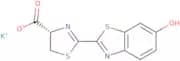
CAS:Water soluble substrate for firefly luciferase. Used for imaging the expression of the LUC marker gene and luciferase-fusion conjugates in living cells, tissues and organisms. Extensively utilized in reporter gene assays, immunoassays and hygiene monitoring.
Formula:C11H7KN2O3S2Purity:Min. 99.0 Area-%Molecular weight:318.42 g/mol2-Nitrophenyl-β-D-glucopyranoside
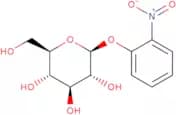
CAS:Chromogenic beta-Glucosidase substrate yielding a yellow solution upon cleavage.
Formula:C12H15NO8Molecular weight:301.26 g/molRef: 3D-N-4320
Discontinued productD-Luciferin Firefly, potassium salt
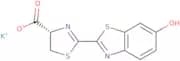
CAS:Water soluble substrate for firefly luciferase. Used for imaging the expression of the LUC marker gene and luciferase-fusion conjugates in living cells, tissues and organisms. Extensively utilized in reporter gene assays, immunoassays and hygiene monitoring. Endotoxin free product.
Formula:C11H7KN2O3S2Purity:Min. 98 Area-%Color and Shape:Slightly Yellow PowderMolecular weight:318.41 g/molRef: 3D-FL08608
Discontinued productAldol® 455 β-D-glucopyranoside, Biosynth Patent: EP 2427431 and US 8940909
CAS:Aldol® 455 beta-D-glucopyranoside is a chromogenic and fluorogenic enzyme substrate used for detection of beta-glucosidase activity. The colorless enzyme substrate is cleaved by beta-glucosidase producing bacteria grown in liquid or solid media, yielding a yellow color and green to orange fluorescence. Aldol® 455 beta-D-glucopyranoside can be used under aerobic and anaerobic conditions.
Formula:C27H24ClNO7Purity:Min. 92.0 Area-%Molecular weight:509.94 g/molRef: 3D-A-4689_P00
Discontinued productBCM® Staphylococcus aureus Plating medium
Please enquire for more information about BCM® Staphylococcus aureus Plating medium including the price, delivery time and more detailed product information at the technical inquiry form on this page
2-Naphthyl b-D-glucopyranoside monohydrate
CAS:2-Naphthyl-lpha-D-glucopyranoside is a substrate for α-glucosidase. 2-Naphthol is released upon hydrolyzation. By simultaneous coupling with a suitable staining reagent, such as hexazonium p-rosaniline, the corresponding reddish-brown azo-dye is formed. Naphthols can also be detected by fluorescence analysis.
Purity:Min. 95%Color and Shape:PowderMolecular weight:324.33 g/molRef: 3D-EN06885
Discontinued product4-Methylumbelliferyl 2-acetamido-2-deoxy-b-D-galactopyranoside-6-sulfate potassium salt
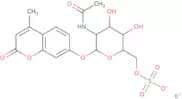
CAS:4-Methylumbelliferyl 2-acetamido-2-deoxy-beta-D-galactopyranoside-6-sulfate potassium salt is a fluorogenic substrate for N-acetylgalactosamine-6-sulfatase. After enzymatic cleaveage, free 4-methylumbelliferone (also known as hymecromone) is released, exhibiting blue fluorescence upon excitation with UV light. The strongest fluorescence of 4-methylumbelliferone requires deprotonation of the hydroxyl group (thus requires alkaline pH), with a maximal fluorescence intensity obtained with excitation at 350 to 370 nm and emission at 440 to 470 nm. The use of 4-methylumbelliferyl 2-acetamido-2-deoxy-beta-D-galactopyranoside-6-sulfate potassium saltas a substrate for measuring the N-acetylgalactosamine-6-sulfatase activity is used for diagnosis of Mucopolysaccharidosis IVA (MPS IVA) (a rare lysosomal storage disorder) and Morquio A syndrome screening.
Formula:C18H20KNO11SPurity:Min. 95%Color and Shape:PowderMolecular weight:497.52 g/molRef: 3D-EM03197
Discontinued product