Enzyme Substrates
Enzyme substrates are molecules upon which enzymes act to catalyze chemical reactions. The substrate binds to the active site of the enzyme, where it undergoes a specific transformation to form the product of the reaction. Enzyme substrates are essential tools in research for studying enzyme kinetics, specificity, and mechanism of action. They are also used in diagnostic assays and biochemical studies. At CymitQuimica, we provide a diverse selection of high-quality enzyme substrates to support your research in enzymology and biochemistry.
Subcategories of "Enzyme Substrates"
Found 1527 products of "Enzyme Substrates"
Sort by
Purity (%)
0
100
|
0
|
50
|
90
|
95
|
100
AquaSpark® 510 Nitroreductase/NADH Probe, lyophilized, Ramot at Tel-Aviv University Ltd. Patent family WO 2017/130191
CAS:The AquaSpark® 510 Nitroreductase/NADH Probe (CL-NTR) is a water-soluble probe for the selective chemiluminescent detection of nitroreductase (NTR) activity. It is a versatile tool for monitoring a number of biological processes.Formula:C28H28ClNO8Color and Shape:PowderMolecular weight:541.15 g/mol4-Nitrophenyl a-D-maltotetraoside
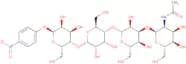
CAS:<p>4-Nitrophenyl alpha-D-maltotetraoside is a chromogenic substrate used for the detection of alpha-glucosidase and alpha-amylase activity. The four glucose units in the molecule are hydrolyzed by the enzyme, releasing 4-nitrophenol and allowing for easy colorimetric measurement of enzymatic activity</p>Purity:Min. 95%Molecular weight:787.67 g/molFast blue BB salt
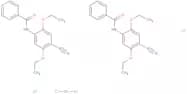
CAS:<p>Fast Blue BB is commonly used for assaying beta-glycosidase activity and the chromogenic reaction between Fast Blue BB and beta-naphthol results in a reddish colored product and is at the basis of its application to different enzymatic activity assays. Produces a fluorescent, blue-green chromophore.</p>Formula:C34H36Cl4N6O6ZnPurity:Min. 95%Molecular weight:831.9 g/molFluorescein diphosphate tetraammonium salt
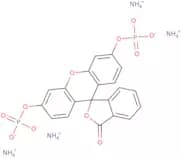
CAS:<p>Fluorogenic substrate targeting phosphatase</p>Formula:C20H14O11P2•(NH3)4Purity:Min. 90 Area-%Color and Shape:Yellow PowderMolecular weight:560.39 g/mol1-Naphthyl-α-D-mannopyranoside
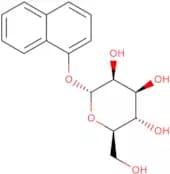
CAS:<p>1-Naphthyl-alpha-D-mannopyranoside is a chromogenic substrate. It is used in diagnostics and as a reagent for enzymatic analysis of alpha-mannosidase activity in culture media, food testing, and environmental testing.</p>Formula:C16H18O6Purity:Min. 95%Color and Shape:PowderMolecular weight:306.31 g/mol4-Nitrophenyl 2-acetamido-2-deoxy-4-O-(β-D-galactopyranosyl)-α-D-glucopyranoside
CAS:4-Nitrophenyl 2-acetamido-2-deoxy-4-O-(β-D-galactopyranosyl)-α-D-glucopyranoside is a high-quality chromogenic pNP enzyme substrate specifically designed to enable effective and accurate detection of enzyme activity. By utilizing this advanced substrate, researchers and professionals can perform a range of applications, including activity assays, enzyme inhibition studies, and substrate specificity profiling. This substrate's unique properties result in exceptional sensitivity and throughput, ensuring effective results for a wide variety of enzyme assays.Formula:C20H28N2O13Purity:Min. 90%Color and Shape:White PowderMolecular weight:504.44 g/mol4-Nitrophenyl b-D-cellopentaoside
CAS:<p>Substrates for endoglucanase and beta-cellobiohydrolase activity in the study of digestive system in Zygentoma as an insect model for high cellulase activity</p>Formula:C36H55NO28Purity:Min. 95%Color and Shape:PowderMolecular weight:949.81 g/mol2-Chloro-4-nitrophenyl 2-acetamido-2-deoxy-β-D-glucopyranoside
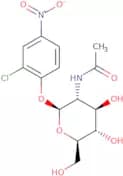
CAS:<p>2-Chloro-4-nitrophenyl 2-acetamido-2-deoxy-β-D-glucopyranoside is a chromogenic substrate used for beta-N-acetylglucosaminidase assays. Upon enzymatic hydrolysis, 2-chloro-4-nitrophenol is released, which has a yellowish color. It is used in diagnostic applications such as lysosomal storage disorder diagnosis (for example, Tay-Sachs disease) and glycosidase inhibition studies.</p>Formula:C14H17ClN2O8Purity:Min. 98 Area-%Color and Shape:White PowderMolecular weight:376.75 g/molNaphthol AS-CL phosphate
CAS:<p>Modified naphtol AS substrate used in histochemical and cytochemical staining</p>Purity:Min. 95%Molecular weight:407.74 g/mol4-Nitrophenyl b-globo-N-tetraoside
CAS:<p>4-Nitrophenyl beta-galactoside (pNP-Gal) is a chromogenic substrate commonly used in enzymatic assays to detect and quantify the presence of beta-galactosidase. It is hydrolyzed by the enzyme to release 4-nitrophenol, which produces a yellow color that can be measured spectrophotometrically. Similarly, 4-Nitrophenyl beta-glucoside (pNP-Glc) can be used to assay beta-glucosidase activity. 4-Nitrophenyl beta-globotrioside (pNP-Glo) is a similar compound that has been designed as a substrate for glycosidases that cleave terminal beta-galactosyl-(1->3)-N-acetylgalactosamine residues. In these assays, the release of 4-nitrophenol can be measured to determine the activity of the enzyme under study. The use of chromogenic substrates like pNP-Glo allows for the rapid and reliable detection of glycosidase activity in a variety of biological samples.</p>Purity:Min. 95%Color and Shape:PowderMolecular weight:828.72 g/molNaphthol AS-OL acetate
CAS:<p>Modified naphtol AS substrate used in histochemical and cytochemical staining</p>Purity:Min. 95%Molecular weight:335.35 g/mol1,2,4-trihydroxynaphthalene-4-O-b-D-glucopyranoside
CAS:<p>Please enquire for more information about 1,2,4-trihydroxynaphthalene-4-O-b-D-glucopyranoside including the price, delivery time and more detailed product information at the technical inquiry form on this page</p>Formula:C16H18O8Molecular weight:338.31 g/mol1,2,4-trihydroxynaphthalene-2-O-b-D-glucopyranoside
CAS:<p>Please enquire for more information about 1,2,4-trihydroxynaphthalene-2-O-b-D-glucopyranoside including the price, delivery time and more detailed product information at the technical inquiry form on this page</p>Formula:C16H18O8Molecular weight:338.31 g/mol4-Nitrophenyl valerate
CAS:<p>Please enquire for more information about 4-Nitrophenyl valerate including the price, delivery time and more detailed product information at the technical inquiry form on this page</p>Formula:C11H13NO4Molecular weight:223.23 g/molMethyl 4-nitrophenyl hexylphosphonate
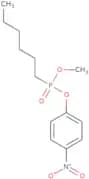
CAS:<p>Methyl 4-nitrophenyl hexylphosphonate is a phosphonate inhibitor of the enzyme serine esterase. It has been shown to be more potent than other irreversible inhibitors such as ethyl 4-nitrophenyl hexylphosphonate and methyl 4-nitrophenoxybutyl phosphate. This compound is an immobilized form of the methyl 4-nitrophenyl hexylphosphonate that is immobilized on an inert surface, such as silica gel, via a covalent bonding process. The immobilization of the molecule ensures that it will not leach from the surface and is stable over time. The molecular weight of this substance is 411.5 Daltons and its molecular formula is C8H15NO4P. This substance has a diameter of 0.8 nm and can be found in crystalline form with a melting point of 143 degrees Celsius at atmospheric pressure. Methyl 4-nitrophenyl</p>Formula:C13H20NO5PPurity:Min. 95%Molecular weight:301.27 g/mol2-Nitrobenzyl 2-deoxy-2-fluoro-L-fucopyranoside
<p>The photorelease of 2-deoxy-2-fluoro-L-fucose from 2-nitrobenzyl-2-deoxy-2-fluoro-L-fucopyranoside was performed under a 365 nm LED illumination. It has been shown in plant cells this liberated 2-deoxy-2-fluoro-L-fucose can be converted by the endogenous metabolic machinery into the corresponding nucleotide-sugar, which then efficiently inhibits Golgi-localized fucosyltransferases.</p>Formula:C13H16FNO6Purity:Min. 95%Color and Shape:PowderMolecular weight:301.27 g/mol4-Nitrophenyl-myo-inositol-1-yl phosphate
CAS:<p>4-Nitrophenyl-myo-inositol-1-yl phosphate is a highly specific chromogenic substrate used for the detection, quantification, and characterization of phosphoinositide phosphatases. When cleaved by the target enzyme, it generates a highly absorbing 4-nitrophenyl moiety, producing a yellow color that can be measured spectrophotometrically. This versatile substrate is valuable in examining phosphoinositide phosphatase activity, enzyme kinetics, substrate specificity, and inhibition studies in various cellular processes, including signal transduction, lipid metabolism, and membrane trafficking.</p>Purity:Min. 95%Molecular weight:381.23 g/molResorufin a-D-mannopyranoside
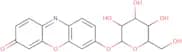
CAS:<p>Resorufin alpha-D-glucopyranoside is a sensitive fluorogenic substrate that generates a red fluorescent product (resorufin) upon interaction with alpha-glucosidase.</p>Purity:Min. 95%Color and Shape:Brown PowderMolecular weight:375.33 g/molH-Ala-Phe-Pro-pNA trifluoroacetate
CAS:<p>Please enquire for more information about H-Ala-Phe-Pro-pNA trifluoroacetate including the price, delivery time and more detailed product information at the technical inquiry form on this page</p>Formula:C23H27N5O5•C2HF3O2Purity:Min. 95%Molecular weight:567.51 g/mol4-Nitrophenyl a-L-galactopyranoside
<p>Chromogenic substrate targeting alpha-D-galactosidase</p>Purity:Min. 95%Molecular weight:301.25 g/mol