Enzyme Substrates
Enzyme substrates are molecules upon which enzymes act to catalyze chemical reactions. The substrate binds to the active site of the enzyme, where it undergoes a specific transformation to form the product of the reaction. Enzyme substrates are essential tools in research for studying enzyme kinetics, specificity, and mechanism of action. They are also used in diagnostic assays and biochemical studies. At CymitQuimica, we provide a diverse selection of high-quality enzyme substrates to support your research in enzymology and biochemistry.
Subcategories of "Enzyme Substrates"
Found 1527 products of "Enzyme Substrates"
Sort by
Purity (%)
0
100
|
0
|
50
|
90
|
95
|
100
Luc-E.coli K
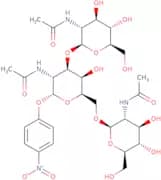
<p>Bioluminescent substrate for detection of E. coli.</p>Formula:C17H14K2N2O9S2Purity:Min. 94 Area-%Molecular weight:532.63 g/mol4-Nitrophenyl 2-acetamido-3,6-di-O-(2-acetamido-2-deoxy-b-D-glucopyranosyl)-2-deoxy-a-D-galactopyranoside
CAS:<p>4-Nitrophenyl 2-acetamido-3,6-di-O-(2-acetamido-2-deoxy-b-D-glucopyranosyl)-2-deoxy-a-D-galactopyranoside is a fluorogenic substrate that is used in enzyme assays to detect the presence of an enzyme. The substrate reacts with the enzyme to produce a fluorescent product. 4NPAAG can be used for diagnostics, culture media, food testing and environmental testing.</p>Formula:C30H44N4O18Purity:Min. 95%Molecular weight:748.69 g/molLuciferin-beta-D-glucuronide, dipotassium salt
<p>Luciferin-beta-D-glucuronide, dipotassium salt is a fluorescent compound that is used as a diagnostic tool. It can be used to detect the presence of enzymes, such as beta-galactosidase and beta-glucuronidase, in culture media or biological fluids. Luciferin-beta-D-glucuronide, dipotassium salt is also used for food testing and environmental testing.</p>Formula:C17H14K2N2O9S2Purity:Min. 94.0 Area-%Molecular weight:532.63 g/mol1,8,15,22,29,36-Hexaazacyclodotetracontane-2,7,16,21,30,35-hexone
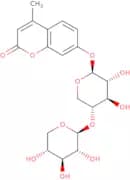
CAS:<p>Please enquire for more information about 1,8,15,22,29,36-Hexaazacyclodotetracontane-2,7,16,21,30,35-hexone including the price, delivery time and more detailed product information at the technical inquiry form on this page</p>Formula:C36H66N6O6Purity:Min. 95%Color and Shape:PowderMolecular weight:678.9 g/mol4-Methylumbelliferyl b-D-xylobioside
CAS:<p>4-Methylumbelliferyl beta-D-xylobioside is a fluorogenic substrate for xylanase. After enzymatic cleaveage, free 4-methylumbelliferone (also known as hymecromone) is released, exhibiting blue fluorescence upon excitation with UV light. The strongest fluorescence of 4-methylumbelliferone requires deprotonation of the hydroxyl group (thus requires alkaline pH), with a maximal fluorescence intensity obtained with excitation at 350 to 370 nm and emission at 440 to 470 nm. The use of 4-methylumbelliferyl beta-D-xylobiosideas a substrate for measuring the xylanase activity is used for detecting bacterial infection and gut microbiome analysis.</p>Formula:C20H24O11Purity:Min. 95 Area-%Color and Shape:White PowderMolecular weight:440.4 g/mol6-Hexanoylamino-4-methylumbelliferyl b-D-galactopyranoside
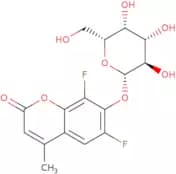
<p>6-Hexanoylamino-4-methylumbelliferyl b-D-galactopyranoside is a chromogenic substrate for beta-galactosidase.</p>Purity:Min. 95%6,8-Difluoro-4-methylumbelliferyl β-D-galactopyranoside
CAS:<p>6,8-Difluoro-4-methylumbelliferyl b-D-galactopyranoside, commonly known as DiFMUG, is a fluorogenic substrate to detect beta-galactosidase. It has higher sensitivity than the common MUG (4-methylumbelliferyl beta-D-galactopyranoside) subtrate.</p>Formula:C16H16F2O8Purity:Min. 95%Color and Shape:PowderMolecular weight:374.29 g/molcis-6,7-Dimethyl-5,6,7,8-tetrahydropterin hydrochloride
CAS:<p>Please enquire for more information about cis-6,7-Dimethyl-5,6,7,8-tetrahydropterin hydrochloride including the price, delivery time and more detailed product information at the technical inquiry form on this page</p>Formula:C8H13N5O•HClPurity:Min. 95%Molecular weight:231.68 g/molAquaSpark® Broad Range Phosphatase Substrate, Ramot at Tel-Aviv University Ltd. Patent family WO 2017/130191
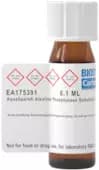
CAS:<p>Chemiluminescent phosphatase substrate in a wide pH range (pH 6 - 10)</p>Formula:C28H30ClO10PPurity:Min. 80 Area-%Molecular weight:592.13 g/molAquaSpark® Alkaline Phosphatase Substrate, 2 mM in DMSO, Ramot at Tel-Aviv University Ltd. Patent family WO 2017/130191
CAS:<p>Chemiluminescence substrate for AP detection</p>Formula:C21H24NaO9PColor and Shape:Clear LiquidMolecular weight:474.37 g/mol5-Iodo-3-indolyl b-D-galactopyranoside
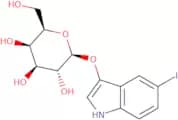
CAS:<p>5-Iodo-3-indolyl b-D-galactopyranoside is a chromogenic substrate used for beta-galactosidase. It is incorporated into media or detection kits for rapid and direct identification of microorganisms.</p>Formula:C14H16INO6Purity:Min. 98 Area-%Color and Shape:PowderMolecular weight:421.18 g/molRef: 3D-EI03217
Discontinued product6-Chloro-3-indolyl phosphate p-toluidine salt
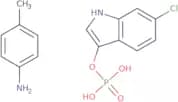
CAS:<p>A substrate for visualising alkaline phosphatase activity. Produces a red colored insoluble end product that is detected visually, when used together with Nitroblue tetrazolium. The substrate system is versatile and functions in a variety of applications, including Northern, Southern, and Western blotting, in situ hybridization, ELISAs and immunohistochemistry. DMF soluble.</p>Formula:C15H16ClN2O4PPurity:Min. 98%Color and Shape:White Off-White PowderMolecular weight:354.73 g/molRef: 3D-EC09439
Discontinued productD-Luciferin Firefly, potassium salt - endotoxin free
CAS:<p>Water soluble substrate for firefly luciferase. Used for imaging the expression of the LUC marker gene and luciferase-fusion conjugates in living cells, tissues and organisms. Extensively utilized in reporter gene assays, immunoassays and hygiene monitoring. Endotoxin free product.</p>Formula:C11H7KN2O3S2Purity:Min. 95%Color and Shape:PowderMolecular weight:318.42 g/molAquaSpark® Enhanced HRP Detection Solution, Ramot at Tel-Aviv University Ltd. Patent family WO 2017/130191
CAS:<p>AquaSpark® Enhanced HRP Detection Solution is a sensitive chemiluminescent substrate solution for detecting horseradish peroxidase (HRP) conjugates on immunoblots (Western blot, dot blot) and in enzyme-linked immunosorbent assays (ELISA). The ready-to-use detection solution contains the AquaSpark® substrate and the oxidizing reagent hydrogen peroxide (H2O2).</p>Purity:Min. 95%Color and Shape:Clear Liquid3-Indoxylacetate
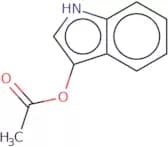
CAS:<p>Please enquire for more information about 3-Indoxylacetate including the price, delivery time and more detailed product information at the technical inquiry form on this page</p>Formula:C10H9NO2Color and Shape:White PowderMolecular weight:175.18 g/molRef: 3D-FI10731
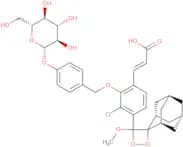
Discontinued productAquaSpark® β-D-glucoside, 10 mM in DMSO, Ramot at Tel-Aviv University Ltd. Patent family WO 2017/130191
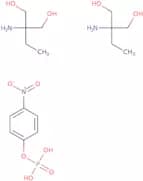
CAS:<p>Please enquire for more information about AquaSpark® beta-D-glucoside, 10 mM in DMSO, Ramot at Tel-Aviv University Ltd. Patent family WO 2017/130191 including the price, delivery time and more detailed product information at the technical inquiry form on this page</p>Formula:C34H39ClO12Purity:Min. 95%Color and Shape:Clear LiquidMolecular weight:675.12 g/mol4-Nitrophenyl phosphate mono(2-amino-2-ethyl-1,3-propanediol) salt monohydrate
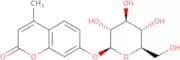
CAS:<p>Chromogenic substrate for alkaline phosphatase</p>Formula:C26H32N3NaO6S2Purity:Min. 95%Color and Shape:PowderMolecular weight:457.41 g/mol4-Methylumbelliferyl β-D-glucopyranoside
CAS:<p>Fluorogenic substrate for β-glucosidase</p>Formula:C16H18O8Purity:Min. 98 Area-%Color and Shape:PowderMolecular weight:338.31 g/molRef: 3D-EM05983
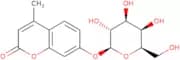
Discontinued product4-Methylumbelliferyl b-D-galactopyranoside
CAS:<p>Fluorogenic substrate for β-galactosidase</p>Formula:C16H18O8Purity:Min. 95%Color and Shape:White PowderMolecular weight:338.31 g/mol4-Nitrophenyl-β-D-glucopyranoside
CAS:<p>4-Nitrophenyl-beta-D-glucopyranoside is a fluorescent probe that can be used in the study of the biochemical properties of enzymes. This compound binds to the enzyme's active site, which allows for transfer reactions to occur. 4-Nitrophenyl-beta-D-glucopyranoside is an artificial substrate that is biochemically inert and has a similar physical structure to natural substrates. It can be used as a model system to study enzymatic reactions and has been shown to have pharmacokinetic properties and a pH optimum. The detection sensitivity of this compound is high, making it ideal for use in biochemical studies.</p>Formula:C12H15NO8Purity:Min. 99.0 Area-%Molecular weight:301.25 g/mol