Enzyme Substrates
Subcategories of "Enzyme Substrates"
Found 1433 products for "Enzyme Substrates".
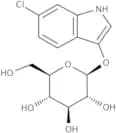
6-Chloro-3-indolyl b-D-galactopyranoside
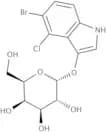
CAS:Formula:C14H16ClNO6Purity:≥ 99.0%Color and Shape:Off-white to pale pink powderMolecular weight:329.745-Bromo-4-chloro-3-indolyl a-D-galactopyranoside
CAS:Formula:C14H15BrClNO6Purity:≥ 98.0%Color and Shape:White powder to colourless crystalsMolecular weight:408.634-Methylumbelliferyl 6-Sulfo-2-acetamido-2-deoxy-α-D-glucopyranoside Sodium Salt (>90%)
CAS:Controlled ProductApplications 4-Methylumbelliferyl 6-Sulfo-2-acetamido-2-deoxy-α-D-glucopyranoside Sodium Salt is an analogue of 4-Methylumbelliferyl 6-Sulfo-2-acetamido-2-deoxy-α-D-glucopyranoside Potassium Salt (M334950) which is shown to be a substrate for the lysosomal N-acetylglucosamine-6-sulphate sulphatase.
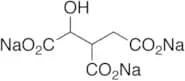
References He, W., et al.: J. inher. Metab. Dis., 16, 935 (1993)Formula:C18H20NO11S·NaPurity:>90%Color and Shape:NeatMolecular weight:481.41Trisodium Isocitric Acid
CAS:Stability Hygroscopic
Applications Isocitric acid is the protonated analogue of isocitrate, a substrate of the citric acid cycle.
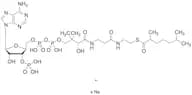
References Zhang, Q., et al.: J. Am. Chem. Soc., 133, 18931 (2011); Crowe, L.M., et al.: Arch. Biochem. Biophy., 242, 240, (1985);Formula:C6H5O7·3NaColor and Shape:NeatMolecular weight:258.072,6-Dimethylheptanoyl-CoA Sodium Salt
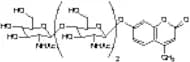
CAS:Formula:C30H52N7O17P3S·x(Na)Color and Shape:NeatMolecular weight:930.74-Methylumbelliferyl β-D-N,N’,N”-Triacetylchitotrioside
CAS:Stability Hygroscopic
Applications 4-Methylumbelliferyl β-D-N,N’,N”-Triacetylchitotrioside is a fluorogenic substrate of uniform, characterized structure for assays of lysozyme.
References Yang, Y., et al.: J. Biochem., 87, 1003 (1980)Formula:C34H47N3O18Color and Shape:NeatMolecular weight:785.75Phosphoglycolic Acid
CAS:Controlled ProductApplications Phosphoglycolic Acid is used in studies pertaining to biological and metabolic processes. It can be used in the study of human apurinic/apyrimidinic endonuclease (Ape) and its role in double strand break repair. It also has been seen to complex with cPEPCK (cytosolic phosphoenolpyruvate carboxykinase) during the study of its inhibition by various substrate analogues.
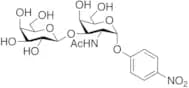
References Suh, D. et al.: Nucl. Acids Res., 25, 2495 (1997); Stiffin, R. et al.: Biochem., 47, 2099 (2008);Formula:C2H5O6PColor and Shape:NeatMolecular weight:156.034-Nitrophenyl 2-(Acetamido)-2-deoxy-3-O-β-D-galactopyranosyl-α-D-galactopyranoside
CAS:Controlled ProductApplications Acetylgalactosaminidase sequence substrate Clostridium Bifidobacterium. A fluorescent substrate for α2,3-(O)-Sialyltransferase
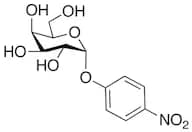
References Medina, M. et al.: Cancer Res. 59,1061-1070, (1999)Formula:C20H28N2O13Color and Shape:NeatMolecular weight:504.44p-Nitrophenyl α-D-Galactopyranoside
CAS:Controlled ProductApplications p-Nitrophenyl α-D-Galactopyranoside (cas# 7493-95-0) is a compound useful in organic synthesis.
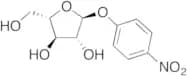
References Anisha, G., et al.: Proc. Biochem., 44, 327 (2009), Bergstroem, M., et al.: Chem. Biol. Drug Des., 73, 132 (2009), Liu, Q., et al.: J. Biol. Chem., 283, 8545 (2008),Formula:C12H15NO8Color and Shape:NeatMolecular weight:301.254-Nitrophenyl-α-L-arabinofuranoside
CAS:Controlled ProductStability Hygroscopic
Applications 4-Nitrophenyl-α-L-arabinofuranoside is a substrate for the enzyme arabinofuranosidase.
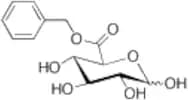
References Tefsen, B., et. al.: Biol. Chem., 393, 767 (2012)Formula:C11H13NO7Color and Shape:NeatMolecular weight:271.22Benzyl D-Glucuronate
CAS:Controlled ProductStability Hygroscopic
Applications Used in efficient synthesis of 1β-O-acyl glucuronides via regioselective acylation
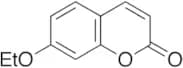
References Meng, X., et al.: J. Med. Chem., 50, 6165 (2007),Formula:C13H16O7Color and Shape:NeatMolecular weight:284.267-Ethoxycoumarin
CAS:Controlled ProductApplications A substrate for cytochrome CYP2B6.
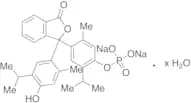
References Kabumoto, H., et al.: Biosci., Biotechnol., Biochem., 73, 1922 (2009), Maresca, A., et al.: J. Med. Chem., 53, 335 (2010), Si-Ahmed, K., et al.: J. Pharm. Biomed. Anal., 51, 225 (2010),Formula:C11H10O3Color and Shape:NeatMolecular weight:190.2Thymolphthalein Monophosphoric Acid Disodium Salt (>85%)
CAS:Controlled ProductApplications Thymolphthalein Monophosphoric Acid Disodium Salt is a chromogenic substrate for the determination of acid phosphatase and alkaline phosphatase. It is a disodium salt form of Thymolphthalein Monophosphoric Acid which can be used as reactant/reagent in reaction of homodimer and heterodimer subunits of human prostate acid phosphatase.
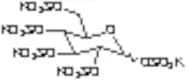
References Lee, H., et al.: Biochem J, 277, 759 (1991)Formula:C28H29Na2O7P•xH2OPurity:>85%Color and Shape:NeatMolecular weight:554.481802Glucose Pentasulfate, Potassium Salt, Technical Grade
CAS:Controlled ProductStability Hygroscopic
Applications Glucose Pentasulfate is used as a reference standard for the drug Sucralfate (S692350(P)), which is an inhibitor of peptic hydrolysis and stomach acidity and used as an anti-ulcerative.
References Mayberr, J.F., et al.: Brit. J. Clin. Pract., 32, 291 (1978); Brogden, R.N., et al.: Drugs, 27, 194 (1984);Formula:C6H7O21S5K5Color and Shape:NeatMolecular weight:770.94p-Nitrophenyl α-D-Glucopyranoside
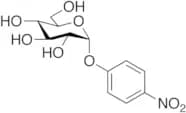
CAS:Applications p-Nitrophenyl α-D-Glucopyranoside is a substrate for α-glucosidase inhibitor.
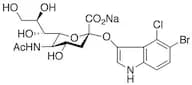
References O'Neill, R., et al.: J. Biol. Chem., 264, 20430 (1989), Carpita, N., et al.: Plant J., 3, 1 (1993), Henrissat, B., et al.: Biochem. J., 293, 781 (1993), Nakai, H., et al.: Biochimie, 89, 49 (2007) ,Formula:C12H15NO8Color and Shape:NeatMolecular weight:301.255-Bromo-4-chloro-3-indolyl-α-D-N-acetylneuraminic Acid, Sodium Salt
CAS:Controlled ProductStability Moisture, Temperature sensitive
Applications Used as a substrate for the detection of sialidase-like enzyme in screening of enzymes, studying physiological activities of gangliosides, and recombinant technologies.
References Biorg. Med. Chem., 1, 147 (1993)Formula:C19H21BrClN2O9·NaColor and Shape:NeatMolecular weight:559.722-Naphthyl a-D-glucopyranoside
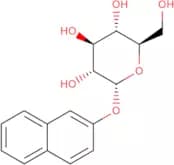
CAS:2-Naphthyl-lpha-D-glucopyranoside is a substrate for α-glucosidase. 2-Naphthol is released upon hydrolyzation. By simultaneous coupling with a suitable staining reagent, such as hexazonium p-rosaniline, the corresponding reddish-brown azo-dye is formed. Naphthols can also be detected by fluorescence analysis.Formula:C16H18O6Purity:Min. 98 Area-%Color and Shape:PowderMolecular weight:306.31 g/mol4-Methylumbelliferyl-beta-D-cellobioside
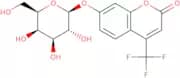
CAS:Fluorogenic substrate for β-D-Cellobiosidase yielding a blue fluorescent solution upon cleavage.Formula:C22H28O13Purity:Min. 98.0 Area-%Molecular weight:500.46 g/mol4-Trifluoromethylumbelliferyl β-D-galactopyranoside
CAS:4-Trifluoromethylumbelliferyl β-D-galactopyranoside is a fluorogenic substrate for beta-galactosidase . Upon hydrolysis, the fluorogenic moiety (blueish) 4-trifluoromethylumbelliferone (also known as TFMU) is released. 4-Trifluoromethylumbelliferyl β-D-galactopyranoside is commonly used in bacterial detection and in LacZ gene expression assays.
Formula:C16H15F3O8Purity:Min. 95%Color and Shape:PowderMolecular weight:392.28 g/mol