Chromogenic Substrates
Found 712 products of "Chromogenic Substrates"
4-Nitrophenyl a-L-galactopyranoside
Chromogenic substrate targeting alpha-D-galactosidasePurity:Min. 95%Molecular weight:301.25 g/mol3,4-Cyclohexenoesculetine-N-acetyl-glucosamine
Please enquire for more information about 3,4-Cyclohexenoesculetine-N-acetyl-glucosamine including the price, delivery time and more detailed product information at the technical inquiry form on this page
5-Amino-3-indoxyl-β-D-galactopyranoside
5-Amino-3-indoxyl-b-D-galactopyranoside is a chromogenic substrate for the enzyme galactosidase. 5-Amino-3-indoxyl-b-D-galactopyranoside is used in diagnostic tests to identify the presence of lactose intolerance. It can also be used to detect traces of blood in food, water, and other substances. This product has a high purity that makes it suitable for conjugation applications.
Formula:C14H18N2O6Purity:Min. 95%Molecular weight:310.31 g/mol5-Bromo-4-chloro-3-indoxyl-alpha-L-fucopyranoside
CAS:Chromogenic substrate for α-D-Fucosidase yielding a blue precipitate.
Formula:C14H15BrClNO5Purity:Min. 98.0 Area-%Molecular weight:392.64 g/mol5-Bromo-4-chloro-3-indoxyl-α-L-arabinopyranoside
5-Bromo-4-chloro-3-indoxyl-alpha-L-arabinopyranoside is a fluorogenic substrate that can be used in enzyme and chromogenic assays. It is a high purity, stable product with a CAS number of 53673-61-7. This product has been shown to have fluorescence properties under acidic conditions, as well as chemiluminescence properties when exposed to an oxidizing agent. This compound can be used for the detection of bacterial activity in culture media and for the detection of pathogens in environmental samples. The conjugate can also be used for food testing.
Formula:C13H13BrClNO5Molecular weight:378.61 g/mol6-Chloro-3-indoxyl palmitate
CAS:6-Chloro-3-indoxyl palmitate is a high quality, pure chemical reagent that can be used as a substrate for enzyme activity. It is a chromogenic substrate that is used in the detection of esterase activity. 6-Chloro-3-indoxyl palmitate is also used as a fluorogenic substrate in the presence of horseradish peroxidase and hydrogen peroxide to produce chemiluminescence. 6-Chloro-3-indoxyl palmitate has been shown to be an effective bioluminescent substrate for luciferase enzymes, such as firefly luciferase and Renilla luciferase.
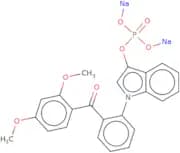
Formula:C24H36ClNO2Purity:Min. 98 Area-%Molecular weight:406.01 g/molAldol® 470 phosphate, disodium salt, Biosynth Patent: EP 2427431 and US 8940909
CAS:Aldol® 470 phosphate, disodium salt is a fluorogenic substrate that is used in the detection of enzyme activity. It can be used to detect the presence of an enzyme by measuring the light emitted from the substrate after it has been converted to fluorescent product. Aldol® 470 phosphate, disodium salt is a chromogenic substrate that is used for detecting and measuring enzyme activity. The product of this reaction can be measured by absorbance or fluorescence spectroscopy, making it useful for many different types of diagnostic tests. This product can be conjugated with a variety of ligands for use in diagnostic assays and research. Aldol® 470 phosphate, disodium salt can also be used in culture media as a bioluminescent substrate for bacterial growth and metabolism studies. This product can also be used as an environmental testing reagent or as a staining agent in microscopy applications.
Formula:C23H18NNa2O7PPurity:Min. 95%Color and Shape:PowderMolecular weight:497.34 g/mol5-Bromo-4-chloro-3-indoxyl caprylate
CAS:Chromogenic substrate for esterase with C8 activity yielding a blue precipitate upon cleavage.
Formula:C16H19BrClNO2Purity:Min. 99 Area-%Molecular weight:372.70 g/mol5-Bromo-4-chloro-3-indoxyl-alpha-D-galactopyranoside
CAS:Chromogenic substrate for α-galactosidase yielding a blue precipitate. Used for species differentiation within the family Enterobacteriaceae and differentiation of Bifido bacteria species from Lactobacillus species.
Formula:C14H15BrClNO6Purity:Min. 99 Area-%Molecular weight:408.64 g/molAldol® 518 alpha-D-glucopyranoside, Biosynth Patent: EP 2427431 and US 8940909
CAS:Aldol® 518 alpha-D-glucopyranoside is a fluorogenic enzyme substrate used for detection of alpha-D-glucosidase activity. The colorless enzyme substrate is cleaved by alpha-D-glucosidase, generating red fluorescent signal and in some conditions, an orange colour in the visible spectrum can get formed, staining bacterial colonies in faint orange coloration. Aldol® 518 alpha-D-glucopyranoside can be used under aerobic and anaerobic conditions.
Formula:C29H29ClN2O7Purity:Min. 95.0 Area-%Molecular weight:553 g/molRef: 3D-A-4713_P00
Discontinued productAldol® 455 β-D-galactopyranoside, Biosynth Patent: EP 2427431 and US 8940909
CAS:Aldol® 455 beta-D-galactopyranoside is a chromogenic substrate for the enzyme β-galactosidase. It is used to detect the activity of β-galactosidase in cell culture, and has been shown to be highly purified and of high quality. This product can be used as a ligand for receptor binding studies or as an agent in enzyme substrates in fluorescence and chemiluminescence reactions.
Formula:C27H24ClNO7Purity:Min. 93.0 Area-%Molecular weight:509.94 g/molRef: 3D-A-4684_P00
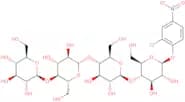
Discontinued product2-Chloro-4-nitrophenyl-β-D-cellotetraoside
CAS:2-chloro-4-nitrophenyl-beta-D-cellotetraoside is a chromogenic substrate for measuring cellulase activity and other glycosyl hydrolases. The release of 2-chloro-4-nitrophenol can be detected at 405 nm.Formula:C30H44ClNO23Purity:Min. 95%Color and Shape:PowderMolecular weight:822.12 g/molRef: 3D-EC36497
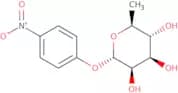
Discontinued product4-Nitrophenyl α-L-rhamnopyranoside
CAS:Chromogenic substrate for alpha-L-rhamnosidase
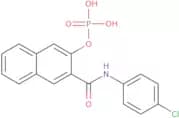
Formula:C12H15NO7Purity:Min. 99 Area-%Color and Shape:White Slightly Yellow PowderMolecular weight:285.25 g/molNaphthol AS-E phosphate, 60%
CAS:Histochemical substrate for alkaline phosphatase
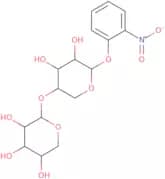
Formula:C17H13ClNO5PPurity:(%) Min. 60%Color and Shape:SolidMolecular weight:377.72 g/mol2-Nitrophenyl b-D-xylobioside
CAS:2-Nitrophenyl b-D-xylobioside is a chromogenic substrate for the enzyme xylanase.
Purity:Min. 95%Color and Shape:PowderMolecular weight:403.34 g/molRef: 3D-EN06167
Discontinued productCrimson-Gal
Crimson-Gal (Crimson-beta-D-galactopyranoside) is a chromogenic indicator for beta-galactosidase activity. The colorless product is cleaved by lactose-utilizing bacteria in liquid media or on agar plates and yields a crimson colored precipitate. Crimson-Gal can also be used as detecting agent for beta-galactosidase activity in reporter gene assays or for identification of positive transformants on agar plates when using the α-complementation approach. Read more in the Application Notes.
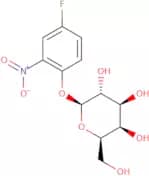
Purity:Min. 95%4-Fluoro-2-nitrophenyl b-D-galactopyranoside
CAS:4-Fluoro-2-nitrophenyl beta-D-galactopyranoside, a fluorinated analog of ONPG, is a chromogenic enzyme substrate specifically used to detect beta-galactosidase in bacterial media. 4-Fluoro-2-nitrophenyl beta-D-galactopyranoside is used in Lactose intolerance screening, bacterial beta-galactosidase detection (E. coli)
Purity:Min. 95%Color and Shape:PowderMolecular weight:319.24 g/molRef: 3D-EF15715
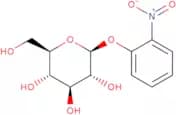
Discontinued product2-Nitrophenyl-β-D-glucopyranoside
CAS:Chromogenic beta-Glucosidase substrate yielding a yellow solution upon cleavage.
Formula:C12H15NO8Molecular weight:301.26 g/molRef: 3D-N-4320
Discontinued product1-Naphthyl b-D-glucuronide sodium salt
CAS:1-Naphthyl b-D-glucuronide sodium salt is a chromogenic substrate commonly used to assay the activity of beta-glucuronidase enzymes. It is hydrolyzed by beta-glucuronidase to yield a yellow-colored product, 1-naphthol, which can be quantified spectrophotometrically. This substrate is widely used in diagnostic tests for detection of beta-glucuronidase activity, particularly in clinical microbiology for the identification of E. coli and other enteric bacteria. With its sodium salt form, it boasts increased solubility in aqueous solutions, ensuring seamless integration into various experimental settings.
Formula:C16H15NaO7Purity:Min. 95%Color and Shape:PowderMolecular weight:342.28 g/molRef: 3D-EN05128
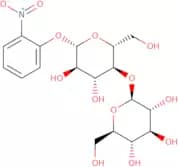
Discontinued product2-Nitrophenyl b-D-cellobioside
CAS:Chromogenic substrate targeting cellulases
Formula:C18H25NO14Purity:Min. 98 Area-%Color and Shape:White PowderMolecular weight:463.39 g/mol